











 Posted 07/10/2015 08:24 am


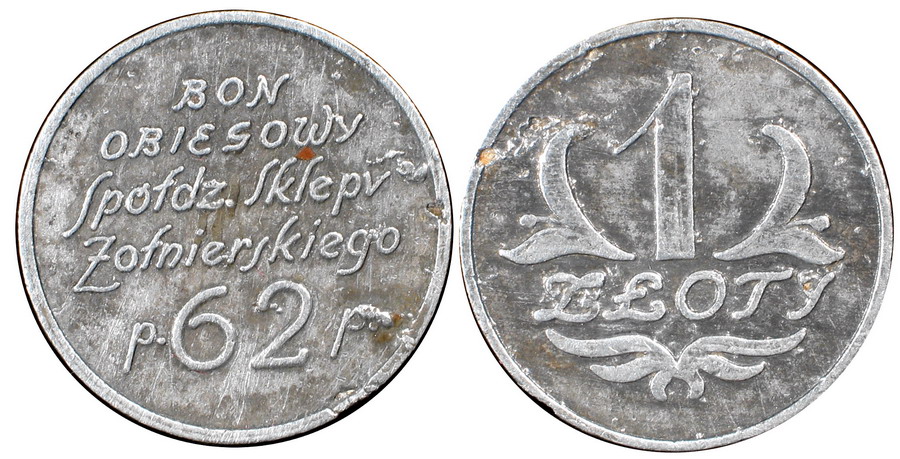
It took me a couple of hours to figure out what it was, a year ago I thought it was a regular store credits token and I didn't look at it twice.
But now I know better and I will keep an eye open for the "PP *number*" in the future when sorting through piles...
They are far from common and many of them got destroyed. The number represent the cooperative (in my case 62, which I don't know what it was), there were around 200 cooperatives but not everyone gave out credits like these, some had only notes.
Some of them can get really pricey to:
http://www.sixbid.com/browse.html?a...tegory=13656
Google translated:
But now I know better and I will keep an eye open for the "PP *number*" in the future when sorting through piles...
They are far from common and many of them got destroyed. The number represent the cooperative (in my case 62, which I don't know what it was), there were around 200 cooperatives but not everyone gave out credits like these, some had only notes.
Some of them can get really pricey to:
http://www.sixbid.com/browse.html?a...tegory=13656
Google translated:
Quote:
Aluminum, distinctive emblem - a problem can not be. This is one of the many coins cooperative military in the Second Republic. The nineteenth century was full of coins issued by private landowners and industrialists. During the inter-active issuer of private coins was the army, and actually trade cooperatives operating in many of its branches. Issuer my buck was 20 Regiment of the Cracow.
Where did these co-operatives in the army? They began to form as early as 1919 on the model of cooperatives in the French and Russian armies. Lower batches were cooperative soldiers, officers formed cooperatives officer. These structures were formed spontaneously - led commercial activities, supplying canteens, casinos, and leading shops in the military units. Following the adoption of the Law on cooperatives (year 1920) cooperatives and some shops closed down, creating in their place cooperatives, whose business was based on common principles, and not on the basis of military regulations. In 1922. However, the military authorities issued a special order to organize the relations between the self-governing co-operatives and military institutions. Cooperatives were among others to lead cultural and educational activities, including civilians residing or employed in the units.
Another statutory task of cooperative military was to provide credit to its members. And here there was a need to create a specific currency with limited circulation. The introduction of such money definitely simplified the bureaucracy associated with granting and enforcement loans and facilitated the settlement of making daily activities.
There was another reason. Co-operatives, which have provided loans of cash in money the state were exposed to losses. The money was used outside entities, not all borrowers are regulated by their commitments. The remedy was to be the money being valid only to a very limited circle. You could pay him only in canteens and shops run by cooperatives. They functioned both euro banknotes and coins. Banknotes, due to the limited resources of cooperatives did not have sufficient safeguards against fraud, and in addition were very unstable. In the thirties, they disappeared almost entirely, replaced by a
In 1922, the army functioned 254 cooperatives, in 1924 - 285, 1931 - 284 and in 1938 204. Number of cooperative changed from year to year, rarely dropping below 200. It is not known whether all co-operatives emitted coin. Certainly, they were the ones that introduced paper money only, but most made use of coins. Hence the diversity of military coins. Diversity, not quantity - this is important.
Military coins were produced in at least several industrial plants. The best documented is the activity Grabski plants in Lodz. This plant offered their services, ensuring that in less than two weeks is able to knock out 10,500 coins in four denominations with a total value of 7250 z#322;. With such an offer benefited, among other things 20PPZK. Some formations procure spending two or four times smaller.
The highest expenditures usually have a buck, but what kind of effort? For example, 5,000 copies. Inevitably, the military cooperative coins are very rare
The four denominations, the 10, 20 and 50 cents and a dollar. As you can see, they operated by low denominations. Loans were typical "chwilówkami" - had to pay them back at the next pay review. Additionally, in 1933. Special order limited the allowable amount of the loan to 20% of salary - because so many were allowed to deduct "from the payroll" without the consent of the employee. After issuing this order, it turned out that some co-operatives have an excessive amount of coins. In order not to tempt fate, ordered the destruction of unnecessary money.
Buck, as I said, was beaten in aluminum. Lower denominations of zinc, copper, nickel, iron. There are known even coins made of plastic - Bakelite. In the case of excessive wear of the coins or after detecting forgeries - they were and such incidents - the whole edition was destroyed and commissioned new coins.
Due to the nature of military coins, as well as other private issues can not be applied in their case the rarity scale adopted for circulation coins. It is customary for them to use the qualified scale Emeryk Hutten-Czapski, more appropriate and precise to small outlay of coins. It looks like this:
Rx - 1 piece
8a - 2 pieces
8b - 3 - 5 pieces
7a - 6 - 10 pieces
7b - 11 - 25 pieces
6a - 26 - 50 pieces
6b - 51 - 125 units
5a - 126 - 240 pieces
5b - 241 - 600 pieces
4a - 601 - 1,200 units
The scale of the adopted Miroslaw Bartoszewicki in the publication "Index - pricing Polish military money 1925 - 1939".
The coin with the picture is a rarity in this concordance 6a.
The specificity of collecting money substitute (private) ratio is another rarity on the market price. The circulation coin known in dozens of copies will be higher than the valuation of rare coins like private, and this is due to an incomparably smaller number of people interested in such dziwade#322;kami. Circulation coins collect thousands of coins private - tens. Military coins are usually poorly preserved. In the interwar period did not gain recognition collectors. Interest in them increased after the publication in the early annals of Numismatic News Bulletins and slightly later by the aforementioned Numismatic M. Bartoszewickiego, Marian Kowalski Wojciech Niemirycz.
Now, when many collectors looking for an attractive topic for the expansion or creation of a new collection, military coins seem appropriate facilities. Provide great excitement while hunting - some emissions coming on the market every few years. Guarantee stability of prices at a high level. And one more thing.
Is it not beautifully reads the sentence: "Such coins, in
Aluminum, distinctive emblem - a problem can not be. This is one of the many coins cooperative military in the Second Republic. The nineteenth century was full of coins issued by private landowners and industrialists. During the inter-active issuer of private coins was the army, and actually trade cooperatives operating in many of its branches. Issuer my buck was 20 Regiment of the Cracow.
Where did these co-operatives in the army? They began to form as early as 1919 on the model of cooperatives in the French and Russian armies. Lower batches were cooperative soldiers, officers formed cooperatives officer. These structures were formed spontaneously - led commercial activities, supplying canteens, casinos, and leading shops in the military units. Following the adoption of the Law on cooperatives (year 1920) cooperatives and some shops closed down, creating in their place cooperatives, whose business was based on common principles, and not on the basis of military regulations. In 1922. However, the military authorities issued a special order to organize the relations between the self-governing co-operatives and military institutions. Cooperatives were among others to lead cultural and educational activities, including civilians residing or employed in the units.
Another statutory task of cooperative military was to provide credit to its members. And here there was a need to create a specific currency with limited circulation. The introduction of such money definitely simplified the bureaucracy associated with granting and enforcement loans and facilitated the settlement of making daily activities.
There was another reason. Co-operatives, which have provided loans of cash in money the state were exposed to losses. The money was used outside entities, not all borrowers are regulated by their commitments. The remedy was to be the money being valid only to a very limited circle. You could pay him only in canteens and shops run by cooperatives. They functioned both euro banknotes and coins. Banknotes, due to the limited resources of cooperatives did not have sufficient safeguards against fraud, and in addition were very unstable. In the thirties, they disappeared almost entirely, replaced by a
In 1922, the army functioned 254 cooperatives, in 1924 - 285, 1931 - 284 and in 1938 204. Number of cooperative changed from year to year, rarely dropping below 200. It is not known whether all co-operatives emitted coin. Certainly, they were the ones that introduced paper money only, but most made use of coins. Hence the diversity of military coins. Diversity, not quantity - this is important.
Military coins were produced in at least several industrial plants. The best documented is the activity Grabski plants in Lodz. This plant offered their services, ensuring that in less than two weeks is able to knock out 10,500 coins in four denominations with a total value of 7250 z#322;. With such an offer benefited, among other things 20PPZK. Some formations procure spending two or four times smaller.
The highest expenditures usually have a buck, but what kind of effort? For example, 5,000 copies. Inevitably, the military cooperative coins are very rare
The four denominations, the 10, 20 and 50 cents and a dollar. As you can see, they operated by low denominations. Loans were typical "chwilówkami" - had to pay them back at the next pay review. Additionally, in 1933. Special order limited the allowable amount of the loan to 20% of salary - because so many were allowed to deduct "from the payroll" without the consent of the employee. After issuing this order, it turned out that some co-operatives have an excessive amount of coins. In order not to tempt fate, ordered the destruction of unnecessary money.
Buck, as I said, was beaten in aluminum. Lower denominations of zinc, copper, nickel, iron. There are known even coins made of plastic - Bakelite. In the case of excessive wear of the coins or after detecting forgeries - they were and such incidents - the whole edition was destroyed and commissioned new coins.
Due to the nature of military coins, as well as other private issues can not be applied in their case the rarity scale adopted for circulation coins. It is customary for them to use the qualified scale Emeryk Hutten-Czapski, more appropriate and precise to small outlay of coins. It looks like this:
Rx - 1 piece
8a - 2 pieces
8b - 3 - 5 pieces
7a - 6 - 10 pieces
7b - 11 - 25 pieces
6a - 26 - 50 pieces
6b - 51 - 125 units
5a - 126 - 240 pieces
5b - 241 - 600 pieces
4a - 601 - 1,200 units
The scale of the adopted Miroslaw Bartoszewicki in the publication "Index - pricing Polish military money 1925 - 1939".
The coin with the picture is a rarity in this concordance 6a.
The specificity of collecting money substitute (private) ratio is another rarity on the market price. The circulation coin known in dozens of copies will be higher than the valuation of rare coins like private, and this is due to an incomparably smaller number of people interested in such dziwade#322;kami. Circulation coins collect thousands of coins private - tens. Military coins are usually poorly preserved. In the interwar period did not gain recognition collectors. Interest in them increased after the publication in the early annals of Numismatic News Bulletins and slightly later by the aforementioned Numismatic M. Bartoszewickiego, Marian Kowalski Wojciech Niemirycz.
Now, when many collectors looking for an attractive topic for the expansion or creation of a new collection, military coins seem appropriate facilities. Provide great excitement while hunting - some emissions coming on the market every few years. Guarantee stability of prices at a high level. And one more thing.
Is it not beautifully reads the sentence: "Such coins, in


