Posted 07/16/2015 1:11 pm


The other dates are correct as mentioned above by Finn. There were a total of 6 obverse dies (the 5 known dates being 1939, 1944 no P with no silver, 1946, 1947, and 1953, with possibility of a 6th unknown date or the 6th die was another 1944, although 1943, 1945, and 1951 have been suggested as the 6th unknown date- but none have surfaced). There were also 6 reverse dies.
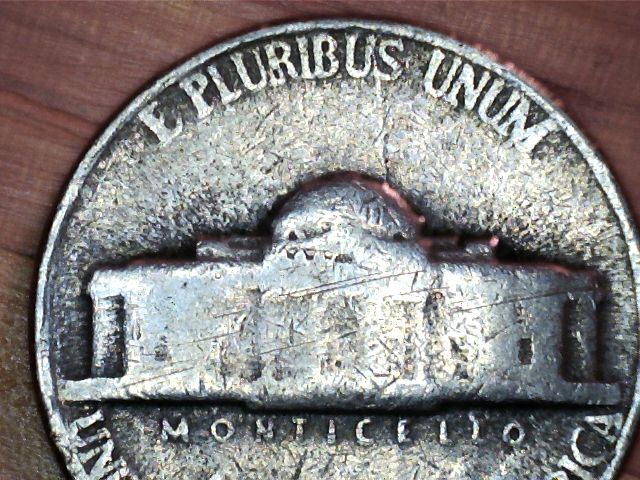
The most common date is 1944 no P and this coin is what got Francis LeRoy Henning caught- because of the mint mark missing on the reverse. Authentic 1944 Jeffersons have silver in the composition and have a P mint mark above the dome on the reverse. And because the diagnostic P is missing in the 1944 Henning, this is by far the easiest date to recognize the coin as a Henning.
Weights: the weights are so close to normal Jefferson nickels that they are considered indistinguishable (5.1-5.4 g for Hennings versus 5.0 g for authentic Jeffersons). Weight cannot be used as a determining factor- if it is overweight, yes you may have one, but if it is normal weight, it does NOT rule out that it might be a Henning.
The blanks used for these counterfeits were 79.1% copper, 20.5% nickel and 0.4% iron. When the blanks were seized, it is believed they were used to mint authentic Jefferson nickels later on, so some Jefferson nickels might have traces of iron in them.
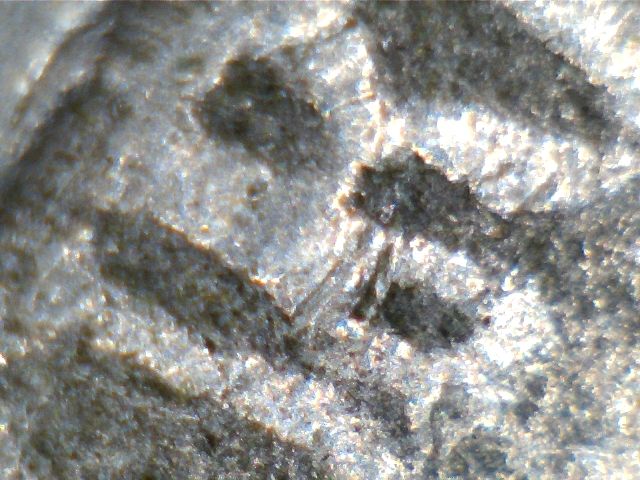
The broken R in "Pluribus" is a hallmark of a Henning, BUT not all Hennings had them because Henning used 6 different dies to mint the coins. Some of the dies have the broken R and some don't.
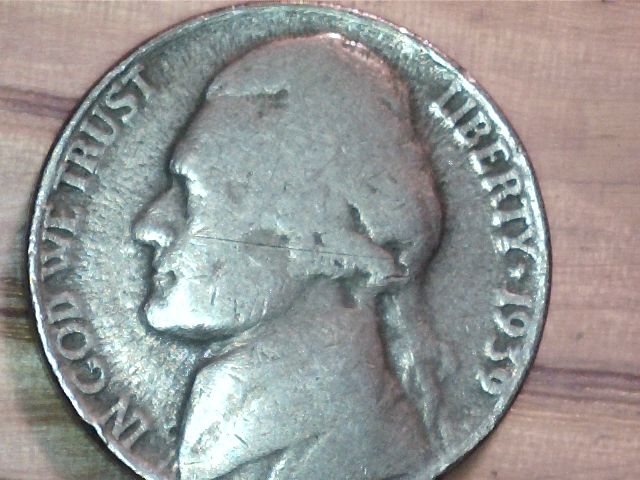
The counterfeits look mushy, have less rim detail, may appear "porous" or rough in the surfaces. Some Hennings have raised dots or pimples in the M of "UNUM".
Henning bought the planchets for 3.5 cents apiece, plus had to buy the equipment for making the counterfeits, so he didn't net much profit. He made an estimated 500,000 counterfeits (planchet cost: $17,500, face value= $25,000). About 100,000 reached circulation by 1954 (he deposited them as rolls), with another 200,000 dumped by Henning in Copper Creek, NJ when he realized the Secret Service was on his tail. Only about 14,000 were recovered. The other 200,000 are believed to have been dumped in the Schuylkill River.
Henning was arrested in 1955 in Cleveland and sentenced to 3 years prison and a $5000 fine (NOT paid in nickels!).
The auction prices for Hennings (1944 no P) on ebay have very spirited bidding. Strangely, the bidding for Hennings (they tend to be G4-VG8) is higher than the key date authentic Jeffersons. They have surpassed the $75 mark a few times but $50-60 range is typical. There are three on ebay currently with BIN of >$100. I think that is a bit too high.
I personally have only seen the 1944 no P both with and without the broken R. I have never seen the other dates, so cannot comment more on the diagnostics to determine that it is a Henning. I would venture to guess that the other Henning dates are extremely scarce and would command prices well above $100.
Henning Nickels belong to a category referred to as Black Cabinet Coins. These are known, documented counterfeits that have a following and they do trade often for considerable money.
The most common date is 1944 no P and this coin is what got Francis LeRoy Henning caught- because of the mint mark missing on the reverse. Authentic 1944 Jeffersons have silver in the composition and have a P mint mark above the dome on the reverse. And because the diagnostic P is missing in the 1944 Henning, this is by far the easiest date to recognize the coin as a Henning.
Weights: the weights are so close to normal Jefferson nickels that they are considered indistinguishable (5.1-5.4 g for Hennings versus 5.0 g for authentic Jeffersons). Weight cannot be used as a determining factor- if it is overweight, yes you may have one, but if it is normal weight, it does NOT rule out that it might be a Henning.
The blanks used for these counterfeits were 79.1% copper, 20.5% nickel and 0.4% iron. When the blanks were seized, it is believed they were used to mint authentic Jefferson nickels later on, so some Jefferson nickels might have traces of iron in them.
The broken R in "Pluribus" is a hallmark of a Henning, BUT not all Hennings had them because Henning used 6 different dies to mint the coins. Some of the dies have the broken R and some don't.
The counterfeits look mushy, have less rim detail, may appear "porous" or rough in the surfaces. Some Hennings have raised dots or pimples in the M of "UNUM".
Henning bought the planchets for 3.5 cents apiece, plus had to buy the equipment for making the counterfeits, so he didn't net much profit. He made an estimated 500,000 counterfeits (planchet cost: $17,500, face value= $25,000). About 100,000 reached circulation by 1954 (he deposited them as rolls), with another 200,000 dumped by Henning in Copper Creek, NJ when he realized the Secret Service was on his tail. Only about 14,000 were recovered. The other 200,000 are believed to have been dumped in the Schuylkill River.
Henning was arrested in 1955 in Cleveland and sentenced to 3 years prison and a $5000 fine (NOT paid in nickels!).
The auction prices for Hennings (1944 no P) on ebay have very spirited bidding. Strangely, the bidding for Hennings (they tend to be G4-VG8) is higher than the key date authentic Jeffersons. They have surpassed the $75 mark a few times but $50-60 range is typical. There are three on ebay currently with BIN of >$100. I think that is a bit too high.
I personally have only seen the 1944 no P both with and without the broken R. I have never seen the other dates, so cannot comment more on the diagnostics to determine that it is a Henning. I would venture to guess that the other Henning dates are extremely scarce and would command prices well above $100.
Henning Nickels belong to a category referred to as Black Cabinet Coins. These are known, documented counterfeits that have a following and they do trade often for considerable money.
Edited by mycrob
07/16/2015 1:15 pm
07/16/2015 1:15 pm