| Author |
 Replies: 11 / Views: 8,195 Replies: 11 / Views: 8,195 |
|
|
New Member
United States
4 Posts |
|
|
|
|
Pillar of the Community
United States
2376 Posts |
Die Attrition Error. Here is a more dramatic example 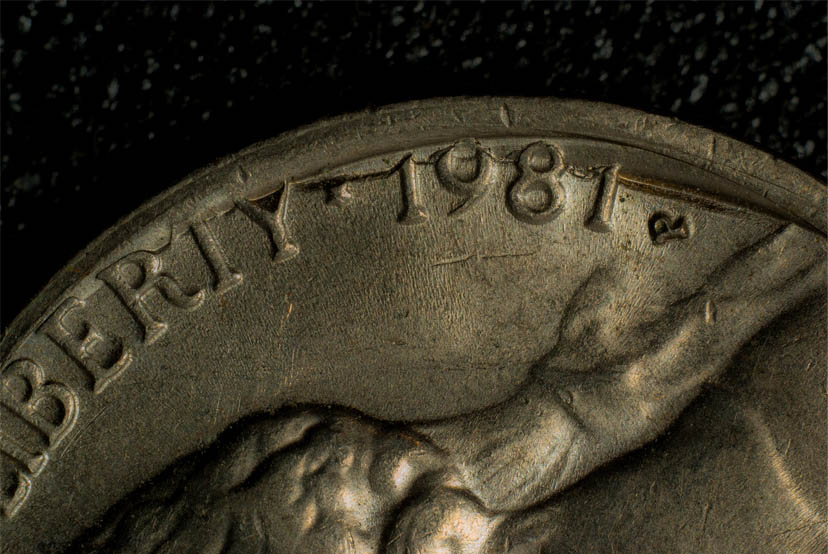 |
|
Valued Member
United States
144 Posts |
Here's another example of die attrition error. This happens when the edge of the die for the field gets worn away from collisions against the beveled edge of the collar. They're pretty cool looking under magnification. 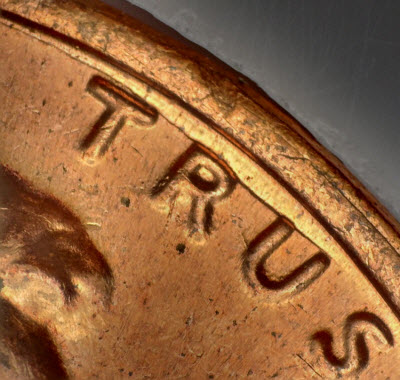 |
|
Bedrock of the Community
United States
62064 Posts |
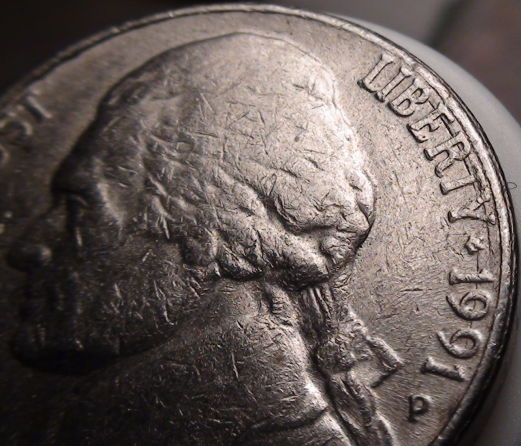
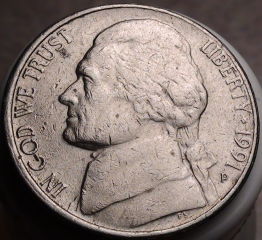
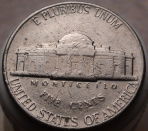
I check with Mike Diamond and here is what he mentioned about this one: Quote:
If it were planchet damage you'd expect the lines to show on top of the letters as well. The lines appear to be incuse and narrow, so they can't be die damage and they don't look like a die attrition error. I'm stumped.
Mike
It's nice when he says he's stumped. I thought it was planchet damage pre-strike. But he ruled that out as well. But mentioned a point I hadn't considered before: "If it were planchet damage you'd expect the lines to show on top of the letters as well." Edited by coop
08/09/2015 2:55 pm
|
|
New Member
 United States
4 Posts |
It just looked weird, and I was trying to figure out how it could happen. Thanks for your replies.
Ever since I started reading this site now I can't stop looking at my pocket change, hehe :) and I never looked at it before.
Thanks again!
|
|
Valued Member
United States
144 Posts |
Hmmm, I was thinking it could have been on the planchet first. And the pressure of the strike flowed the metal into the recesses of the letters. But since the field outside of the letters experiences relatively little metal flow, it wasn't enough to close up those lines there. Then I remembered this incomplete clipped planchet that I've attached. The planchet wasn't clipped all the way through so on the strike, the only part of the clip (the line on obverse) that close was at the rim. But you can see on the reverse that did not happen with the letters. I agree with what Mike and Coop wrote. These images are instructional in that regard. 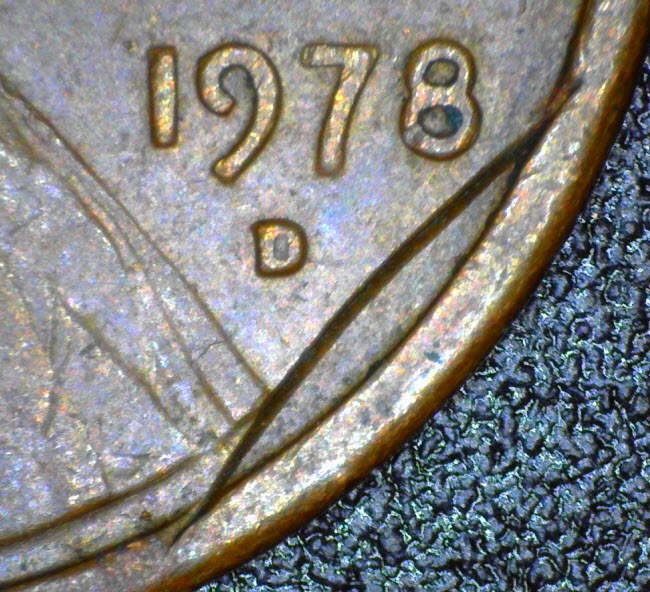 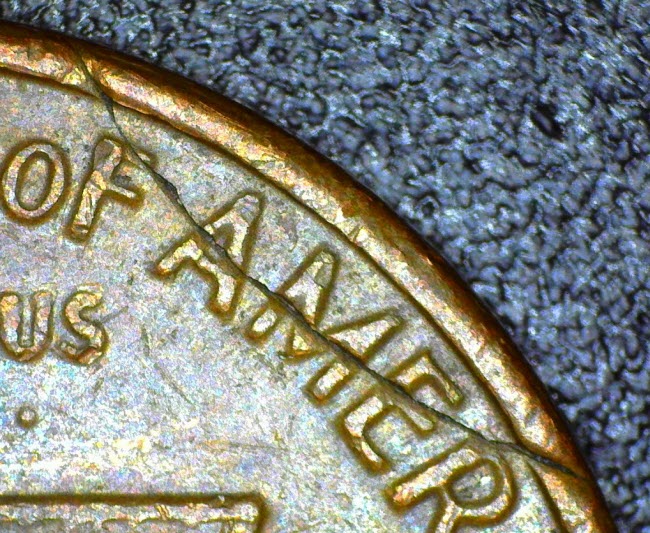 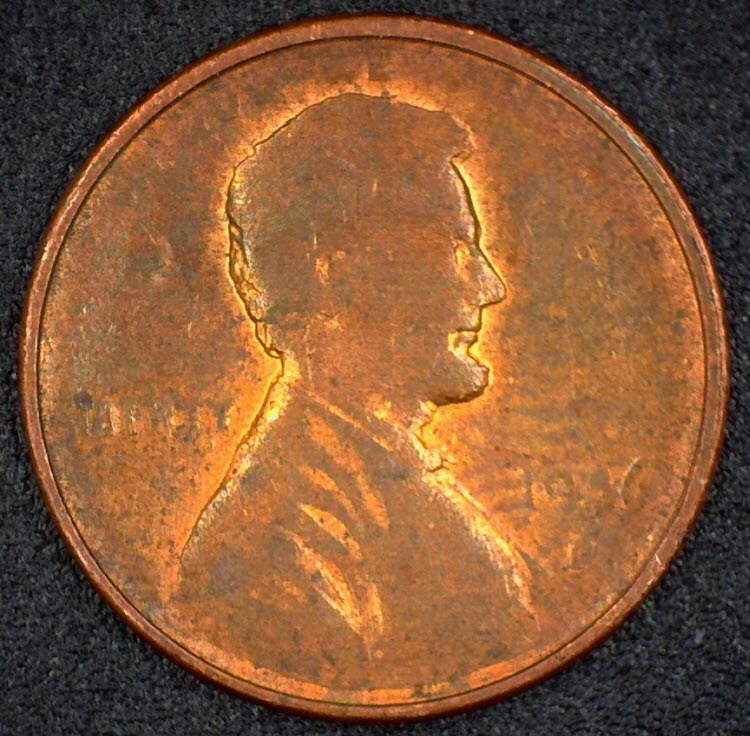 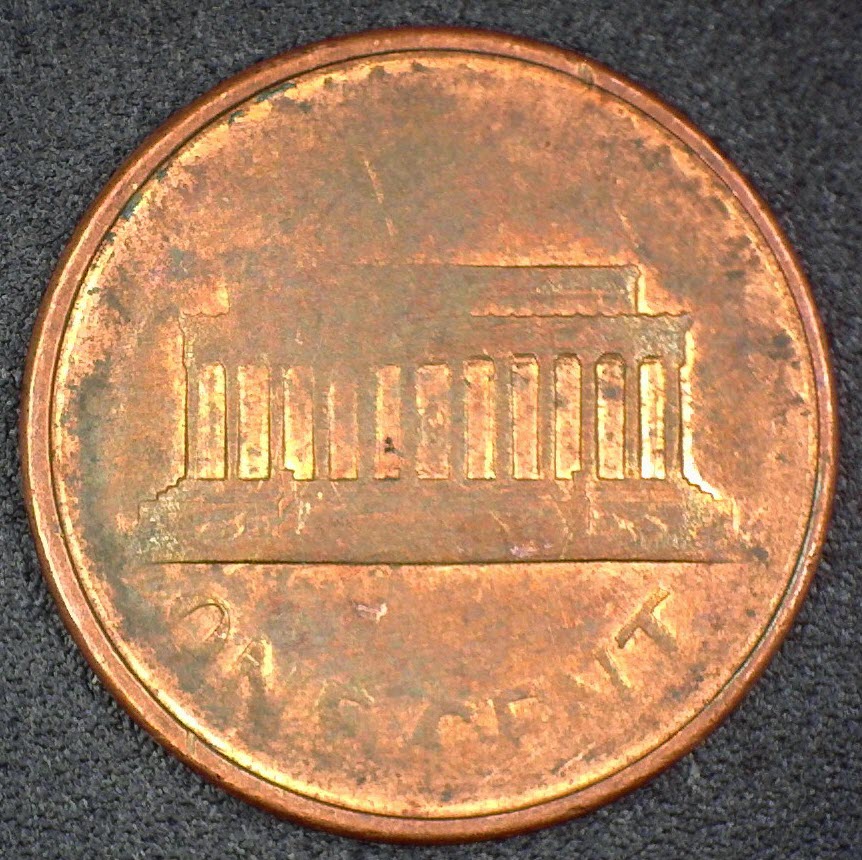 |
|
Bedrock of the Community
United States
62064 Posts |
It is not the same as profiler's coin though. Note on his coin the devices are affected. The devices on slimtx's coin is not affected. So the jury is still out on this one.
|
|
Valued Member
United States
144 Posts |
Indeed, Coop. Thanks for clarifying my post. I had submitted the images in support of what you and Mike had written as a contrasting example of what OP's coin is NOT (i.e., even if the incuse lines were on the planchet before strike, they would still show up on devices such as it did on my coin. Not the case in OP's coin.)
Thanks, Coop.
|
|
Bedrock of the Community
United States
62064 Posts |
But I will add your images of these coins to my files as instructional points.
|
|
Valued Member
United States
144 Posts |
|
|
Pillar of the Community
United States
5964 Posts |
|
|
Bedrock of the Community
United States
62064 Posts |
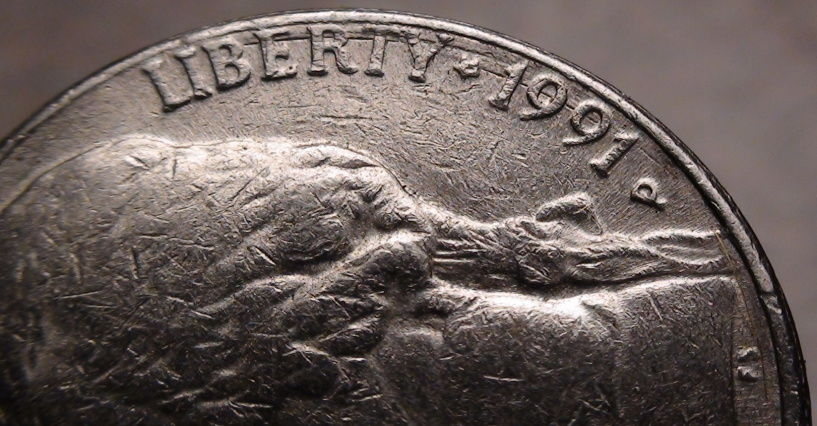
Do you have the cent you posted as a die attrition error. I enlarged the image and it's not an attrition error. I feel it is a thin layer of grease hear the rim. Take a toothpick and see if that is the case. On an attrition error the edge of the die is worn off the edge of the die. The edge makes of the die is closer to the devices. I don't see that on your coin. Take a look at the image I posted above: 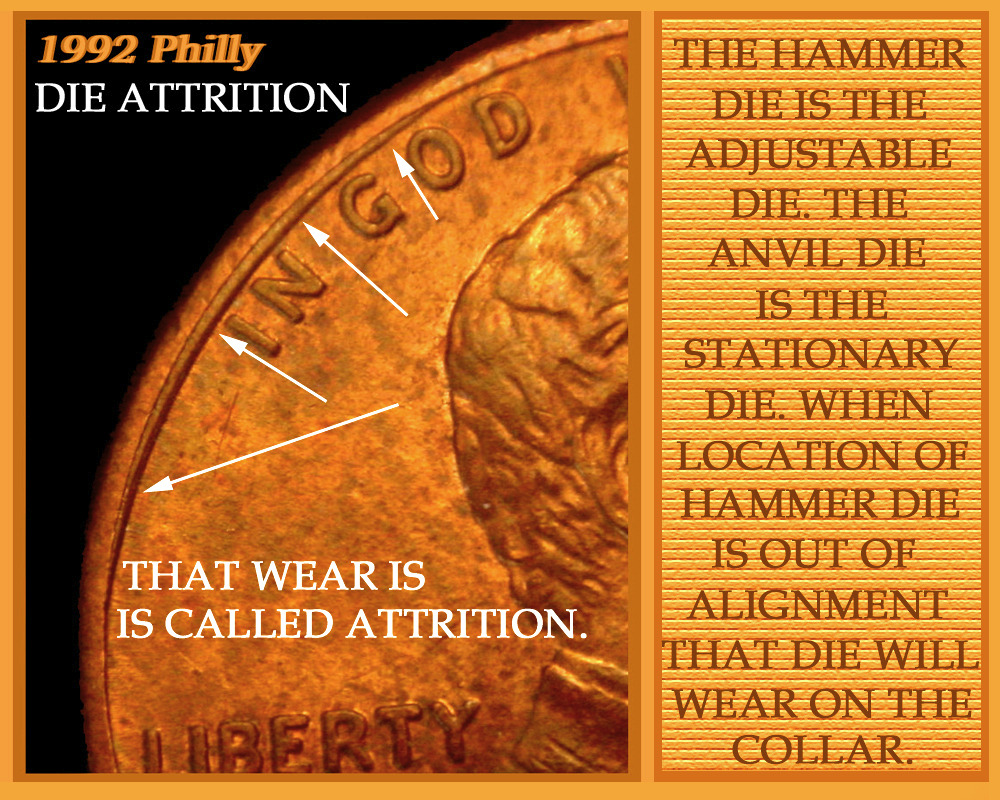 Note how the rim is closer to some devices and farther way from other devices. (when I enlarged you image I noticed it was like that) Let me know if it is grease as I don't have an image of the grease near the rim. Yours will so do well. The crease accumulates along the rims of coins. Note sure why? But it does on some coins. |
| |
Replies: 11 / Views: 8,195 |
|












 Posted 08/09/2015 1:25 pm


