| Author |
 Replies: 142 / Views: 23,032 Replies: 142 / Views: 23,032 |
|
|
|
Valued Member
United States
165 Posts |
|
|
Pillar of the Community
 United States
3363 Posts |
Quote:
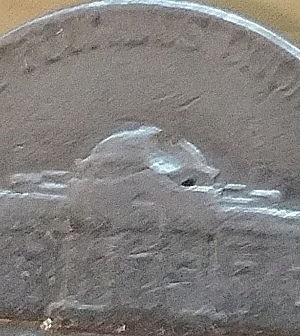
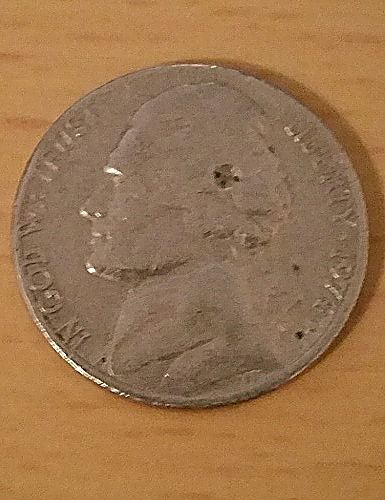
I think I might have found one on a 1974-D Nickel. What do you guys think? Both photos of the same coin? If so, seems like there are 2 depressions (?) The photos are a bit blurry...is it possible to have a closer, clearer photo of each one? Is there a raised area on the coin opposite of the mark? |
|
Valued Member
United States
68 Posts |
I'm surprised - no silver yet? I inherited this Morgan dollar from the Grandfather, and always assumed it to be a damaged coin. However, this "Rockwell Test" phenomenon, has me curious as to whether or not I might be in luck! Thoughts? Was such a test even in use in the 1920's?     |
|
Pillar of the Community
United States
3363 Posts |
Hello Shnug - not seeing your photos?
Edited by Pete2226
08/19/2015 09:38 am
|
|
Valued Member
United States
68 Posts |
|
|
Pillar of the Community
United States
3363 Posts |
It is difficult for me to tell whether there is a small bump under the Eagle's right wing (the left side of the bird when looking at the Reverse). There appears that there might be - can you check? If so, it would indicate damage, I think. I did an overlay which shows the area I noticed is where the mark would produce the bump. If that is not a raised area, then it appears to me that it could be a possibility, There appears to be a slight elongation from NE to SW. I do not know when the Mint might have started Rockwell testing, but the Rockwell test Patent was issued in 1919. 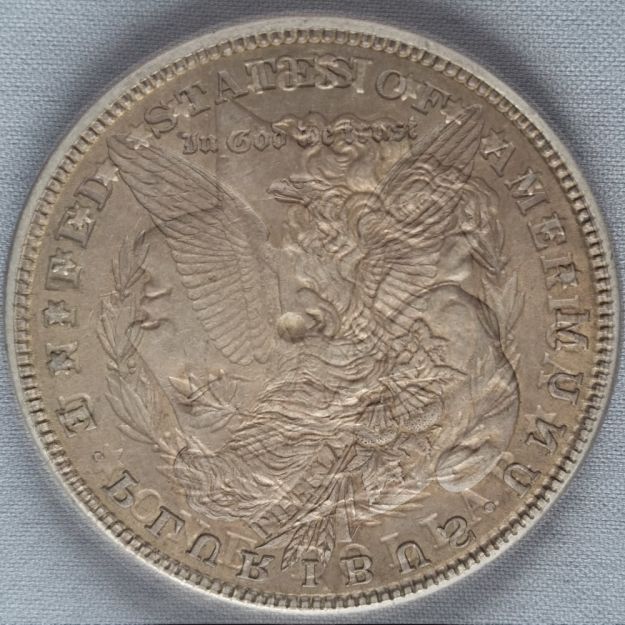 Edited by Pete2226
08/19/2015 10:23 am
|
|
Pillar of the Community
United States
3363 Posts |
There are at least 2 areas where there appears to me to be a lack of agreement about Rockwell Test Marks.
One is answering the question: "How do you know when you have one?" In other words, how can the authenticity of the mark be confirmed or proven? The answer appears to be, short of witnessing the actual test itself, that the authenticity of a mark cannot be proven. At the very least, it seems to me that a Rockwell Test Mark on a coin should have a smooth, hemispherical shape which might be slightly distorted from a circle around its circumference to more of an oval. There should be no raised area on the opposite side of the coin and no pressure ridge around the circumference of the mark. If a mark fits this definition, then the odds are higher that it is a Rockwell test Mark. Since it appears that the material from Rockwell Tests was supposed to have been discarded and not allowed to enter the minting process, it is uncommon to find examples.
The other area where there is lack of agreement is the need for Rockwell Tests where Zinc planchets are used. One view is that the uniformity of the zinc in a planchet suggests that a test is not necessary. My own view is that it is called for. I find it interesting that the various zinc alloys all contain Lead, Iron, Cadmium, Aluminum, Copper, and Titanium and it is obvious to me that the levels of each in a zinc planchet determine the hardness of the planchet - with only one of the alloys meeting the US Mint standards. It seems to me that calls out for hardness testing somewhere along the production line (if not in more than one place)!
Edited by Pete2226
08/19/2015 5:36 pm
|
|
Pillar of the Community
United States
3363 Posts |
I found this 1998-D LMC with a mark similar to a Rockwell. I think it is fairly clear this is PMD. There is a pressure ridge around a significant portion of the circumference, the floor is not completely smooth and the shape is not oval or round, but slightly more "squared off". 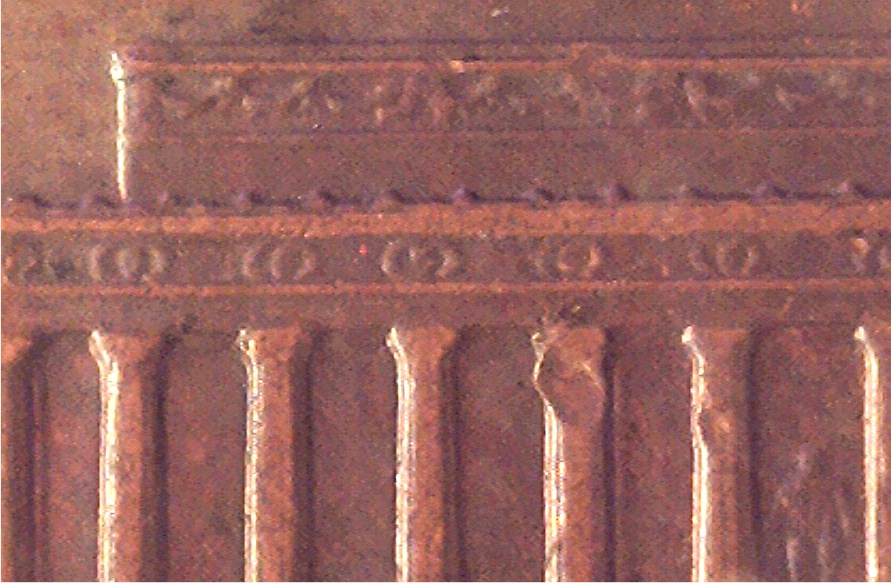 |
|
Valued Member
United States
68 Posts |
Pete2226, to my most accurate observation, there appears to be no raised area on the reverse of the coin on the area your overlay indicates. I do see a smaller circular raised area on the dead center of the eagle's chest, but think that's common for the 1921 Morgans and part of the design.
|
|
Pillar of the Community
United States
3363 Posts |
Quote:
there appears to be no raised area on the reverse of the coin on the area your overlay indicates. This seems to me to be an argument in favor of this being a Rockwell Test Mark. As I said earlier, there appears to be no way to prove or absolutely confirm that it is! I hope someone might know of a way! |
|
Valued Member
United States
165 Posts |
Here is a better image. Yes it is the same coin and yes there is a slight raise opposite the depressions. 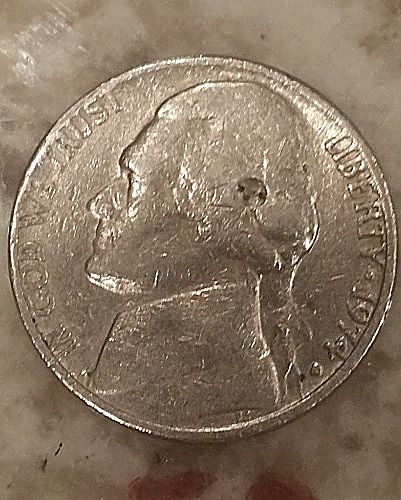 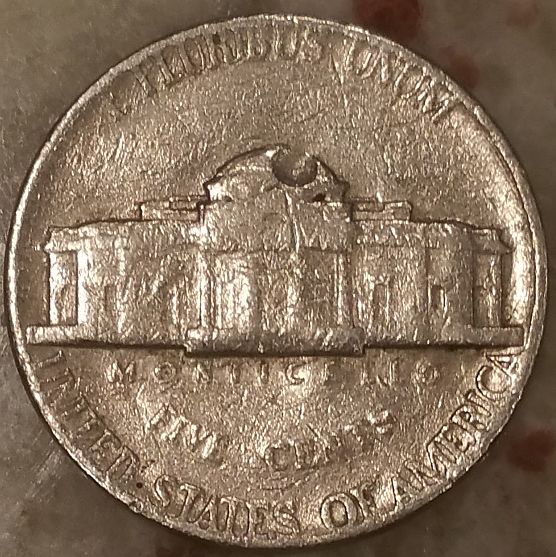 |
|
Pillar of the Community
United States
3363 Posts |
Quote:
yes there is a slight raise opposite the depressions This suggests PMD to me. Thanks for posting your images! |
|
Valued Member
United States
165 Posts |
Yea after I saw the raise figured as much lol
|
|
Valued Member
United States
108 Posts |
I'd think PMD too. Looks like somebody stuck it in a hardness tester. I note some of the depressions are on top of the pattern, most in the flats. I'd think the ones on top of pattern are dings. Pretty symmetrical otherwise. I dunno. |
|
Rest in Peace
United States
7075 Posts |
Pete2226 You've really done some work on this. I think we need to search for an example still in mint packaging. It may not prove it is a test mark, but you'll know for sure where it happened. 
|
| |
Replies: 142 / Views: 23,032 |






 First Page
 Previous Page




 Posted 08/19/2015 08:42 am


