First Page
 Previous Page


 Posted 09/01/2015 09:31 am


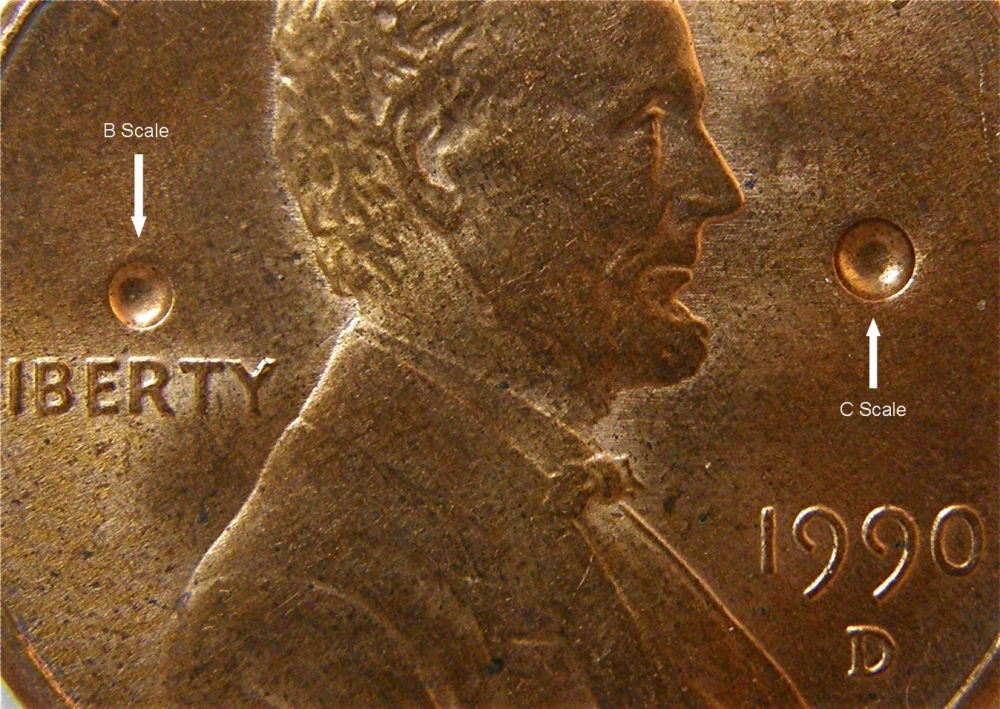
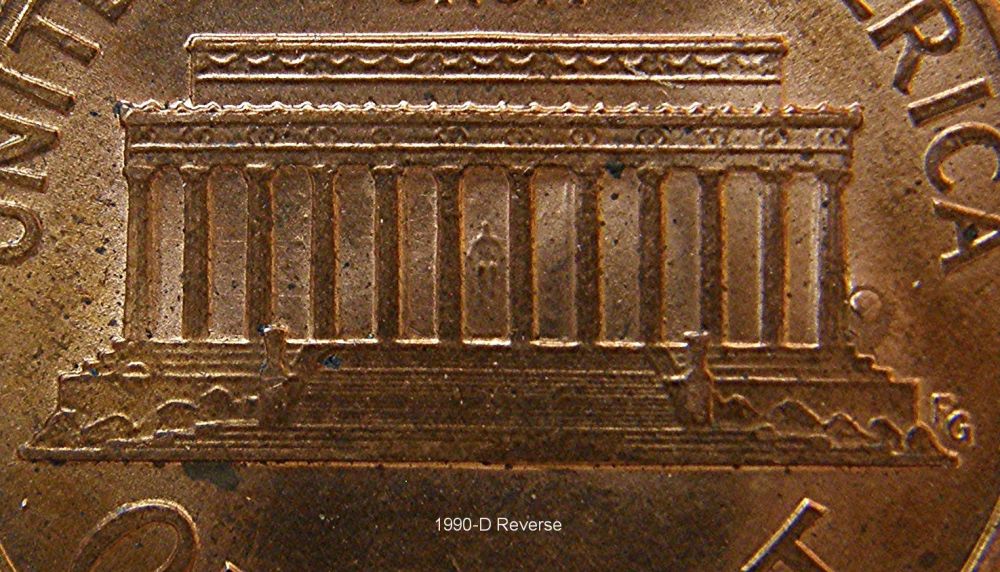
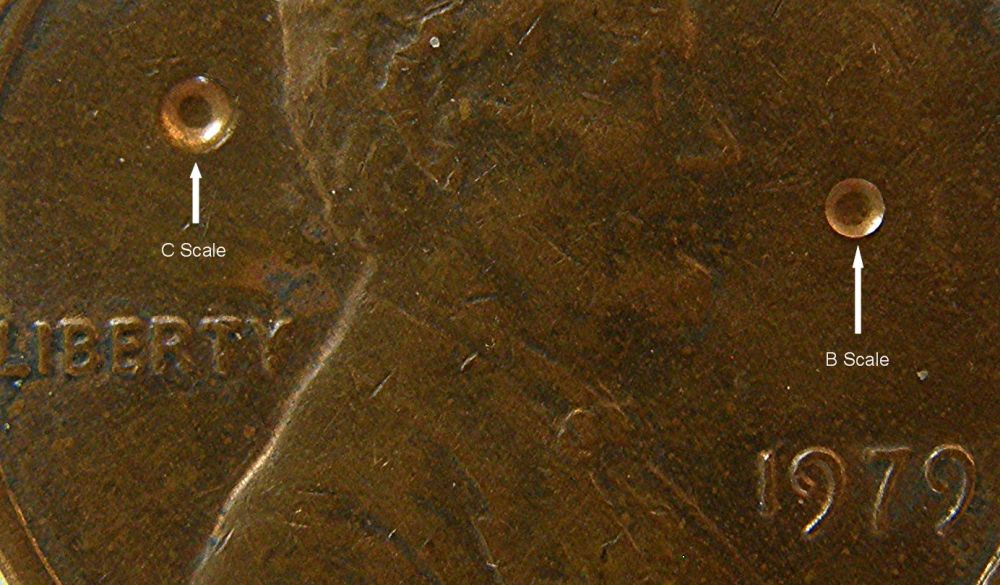
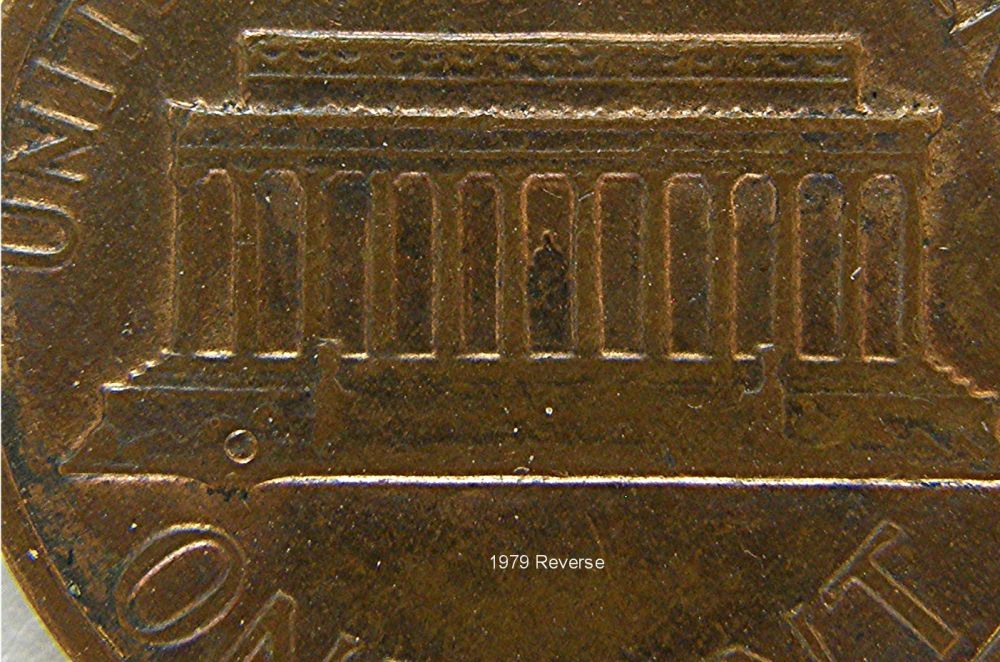
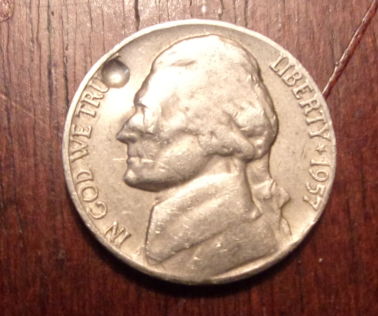
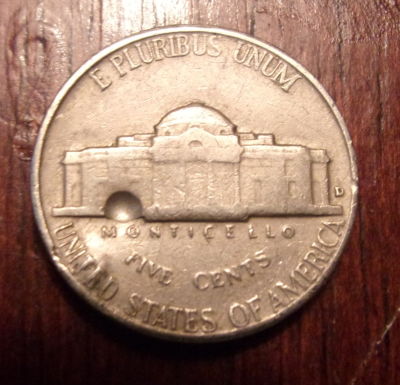
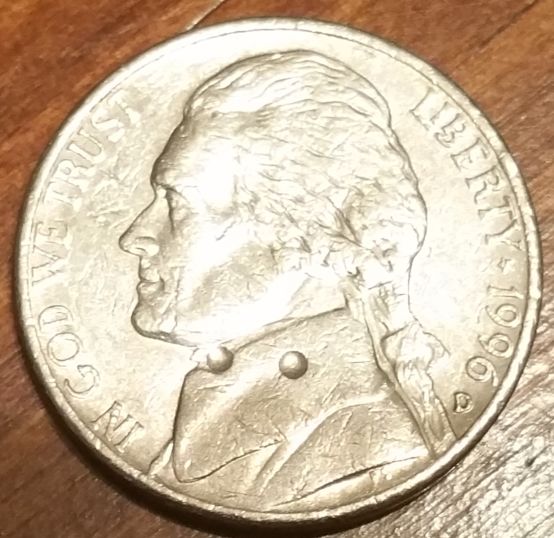
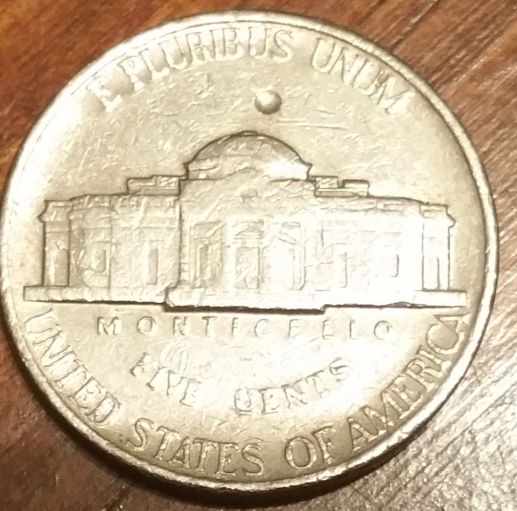
I know that some may think I am wasting my time researching such an obscure area of Numismatics as Rockwell Testing! Perhaps I am, but I am having fun! I love research! This seems to be a radically under researched area, also. I am finding a paucity of articles concerning the subject. I hope that if anyone is aware of any Numismatic Resources which discuss the question, you will let me know where they are! If you have followed this thread from the beginning, you have seen my thoughts vacillate from thinking these are Rockwell Test Marks to thinking they are not and then back again!
There is an old saying:
This saying may not quite apply in this case. It is more likely that it may be a duck!
The basic question I have been trying to answer is: "How do you know when you have one?" How is a Rockwell test Mark authenticated as such? The fact that an authority says it is lacks credibility for me. I want to know why this authority thinks so!
At this site: http://www.error-ref.com/?s=Rockwell Mike Diamond has an image of a coin with a Rockwell Test Mark with a note that it was authenticated by John Devine.
I have asked Mike the following question:
Here is Mike's response (Quoted with permission):
This 5th edition of Modern Mint Mistakes was published in 1976.
This one coin, then, claims to be authenticated as a Rockwell Test Mark and the authors mentioned above reference several others - all from the San Francisco Mint. However no one has proposed any more stringent guidelines for authentication than those I have outlined here in this thread. There is a general impression that Rockwell Test Marked Coins can only come from the San Francisco Mint. This comes from the authors' assertion that the Rockwell Testing device is several hundred feet from the coinage presses in Denver and must therefore be closer in San Francisco since that is where we have seen coins with Rockwell Test Marks originate. (At least this is the way things were sometime before 1976). This logic is used to say that any coin which meets the criteria for a Rockwell Test Mark cannot be so if it comes from the Denver Mint! This is a circular argument at best! There are simply too many questionable assumptions behind these statements! Perhaps arrangements at the Mints have not changed in the last 40+ years, but there are still too many other possibilities for a test blank to make it into production.
Of course, authentication is the key issue. I believe that the shape of the indentation is central to the definition. Having no pressure ridge and no bulge on the opposite side of the coin are also important.
Here is the photo (a black and white of it appears in the above referenced site):
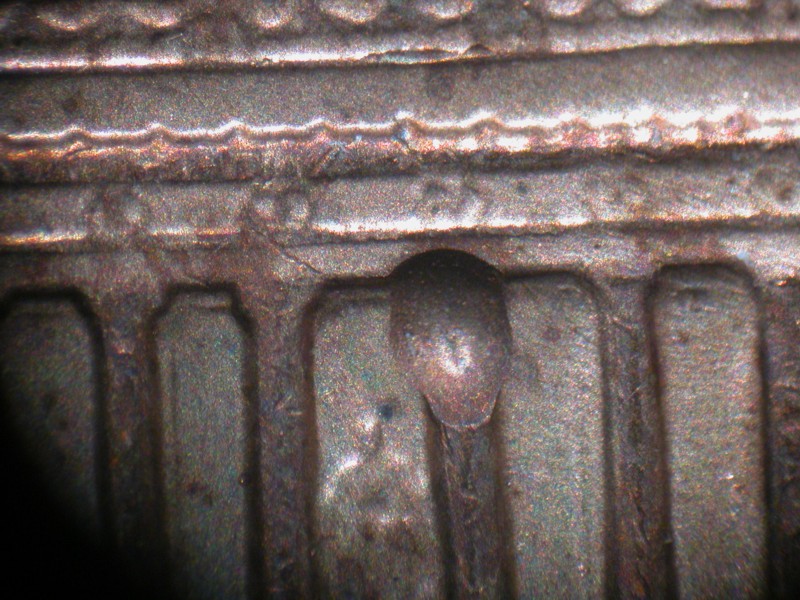
Presumably, the super imposition of the devices over the location of the impression causes the impression to assume a more oval shape from the original circular shape, because of die flow. I would infer from this that if devices are not touching the area of the impression, then the circular shape is unaffected by die flow.
I have also super imposed an image of my experimental test over the above image (black and white version). I placed the imposition slightly lower so that the arc can be compared in the 2 images. To my eyes, the arc appears to be the same.
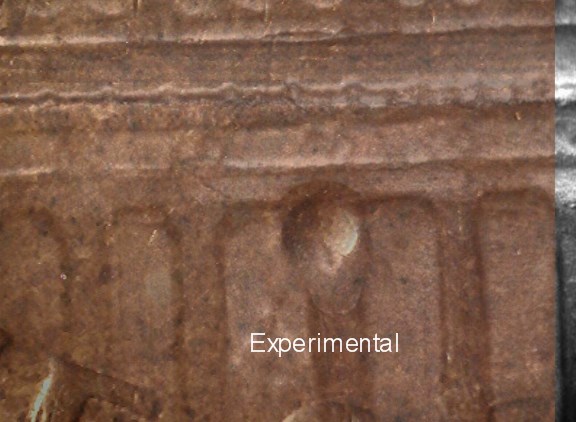
This, of course, says nothing more than that the two indentations were most likely caused by 1/16" balls! So how do we get to the point of saying that the attributed image is a Rockwell Test Mark? I am still looking for the answer to that! If anyone has it, please share!
There is an old saying:
Quote:
"If it looks like a duck and walks like a duck and quacks like a duck, then it is a duck."
"If it looks like a duck and walks like a duck and quacks like a duck, then it is a duck."
This saying may not quite apply in this case. It is more likely that it may be a duck!
The basic question I have been trying to answer is: "How do you know when you have one?" How is a Rockwell test Mark authenticated as such? The fact that an authority says it is lacks credibility for me. I want to know why this authority thinks so!
At this site: http://www.error-ref.com/?s=Rockwell Mike Diamond has an image of a coin with a Rockwell Test Mark with a note that it was authenticated by John Devine.
I have asked Mike the following question:
Quote:
Let me ask this: how did John Devine go about making that authentication? He could not have actually witnessed the actual test, so there must be some criteria! You mention some criteria on your site, of course.
Let me ask this: how did John Devine go about making that authentication? He could not have actually witnessed the actual test, so there must be some criteria! You mention some criteria on your site, of course.
Here is Mike's response (Quoted with permission):
Quote:
Hi Pete.
I suspect Devine got the coin from Phil Steiner and Mike Zimpfer, as what appears to be the same specimen can be found on page 125 of their Modern Mint Mistakes (5th edition).
These authors state on page 122,
"The authors witnessed the Rockwell test being performed on both type one (unannealed) and type two (annealed) blank planchets. Pressure differences read off the instrument showed the softening effect the annealing had on the blanks.
In Denver the Rockwell test apparatus is several hundred feet away from the coinage presses; therefore there is little possibility of these Rockwell test planchets reaching the presses. To date all of the known Rockwell test coins are from the San Francisco assay office. Therefore, a conclusion that the Rockwell apparatus is in close proximity to the coinage presses can be reached."
They also say,
"The area around the indentation shows metal flow toward the hole (which is no longer perfectly round) once the planchet is struck."
I've attached a color photo of the 1971-S cent. You can post it if you'd like.
Hope this helps.
Mike
Hi Pete.
I suspect Devine got the coin from Phil Steiner and Mike Zimpfer, as what appears to be the same specimen can be found on page 125 of their Modern Mint Mistakes (5th edition).
These authors state on page 122,
"The authors witnessed the Rockwell test being performed on both type one (unannealed) and type two (annealed) blank planchets. Pressure differences read off the instrument showed the softening effect the annealing had on the blanks.
In Denver the Rockwell test apparatus is several hundred feet away from the coinage presses; therefore there is little possibility of these Rockwell test planchets reaching the presses. To date all of the known Rockwell test coins are from the San Francisco assay office. Therefore, a conclusion that the Rockwell apparatus is in close proximity to the coinage presses can be reached."
They also say,
"The area around the indentation shows metal flow toward the hole (which is no longer perfectly round) once the planchet is struck."
I've attached a color photo of the 1971-S cent. You can post it if you'd like.
Hope this helps.
Mike
This 5th edition of Modern Mint Mistakes was published in 1976.
This one coin, then, claims to be authenticated as a Rockwell Test Mark and the authors mentioned above reference several others - all from the San Francisco Mint. However no one has proposed any more stringent guidelines for authentication than those I have outlined here in this thread. There is a general impression that Rockwell Test Marked Coins can only come from the San Francisco Mint. This comes from the authors' assertion that the Rockwell Testing device is several hundred feet from the coinage presses in Denver and must therefore be closer in San Francisco since that is where we have seen coins with Rockwell Test Marks originate. (At least this is the way things were sometime before 1976). This logic is used to say that any coin which meets the criteria for a Rockwell Test Mark cannot be so if it comes from the Denver Mint! This is a circular argument at best! There are simply too many questionable assumptions behind these statements! Perhaps arrangements at the Mints have not changed in the last 40+ years, but there are still too many other possibilities for a test blank to make it into production.
Of course, authentication is the key issue. I believe that the shape of the indentation is central to the definition. Having no pressure ridge and no bulge on the opposite side of the coin are also important.
Here is the photo (a black and white of it appears in the above referenced site):
Presumably, the super imposition of the devices over the location of the impression causes the impression to assume a more oval shape from the original circular shape, because of die flow. I would infer from this that if devices are not touching the area of the impression, then the circular shape is unaffected by die flow.
I have also super imposed an image of my experimental test over the above image (black and white version). I placed the imposition slightly lower so that the arc can be compared in the 2 images. To my eyes, the arc appears to be the same.
This, of course, says nothing more than that the two indentations were most likely caused by 1/16" balls! So how do we get to the point of saying that the attributed image is a Rockwell Test Mark? I am still looking for the answer to that! If anyone has it, please share!