| Author |
 Replies: 35 / Views: 3,354 Replies: 35 / Views: 3,354 |
|
|
|
Valued Member
United States
144 Posts |
Thank you for that distinction and clarification, cwb. I went back to cuds-on-coins and compared RIDBs with IDBs. I now see the difference. Very cool. Thanks for that.
And the difference between "chip" and IDB is size? I've read a few times >= 4mm is the threshold guideline. Is that correct?
|
|
Moderator
 United States
23522 Posts |
I've always thought that a "die break" starts as a die crack which then expands into two dimensions, and die chips were sudden catastrophic failures in which a piece of the die came loose all at once.
|
|
Pillar of the Community
United States
3463 Posts |
This is sort of a shady area, some say that smaller than 1 square mm is a chip, some say larger than 4 square mm is a break, some say that a break is connected to a die crack. To me, a die break is usually larger in size and more like a Cud, being connected to the rim where a piece of die is actually broken off. Anything in the middle (not connected to the rim) would be a chip. I'm sure there are some that will argue that, but that's how I see it. |
|
Pillar of the Community
 United States
5964 Posts |
Just realized there was a second page of discussion, now I'm not sure if it is a break or chip.
Edited by CoinMasters
08/23/2015 9:27 pm
|
|
Valued Member
United States
144 Posts |
CM, I think it's a break because you have, what looks like, a connected die crack -- as well as Die Deterioration at the tops of the devices towards the rim. There are other signs of Die Deterioration on the reverse, as well: the crack in upper bay #1, orange peel ("elephant skin" -- no offense meant to elephants) in the fields above and below memorial, and a small die chip in lower bay #10. This die has seen better days... |
|
Pillar of the Community
United States
5964 Posts |
A break it is Profiler. You are the Tie Breaker for the Die Breaker. Thanks everyone.
|
|
Pillar of the Community
United States
5964 Posts |
Maybe some gray areas here, but this is what I'm taking - Details required for Retained Rim required for CudCrack required for Break Edit: Crack is a good sign of break Edited by CoinMasters
08/24/2015 12:24 am
|
|
Valued Member
United States
144 Posts |
CM, a crack is not required for a break. It's not a rule, just another clue of many in this case.
And for myself, I wouldn't discount anything cwb posted. I learned a lot from him on this thread.
One way to look at errors vs. varieties is that they leave clues, there are gray areas, and many times they're just not as cut and dried as varieties are, which are very well documented with markers by several attributors.
|
|
Bedrock of the Community
United States
62064 Posts |
Here is an image of a cracked die and also a Cud: 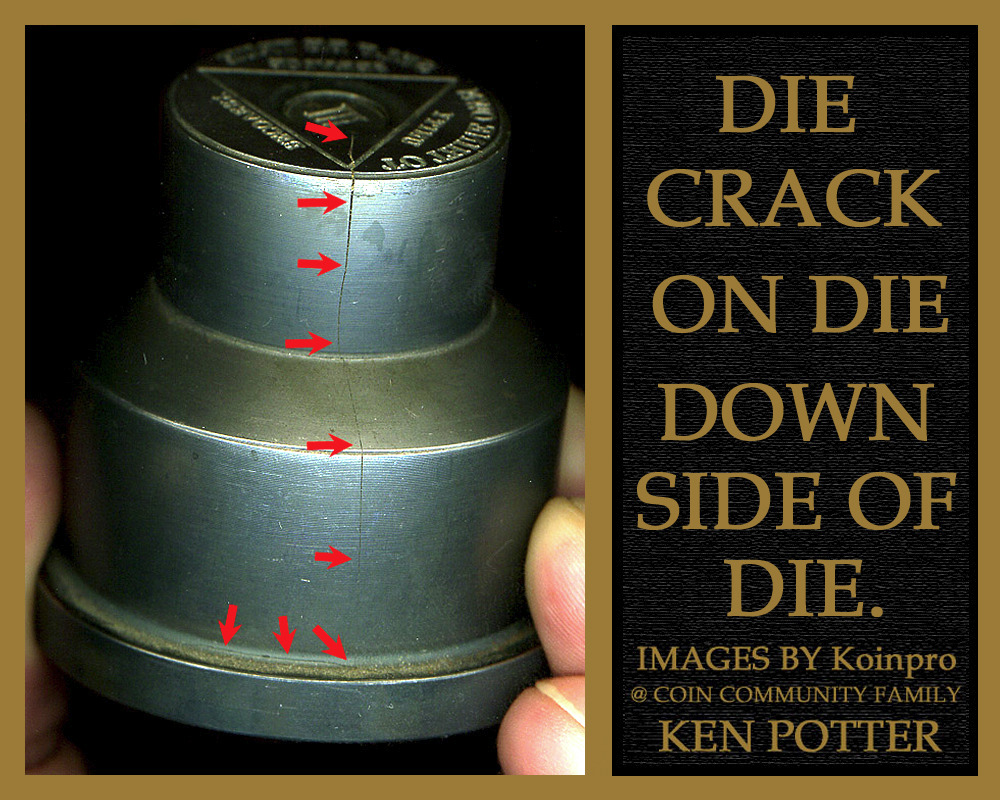 Cud Cud: 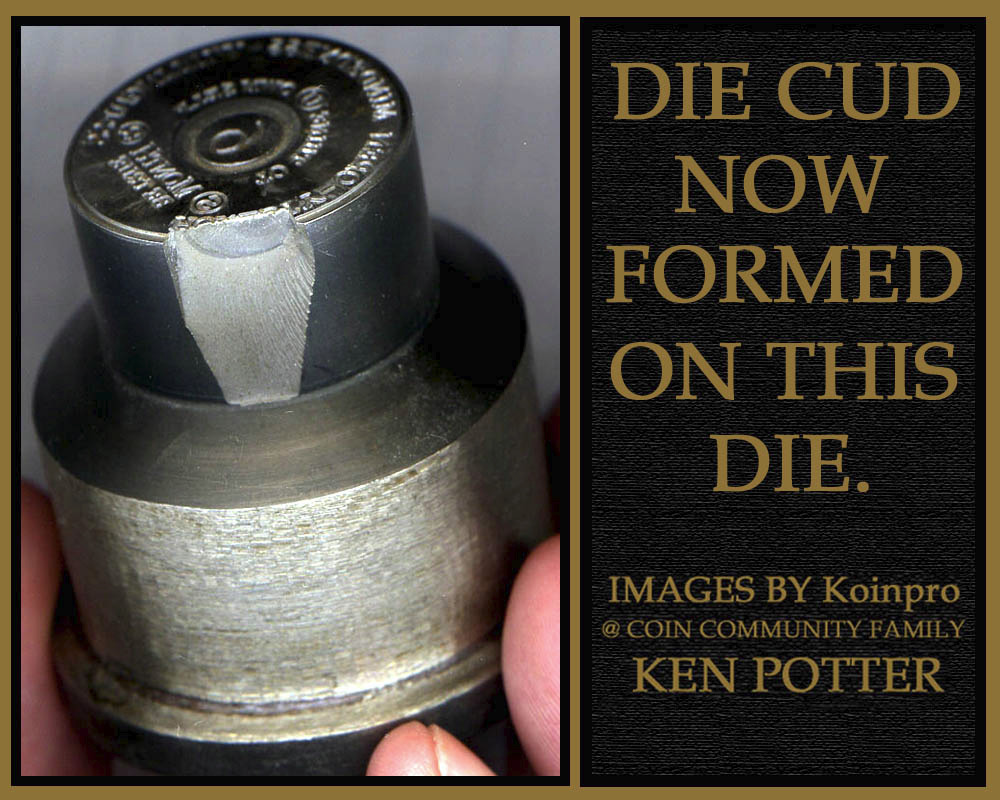 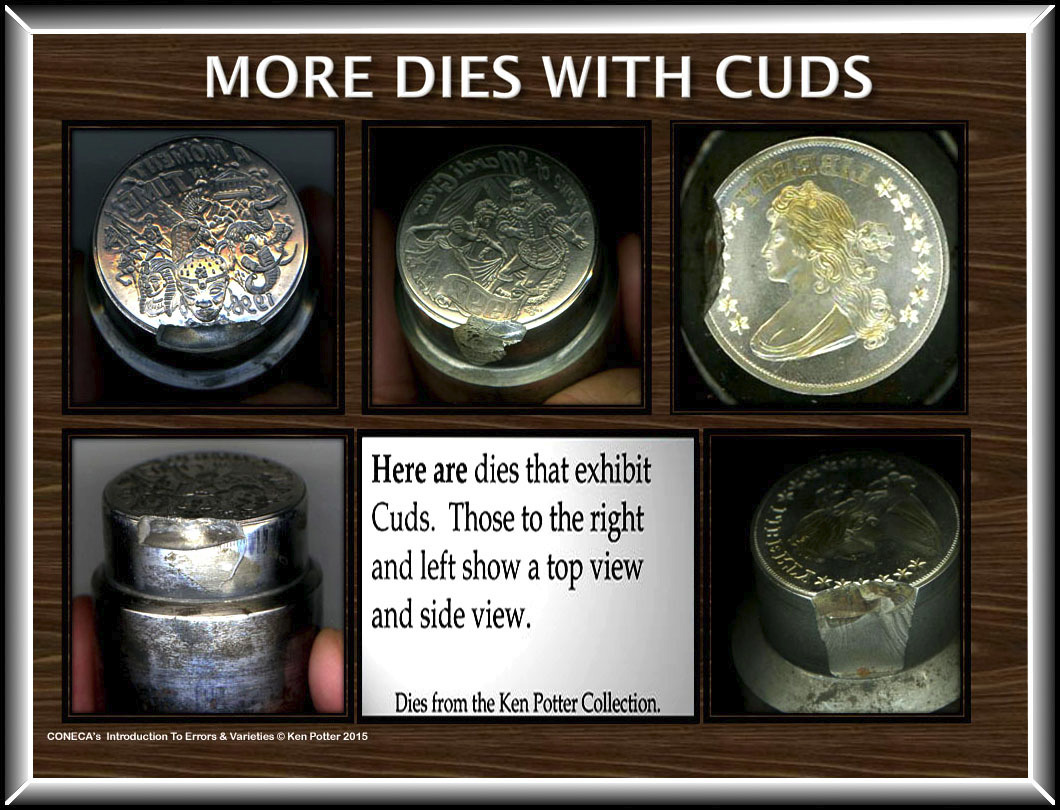 |
|
Valued Member
United States
134 Posts |
I am still struggling with "die chip" vs "interior die break". Maybe some day I will understand the difference.
|
|
Pillar of the Community
United States
5964 Posts |
No, Profiler, I never discount Cwb, he is very knowledgeable, but he said himself that it was a "Shady area". There are many differences of opinion, even among the pros - there just comes a time when a person has to formulate his own beliefs.
You are definitely right about errors being trickier than varieties. I'm a work in progress concerning both.
Edited by CoinMasters
08/23/2015 11:14 pm
|
|
Pillar of the Community
United States
5964 Posts |
Coop, Sheltie and I are struggling together. Nice pics for Cuds. Would you elaborate some on chips vs breaks? |
|
Bedrock of the Community
United States
62064 Posts |
On the first die I posted, the shows that a crack is on the die that extends to the bottom of the die. On a Cud the area that cracks on the die has broken off the die. Here is a die that has the split die in two pieces: 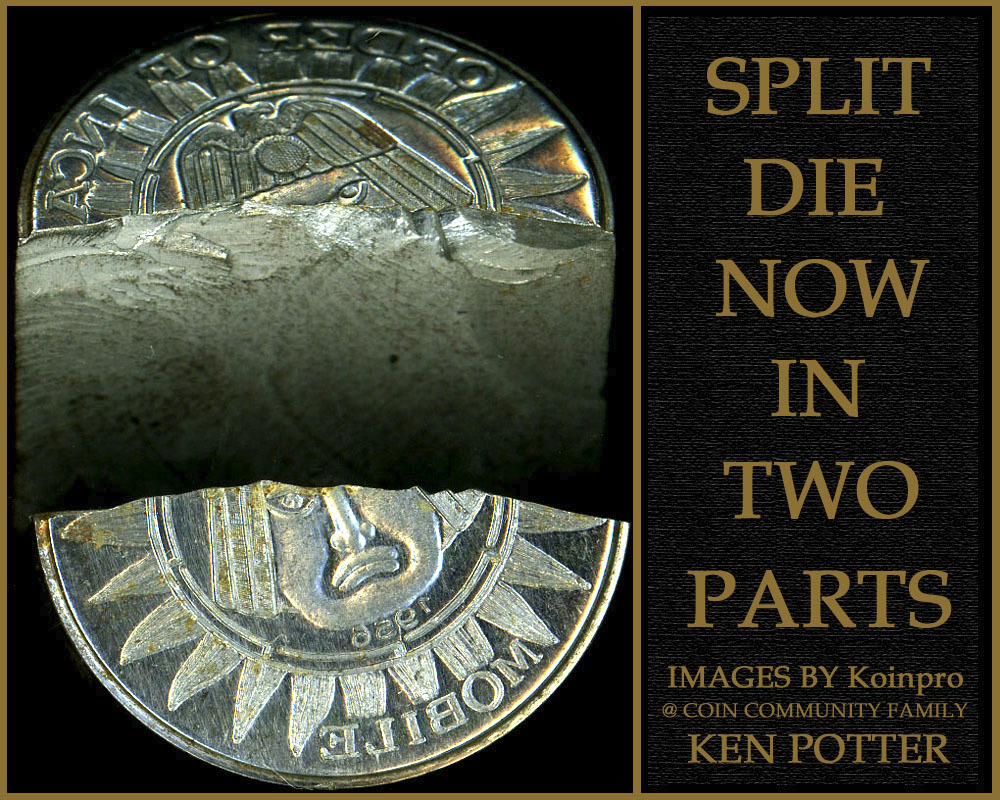 But when part of the die crack starts crumbling off the die, then we note a chip on the coins struck with it. Here is what an interior break is: (From Mike Diamonds web site) http://www.error-ref.com/?s=interior |
|
Pillar of the Community
United States
5964 Posts |
That is definitely a die break.
|
|
Pillar of the Community
United States
1781 Posts |
Maybe this will help explain how a Cud forms and what a die chip is. The below image is of a 1oz Silver Round with a so-called "Pre-Cud" die break or what I prefer to call a rim-to-rim die break. It's pointed out by the arrows. 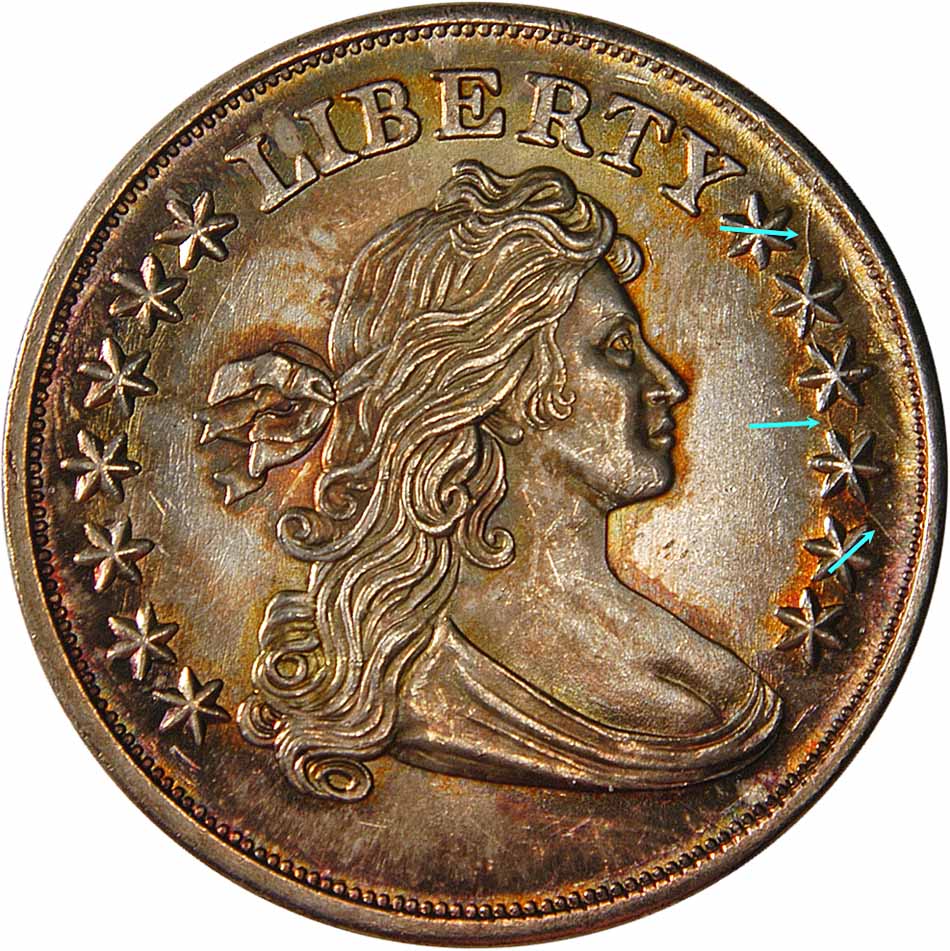 Below is the die from which the above silver round was struck but after the chuck of die "outside" the rim-to-rim die crack broke away. 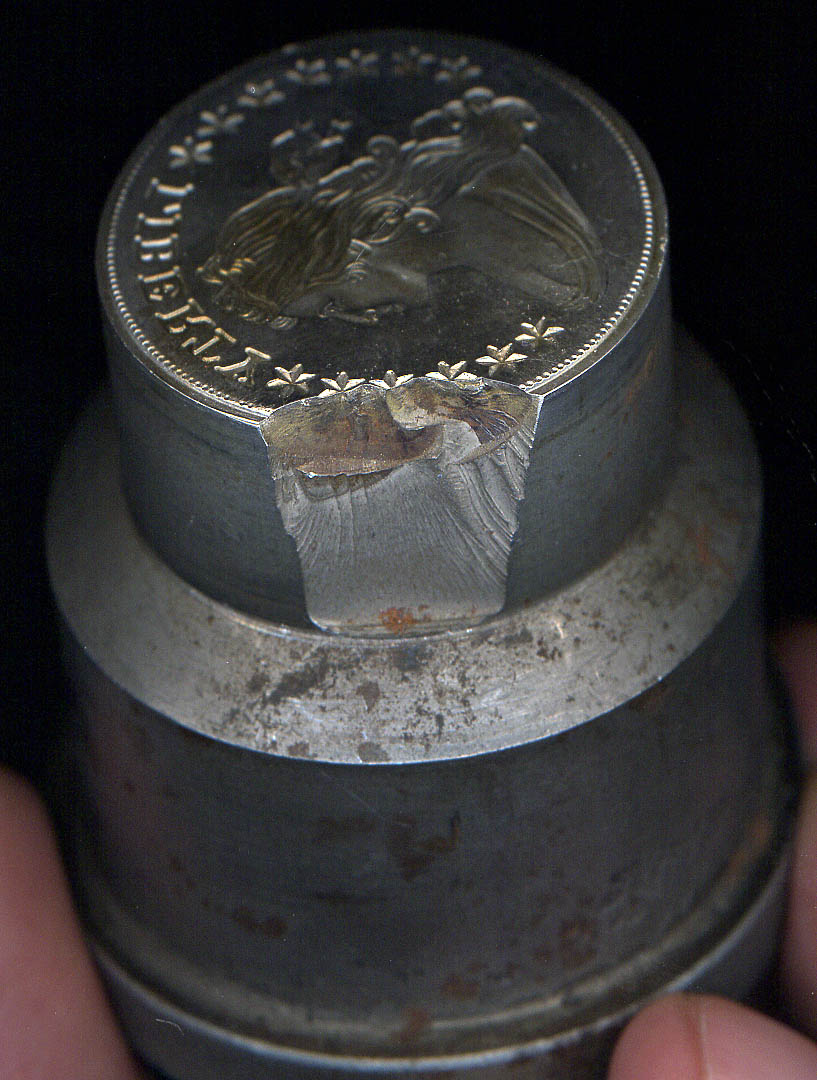 Below is a bronze medal struck from the same die after the Cud formed & a look at the face of the die.  Here is a 1929-D Standing Liberty quarter with a Die Break. In my opinion the term "Die Break" alone is sufficient to describe what it is but others feel compelled to call these "Interior Die Breaks" or the erroneous term "Interior Cud". 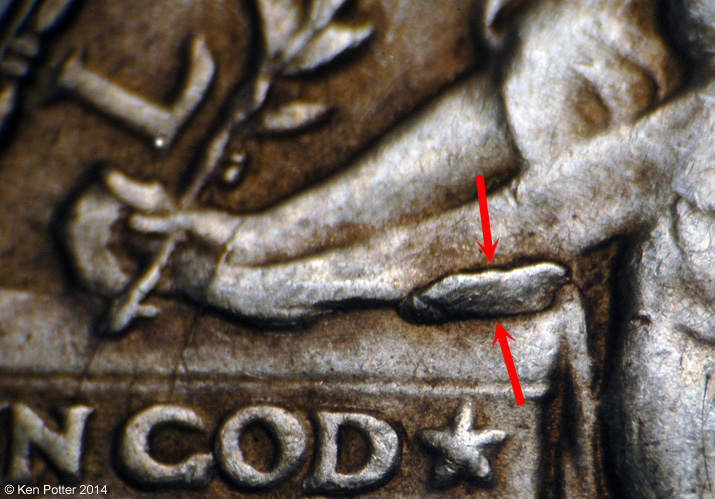 The term "Die Chip" simply describes a small die break; maximum size often subjective and/or depending on who is viewing the coin. The below "BIE" on this 1955-S is commonly described as a "die break" between the B and E of LIBERTY but it actually qualifies as being a "die chip." In effect, calling it a die break is correct but calling it a die chip is being more specific.  Edited by koinpro
08/24/2015 10:42 am
|
| |
Replies: 35 / Views: 3,354 |







 First Page


 Posted 08/23/2015 4:41 pm





