| Author |
 Replies: 16 / Views: 2,687 Replies: 16 / Views: 2,687 |
|
Valued Member
United States
134 Posts |
A small break, but it does seem to affect the rim. 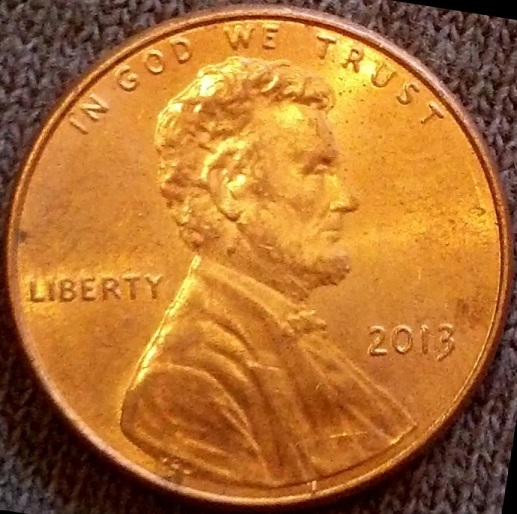 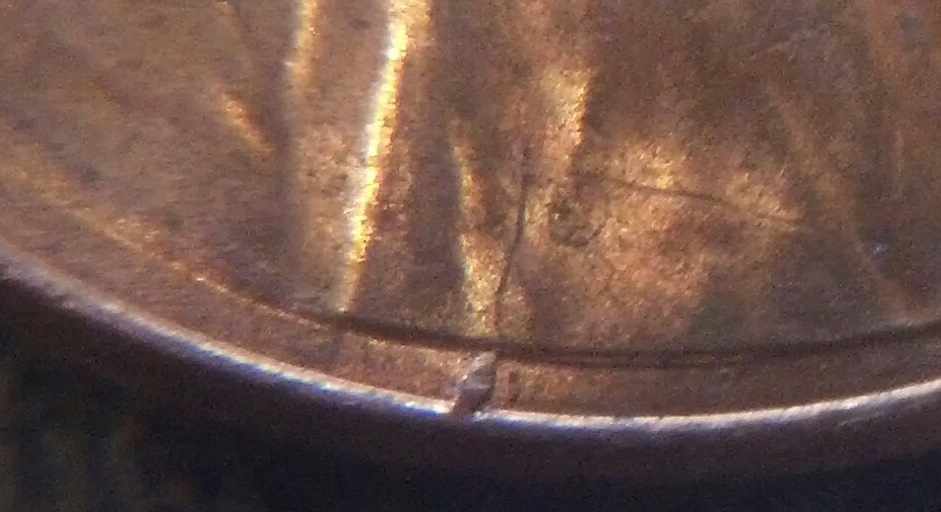 |
|
|
|
Pillar of the Community
United States
538 Posts |
It looks like a chip/crack to me.
|
|
Valued Member
Canada
488 Posts |
I'm going with PMD. Looks like metal from the rim pushed over the coin. |
|
Pillar of the Community
United States
2589 Posts |
I dont think its PMD, it looks like there is a die crack running north of the area in question |
|
Valued Member
Canada
488 Posts |
That was my first thought but the more I look it looks like a scratch.fallow through from what did the rim damage. Is it raised sheltie?
|
|
Pillar of the Community
United States
1807 Posts |
|
|
Valued Member
 United States
134 Posts |
It is a die crack with a chip. I just wondered if it would be considered a Cud due to the break affecting the rim. maybe this pic will help. I can try to get one of the rim, I have tried and failed before, lol I struggle with the photos.  |
|
Valued Member
Canada
488 Posts |
I think if it's on the rim its a Cud. |
|
Valued Member
United States
134 Posts |
It appears to me that it does affect the rim, however it is hard to tell for sure with the magnification I have available. Maybe the worlds smallest Cud? |
|
Bedrock of the Community
United States
62064 Posts |
Looks more like a die chip issue.
|
|
Pillar of the Community
 United States
5828 Posts |
Not a cud- I dont think this counts LOL. Looks like a nice sized die chip as well as some cracks ta boot! Not a bad find  |
|
Valued Member
United States
134 Posts |
Quote:
Looks more like a die chip issue. From cuds-on coins Definition: A Cud is a die break that involves the rim and at least a little bit of the adjacent field or design. Is a die chip not a break in the die coop? I have asked in previous posts how to differentiate between a die break and a die chip and still I do not know. Is the difference in the size of the affected area? I keep running into the terms "interior die break" and "die chip" on the forum. Some seem to use the terms loosely as if they are one in the same. I believe they are different, just not sure how to differentiate between the two. Edited by SheltieGuy1966
08/23/2015 10:52 pm
|
|
Pillar of the Community
United States
5964 Posts |
I think it's a crack leading to a break, and since it's on the rim, by definition it's a Cud. |
|
Pillar of the Community
United States
526 Posts |
I know that I am going to get some feedback on this statement, but here goes. Technically the anomaly being discussed here is a Cud, though very small, it is still a Cud. Why? It is a die break or in other words, a piece of die the is missing. This is the first qualification for a Cud. Second qualifier; the missing piece involves the rim and a small area of the interior of the die. With those two conditions being met, it is then a Cud and one that I would list on cuds-on-coins.com Please contact me if you are willing to share this information bu allowing me to put it on site. BJ Neff |
|
Pillar of the Community
United States
1781 Posts |
"IF" (and this is a big IF in that the images do not definitively but strongly suggest) this goes all the way to the rim, it is a Major Die Break or what we all call a Cud. I'd personally have to see better images of the rim or the coin to be 100% sure. Edited by koinpro
08/24/2015 12:16 pm
|
|
Valued Member
United States
319 Posts |
Quote:Why? It is a die break or in other words, a piece of die the is missing. This is the first qualification for a Cud. Second qualifier; the missing piece involves the rim and a small area of the interior of the die. Just defining a Cud, doesn't make this a Cud. I honestly don't see how anyone can say anything definitively with the pictures provided. Just looks like PMD to me, the rim pushed in and down. |
| |
Replies: 16 / Views: 2,687 |







 Posted 08/23/2015 8:48 pm





