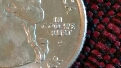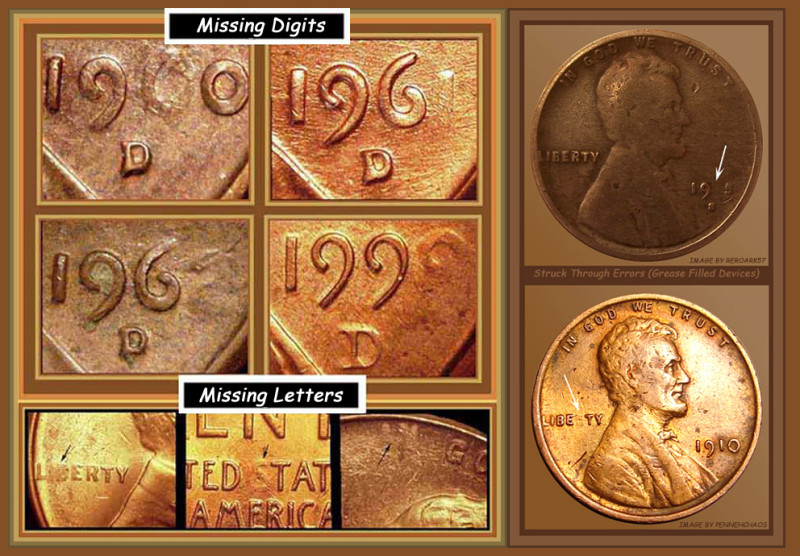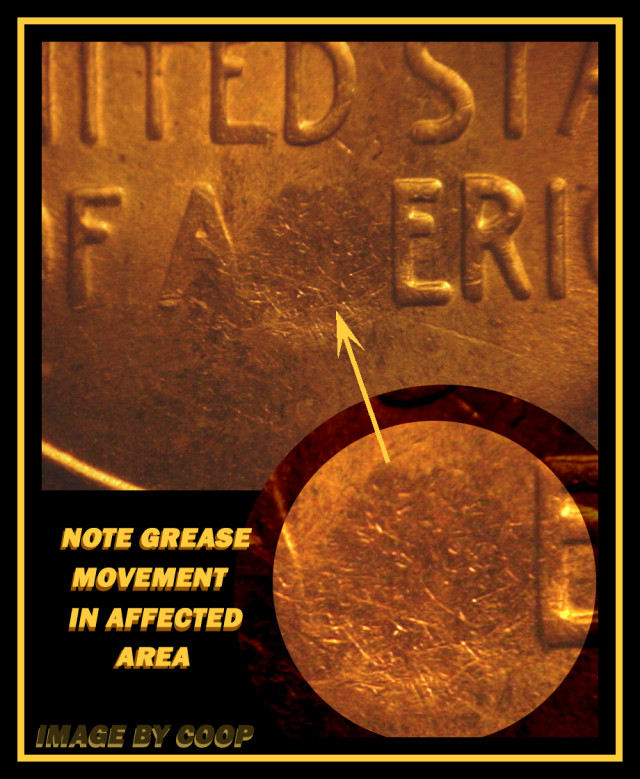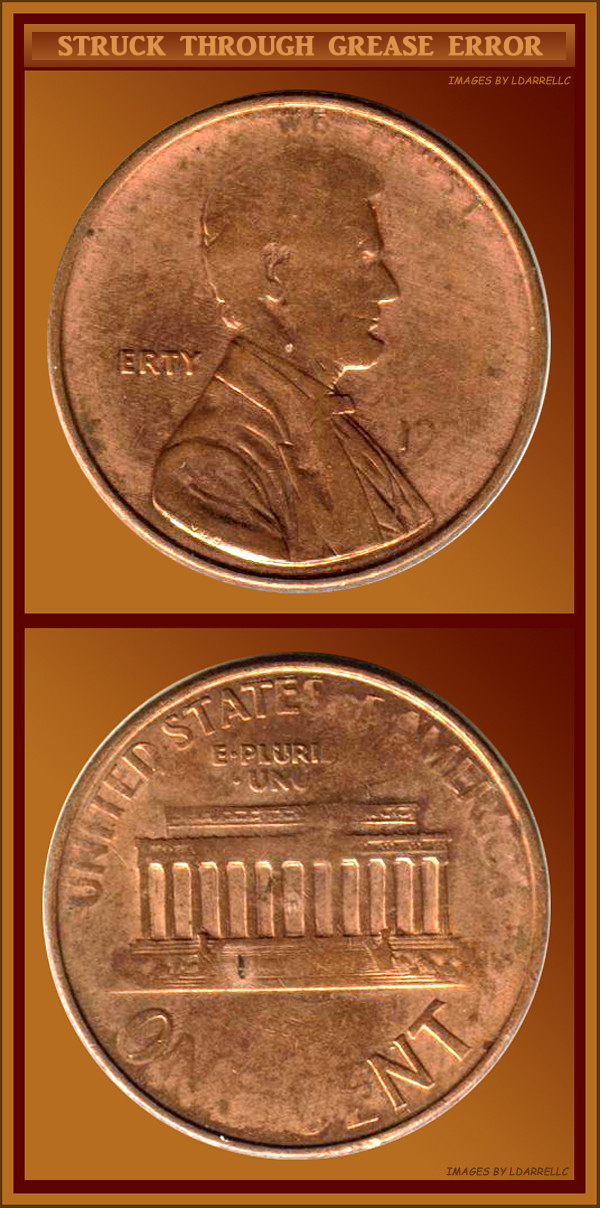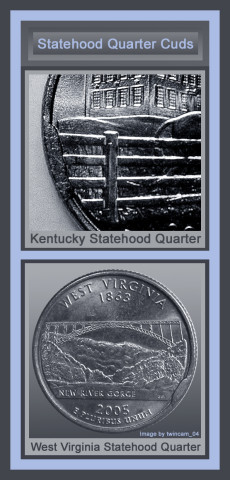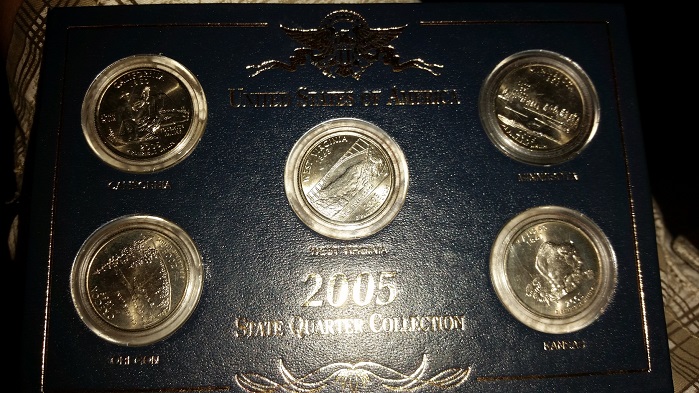


 to CCF.Tell your mom to stop wasting her money on these,they are almost always way overpriced. Yes they are legal tender. Color wise,could be plated or just toned.I don't know what you mean by missing


 Posted 09/11/2015 4:27 pm


Congrats on taking the first steps into coin collecting! You've come to a great place for learning.
As for the coin question you pose, I believe toning is more the reason why some of your State Quarters appear brownish gold. Toning is where the metal of the coin reacts to air, making the surface metal change from its original color. The plastic capsules the coins are stored in may not be airtight, allowing for toning to occur over time.
Also, some private companies can plated coins with other metals, like plating State Quarters with gold. Your coins do not look like that, but it is something you may see from time to time.
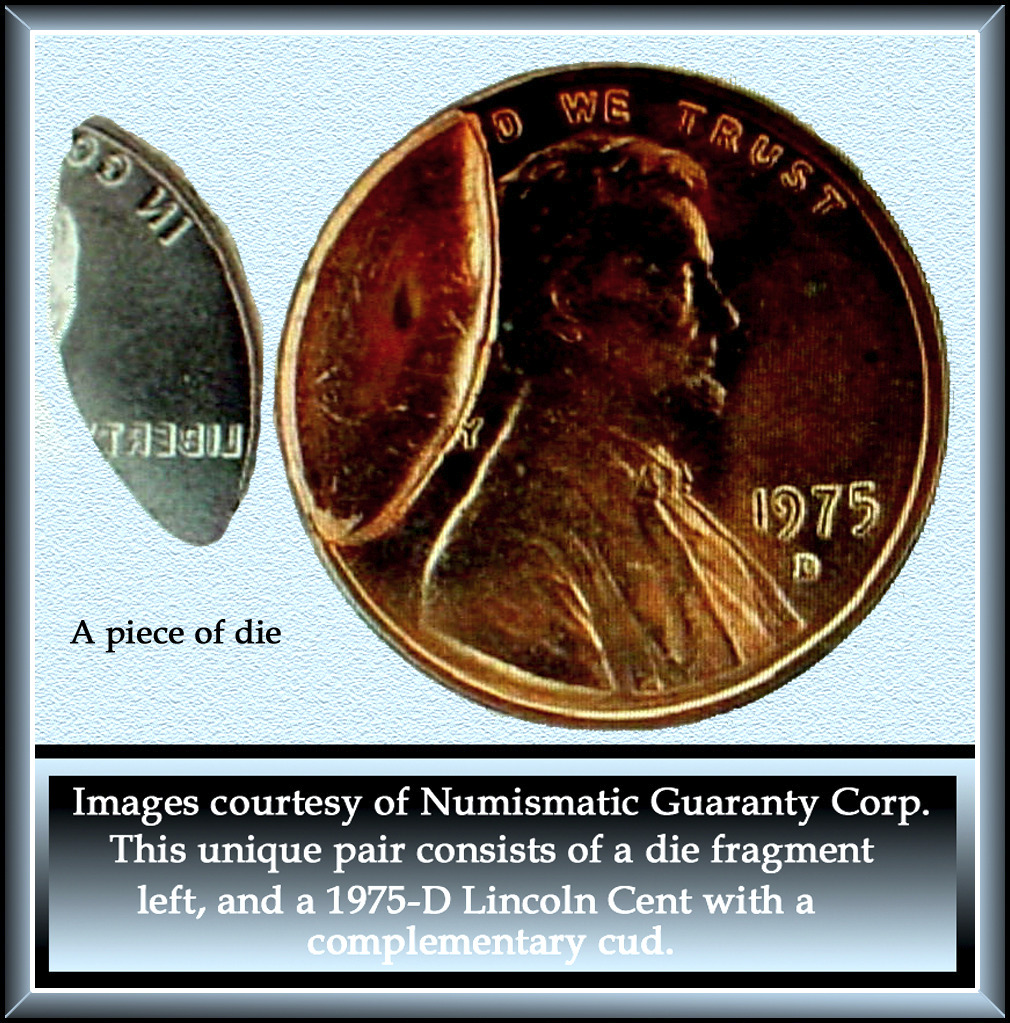
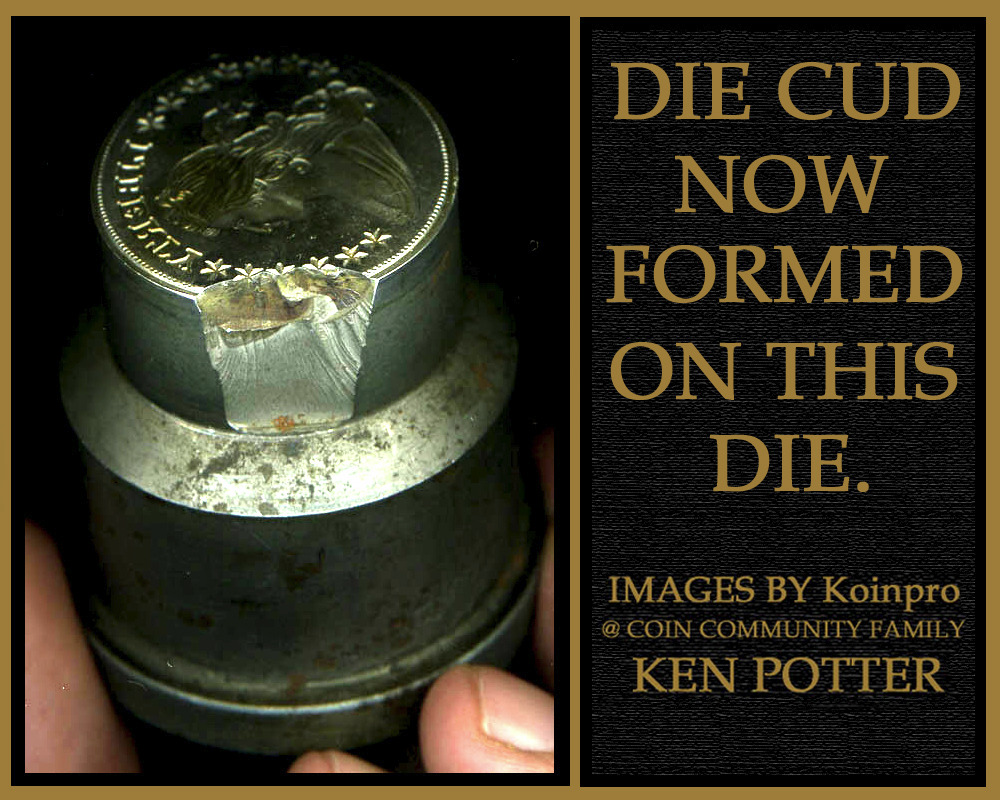
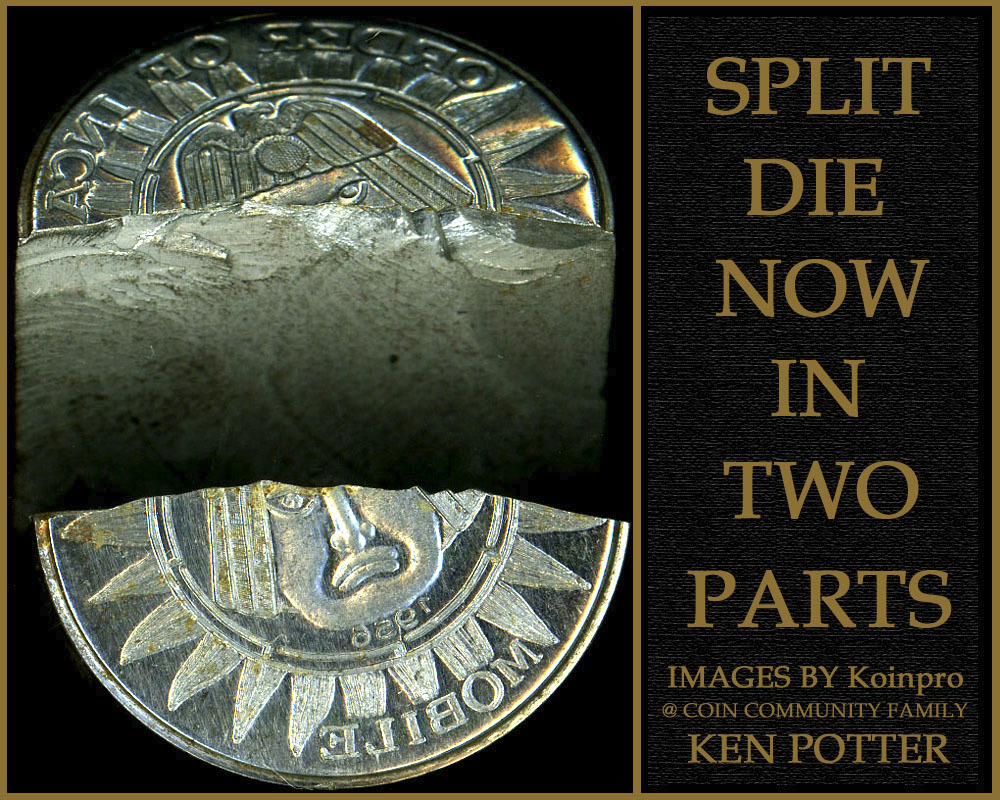
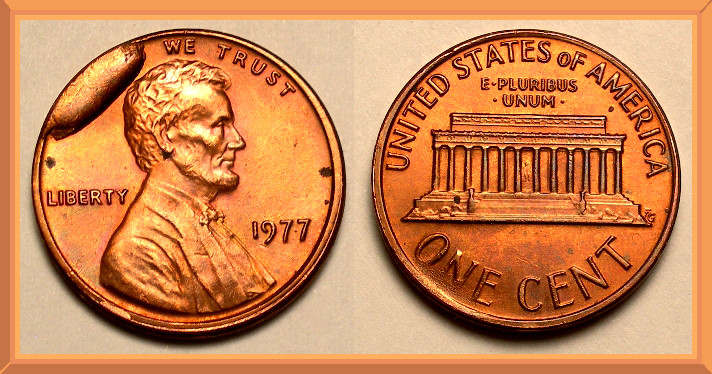
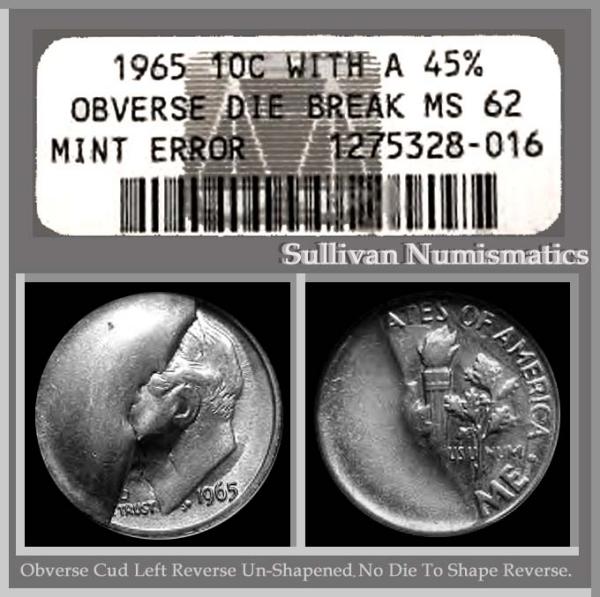
Now, as for the word Cud, "Strike It Rich" by Ken Potter and Dr. Brian Allen defines a Cud as a "broken die involving a piece that breaks away from the shank and extends inward into the design. The result is often what appears to be a blob of raised metal in the area where the broken chunk of the die fell out." I'll let someone else post a picture of a Cud since I do not have one on me at the time.
I believe the word you are looking for is clad or clading, which is the metal layers that create the planchet that most U.S. coins are struck on. In this case, I believe your State Quarters are experiencing toning of the metal, not an error.
As for the coin question you pose, I believe toning is more the reason why some of your State Quarters appear brownish gold. Toning is where the metal of the coin reacts to air, making the surface metal change from its original color. The plastic capsules the coins are stored in may not be airtight, allowing for toning to occur over time.
Also, some private companies can plated coins with other metals, like plating State Quarters with gold. Your coins do not look like that, but it is something you may see from time to time.
Now, as for the word Cud, "Strike It Rich" by Ken Potter and Dr. Brian Allen defines a Cud as a "broken die involving a piece that breaks away from the shank and extends inward into the design. The result is often what appears to be a blob of raised metal in the area where the broken chunk of the die fell out." I'll let someone else post a picture of a Cud since I do not have one on me at the time.
I believe the word you are looking for is clad or clading, which is the metal layers that create the planchet that most U.S. coins are struck on. In this case, I believe your State Quarters are experiencing toning of the metal, not an error.