| Author |
 Replies: 10 / Views: 1,608 Replies: 10 / Views: 1,608 |
|
|
New Member
United States
6 Posts |
Coin experts, please explain the poor star details...they are not worn, as I have seen MS65 graded SLDs of the same year showing the same weak strike pattern on the stars. Is the poor detail on the stars due to a dirty/clogged die, or a worn die. I would like to understand how/why this happens. Would this poor detail indicate this coin was struck toward the end of the year's pressing activity, or would the mint periodically clean the die or restore it and then again begin pressing perfectly detailed coins dated 1853? Question for any SLD experts, do all 1853 SLDs suffer from poor detail on the star pattern? I hope the photo shows...this is my first post to this forum. 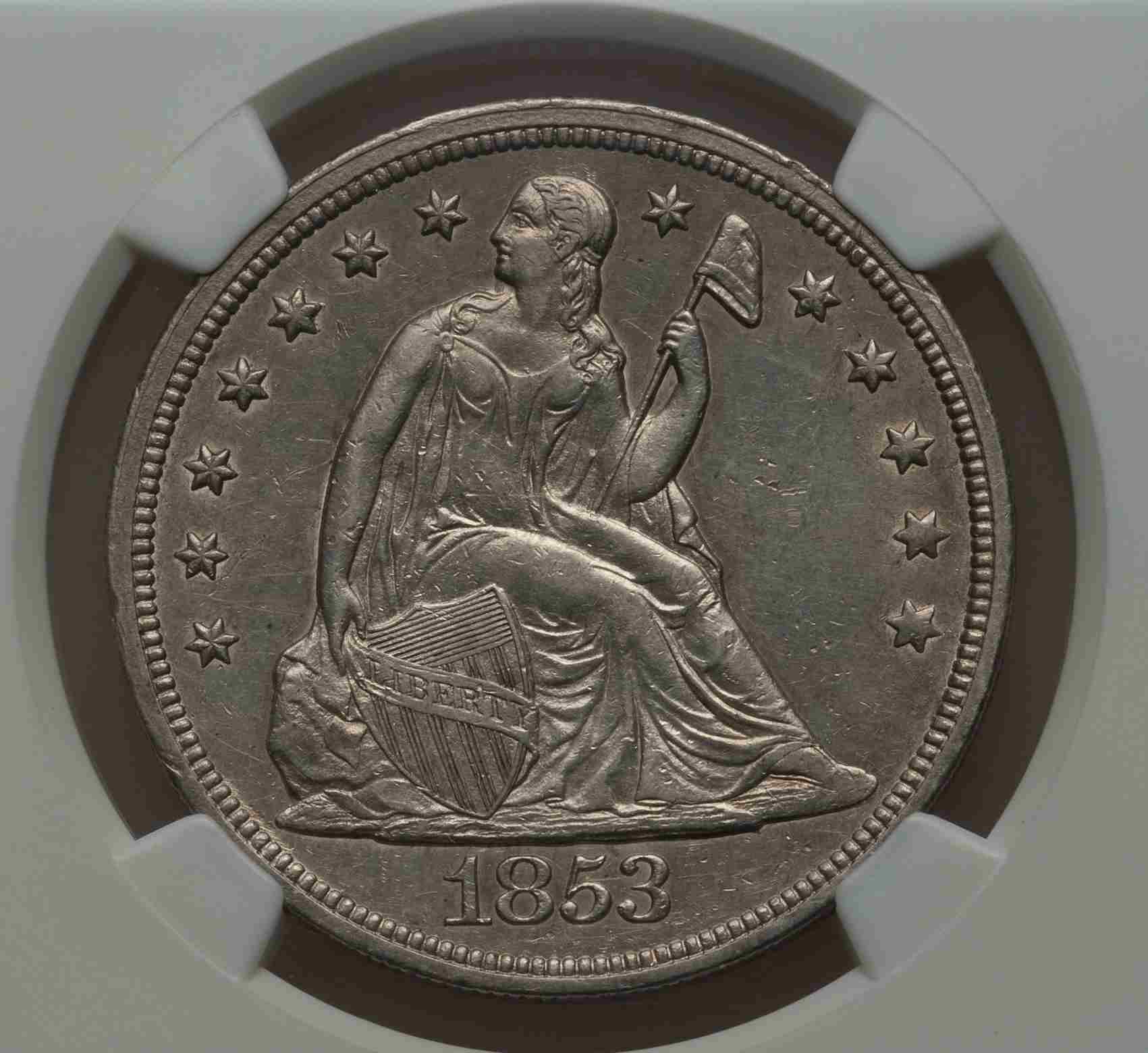 |
|
|
|
Pillar of the Community
United States
4963 Posts |
I'm no SLD expert, but I think that's just a weak strike. To answer your question about dies, there's no good way for the mint to 'fix' the dies- when the die is worn or damaged, the mint defaces and sometimes destroys it, and begins using a new die.
|
|
Pillar of the Community
United States
6370 Posts |
|
|
Pillar of the Community
United States
5825 Posts |
I agree with @Numisma and @TypeCoin971793.
Most likely a combination of the two situations with IMO in this case misaligned dies more responsible than a weak strike.
Why in this case?
Because stars 1 through 8 are largely well struck but 9-13 are lacking detail.
|
|
Pillar of the Community
United States
7729 Posts |
Uneven striking detail is not unusual with larger coins from this time frame. Technology wasn't near as advanced back then as it is today.
Anyway, the mint was in business to make coins, not satisfy collectors.
You have a very nice coin!
|
|
Bedrock of the Community
United States
17884 Posts |
I would think die faces slightly out of parallel. The weakest area is between the 13th star and the foot. 180 off from that the strike is at it's sharpest and there is even some finning there. Die faces not parallel with them closest around star 7 and farthest apart around the foot. is there corresponding strength and weakness in those areas on the reverse?
|
|
Pillar of the Community
United States
4963 Posts |
|
|
New Member
 United States
6 Posts |
Dies being not parallel seems like such a logical answer...I had never even thought of that. However, can that even be possible...we'd have to have an understanding of how a 1850s era press held the die. Anyone? Additionally, I'm not even sure the reverse image (see below) supports that thesis...or does it? Thanks for all the replies...I have a continuing interest in any aspect of this coin (admittedly, it is "improperly cleaned"), so if any readers have any view, please post. 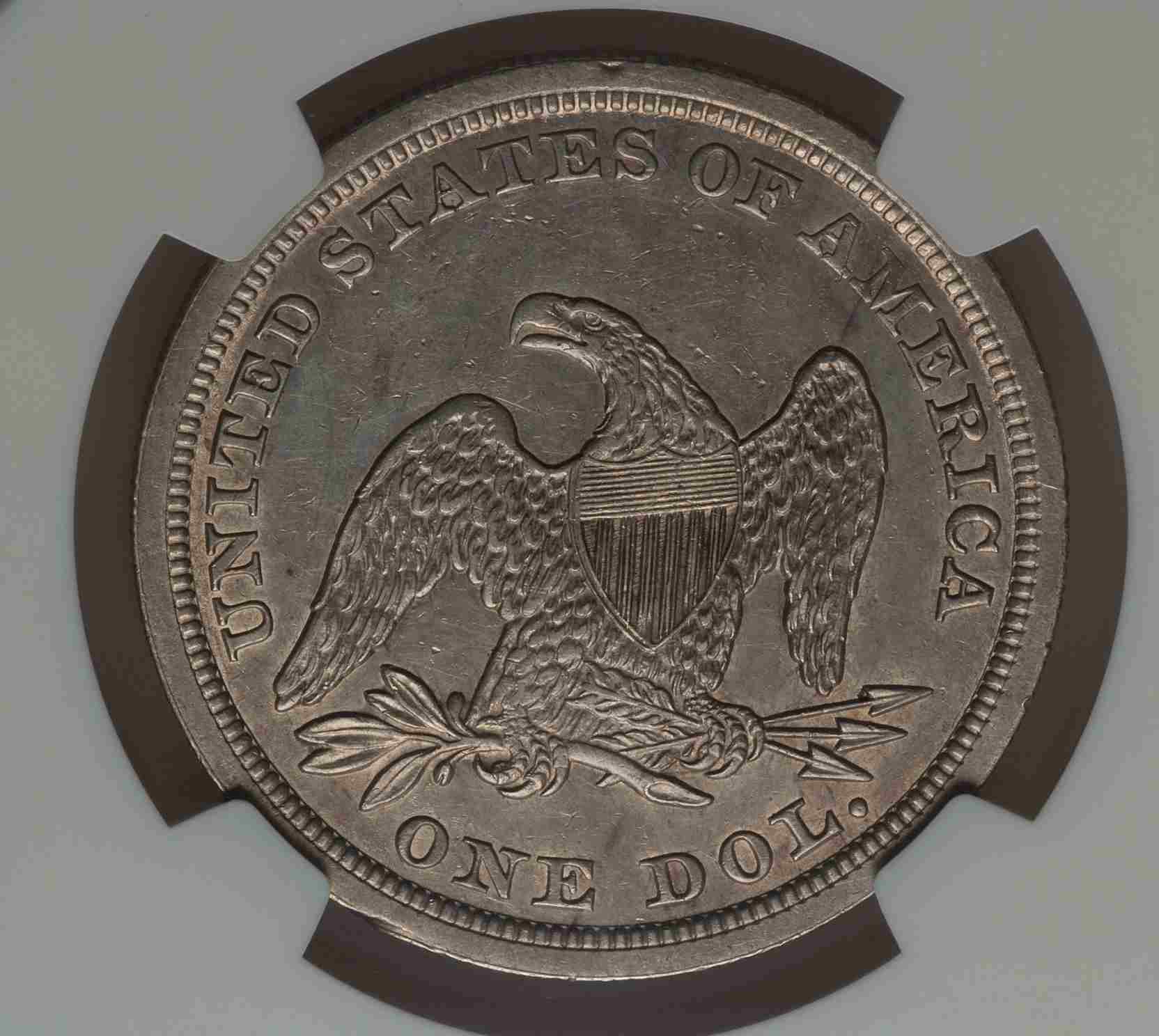 |
|
New Member
United States
6 Posts |
Hmmmm, I just realized that the weakness in the stars on the obverse mirrors the weakness in the "AM" on the reverse (i.e., the reverse is upside down), adding credibility to the thesis that the dies were not aligned on parallel planes.
|
|
Bedrock of the Community
United States
17884 Posts |
All it would take to render the die faces out of parallel would be a tiny piece of stray metal under the base of the anvil die in the die cup.
|
|
Pillar of the Community
United States
6429 Posts |
 The misaligned die theory sounds plausible. Perhaps the typical conditions at the mint in 1853 involved lots of dirt and grit in the machines and slight mis-alignments were just business as usual. In general it is common to see weakly-struck stars on Seated Liberty coins. Even proofs sometimes have stars with incomplete radial lines. Large cents from that era are usually found with at least some star detail weakness. I presume you know the 1853 is a somewhat better date in the Seated dollar series. Your coin looks to have uncirculated detail and even with an "improper cleaning" determination from NGC it should be worth a couple thousand dollars. Most collectors would be proud to have it in their collection. Thank you for sharing! |
| |
Replies: 10 / Views: 1,608 |
|







 Posted 10/16/2015 06:54 am





