

 Posted 10/17/2015 05:33 am


This is a great idea for a thread.
The historical events surrounding coinage are a main interest for me and one of my main collecting drives.
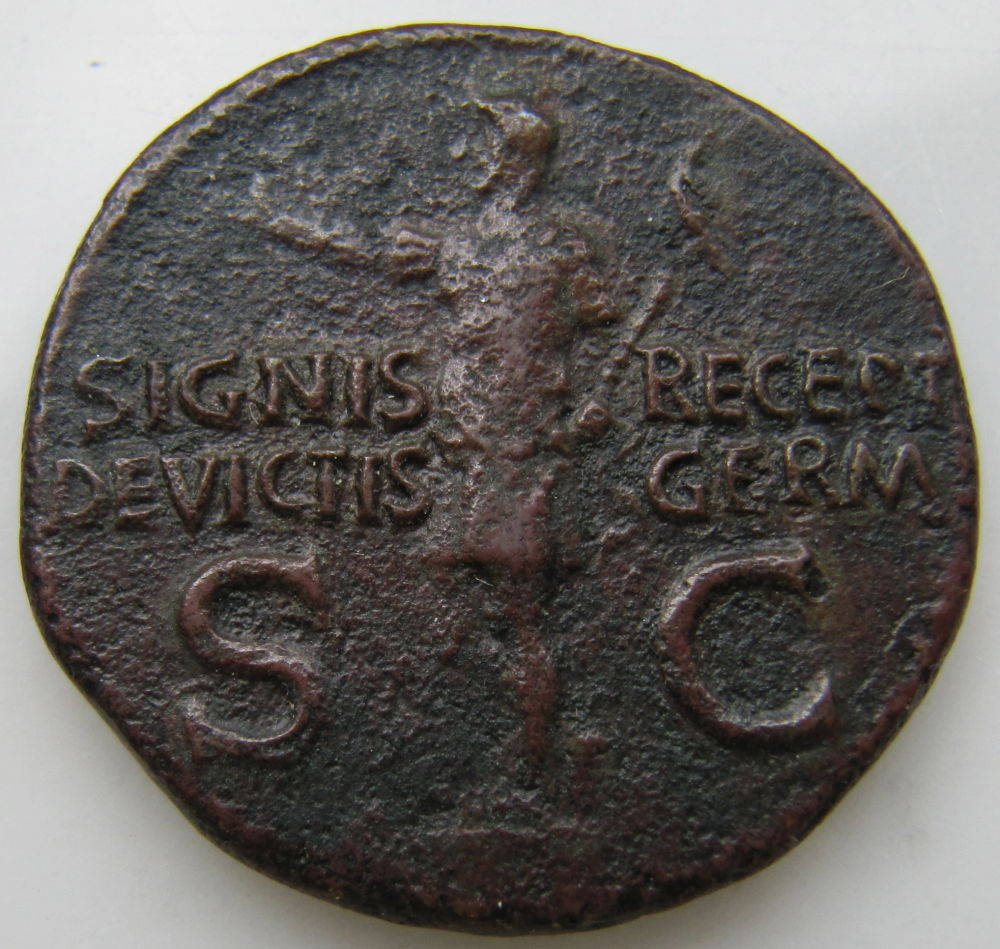
Here is a historical coin minted 2000 years ago during the reign of the emperor Caligula (37-41. The coin, a dupondius, honors the roman general Germanicvs and commemorates the return of the Legionary Standards lost by Rome in a battle some 10 years before in Germania.
Here is a write-up I did describing the events of this battle and its historical implications for the course of German and european history.
''Some events in history are so significant that they have the power to change the course of history. Napoleon's defeat at Waterloo, and more recently, the Landing of allied forces at Normandy to liberate Europe from the Horrors of Nazi Germany constitute such events.
In the much more distant past significant events have also occurred which altered the course of history. The utter defeat and loss of 3 Roman Legions in the dark forests of Germany in the year 9 A.D was one such event.
2000 years ago, in the depths of the dark and forbidding woods of northern Germany, a Roman army commanded by Publius Quinctilius Varus, Roman Governor of the province of Germania Superior was defeated in such a crushing battle against unified Germanic tribes, that the legions he commanded are sometimes referred to as the lost legions.
Significant also are the circumstances under which this happened: The Roman conquest of Gallia by Julius Caesar was over, and Emperor Octavian Augustus, his designated successor, then turned his attention to Germania. This proceeded almost unincumbered, the resistance of the local barbaric gemanic tribes was at first feeble and disorganized. Rome proceed to pacify and convert Germania, including all lands east of the Rhine River, and as far east as the river Wesser and Elbe into a regular Roman province. Varus, who had previously been the succesful Roman Legate or Governon of Syria, was sent to Germania to administer the new province. His rule was efficient but despotic. The raising of tribute and taxes imposed on the local population brutal. Soon discontent started to simmer among the local tribes. At this stage a local chieftain by the name of Arminius, of the tribe of the Cherusqui, who had actually been raised in Rome as son of a Barbaric chieftain, and who was welll versed in Roman customs and warfare, started to conceive the idea to drive the Roman invaders out of Germania. Arminius accomplished what until then had not been possible: he managed to unify the various tribes - the Cherusqui, Chatii, Marser, and Bruketerer who were usually busy fighting against each other, into a unified force to face Rome. It was a dangerous move for Arminius as he also enjoyed the trust of the Romans. This he used with advantage and ruse.
So it came to pass that Arminius, acting as a guide during the retreat of the roman armies to their winter quarters along the Rhine, managed to convince Varus to take a route which would cause the Romans to be dispersed along a narrow and densely wooded stretch of marshy lands.
The Roman force was very substantial, consisting of 3 legions: the XVII, XVIII, and XIX Legions, in addition to some cavalry units and auxiliary troops. Fully 1/8th of the total Roman army was assembles that day.
To this number were added many camp followers and other civilians. According to the Roman historians Tacitus and Velleius Paterculus, the total number was 20000 to 25000. The route chosen by Varus on Arminius' advice caused the Roman army to be dispersed along a line estimated at 15-20 kilometer long. Arminius then gave his united forces, who had been watching the painful progress of the roman army, the sign to attack. It was series of attack and retreat actions which lasted a full 2 days. Hordes of barbarians fighting on familiar terrain descended upon the unexpecting Roman Legions. The Romans heroically organized whatever resistance was possible, led by their Centurions, but at the end they were worn down by fatigue, and their movements impeded by the difficult terrain. The massacre was terrible. Very few of Varus' followers were able to escape. Others are reported to have deserted their comrades under these desperate circumstances. Varus himself, followed by his top commanders commited suicide by throwing themselves on their swords. Of the few survivors, most were forced into slavery, while the centurions who were captured alive were sacrificed to the barbarian gods upon their altars, according to their rituals.
This battle has come to be known as the Battle of the Teutoburger Forest. This location was the best estimate of where the battle actually took place, until the 1980's, when thanks to the research and of an english army officer stationed in Germany, another location - the region known as Kalkriese, in the vicinity of modern day Osnabrück - has now been accepted as the location of the battle.
News of this terrible defeat took about 3 weeks to reach Rome. Emperor Octavian Augustus, upon hearing the news, went into a fit of grief and despair, reportedly banging his head against the walls of his palace and screaming „Quintile Vare, Legiones Rede" „Varus, give me back my legions!"
The Romans were not to avenge this ignomious defeat until 15/16 A.D, when Augustus' successor, emperor Tiberius nominated the able general Germanicus to push back the rebellious tribes and equally importantly, to restore Roman honour by retrieving the legionary Eagles, or standards which had been taken by Arminius.
Germanicus mounted a vigorous attack, crossing the Rhine into Germania and inflicting serious loss to Arminius and his forces. He arrived at the place of the battle, where heaps of bleached bones where still scattered around, and the skulls and torsos of the Centurions who had been scarified had been nailed to the trees. At the end, and after much loss of life and at tremendous cost, the campaign was not conclusive, but Germanicus did manage to retake 2 of the 3 legionary standards. Tiberius eventually recalled Germanicus, and withdrew his legions to their main quarters and forts along the Rhine river. Tiberius' decision effectively relinquished control of the lands east of the Rhine to the unified Germanic tribes under Arminius, and in doing so altered the course of history in this part of central Europe. This epic battle also gave rise to a unique sense of unity, pride and nationalism to what was, many centuries later, to become what is now Germany. German historians and Philosophers, commencing around the 17th century „rediscovered'' Arminius feats' and renamed him „Hermann der Etrusquer". Monuments to Hermann and Germania went up in many places, with a massive monument in the Teutoburger forest erected during the Prussian era to commemorate Hermann's feats. This nationalism and sense of unity undoubtedly played a part also when the various German States were finally united by Chancellor Bismarck in 1870. Thus, the consequences of this battle and actions of Arminius of so long ago in some way contributed to shape Germany, and the course of European history many centuries later.
The re-capture and return of 2 of the legionary standards by Germanicus is commemorated in this Dupondius. The last eagle was re-captured many years later around 40 a.d. The loss of the legions themselves was eventually overcome, but the painful memory of their loss was not: the Romans never again assigned the numbers of these legions: XVII, XVII and XIX to any other legion. It is said that the fact that these were some of the very few legions for which a name is not known, is due to the fact that the pain and shame of their loss was so deep, that all memory of their existence was forever to be forgotten''.
This dupondius commemorates the return of the legionary Eagles.
The historical events surrounding coinage are a main interest for me and one of my main collecting drives.
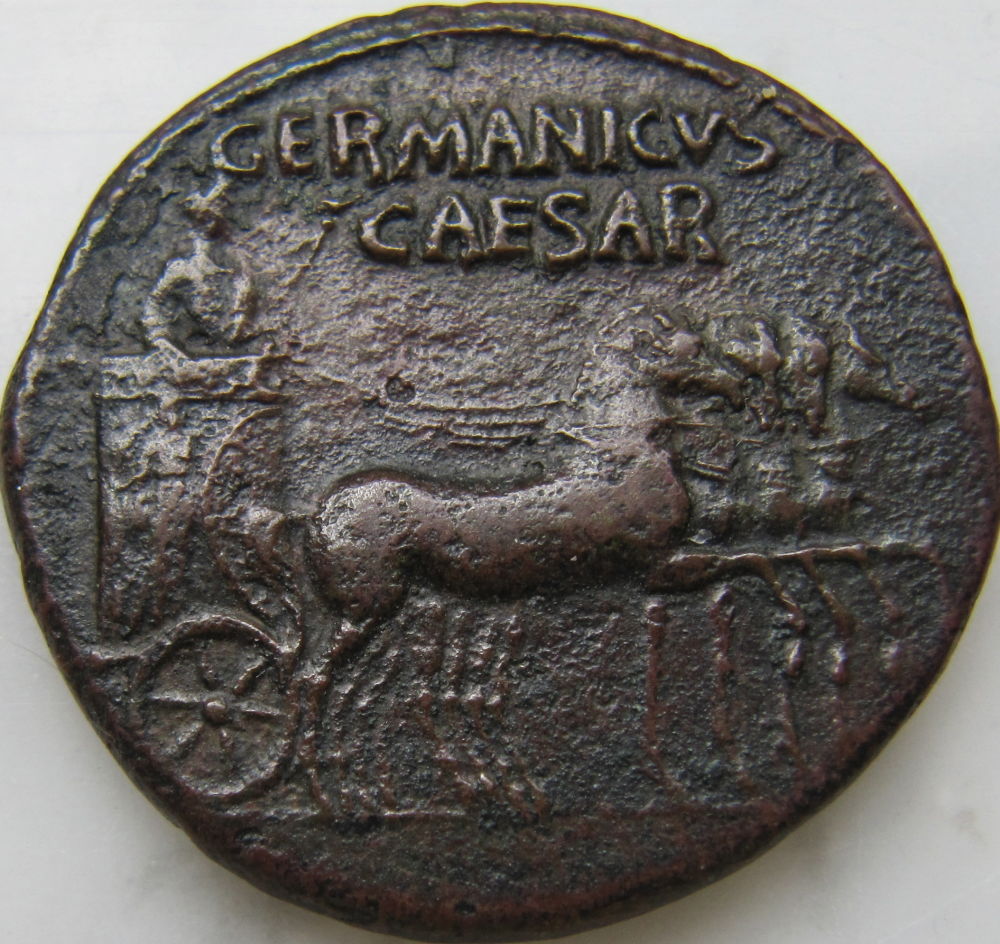
Here is a historical coin minted 2000 years ago during the reign of the emperor Caligula (37-41. The coin, a dupondius, honors the roman general Germanicvs and commemorates the return of the Legionary Standards lost by Rome in a battle some 10 years before in Germania.
Here is a write-up I did describing the events of this battle and its historical implications for the course of German and european history.
''Some events in history are so significant that they have the power to change the course of history. Napoleon's defeat at Waterloo, and more recently, the Landing of allied forces at Normandy to liberate Europe from the Horrors of Nazi Germany constitute such events.
In the much more distant past significant events have also occurred which altered the course of history. The utter defeat and loss of 3 Roman Legions in the dark forests of Germany in the year 9 A.D was one such event.
2000 years ago, in the depths of the dark and forbidding woods of northern Germany, a Roman army commanded by Publius Quinctilius Varus, Roman Governor of the province of Germania Superior was defeated in such a crushing battle against unified Germanic tribes, that the legions he commanded are sometimes referred to as the lost legions.
Significant also are the circumstances under which this happened: The Roman conquest of Gallia by Julius Caesar was over, and Emperor Octavian Augustus, his designated successor, then turned his attention to Germania. This proceeded almost unincumbered, the resistance of the local barbaric gemanic tribes was at first feeble and disorganized. Rome proceed to pacify and convert Germania, including all lands east of the Rhine River, and as far east as the river Wesser and Elbe into a regular Roman province. Varus, who had previously been the succesful Roman Legate or Governon of Syria, was sent to Germania to administer the new province. His rule was efficient but despotic. The raising of tribute and taxes imposed on the local population brutal. Soon discontent started to simmer among the local tribes. At this stage a local chieftain by the name of Arminius, of the tribe of the Cherusqui, who had actually been raised in Rome as son of a Barbaric chieftain, and who was welll versed in Roman customs and warfare, started to conceive the idea to drive the Roman invaders out of Germania. Arminius accomplished what until then had not been possible: he managed to unify the various tribes - the Cherusqui, Chatii, Marser, and Bruketerer who were usually busy fighting against each other, into a unified force to face Rome. It was a dangerous move for Arminius as he also enjoyed the trust of the Romans. This he used with advantage and ruse.
So it came to pass that Arminius, acting as a guide during the retreat of the roman armies to their winter quarters along the Rhine, managed to convince Varus to take a route which would cause the Romans to be dispersed along a narrow and densely wooded stretch of marshy lands.
The Roman force was very substantial, consisting of 3 legions: the XVII, XVIII, and XIX Legions, in addition to some cavalry units and auxiliary troops. Fully 1/8th of the total Roman army was assembles that day.
To this number were added many camp followers and other civilians. According to the Roman historians Tacitus and Velleius Paterculus, the total number was 20000 to 25000. The route chosen by Varus on Arminius' advice caused the Roman army to be dispersed along a line estimated at 15-20 kilometer long. Arminius then gave his united forces, who had been watching the painful progress of the roman army, the sign to attack. It was series of attack and retreat actions which lasted a full 2 days. Hordes of barbarians fighting on familiar terrain descended upon the unexpecting Roman Legions. The Romans heroically organized whatever resistance was possible, led by their Centurions, but at the end they were worn down by fatigue, and their movements impeded by the difficult terrain. The massacre was terrible. Very few of Varus' followers were able to escape. Others are reported to have deserted their comrades under these desperate circumstances. Varus himself, followed by his top commanders commited suicide by throwing themselves on their swords. Of the few survivors, most were forced into slavery, while the centurions who were captured alive were sacrificed to the barbarian gods upon their altars, according to their rituals.
This battle has come to be known as the Battle of the Teutoburger Forest. This location was the best estimate of where the battle actually took place, until the 1980's, when thanks to the research and of an english army officer stationed in Germany, another location - the region known as Kalkriese, in the vicinity of modern day Osnabrück - has now been accepted as the location of the battle.
News of this terrible defeat took about 3 weeks to reach Rome. Emperor Octavian Augustus, upon hearing the news, went into a fit of grief and despair, reportedly banging his head against the walls of his palace and screaming „Quintile Vare, Legiones Rede" „Varus, give me back my legions!"
The Romans were not to avenge this ignomious defeat until 15/16 A.D, when Augustus' successor, emperor Tiberius nominated the able general Germanicus to push back the rebellious tribes and equally importantly, to restore Roman honour by retrieving the legionary Eagles, or standards which had been taken by Arminius.
Germanicus mounted a vigorous attack, crossing the Rhine into Germania and inflicting serious loss to Arminius and his forces. He arrived at the place of the battle, where heaps of bleached bones where still scattered around, and the skulls and torsos of the Centurions who had been scarified had been nailed to the trees. At the end, and after much loss of life and at tremendous cost, the campaign was not conclusive, but Germanicus did manage to retake 2 of the 3 legionary standards. Tiberius eventually recalled Germanicus, and withdrew his legions to their main quarters and forts along the Rhine river. Tiberius' decision effectively relinquished control of the lands east of the Rhine to the unified Germanic tribes under Arminius, and in doing so altered the course of history in this part of central Europe. This epic battle also gave rise to a unique sense of unity, pride and nationalism to what was, many centuries later, to become what is now Germany. German historians and Philosophers, commencing around the 17th century „rediscovered'' Arminius feats' and renamed him „Hermann der Etrusquer". Monuments to Hermann and Germania went up in many places, with a massive monument in the Teutoburger forest erected during the Prussian era to commemorate Hermann's feats. This nationalism and sense of unity undoubtedly played a part also when the various German States were finally united by Chancellor Bismarck in 1870. Thus, the consequences of this battle and actions of Arminius of so long ago in some way contributed to shape Germany, and the course of European history many centuries later.
The re-capture and return of 2 of the legionary standards by Germanicus is commemorated in this Dupondius. The last eagle was re-captured many years later around 40 a.d. The loss of the legions themselves was eventually overcome, but the painful memory of their loss was not: the Romans never again assigned the numbers of these legions: XVII, XVII and XIX to any other legion. It is said that the fact that these were some of the very few legions for which a name is not known, is due to the fact that the pain and shame of their loss was so deep, that all memory of their existence was forever to be forgotten''.
This dupondius commemorates the return of the legionary Eagles.
Edited by GERMANICVS
10/17/2015 05:45 am
10/17/2015 05:45 am