| Author |
 Replies: 7 / Views: 3,004 Replies: 7 / Views: 3,004 |
|
|
Valued Member
United States
220 Posts |
This is my French Guiana: French Colony. Cayenne 2 Sous 1789-A, KM# 1. My question is whether this coin is a contemporary counterfeit as described in Krause. It doesn't look like any of the pictures of a 2 Sous that I can find. It doesn't look like billon either, but I will admit I have no idea what the metal is, whether copper or brass, or brassy billon. The strike looks weak, the crown looks very different, and of course "many die varieties exist". Anyone out there familiar with these and can shed some light on what I have? 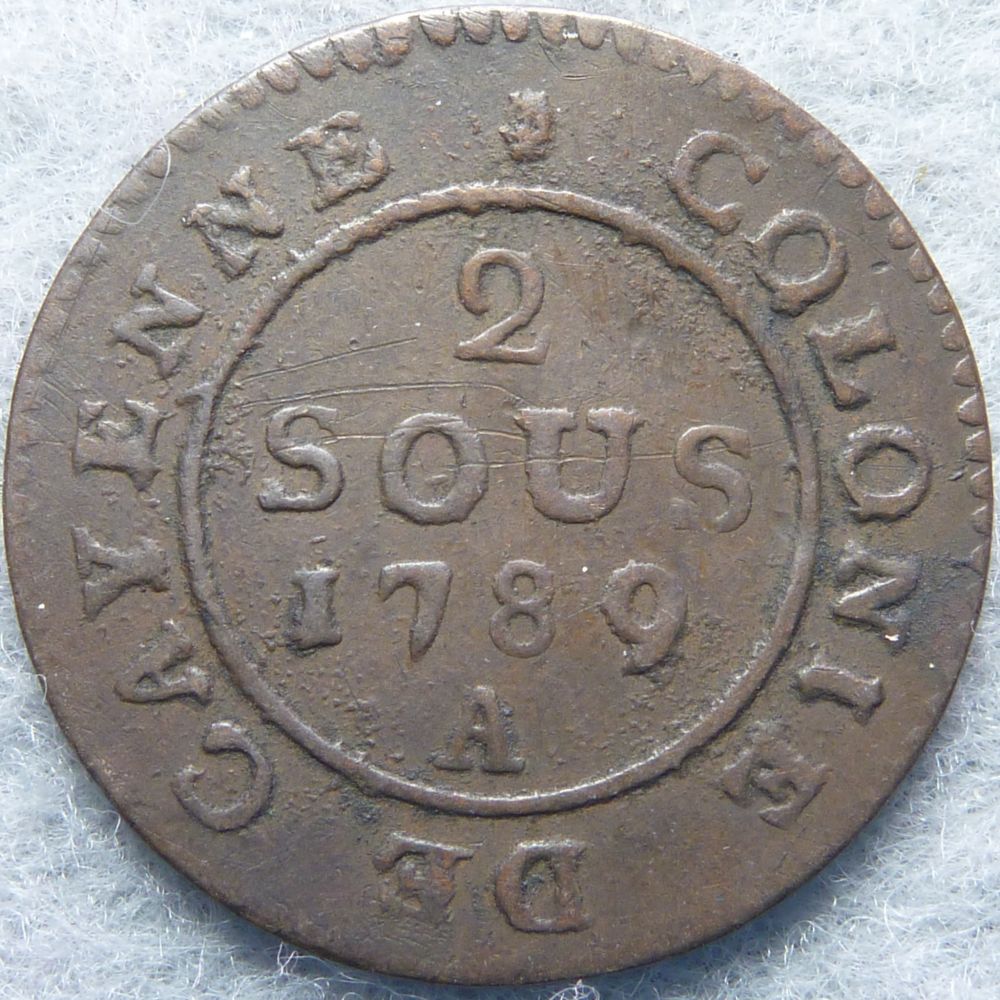 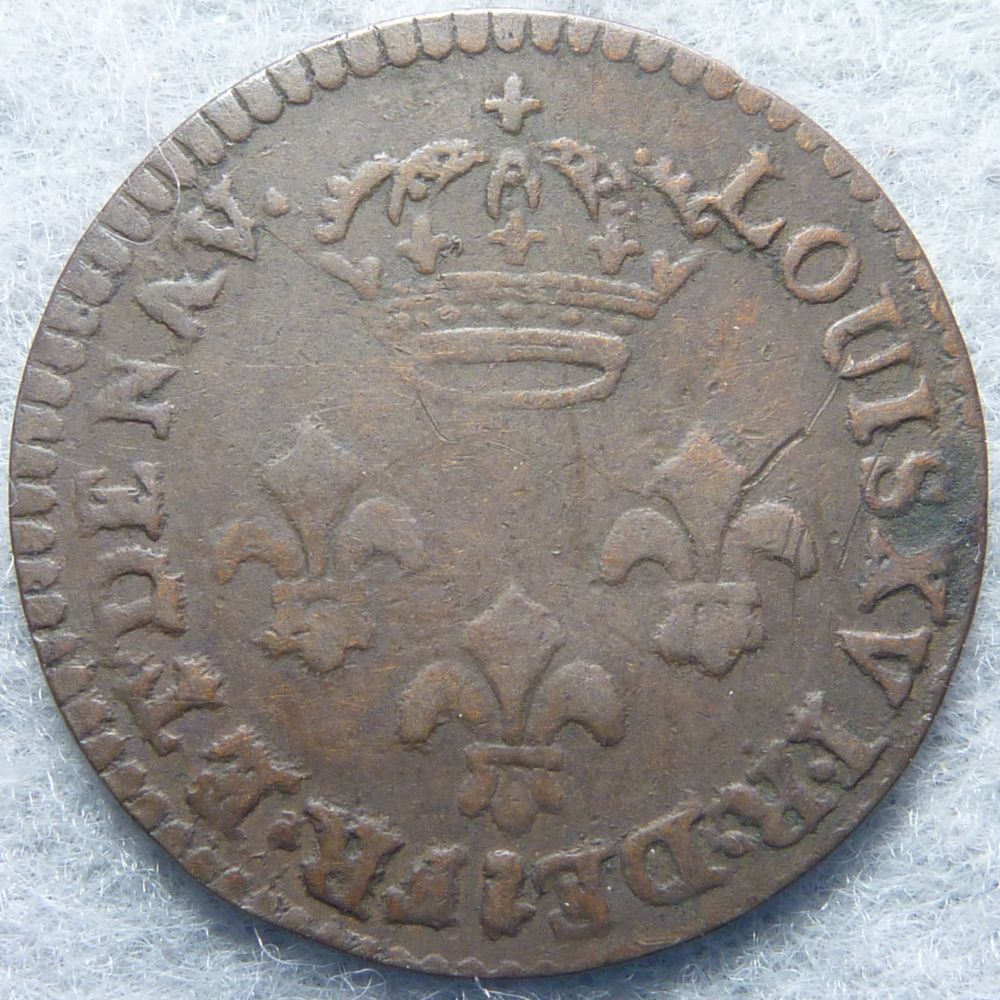 |
|
|
|
Pillar of the Community
 United States
1950 Posts |
Not an expert on French Colonial at all, but I have seen many billon pieces end up as a similar color, usually from many years in storage in coin envelopes... I have seen that with quite a few German States issues
|
|
Valued Member
 United States
220 Posts |
Good call, yes, this spent many years in a small coin envelope. So billon is a possibility, thanks!
|
|
Pillar of the Community
United States
3363 Posts |
cgb.fr has 11 1789 French Guinea 2 sous in their archives, real and fake. The real ones are billon. Unfortunately yours doesn't look like any of them. My guess is that yours a bad contemporary copper fake. Here's a good copper fake: http://www.cgb.fr/guyane-francaise-...25898,a.htmlGiven the high mintage, the contemporary fakes are worth as much as the real ones, in the $10-20 range. "Two minutes ago I would have sold my chances for a tired dime." Fred Astaire
Edited by thq
11/06/2015 7:57 pm
|
|
Pillar of the Community
Hong Kong
1270 Posts |
I don't know there are counterfeits of this coin. Yes, Thryan, I agree your coin is a contemporary counterfeit. Here I show my collection to seek your opinion, is a counterfeit or original? 1.72gr., 22.4mm. 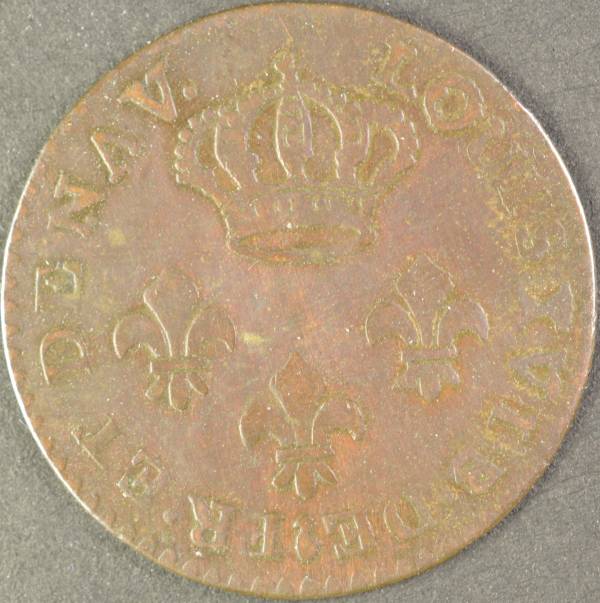 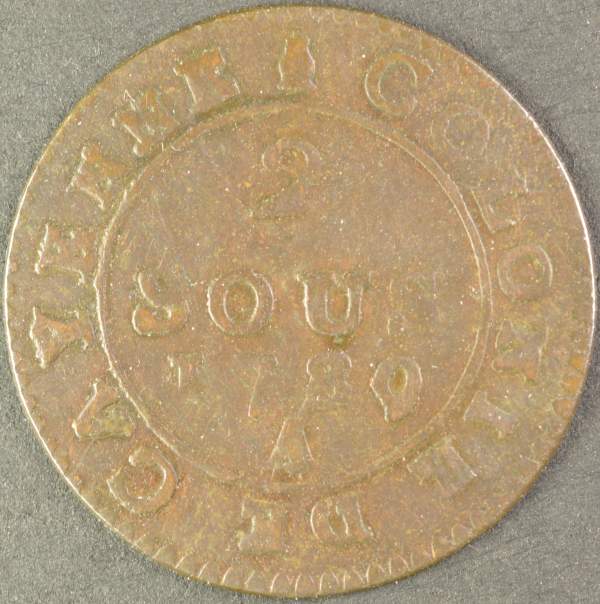 |
|
Valued Member
United States
220 Posts |
I have no idea, yours looks a lot like all of the other 2 sous I see out there. Krause says "coins with curved base crown are contemporary forgeries, mostly brass and originating in Birmingham." I cannot distinguish between curved base and not curved base crowns. All I know is the crown on mine looks very different from all of the examples I can find. The metal content is a point of confusion as well.
|
|
Pillar of the Community
United States
1915 Posts |
This topic has been of great interest to me as I have been doing a study of these very same coins as a project. I have photos of the genuine varieties plus actual coins and I'd say the OP post is what I call a "local imitation" or "contemporary counterfeit". Right or wrong, I subscribe to the idea that there are three kinds: (1) Official Issue, (2) Contemporary Counterfeit (these are well made typically at Birmingham) and can look quite nice. And then (3) Local Imitation (these are shabby and non-uniform). One key ingredient seems to involve weight compared to the official issue. If the OP can weigh the coin, see if it is about equal or more than 1.90 grams. Just about all my fakes are less than that.
I should clarify to say that weight alone may not be used to determine genuine or non-genuine. It's just that 75% of my non-genuine coins are underweight. If you measure diameter, thickness, weight and density, there doesn't seem to be a smoking gun among any one attribute. However, the concept behind counterfeiting would be to have low weight copper or de-based billon. By that I mean to say assume billon is 20% silver and 80% copper. A contemporary counterfeit might be 2% silver.
Edited by Albert
06/04/2017 5:17 pm
|
|
Pillar of the Community
United States
1915 Posts |
I thought I'd return with a couple observations after comparing the OP coin to mine. It seems I about have a very good look-a-like, but it's not one coin. I call my coins A through R. The obverse is similar to a contemporary counterfeit I have named coin H, not exactly but it has a fragmented crown that doesn't look right compared to Lecompte. I have two local imitations I call coin B and coin E. Your reverse is a good match for coin B and almost a good match for coin E. So it's hard to say which kind you have since it replicates one side each of a contemporary counterfeit and a local imitation. If you can give me the measures, I'd see which of my three are closest. Weight, diameter, thickness and density. My three non-genuine coins have pretty good deviation.
|
| |
Replies: 7 / Views: 3,004 |
|







 Posted 11/06/2015 1:09 pm





