| Author |
 Replies: 10 / Views: 3,331 Replies: 10 / Views: 3,331 |
|
|
Pillar of the Community
United States
1156 Posts |
Owner notes weight at 26.77g, diameter at 40mm. Thoughts? 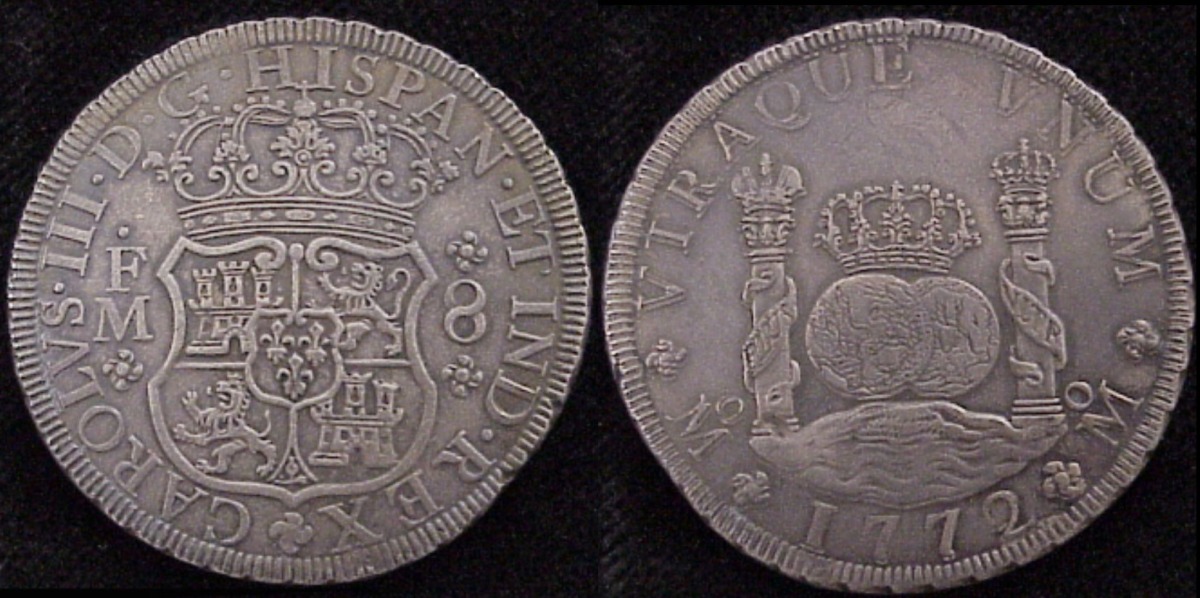 |
|
|
|
Pillar of the Community
United States
1801 Posts |
|
|
Valued Member
United States
309 Posts |
I don't think Mexico made this style in 1772. Only Lima did. So this is a fantasy date like the 1815 large cent. I do admire the craftsmanship. This would fit well in a colonial coin black cabinet of counterfeits.
|
|
Pillar of the Community
United States
1801 Posts |
According to the reference book "Eight Reales and Pesos of the New World" by Carlos Elizondo Jr there are two specimens of the 1772 MoFM Pillar dollar, one of which is in the Mexico City Mint collection (La Casa De Moneda). However the one shown above, while a nicely done counterfeit, is not the other specimen, fonts are off and the overall look of the coin is off.
|
|
Pillar of the Community
Austria
566 Posts |
Agree, something is very wrong with this one.
|
|
Pillar of the Community
United States
5362 Posts |
Nice forgery - I would love to buy it.
|
|
Pillar of the Community
 United States
1156 Posts |
I apologize for the subterfuge of withholding the provenance of the subject coin but I was curious to get some unbiased opinions. This is the Banco de Mexico example, as noted in my edition (2nd) of Elizondo. I believe the collection web site went live in 2014, although I just stumbled across it recently. Here's the introductory info: Quote:
Banco de Mexico decided to create an archive to document the history of monetary circulation in Mexico. Thus, the numismatic area of the Central Bank came into being. The area is responsible for the numismatic collection, which, building on the legacy of a small but important stock of viceroyalty era coins donated in 1936 by the coin collector and historian Don Manuel Romero de Terreros, has gradually grown over the last sixty years.
Banco de Mexico's Numismatic Collection is currently considered one of the most important in the world, not only for its content of over 58,000 pieces, including coins, banknotes and medals, but also because of the quality and rarity of many items. The 1772 Mo FM pillar 8R is not from Colección Romero de Terreros but from Colección Kososky, which I believe is a reference to the collection of Fernando Kososky. All I could find about this collection was a brief reference in an article about Kososky's postcard printing business. Quote:
Con participación en empresas mineras, y un gusto muy especial por la numismática; al grado que llegó a poseer en los años cuarenta del siglo XX la colección más grande de monedas y medallas mexicanas.
"From participation in mining companies, and a very special taste for numismatics; to the extent that he came to possess in the forties of the twentieth century the largest collection of Mexican coins and medals." I have perused some of the later pillar 8Rs and early bust 8Rs. Many are attributed to Kososky and Romero de Terreros as well as Perez Salazar. These appear to be advanced collections based on the breadth of the examples, regal and non-regal. However, it doesn't seem like the Bank's collection has been curated by experts -- none of the overdates that I've seen are noted as such and what clearly appear to be counterfeits are not noted either. Here's an example of a plated portrait dollar. 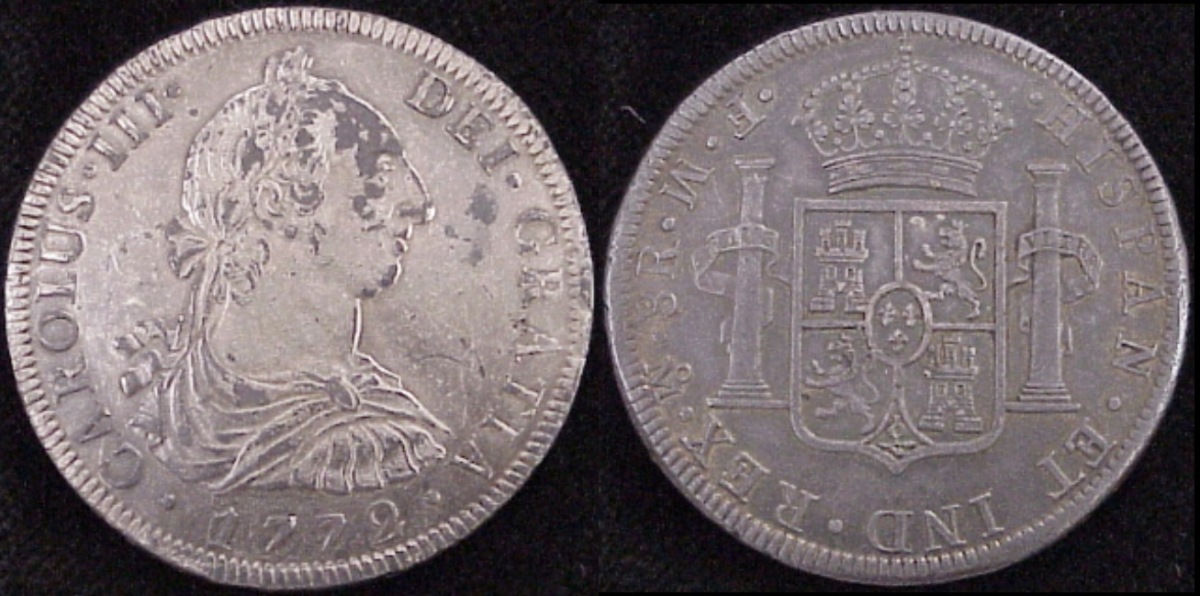 Perhaps the donor's notes got separated from their collections and lost, with the consequence that their "black cabinet" items got mixed in with the rest. It makes me wonder if Kososky knew that his 1772 Mo FM pillar 8R was suspect but the Banco de Mexico never passed that information forward to researchers like Elizondo. Edited by jgenn
01/27/2016 10:25 pm
|
|
Pillar of the Community
United States
5362 Posts |
In the 1940s, the subject of the detection of high quality counterfeits was in its infancy. Many spurious coins were mixed into prestigious collections. I know for example that Coronado's work has the same mix of counterfeit and genuine varieties and his notes admit that he was not sure of the classifications. I am not generally one who accepts oddball or otherwise eccentric items as genuine without proof. For decades coins with odd dates have been called die errors when in fact they are simple counterfeits.
|
|
Pillar of the Community
United States
1962 Posts |
Quote:
This is the Banco de Mexico example, as noted in my edition (2nd) of Elizondo. I believe the collection web site went live in 2014, although I just stumbled across it recently. Here's the introductory info:
"Banco de Mexico decided to create an archive to document the history of monetary circulation in Mexico. Thus, the numismatic area of the Central Bank came into being. The area is responsible for the numismatic collection, which, building on the legacy of a small but important stock of viceroyalty era coins donated in 1936 by the coin collector and historian Don Manuel Romero de Terreros, has gradually grown over the last sixty years.
Banco de Mexico's Numismatic Collection is currently considered one of the most important in the world, not only for its content of over 58,000 pieces, including coins, banknotes and medals, but also because of the quality and rarity of many items." Great website (wow, the dated Mex cobs!! War of Ind., etc...), but horrible interface. Practically unusable as is, unless I'm missing something. http://www.banxico.org.mx/ColeccionNumismaticaRE: the 1772 pillar... Had seen the picture before, but no comment... beyond my scope. On that 1772 portrait, though... you sure that's plating? I see where you're thinking that, but the image isn't great... and a lot of the pieces in those old hoard collections accrue some odd, uneven toning due to their set it and forget it storage. I viewed the Huntington Collection when it was on display, and I can tell you that splotchy, uneven toning abounded. |
|
Pillar of the Community
United States
1758 Posts |
I went through the Bank of Mexico's War of Independence Collection and I thought the same thing ... who has validated these things as regal or CCC? Take a look ... Alot of plated stuff - well at least from the photos. I did even spot (4) Kleebergs in their collection but forgot the category. These may have been marked as spurious or non-referenced in terms of false assayers. Surprisingly I believe they have a XRF device as I did correspond with someone way back about my Platinum values in my MNA article on the WOI Cast pieces I did for a MNA Journal piece. Just for accuracy that was a learning curve these false Pt positives with silver and gold detection. In the end Pt is very difficult to analyze and IGNORE my Pt levels as signatures ... gold is your principal indicator for authenticity and not platinum in 18th and 19thC silver artifacts.
|
|
Pillar of the Community
United States
1801 Posts |
Interesting
I have never seen the collection at Casa De Moneda but then again, I have never seen a legitimate pillar with an Mo mint mark that looks like the one to the left of the date on this one either. I would have passed on this coin if offered to me, based on both the lack of known examples and the funky mint mark.
Being the only known example makes it hard to do a die comparison but none of the mint marks on my 1770, 1771 pillars or on my 1772 and 1773 portraits look like that one.
|
| |
Replies: 10 / Views: 3,331 |
|










 Posted 01/23/2016 11:48 am


