| Author |
 Replies: 9 / Views: 1,392 Replies: 9 / Views: 1,392 |
|
|
Pillar of the Community
United States
4883 Posts |
Gordian II was proclaimed Emperor at the tender age of about 15, and was liquidated at age 21 or so at the direction of his successor, Philip the Arab. 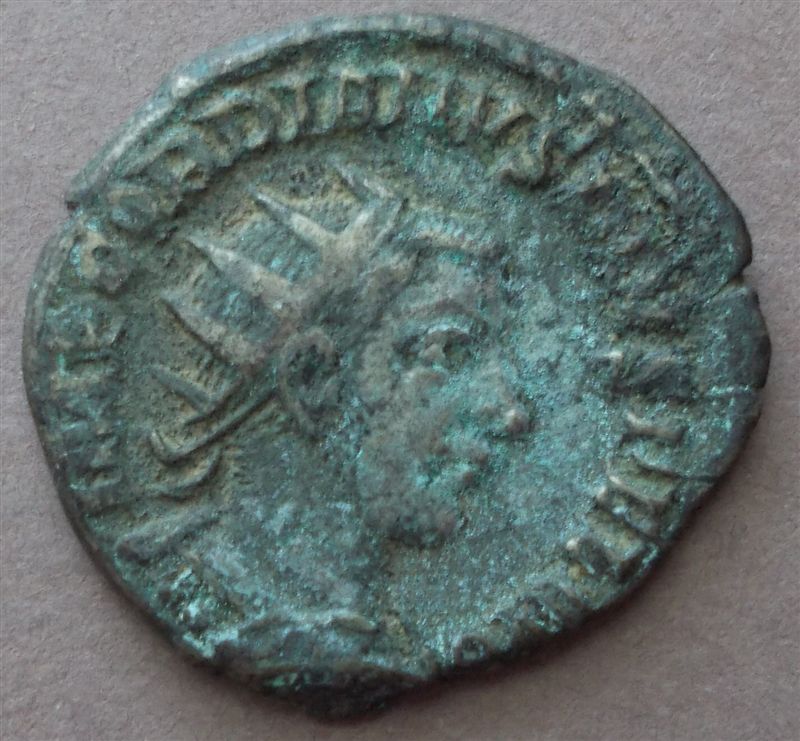 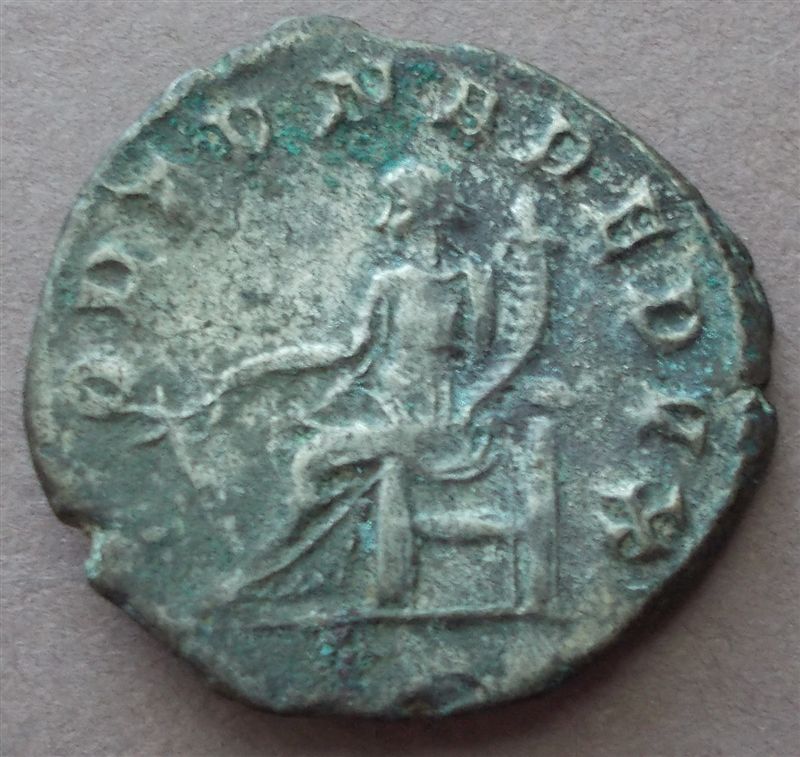 Picked this coin up today at a "time to get rid of it" price, and I thought it to be silver although the photos may not make it look so, as it certainly retains a good deal of patina. Even if it is silver, it may be quite debased, as it really doesn't have anything in the way of a ring. About 19mm in its longest dimension, weight 5.15 grams. I read the reverse legend as FORTVNA REDVX, and have tentatively identified it as RIC 144. Colligo ergo sum
|
|
|
|
Moderator
 United States
23731 Posts |
Looks like some environmental damage, I see what appears to be horn silver in some spots. You may want to clean it up a bit.
|
|
Pillar of the Community
United States
5007 Posts |
make sure none of that light green stuff easily flakes off when rubbed with your finger lucky cuss. I don't think it's BD, but it could be.
|
|
Pillar of the Community
 United States
4883 Posts |
Quote:
make sure none of that light green stuff easily flakes off when rubbed with your finger lucky cuss. I don't think it's BD, but it could be. Well, some of it absolutely came right off, almost like a dust, more blue in color than green. But the greener stuff is more adhesive. What is BD? I'm not familiar with that abbreviation. Quote:
I see what appears to be horn silver in some spots. Horm silver? Another term I've not heard before. Colligo ergo sum
Edited by Lucky Cuss
01/30/2016 9:13 pm
|
|
Pillar of the Community
United States
5007 Posts |
oh no...that's bronze disease! it's a chemcial reaction and it can destroy that coin, you'll need to treat it! for now, scrap off all you can. soak in distilled water for a couple of days...scrape again....replace the water, soak several more days. keep doing this until as much as off the coin as possible. when it's gone (or close as you can get), bake the coin in the oven for 25 minutes at 250 degrees to dry it. do you have any verdi-care? if so, treat with that when you're done. if not, consider getting some! http://www.crescentcitycoinclub.org...0Disease.pdfhere's a link to a good pdf Edited by chrsmat71
01/30/2016 9:12 pm
|
|
Rest in Peace
United States
17900 Posts |
 this coin definitely needs verdicare. |
|
Pillar of the Community
United States
949 Posts |
If you mishandle this coin you can ruin it. Verdigris is not the same thing as bronze disease, and the treatment for these two problems is entirely and fundamentally different. That said, your coin does have some verdigris on the reverse and probably some on the obverse. That is not a serious problem. However, the soft powder you describe is a characteristic of bronze disease which could be taking place as well, particularly on the obverse. Antonniniani of debased silver may sometimes have enough bronze in their alloy to support bronze disease. Bronze Disease is a chemical reaction between bronze and airborne reagents containing chlorides that binds copper with the ionized chlorides to produce a salt of copper that further degrades into a combination of cupric chloride and hydrochloric acid. This continues to erode the metal until all the copper is gone. Verdi-care will not help with that, and the manual removal (scraping? goodness no) and baking treatment that chrsmat71 described is a temporary solution at best. Whatever you do, do not attempt to seal the coin with Renaissance Wax or any other microcrystalline wax if you have not chemically neutralized the BD. Otherwise it will continue to eat at the metal under the layer of wax and be almost impossible to stop after that. The treatment of choice involves the use of sodium sesquicarbonate, which would strip the coin of its natural patina. However this coin is principally a silver alloy and does not have a copper based patination. So this is a good candidate for learning how to use this stuff. Here is a link to a Wikipedia page that will give you the basics on all of this: https://en.wikipedia.org/wiki/Bronze_diseaseFrom here you can learn how to use the sesquicarbonate, and what to do after that stage of treatment is complete. By way of contrast, verdigris is a surface deposit on a coin which results from a reaction to acetate ions in the air. Unlike bronze disease the deposit forms a barrier between the coin metal and acetic acid in the air, so this problem is self limiting. If the deposit is removed and the coin is not treated with a wax, then it is ripe to having a new deposit form again. Edited by lrbguy
01/31/2016 12:11 am
|
|
Pillar of the Community
United States
4883 Posts |
As would be my normal procedure, I've taken initially a very conservative approach to getting some of the crud (active or otherwise) off this coin. An overnight soak in distilled water, a brief immersion in lemon juice, and another rinse with distilled water. In between, I gently worked some of the crevices with a soft wooden toothpick. Blotted, not wiped, dry at each stage. 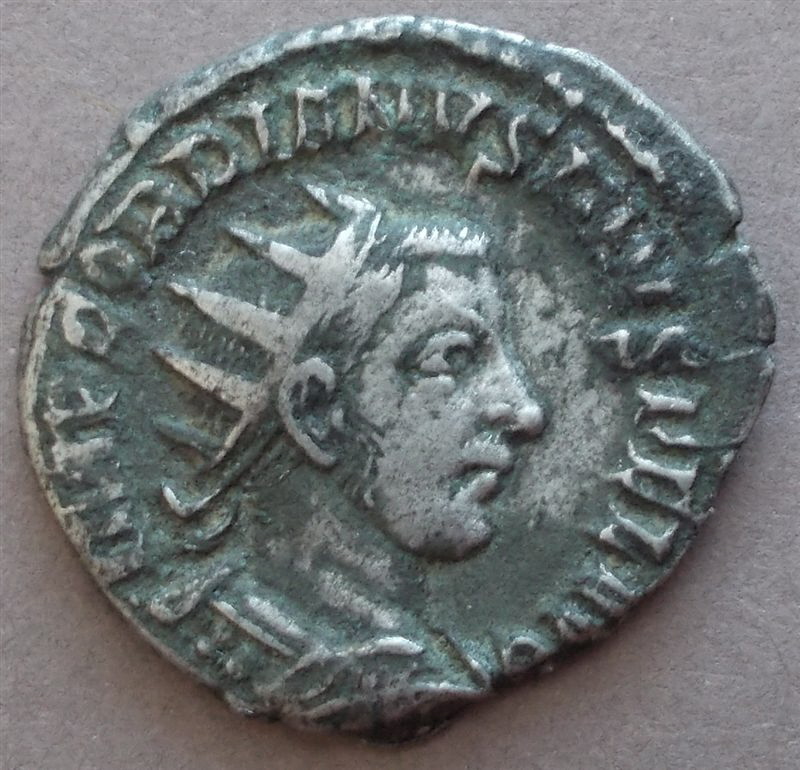 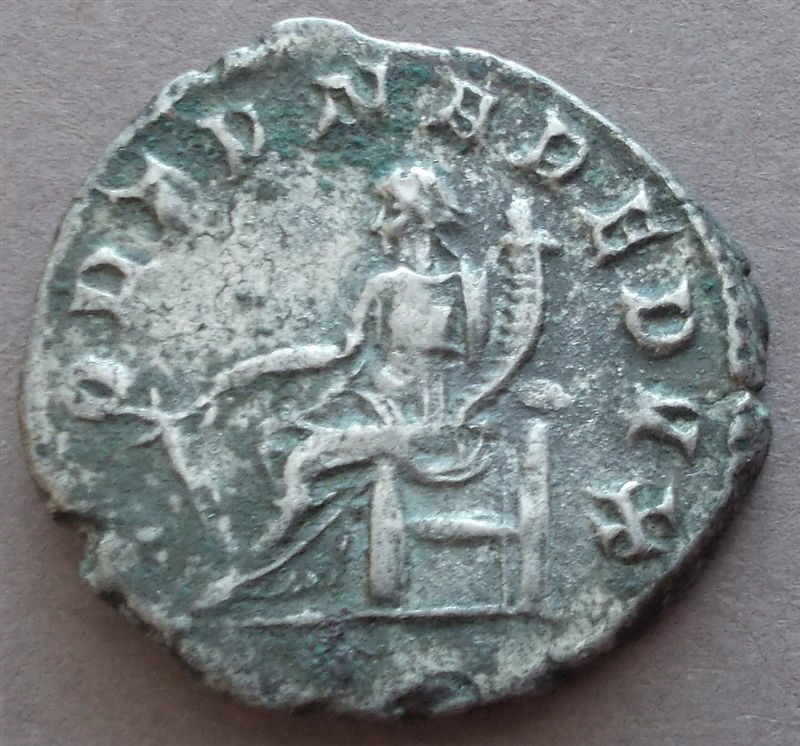 I'm not sure what else I ought (or want) to do to it at this point. What complicates matters is that although technically a silver coin, I still believe the purity to be very low, alloyed with a lot of copper. Colligo ergo sum
Edited by Lucky Cuss
01/31/2016 2:53 pm
|
|
Pillar of the Community
United States
949 Posts |
It looks good for now. Don't seal it with any coating for the present. Put it in a flip and add it to your collection. If nothing develops over the next year, give it as much or as little additional attention as it seems to require.
And just enjoy it; it looks like a nice coin.
|
|
Pillar of the Community
United States
4883 Posts |
I'm certainly not going to do anything more agressive than to let it soak in distilled water for another 24 hours or so, don't see how that'll do any harm.
Colligo ergo sum
|
| |
Replies: 9 / Views: 1,392 |
|






 Posted 01/30/2016 8:28 pm





