








 Posted 02/03/2016 7:19 pm


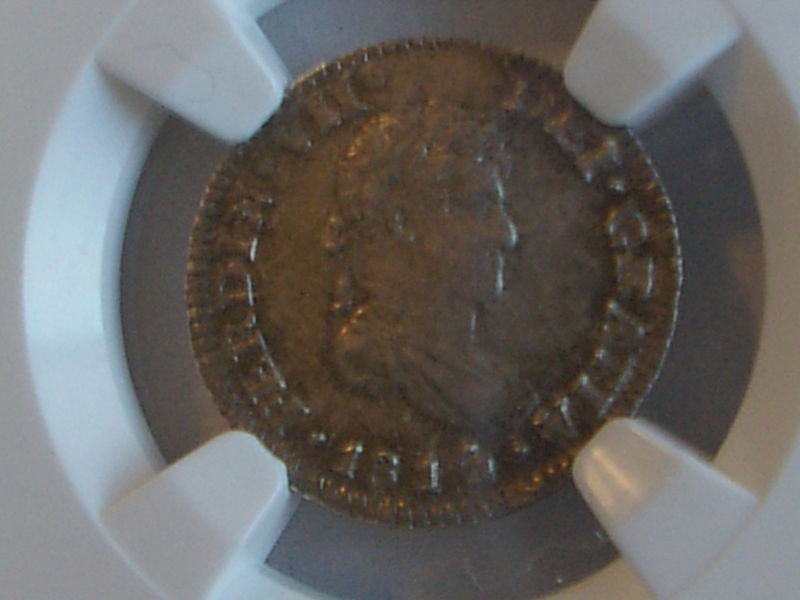
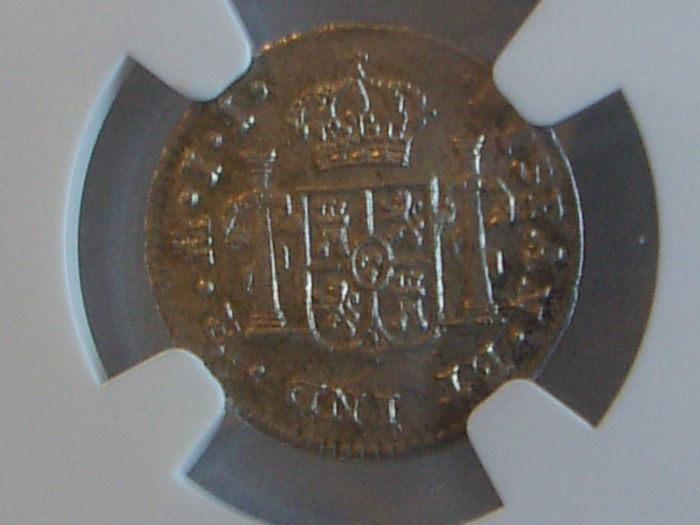
I agree it is a simple die clash. The Spanish American colonial issues (all denominations) were struck on manually operated screw presses with no collar. The planchets were hand centered on the anvil die by a human who had a second or two to remove the struck coin from the anvil die and replace it with a new planchet - before the dies came back together.
Speed was critical because workers were paid based on the monetary value of the output.
I realize a small coin like a 1/2 reale can be struck on a rather small press, however, dies coming together without a planchet in between is as common on 1/2 reales coins as it is on 8 reales coins.
Normally a die clash required the dies to be lapped to remove evidence of damage. However, repairs to a die pair carried a negative incentive because of time lost and on small denominations that were made mostly for local usage - repairs were deemed less than critical.
Even a clear die clash was in the past regarded as a detrimental feature that reduced the value of the coin because it represented damage to the die. However, more recently some collectors have become interested in clear clash impressions and pay a premium for them. I believe this because some older US coins have similar clashes and the belief that Mexican coins with clashes are rare has "spilled over" from US collectors.
In Mexican Mints clashes were somewhat common. I would draw an analogy with modern press errors (off center, large clips, double strikes , etc.) which are also far more common from the Mexico City mint than from the US mints. Values of Mexican mint errors lag FAR behind the same error seen on US coins - just check ebay auctions.
Speed was critical because workers were paid based on the monetary value of the output.
I realize a small coin like a 1/2 reale can be struck on a rather small press, however, dies coming together without a planchet in between is as common on 1/2 reales coins as it is on 8 reales coins.
Normally a die clash required the dies to be lapped to remove evidence of damage. However, repairs to a die pair carried a negative incentive because of time lost and on small denominations that were made mostly for local usage - repairs were deemed less than critical.
Even a clear die clash was in the past regarded as a detrimental feature that reduced the value of the coin because it represented damage to the die. However, more recently some collectors have become interested in clear clash impressions and pay a premium for them. I believe this because some older US coins have similar clashes and the belief that Mexican coins with clashes are rare has "spilled over" from US collectors.
In Mexican Mints clashes were somewhat common. I would draw an analogy with modern press errors (off center, large clips, double strikes , etc.) which are also far more common from the Mexico City mint than from the US mints. Values of Mexican mint errors lag FAR behind the same error seen on US coins - just check ebay auctions.


