Upon the request of CCF member Collects82, I'd like to share another coin with you.
According to Levinson's "The Early Dated Coins of Europe: 1234-1500", the German duchy of Saxony was among the largest producers of coinage in the late Middle Ages. Dated coinage began in Saxony in 1457 and then proceeded for most of the remaining years of the 1400s (including 1482!) Saxony, a region of Eastern Germany, managed multiple mints: Gotha, Leipzig, Colditz, Freiberg, Oelsnitz, Wittenberg, Zwickau, Schneeberg, and Annaberg and drew on productive silver mines for its prodigious coinage.
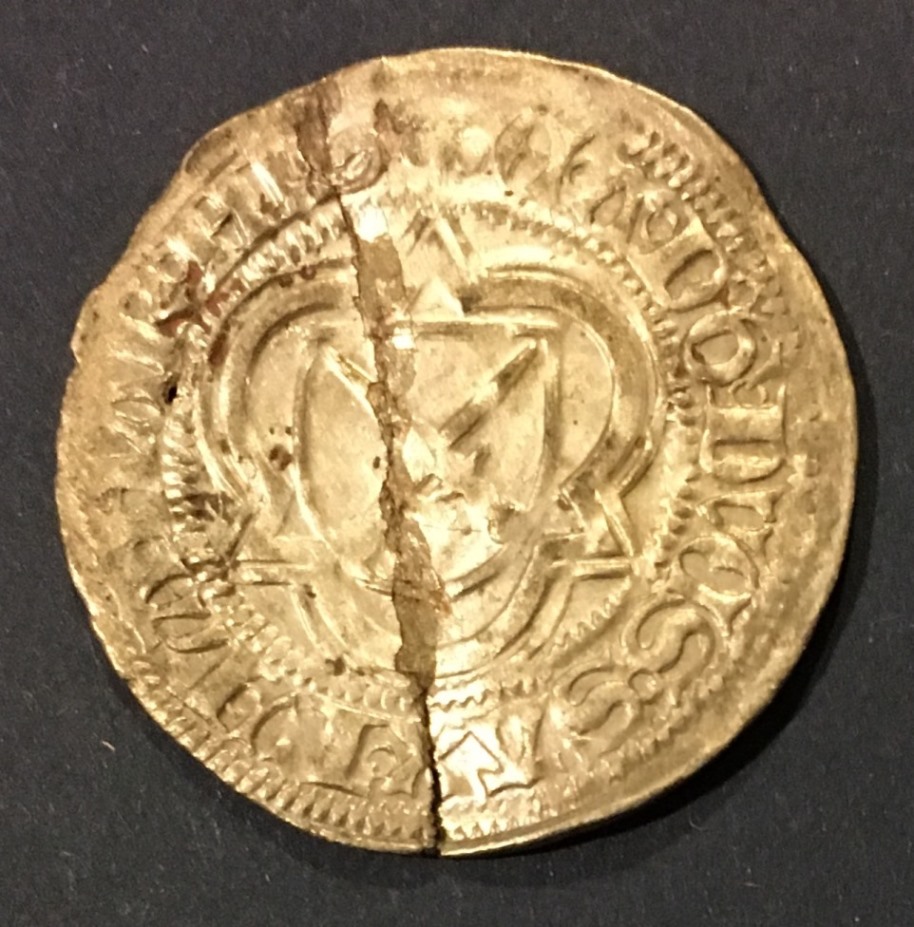
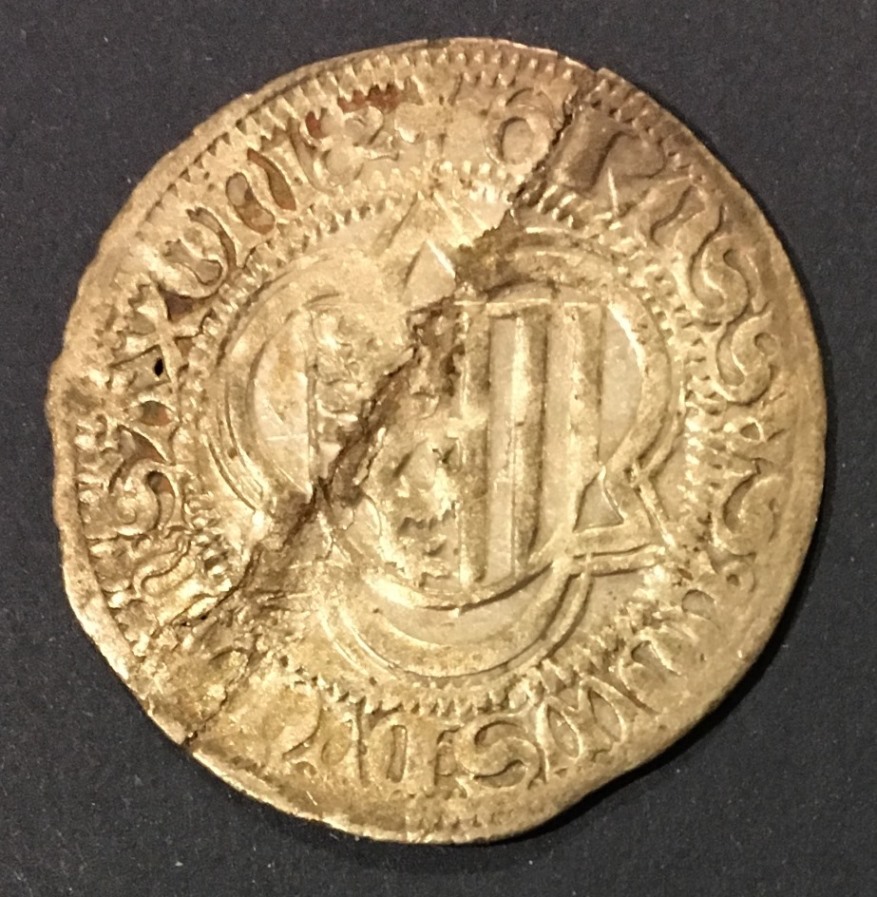
See below for a picture of my 1482 half-Schwertgroschen of Saxony (Lev. I-185; Saurma 4400). The diameter of this silver coin is 27 mm and the mass is 2.0 g. Levinson describes this coin as "common", meaning there are more than 251 collectable coins extant. It is one of the most common German coins dated 1482 (of ten distinct types). The Saurma Muenzsammulung of 1892 includes this coin and correctly identifies the mintmark: a cloverleaf at the start of the obverse and reverse legends, but doesn't include a picture in the plates. The cloverleaf indicates the mint was located at Zwickau. I don't see any of this 1482 for sale currently on vcoins, but there are four or five available on ma-shops. Vcoins does have a different German 1482 listed for sale.
The obverse includes a shield of crossed swords (hence the German "Schwert"groschen) inside a trefoil. The text reads E:A:D:G:DVCS: SAX: TV:LA:MAR:HS and starts with a three-leaf clover. On the reverse of this coin is a similar trefoil but with the shield of Landsberg-Meissen inside. The text reads GROSSVS:NOVVS:DVCVM:SAXONI 82 and also starts with a three-leaf clover. Levinson correctly notes that the numeral two is a bit smaller and squished into place compared with the other characters in the legends. Evidently this has caused some difficulties for numismatists in the past. Also of note is that the date was fixed for several years and so while the date says 1482, coins with this same design were made up until 1485. Very obviously my coin was bent and then straightened at some point in the last 500+ years. Probably I should upgrade to a problem-free example!
According to Wikipedia, Zwickau's industrial roots date back to regional mining in 1316 AD, but the discovery of rich stores of silver in nearby Schneeberg in 1470. Zwickau became the cultural and economic center of Saxony in the 1400s and 1500s. Interestingly, coal mining replaced the silver mining in the 1800s. This may have contributed to this region being a center of the Saxon automobile industry to this day.







 Posted 02/21/2016 8:15 pm





