| Author |
 Replies: 21 / Views: 3,241 Replies: 21 / Views: 3,241 |
|
Pillar of the Community
United States
1674 Posts |
Picked this up as a genuine well worn coin, in hand realized it was a CC and matched it with the Kleeberg plate coin. colonialjohn, swamperbob, you guys are familiar with these - any idea what it may be worth now? I found one about the same shape in a 2009 Stacks auction, but I don't know if the market for these is stronger than it was then or not. 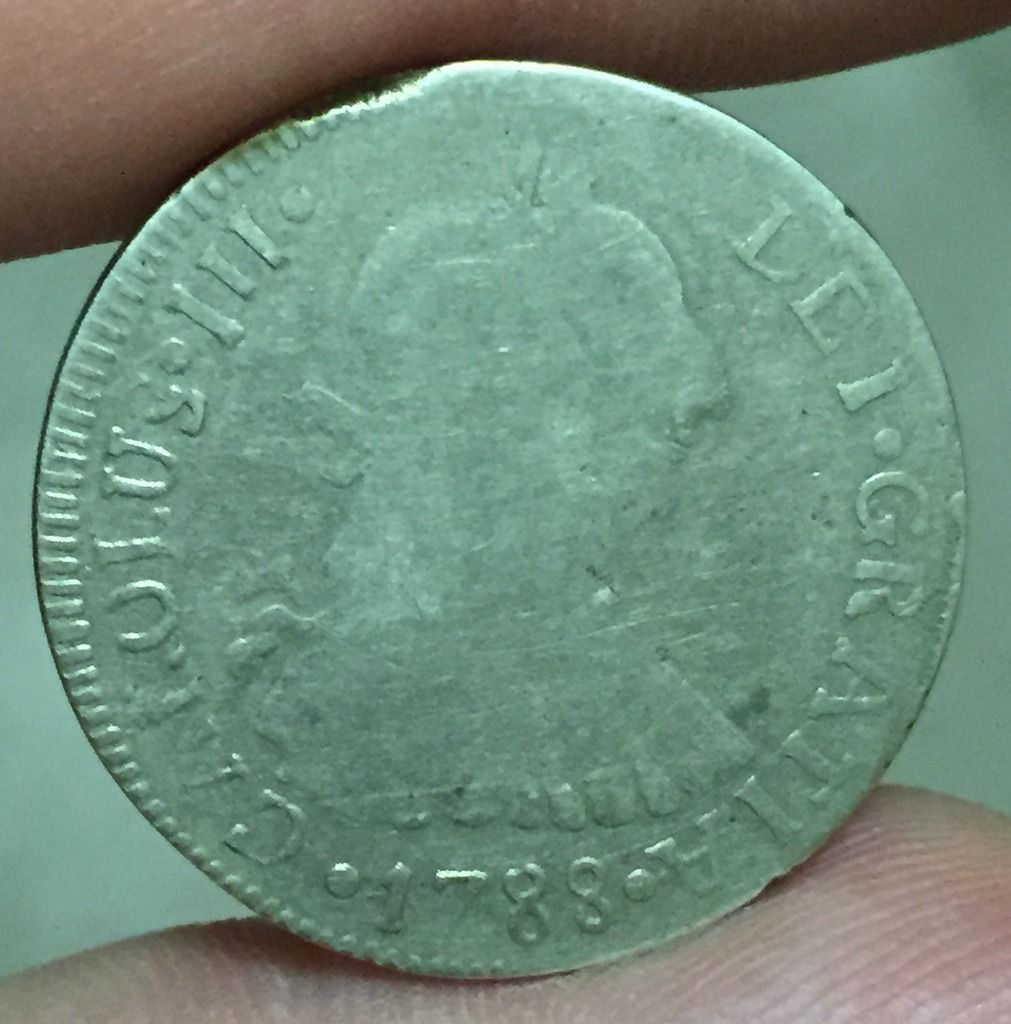 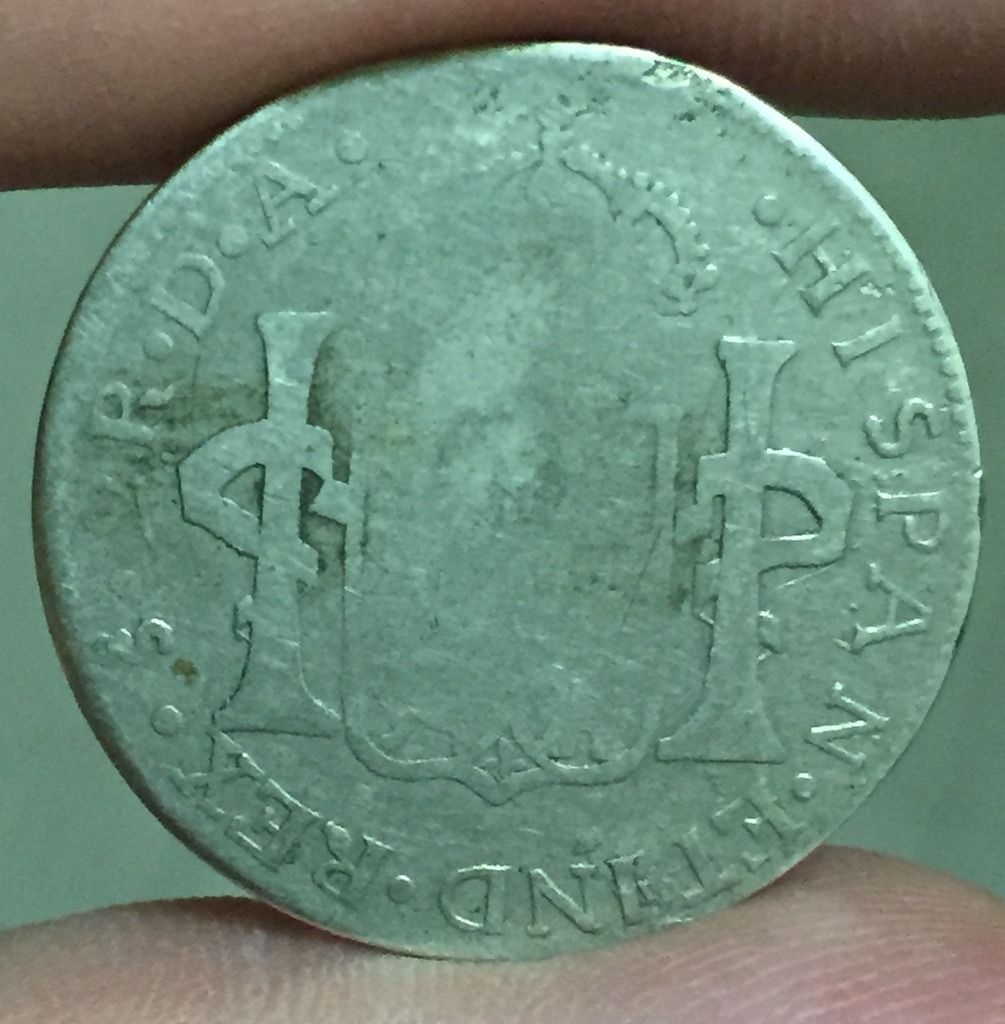 |
|
|
|
Pillar of the Community
United States
1768 Posts |
Stay tuned ... late tonight I will give you the Kleeberg number and its diagnostics. NICE!
John Lorenzo
Numismatist
New Jersey
In the meantime go to Stacks/Bowers and in their past auctions go to their November 16, 2012 and see the David Wnuck Collection starting with Lot 6896.
They go obviously for more money than GNL pieces since they have been cataloged longer ... and have a larger following. Also and as INCREDIBLE as it may sound old time Mexican collectors prior to the GNL book never thought contemporary circulating counterfeits as collectible. They consider them annoyances or issues to be avoided ... but this is changing withe the GNL book on these CCC 8R's.
But it will take time ... CCC GNL Type 1's are VERY collectible ... some are starting to get the message in the MNA. It will take time ... right now its like Eric Newman and Robert Vlack in the 50 & 60's with Bungtown's (i.e., a term originating in the American Journal of Numismatics in terms of CCC's being imported from England to the U.S. Colonies and being re-energized by Newman in his early writings) as it relates to English/Irish CCC 1/2d and 1/4d's. In other words MNA members need to consider these almost as HISTORICAL as War of Independence Issues. I did say almost ... <BG>.
That took 30-40 years until Anton came out with his ground-breaking book in 1992 (Forgotten Coins) ... BTW ... my new book takes off on this cryptic book produced in 1992. Cryptic? Yes ... all pictures and no words ... LONG STORY.
When these first surfaced with collectors like Mike Ringo & Ed Saraffian (North American Reference Collection - Stacks) we probably thought there were like 50-75 varieties. With now my Part 3 in my new book (due out 11/2016) the varieties are around 150-155. Most are Rarity 7+-8 (3-4 known) with about 1/3 currently UNIQUE. This 1788 piece is around $100-up depending on the selling venue (E-Bay or Stacks/Bowers). Their characteristics are generally off-metal, Plain Edge, Medal Turn Die Axis and DO NOT include the debased silver issues which are too common and not worth a PREMIUM as withe the off-metal brass, German silver and copper Kleebergs.
The infamous EARLY BIRD last year sold at over $1,000. The current record is $1,725.00. But they have come down due primarily of their infrequency at auction due to their rarity and the discovery of more varieties and most are in the $100-500 range depending on condition, crudeness and rarity (i.e., UNIQUE?).
There have been three major auctions on Kleebergs (Ringo,Ed Sarrafian & Wnuck). All by Stacks/Bowers. The Saraffian was called the North American Reference Collection.
All Kleebergs ALMOST ALWAYS bring more money than their regal counterparts in terms of grade, mint mark, assayer and condition.
JPL
Edited by colonialjohn
03/11/2016 09:59 am
|
|
Pillar of the Community
United States
1768 Posts |
K.88C-S4. One of two known I believe ... if you put it on ebay let me know ... <VVBG>. See WNUCK: 6920 which was the Ringo Collection specimen. None in the American Numismatic Society Collection of around 60 varieties or in Saraffian. Missing from my collection. As with Wnuck probably of German silver based on your photo. It's a winner ... JPL Edited by colonialjohn
03/12/2016 12:20 pm
|
|
Pillar of the Community
 United States
1674 Posts |
Thanks for the info John. I haven't been able to find another. I did find this one attributed as 88C http://www.worthpoint.com/worthoped...gh-132375928It has similarities but does not match the Wnuck coin completely whereas my coin does. It's also very light weight. Kleeberg notes 3 examples with weights from the high 5 gram to low 7 gram range, my coin is 6.24 grams, and the one in the link is only 4.64. And ideas? Edited by Numismat
03/11/2016 7:46 pm
|
|
Pillar of the Community
United States
1768 Posts |
It appears there are two known specimens the Ringo specimen and this specimen.
Again - Congratulations.
JPL
|
|
Pillar of the Community
United States
1674 Posts |
Maybe I'm not reading it correctly, but why does the Kleeberg reference give three reference weights attributed to "MKR" (Ringo) I assumed that was three individual pieces.
Edited by Numismat
03/12/2016 1:41 pm
|
|
Pillar of the Community
United States
1768 Posts |
HMMM ... yes in the ANS 1998 COAC article Kleeberg on page 179 for his specimen listings and in his die study article for Ringo indicates three specimens for this die variety. In his sale (Schaumburg Sale; Stacks; June 25, 2009 we see only ONE K.88C-S4 (lot 73) ... these two other may have appeared later in auction, were sold privately or was an error in communication between Ringo & Kleeberg? I have traced only one so far outside of this specimen which is the one in this thread. Wnuck purchased this Ringo piece. In this Ringo Schaumburg sale we ALSO see the same cataloging reference none in the ANS or in the C.G. 2007 Sale (Ed Saraffian N.American Reference Collection Sale).
A good catch and will keep exploring ... perhaps this piece is one of the two long lost Ringo pieces? But you listed your weight as 6.24 grams and the Ringo/Kleeberg Reference weights are: 5.96,7.33 and 5.28. In the Ringo sale the weight was 5.24 (5.28) and in Wnuck 5.2 grams. So one of the three MATCH. So if Ringo/Kleeberg are right we are missing 5.96 and 7.33 gram pieces. As you suggest.
So there is either two to four known ... maybe? Will keep checking. After Ringo died they did sell another small group of Kleeberg's from memory. I think he did hold back some duplicates. Will trace this group over the next week or two ... it was by Stacks ... John K. did not pick this up in Wnuck in 2012 but due to time limitations he may have been just reciting the 2009 Ringo reference for this die variety.
JPL
Edited by colonialjohn
03/13/2016 01:47 am
|
|
Pillar of the Community
United States
1674 Posts |
Thanks for the clarity John. I'm sure researching these pieces must be very difficult with the scarcity of information and specimens.
|
|
Pillar of the Community
United States
1211 Posts |
OP: Where did you purchase this coin?
|
|
Pillar of the Community
United States
1674 Posts |
I purchased it online, was being sold as a genuine coin with not so clear pictures. I only realized what it was when I had it in hand.
|
|
Pillar of the Community
United States
1962 Posts |
Note that 1788 seems to be the most frequently appearing date of the Charles III Chile 2R (in modern times, anyway), and assuming that extends to when they circulated as well, I'd say it's no coincidence that this date for Santiago was copied. Either way, in terms of the counterfeit version... there are some out there. Have run into specimens on ebay several times before... I've missed and/or lost a few - I kind of recall being conservative on a lower-grade specimen or two w/the thought that I was seeing several of them, perhaps they're not that scarce... then the apearances seemed to dry up. I "think" I did pick one up? One point, wonky strike seems to be a thing for this counterfeit (doubling, off-center)... Aside from that, the date (which I presume is what's meant by the above comment "does not match completely")... while all are clearly of the same dies (multiple matching die markers), there does seem to be variation in the date digits. My impression is that the dies may have received a touch-up in that area. ========================= So, aside from the OP's piece in question... https://auctions.stacksbowers.com/l...view/3-2C638 (Ringo) https://auctions.stacksbowers.com/l...view/3-2JH9F (another Ringo) https://auctions.stacksbowers.com/l...view/3-21LWV ***this must be the other Ringo piece noted in Kleeberg - weight matches exactly http://www.worthpoint.com/worthoped...gh-132375928Then this piece, which I assumed then (and now) to be a heavily blundered specimen of this type: http://www.worthpoint.com/worthoped...go-460863507Plus, again, several others on ebay... but can't find any record/archive of them at this time (note that WorthPoint is not exhaustive...). PS - My general recollection is that what I saw was from U.S. sellers... rather than South American or Spain sources. |
|
Pillar of the Community
United States
5362 Posts |
John are you positive the alloy is German Silver? That alloy dates to 1835 in England and about 1830 in Germany at the very earliest. Have you isolated Paktong (classed as a Cupro-nickel) as a distinct alloy which could date back to the early 1700s or Brittania metal (a pewter) which dates to 1769 or 1770.
Either of those two alloys could have been used for a US colonial era circulating counterfeit like the 1788 Chile 2 reales. German silver would place production of the coin well after the US was independent and even AFTER the date for the end of the Spanish Colonial era in the Americas. It would be classified as a contemporary circulating counterfeit but from the later portion of that period.
I am still of the opinion that the CCC group needs to be divided into two distinct phases pre and post 1830. That date serves as a convenient dividing point for different technologies, different alloy types and often different locations where the coins were used.
In 1830 or later the most likely target for use was the US. That is where I would believe such a coin circulated. Before that date many other locations would have been receptive markets for the coin.
The almost complete lack of tarnish could point to either of the earlier alloys. German silver will discolor and stain rather easily.
Edited by swamperbob
03/17/2016 04:50 am
|
|
Pillar of the Community
United States
1768 Posts |
I made a recent discovery of a 1771 2R Pistareen with German Silver MIXED with silver. I am starting to study the CCC Cross Pistareens. Most seem to be brass/bronze and debased silver and the only GS confirmed so far was on the edge of this TYPE issued in the last year being 1771. There was always a suspicion or feeling an earlier alloy may exist as John Kraljevich of Stacks/Bowers discussed with me a decade or so ago with these Kleebergs. Remember this alloy was Brought to England as you know. Did some earlier types make their way out as exports?
Still investigating.
There are several GS pieces (XRF confirmed - 100% Certainty) of 1771-1780 with one in particular GS dated 1771 in my collection of GS Kleebergs which we consider the first year of Kleebergs although several are dated earlier in a sporadic dated manner. 100% GS Certainty of SEVERAL 1771's. As I mentioned to Jeff Rock of California it would be huge to find a 2R Pistareen GS say dated 1717. Take a look at Civitas Galleries they seem to have some earlier dated 2R Pistareens of a silver looking alloy but are overpriced at $105. Perhaps this GS/Pistareen discovery will remain in and around the last year or years of the Cross Pistareen (i.e., 1771)?
What would we make of a 1717 Civitas 2R Pistareen in GS ... I was tempted ... but remain patient from a cheap one from Spain who are of course like Mexican Collectors with CCCs still in the DARK AGES.
So currently we assume its severely back dated if 1771 ... but what do we call something like 1717 in GS if confirmed?
No harm/no foul ... that is our job to show EVERYONE the LIGHT AT THE END OF THE TUNNEL.
<VVBG>
John Lorenzo
Numismatist
New Jersey
Edited by colonialjohn
03/17/2016 08:25 am
|
|
Pillar of the Community
United States
5362 Posts |
John my point is that the imported alloy from China Paktong is NOT actually German silver. It is like Britannia metal a different alloy with a different composition but a similar appearance. When you say German silver you are dealing with the German's attempts to re-create Chinese Paktong. The alloys are different slightly different. Paktong does not always contain zinc above a trace (accidental level). There is substantial confusion of this term because people use Nickel silver (a misnomer) as a catch all category that includes both Paktong and German silver.
With XRF you need to get the signature of English Patkong pre-1830 (some pieces are hallmarked specifically for that alloy) and isolate the main and trace elements. I know museums have started to refer to the alloy as cupro-nickel no longer giving it a linkage to the German silver replication.
So I am concerned that stating flat out that German silver existed before the 1830 break through by the Germans is a challenge to the history of metallurgy that will need substantial justification to be taken seriously by authentication labs who do work for museums.
It may not be an easy to solve issue but German silver simply did not exist before 1830.
|
|
Pillar of the Community
United States
1768 Posts |
Good point -
I NEVER read a paper on Chinese Paktong in terms of its metallurgical analysis in numismatic items or historical artifacts for that matter - so will investigate. The 1771 Pistareen 2R had a healthy dose of zinc from memory.
I see your point - the Germans did reformulate this alloy from the metal STOLEN from this region (i.e., exported or brought out illegally from China).
So if found in earlier Pistareens to keep things PROPER - just call it Paktong.
Paktong = An alloy of zinc, copper and nickel, closely resembling silver, of Chinese origin; any of a number of similar alloys developed in imitation of the Chinese product.
Perhaps with this degree of backdating and the 1830(Germany)/1835(U.K.) cut-off the 1771 Kleeberg 2R and this 1771 2R Pistareen may be properly called paktong.
Somehow a good paper differentiating between the two is needed as you say in terms of trace constituents to hallmark the two alloys if possible.
For two decades now Stacks and JPL have been calling all XRF confirmed GS alloys prior to 1830 German Silver and NOT paktong. Not to worry - we always ADVANCE our definitions ... I agree the Oliver Hoover/ANS/GNL discussions with GS and 1830 (Germany)/1835(U.K.) origins seemed very SOLID with historical confirmation/metal alloy patents/distinct makers of these alloys identified, etc.
We are ready for the next chapter ... paktong vs. German/English German Silver alloy types.
JPL
Edited by colonialjohn
03/17/2016 1:37 pm
|
|
Pillar of the Community
United States
5362 Posts |
I agree completely re the need to change the definitions slightly. It is the only way dating with XRF will work correctly for German silver. Some of the material coming out of the Winterthur Laboratory indicates Paktong with only a contaminant level of zinc that entered the alloy naturally by way of the copper mined in China. I recall the level being under 10% zinc. I may be wrong.
The best reference to date on Paktong is Keith Pinn's book "Paktong - The Chinese Alloy in Europe 1680 - 1820. In the book once again Matthew Boulton and Birmingham, England are players in the manufacture of materials made from illegally imported Paktong. One of the more interesting parts are the results of tests run on the collection. The entire Pinn collection was tested for 10 elements using XRF at a detection limit of 0.02% or 200 ppm. The 129 pieces had some or all of the following elements present: copper (Cu), nickel (Ni), zinc (Zn), Iron (Fe), lead (Pb), arsenic (As), cobalt (Co), silver (Ag), tin (Sn) and antimony (Sb). Zinc levels varied from a low of 12 % to a high of 45%. Both Iron and Lead are contaminants in the 0.5% to 5% range and the rest tend to be lower level trace contaminants typically under 0.5% (5000ppm). One reading on one portion of a snuff box had an anomalous reading of 30% silver. Another location tested showed silver as a trace contaminant only.
On a second topic I raised earlier. Have you ever found the pewter alloy called Britannia metal? It is typically composed of 92 or 93% tin, 6 or 5% antimony, and 2% copper. It contains no lead is harder than most pewters and was used extensively for lower value flatware, plates etc. in the middle of the 18th century. It was also used as the base metal for early electroplated flatware in the 1840s and 1850s. This may be the high tin alloy that Bordeaux speaks about as Type 5.
|
| |
Replies: 21 / Views: 3,241 |










 Posted 03/11/2016 4:38 pm


