| Author |
 Replies: 17 / Views: 3,942 Replies: 17 / Views: 3,942 |
|
Pillar of the Community
United States
4883 Posts |
Marcus Aurelius Severus Alexander (originally Gessius Bassianus Alexianus) adopted a far more conventional public persona than his cousin and predecessor, the eccentric Elagabalus. Just as had been the case with Elagabalus, though, Severus Alexander was a mere youth whose acclamation as Augustus might've never happened but for an assertion that he was in fact an illegitimate son of Caracalla (which if actually true for both would've made them half brothers as well). Some historians have cast Severus Alexander as a pliable dullard, and the formation of senatorial regency council to help guide his policies lends credence to this view. However, even that attempt at relegitimizing imperial authority couldn't prevent there being something of a continuing civil power vacuum that fostered instances of insubordination in the military. This breakdown in discipline, coupled with even the mature Severus Alexander proving personally inept at dealing with pressure on the frontiers of the empire from the Persians and the Alemanni, finally led to his murder by disaffected troops in Gaul, thus bringing the Severan dynasty to an ignominious end. 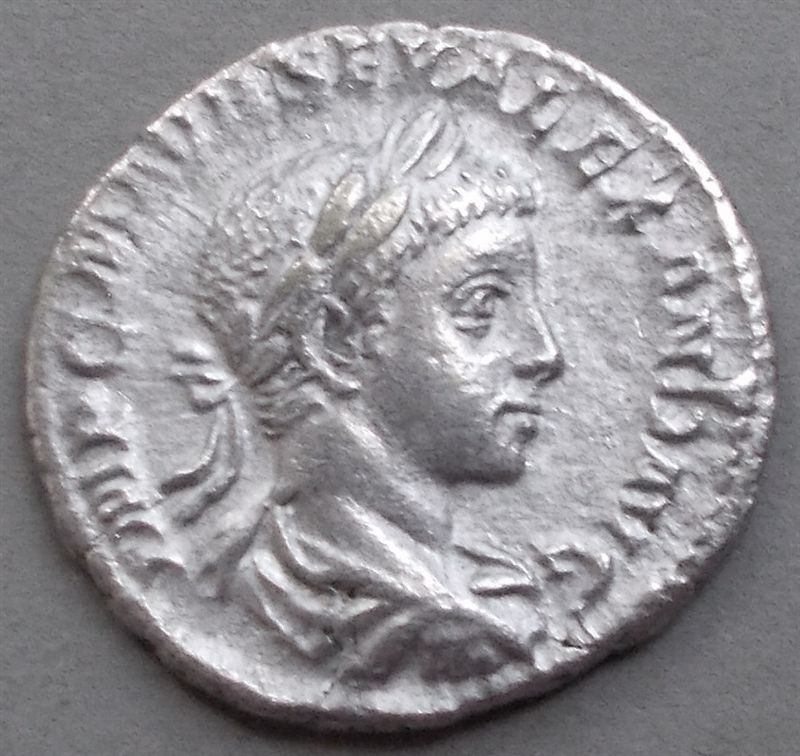 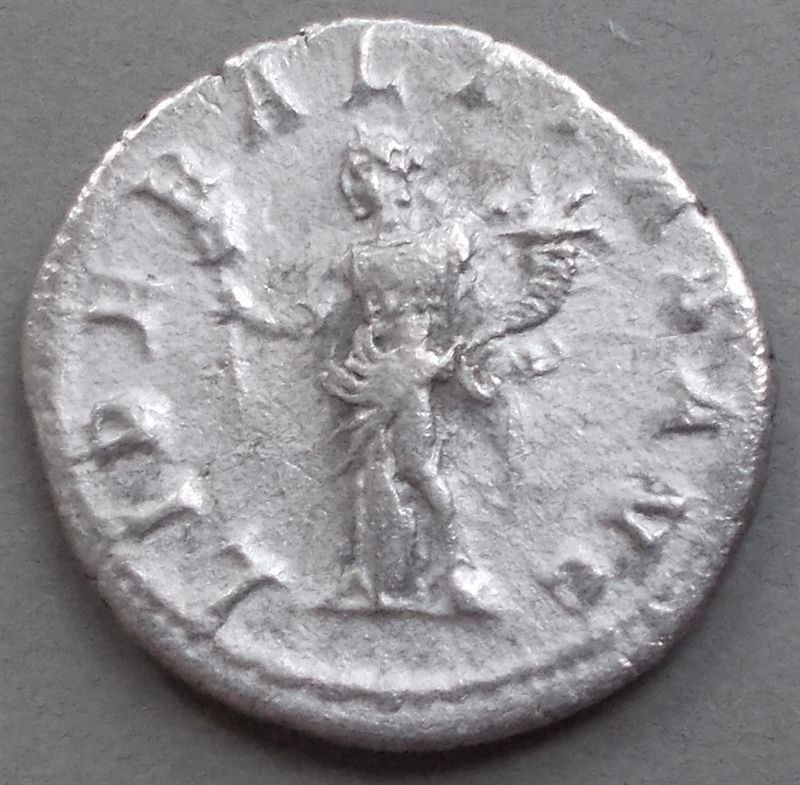 Colligo ergo sum
|
|
|
|
Moderator
 United States
34563 Posts |
Nice coin Lucky Cuss!
"If you climb a good tree, you get a push."
-----Ghanaian proverb
"The danger we all now face is distinguishing between what is authentic and what is performed."
-----King Adz
|
|
Moderator
United States
23731 Posts |
Nice and write up. If you know the reference information, can you add that?
|
|
Pillar of the Community
United States
616 Posts |
A sad end to an illustrious dynasty and a half-century long soap opera. Characters include scheming women such as Julia Maesa, a tough and Machiavellian-minded general weakened by superstition in Severus himself, insane megalomaniacs in Caracalla and Elagabalus, playboys like Geta, and people swept up by events - Domna, Aquilia Severa, Annia Faustina and perhaps Severus himself.
Alexander's wife Orbiana is one of the finer coins of the period.
Edited by jskirwin
04/30/2016 7:26 pm
|
|
Pillar of the Community
 United States
4883 Posts |
Quote:
If you know the reference information, can you add that? Well the reverse legend is pretty easily read as LIBERALITAS AVG, with the obverse legend being in comparison rather poorly rendered, but IMP C M AVR SEV ALEXAND AVG seems plausible enough. The D in that sports an atypical appendage reaching almost all the way out to the rim. 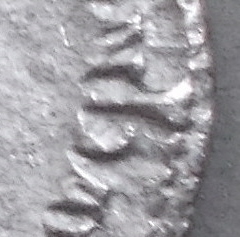 Despite this quirk, I think it overall exhibits overwhelming similarities to other specimens I'm seeing identified as RIC 148. Colligo ergo sum
Edited by Lucky Cuss
05/01/2016 09:35 am
|
|
Pillar of the Community
United States
4883 Posts |
Here's another, which would seem to correspond with the description for RIC 185. 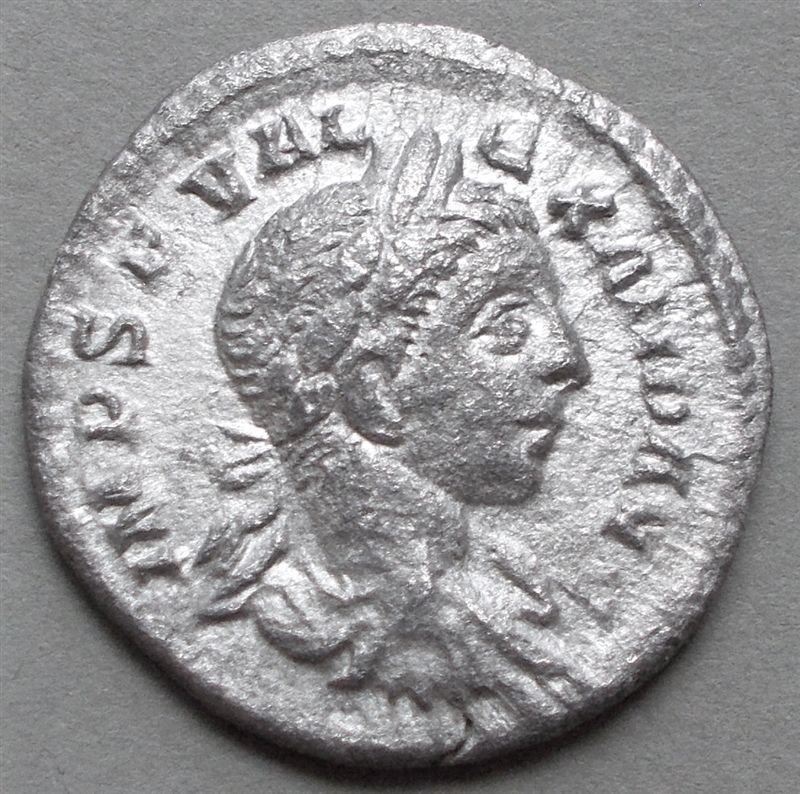 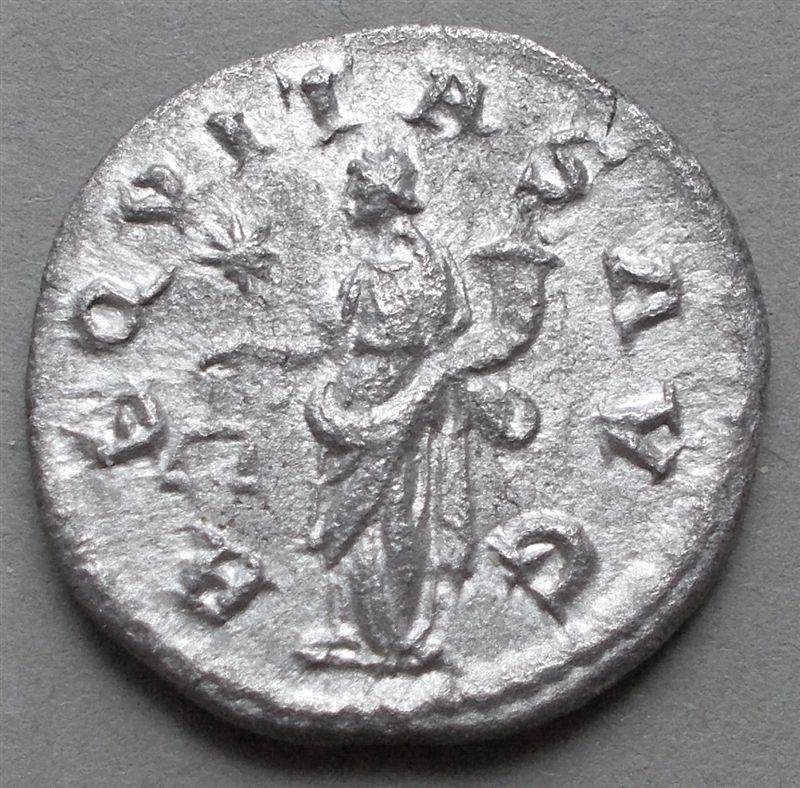 Supposedly this variety dates from the period 228-231. However, the notably adolescent portrait could be taken as indicating it's from earlier in Severus Alexander's reign. Furthermore, the star in the field on the reverse typically is meant to signify the emperor's divinity, or at the very least, his close relationship with the deities. This led me to entertain the notion that the stellated die(s) might simply have been left over from the time of Elagabalus, who was prone to making such claims, which'd also suggest the type was actually struck not too long after Elagabalus' death in 222. The problem with my theory is that while certainly some of Elagabalus's coinage has such a star in the reverse field, none of those depict Aequitas. In fact, I can't find any denarius issue of Elagabalus whatsoever with an Aequitas reverse, so the chances of this being a mule would seem to be about nil. Still, it can't help but be a bit puzzling that Severus Alexander, who was very much trying to distance himself from his notorious cousin's excesses (particularly those of a religious nature), would have a coin like this struck. Colligo ergo sum
|
|
Moderator
United States
23731 Posts |
Nice coin, a little porous possibly from a little harsh cleaning. Is has a nice strike with clear details.
|
|
Valued Member
United States
61 Posts |
Fairly rare according to my census from a year or two ago. A reminder to anyone interested in the coins of this emperor I posted a draft of ERIC III for this section free to download. Even though it's in draft form the survey is pretty extensive and you should get a much better feel for his coinage compared to RIC et al. http://dirtyoldcoins.com/shop/the-c...us-alexanderRas |
|
Pillar of the Community
United States
4883 Posts |
I had to travel out of state this past week, and visited a smallish coin shop not expecting to find any bargains. The proprietor probably witnessed a triumph of Julius Caesar's when he was just a lad, but actually had no interest in or particular knowledge regarding Roman coins. This was the sole example in his inventory, and the asking price was so ridiculously low that I could hardly get my wallet out fast enough. 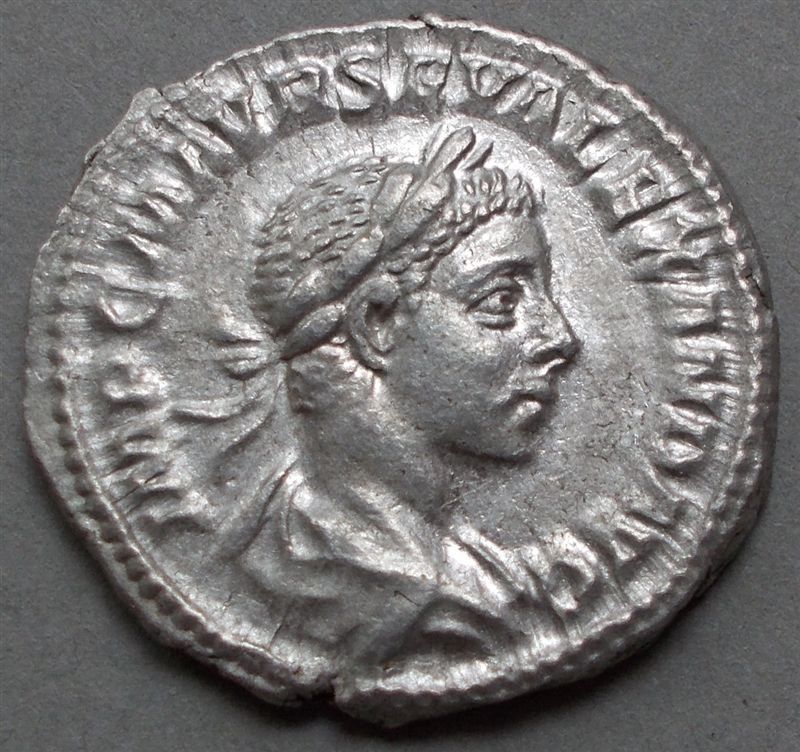 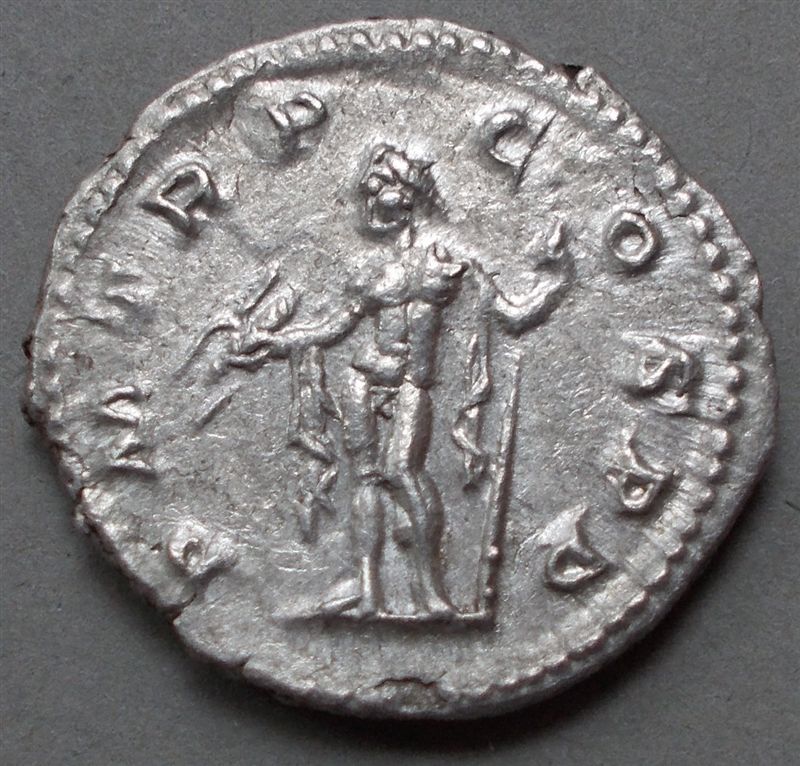 I was originally interpreting the figure on the reverse as a representation of Jupiter, and in fact I believe I've identified this type to be RIC 5 (Sear 7891, RSC 204). Colligo ergo sum
Edited by Lucky Cuss
06/28/2016 10:39 pm
|
|
Moderator
United States
34563 Posts |
Nice pick-up!
"If you climb a good tree, you get a push."
-----Ghanaian proverb
"The danger we all now face is distinguishing between what is authentic and what is performed."
-----King Adz
|
|
Pillar of the Community
United States
4883 Posts |
Just a couple more details with respect to the last specimen I posted.
The handwritten flip insert averred that the reverse depicts Roma - as I said earlier, it seems fairly clear to me that it's in fact Jupiter.
I also forgot to mention that it exhibits coin alignment, albeit with a rotation of about 20°.
Colligo ergo sum
Edited by Lucky Cuss
06/30/2016 10:40 am
|
|
Pillar of the Community
United States
4883 Posts |
My latest, bought from an extremely reputable dealer specializing in ancients. This appears to be RIC 67 (RSC 319, Sear 7904) which could date to possibly as early as 226 AD. The emperor's countenance seems slightly pensive to me. I note that unlike the other examples I've previously posted here, on this one he's shown with a little bit of a beard, albeit hardly a full, manly one. This is consistent with other roughly contemporary issues. The physical properties of this specimen are curious. While about 20 mm in diameter, it's immediately noticeable how gossamery the flan is, with a weight coming in at a mere 1.56 grams. There was certainly some tinkering with the silver content of the denarius in Severus Alexander's time, but in this case it'd seem extreme, unless it's of a much higher silver purity than was the norm during this period. It might be a good candidate for analysis via xray fluorescence. 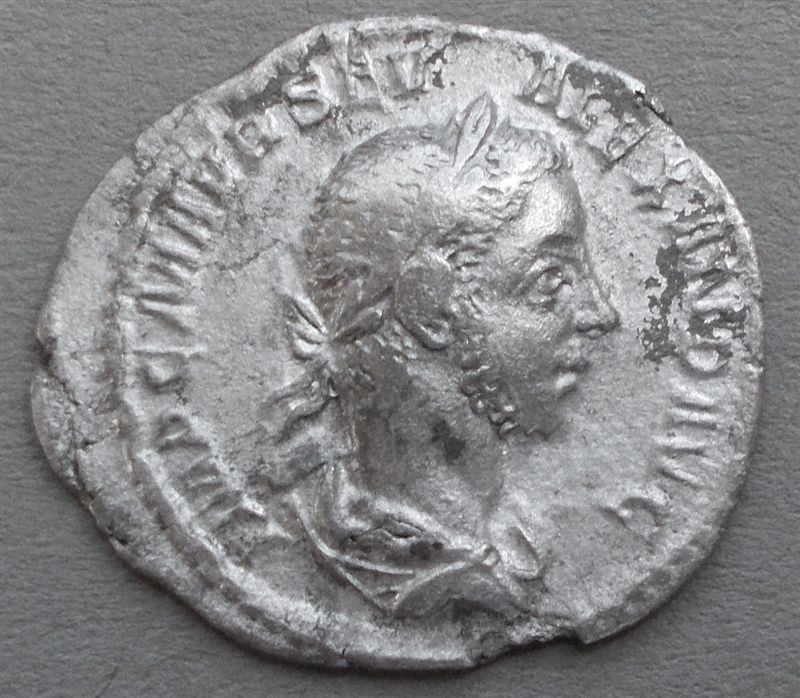 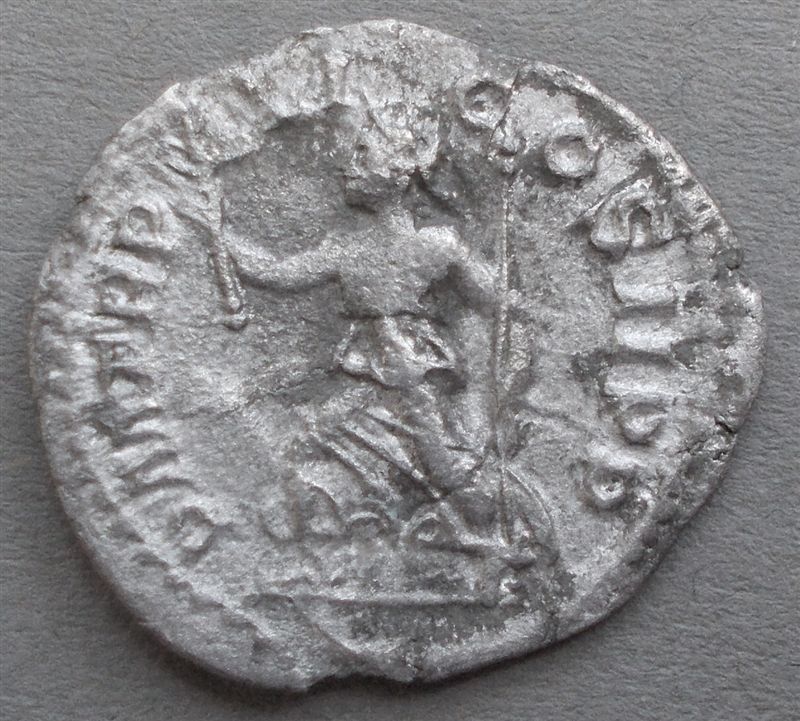 Colligo ergo sum
|
|
Moderator
United States
23731 Posts |
From the weight and appearance of the flan, I think this might be a Limes denarius.
|
|
Pillar of the Community
United States
4883 Posts |
Quote:
From the weight and appearance of the flan, I think this might be a Limes denarius. That's an interesting possibility I hadn't considered. I'd remark that so far as I can tell, it's neither cast nor silver washed bronze, though. It's just that it's so obviously a relatively flimsy thing that it's hard to see how it could've been an officially sanctioned issue of the Rome mint. Colligo ergo sum
Edited by Lucky Cuss
09/26/2016 01:27 am
|
|
Pillar of the Community
United States
4883 Posts |
An update on the last specimen I had posted here. I emailed the seller to ask him for his take on the light weight, and he sent back a pretty detailed reply that I've taken the liberty of reproducing verbatim below:
"As for the denarius of Severus Alexander, there is a very simple explanation. When silver corrodes in the soil, sometimes it will form a patina like a bronze coin and the inner portion of the metal will be preserved. However, sometimes the coin will react badly (particularly in very acidic soil) and undergo another reaction. This reaction is very similar to rust in iron and leaves the metal brittle and much lighter, due to the leaching of ions into the surrounding soil and possible other artifacts surrounding it. This process is called crystallization in numismatics, but the term is a bit of a misnomer as obviously no crystals are being formed. A good test to perform (outside of the obvious low weight and light feel) is to drop the coin on a hard surface from a not-too-high position. Rather than ringing like metal, it will sound more like a rock hitting the surface. There may be some or no ringing, but there will be a pronounced difference between a crystallized and non-crystallized silver coin. Obviously care needs to be taken as the coin can chip, crack or break if dropped too hard or from too high."
Now, the coin actually has a good ring to it, but my doubts regarding the above theory mostly arise from the degree of original detail extant and a distinct lack of surface porosity. Am I off base in considering these aspects to be relevant, or is the appearance of the coin consistent with the chemical process he believes it to have undergone?
Colligo ergo sum
|
|
Pillar of the Community
United States
7067 Posts |
My understanding is that internal crystallization can indeed result in lighter weight coins and does not necessarily result in any surface irregularities.
Handsome set of coins, Lucky Cuss.
|
| |
Replies: 17 / Views: 3,942 |






 Posted 04/30/2016 7:21 pm





