| Author |
 Replies: 35 / Views: 4,125 Replies: 35 / Views: 4,125 |
|
|
|
Pillar of the Community
United States
6370 Posts |
Quote:Where is the grading line for toned silver coins with bright colors to be natural toned and not dipped? I have read that CAC does not like to sticker dipped coins, but the 1877 Seated quarter has a sticker. The 1877 does show some original luster on the obverse that looks much like AU. I have no idea. I think it is pretty much the whim of the grader. There are many that would find your coin very attractive, and they would pounce on it with it being certified and CACed. The grader and the evaluator at CAC may have thought the same thing. I see the luster, and I think your pictures might be muting it. I will say that the reverse has more luster than on a typical EF-45, and if the obverse is a similar story, that is probably what drove CAC to bean a dipped coin. |
|
Bedrock of the Community
United States
94367 Posts |
Well, I was sure off base here! To me it looked altered, and still does.  |
|
Pillar of the Community
United States
6370 Posts |
Let me get one thing straight. I was not trying to belittle your coin. I think the toning is genuine album toning that is attractive. My toned SLQ looks much worse than yours as far as the surfaces are concerned.
|
|
Pillar of the Community
 United States
4510 Posts |
TypeCoin,
I am trying to understand the dipping and retoning process and how to determin if a coin has been dipped and retoned. I thought it would be fun to do a type set with lots of color that would be made up of original coins. When I look at the coin in hand, I can see nothing that would that would lead me to think that the coin was dipped and retoned. I spent about two hours on the Internet today reading about dipped and retoned coins and did not find anything useful. I have thought about calling CAC for a reevaluation of the coin.
|
|
Pillar of the Community
United States
6370 Posts |
What happens when a coin is dipped is the top layer of silver atoms are stripped from the coin. Usually, this is to remove the silver atoms bonded with sulfur (or sometimes oxygen). The silver atoms bonding to other atoms cause the dark color on circulated coins, and when they are stripped, the silver has a silver color again. This leaves the silver surface raw and highly reactive, so placement into an album with a high sulfur content will induce rainbow album toning. So worn coins with white silver surfaces have been dipped. The way the coin was stored causes toning.
On AU and MS coins, stripping the silver lowers and eventually takes away the microscopic metal flow ridges that are the essence of luster. That is why dipping is generally not recommended for high-grade coins.
However, I think there are some dips (EZest comes to mind) that takes the sulfur from the silver atoms and bonds the sulfur atoms to hydrogen atoms to make H2S. These don't strip off the silver atoms themselves.
I hope I explained everything correctly.
|
|
Bedrock of the Community
United States
10982 Posts |
CAC will sticker cleaned coins. They do it all the time.
|
|
Pillar of the Community
United States
4337 Posts |
Quote:How about this 1830 Half Dime? You can clearly see hairlines and unnaturally shiny surfaces, which are indicative of a harsh cleaning. You might be mistaking die scratches for cleaning lines. Die scratches are a common occurrence in early 19th century coinage. Also, I highly doubt this coin was "dipped". Was it cleaned at some point? Sure, but in all likelihood the OPs coin is an old water and cloth cleaning from a hundred years ago and the coin found its way into a Wayte Raymond cardboard holder where it developed its toning pattern. This is a typical collectors debate. Buy the coin, not the holder or complimenting sticker. I would also start with this article for a very detailed explanation of thin film interference. http://www.jhonecash.com/research/t..._physics.asp |
|
Pillar of the Community
United States
6370 Posts |
Quote:
You might be mistaking die scratches for cleaning lines. Die scratches are a common occurrence in early 19th century coinage. No, I'm not. I posted two pictures from two different lighting angles. Look at how the scratches change direction from one picture to the other. Also, you can see the scratches on the worn high spots. If those were die scratches, would they have those characteristics? |
|
Pillar of the Community
United States
4510 Posts |
TypeCoin, Here is a Seated dime in a PCGS holder graded problem free VF30 with strong rainbow toning. Your position is that this circulated dime had to be cleaned or dipped to enable the toning because the dime's original surface in VF30 condition would not tone in rainbow colors without assistance of a dip or cleaning. If this dime was in AU condition, could it tone in rainbow colors without a dip or cleaning because most of the original surface and luster is still intact? 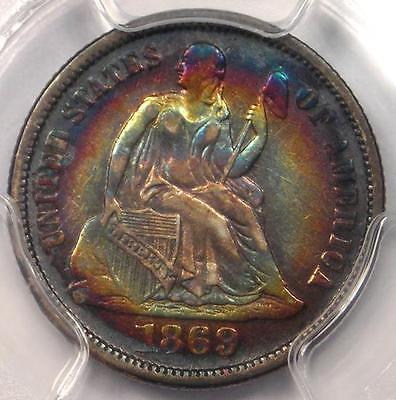 Edited by Slider23
05/09/2016 10:32 am
|
|
Pillar of the Community
United States
6370 Posts |
@Slider Yes on all points. However, I have seen AU/MS naturally get the dull brown toning that is seen on many circulated coins. I don't think I have seen any with grey toning, so I think only circulated coins tone to a grey. I don't immediately know what causes the difference, but that is what I have observed. But the point is that circulated (<AU) coins shouldn't get rainbow toning. If you look at the right field of the dime, you can see hairlines going from NW to SE. If you think about it, when was the last time you saw a rainbow-toned VF/EF/AU Morgan dollar in a problem-free holder? Here's an example. This 1861 quarter was cleaned, and I toned it with an envelope: https://goccf.com/t/195501&SearchTerms=1861This 1857 quarter is in slightly better condition, but the toning is much duller: https://goccf.com/t/257196&SearchTerms=1857Edited by TypeCoin971793
05/09/2016 12:22 pm
|
|
Valued Member
United States
71 Posts |
Thanks for the discussion on this topic. I found the 1861 example to be very interesting, and beneficial to my understanding of toning.
|
|
Pillar of the Community
United States
4337 Posts |
Quote:
If those were die scratches, would they have those characteristics? potentially. I have seen some funky die scratches over the years. Quote:
so I think only circulated coins tone to a grey. I don't immediately know what causes the difference, but that is what I have observed. Circulated to what degree? Meaning, grade threshold. Quote:
But the point is that circulated (<AU) coins shouldn't get rainbow toning. Why? What are your thoughts on this coin? 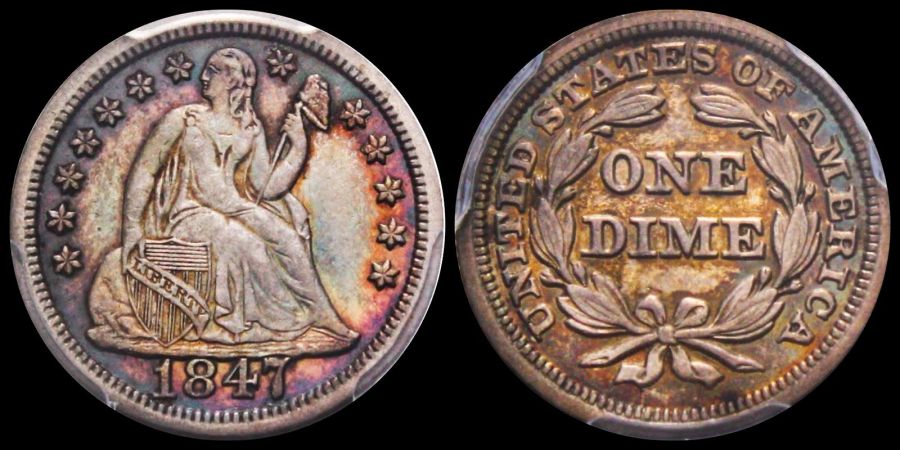 |
|
Pillar of the Community
United States
6370 Posts |
Quote:
Why? I did some research into the physics of toning on circulated coins to answer your question. I hope what I uncovered is right. The rainbow toning is caused by thin film interference, which requires a reflective surface underneath the thin film (oxidation) to cause the colors. Without this reflectivity, then the coin would be brown/grey. While silver coins were circulating, the constant abrasion of human hands kept them from toning, so they all had a dull white look to them. When the coins got pulled out of circulation, they got the chance to tone. Some coins reacted with oxygen to produce a black layer of silver oxide, while others reacted with sulfur to get a rainbow tone. However, as this sulfide layer got deeper, the worn coins did not have the surface reflectivity to cause the pretty colors seen with thin film interference. AU/UNC coins had luster that had enough reflectivity to make the colors pop when light hit them. This phenomenon can be seem in Oih82w8's EF-45 1861 Half Dime, where there is vibrant color where there are remnants of original luster on the reverse. Everything else is grey. 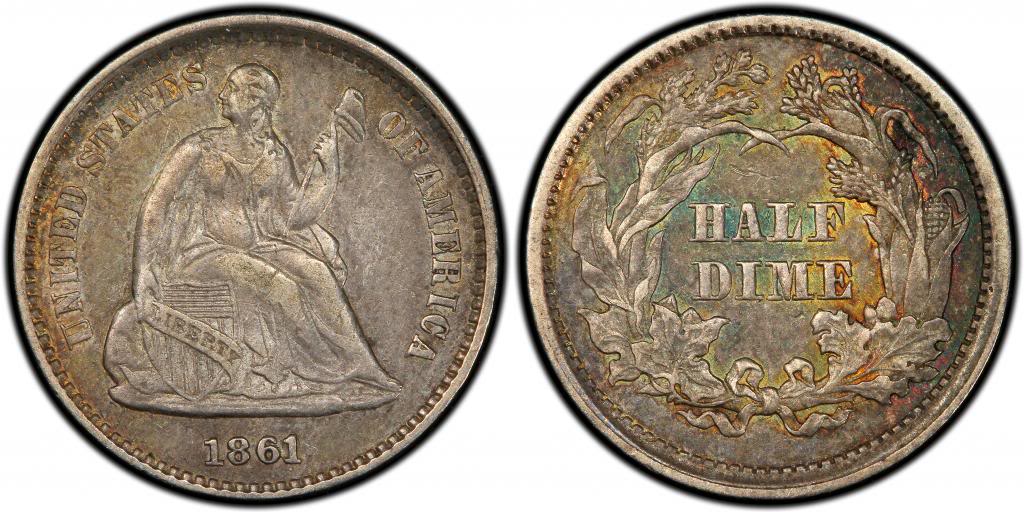 This is also seen on this CBH: 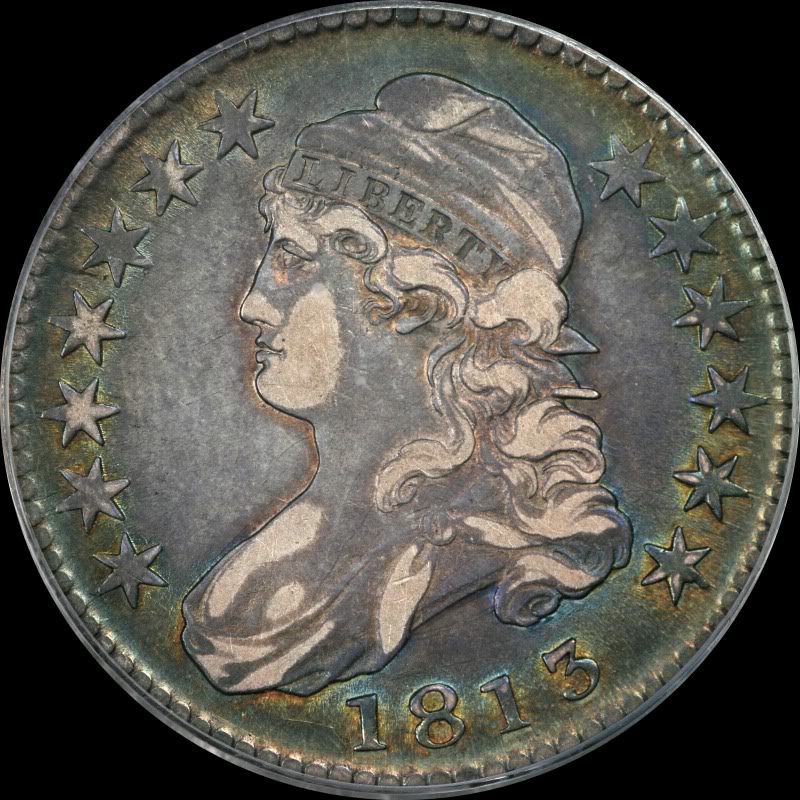 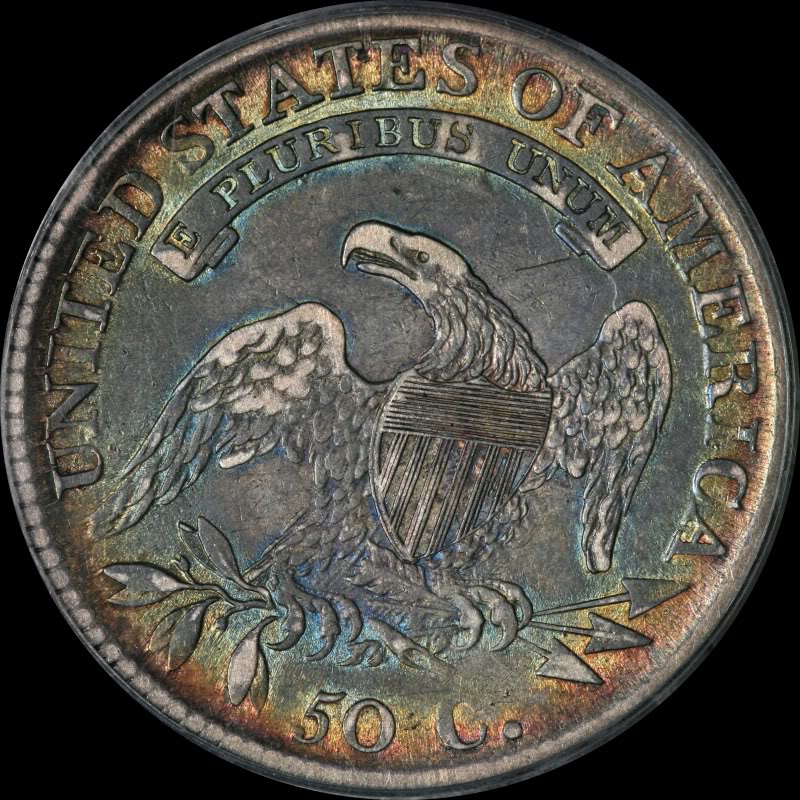 When silver coins are cleaned, the sulfide/oxide layer is made very thin to nonexistant again. The raw silver has a natural reflectivity that will produce colors for relatively thin layers of sulfide. Also, the surface is often made shiny to cause the colors to pop out, such as on my quarter or this CBH (note the hairlines on the fields). 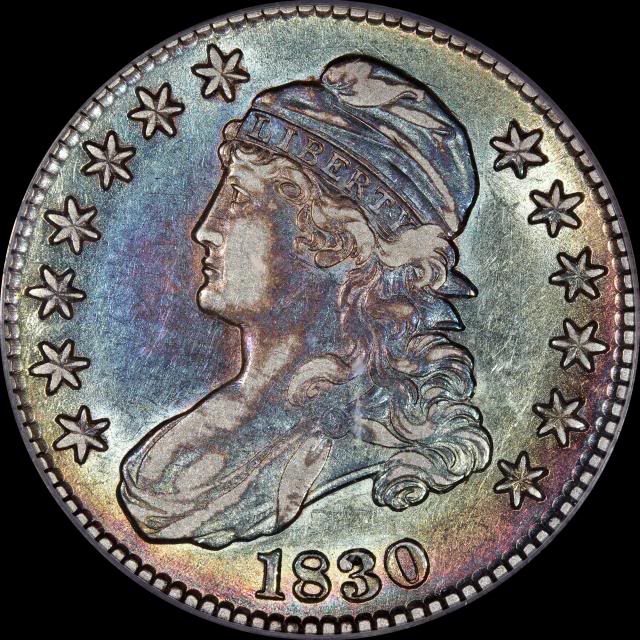 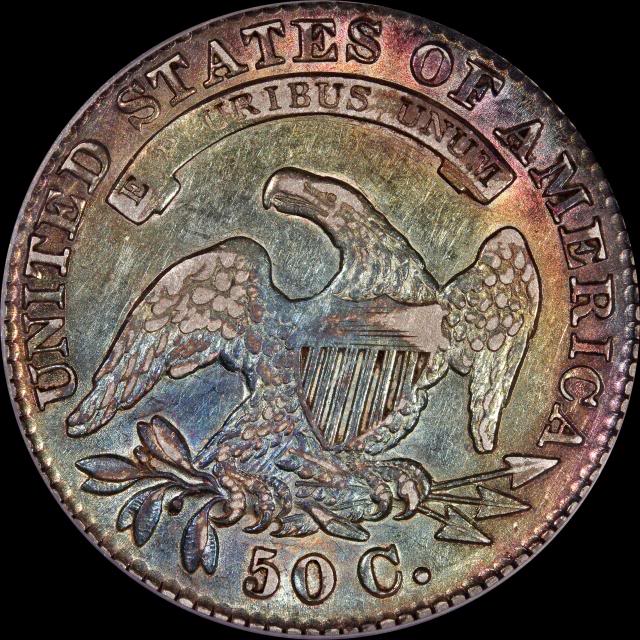 |
|
Pillar of the Community
United States
6370 Posts |
Quote:
I have seen some funky die scratches over the years. Wouldn't they have been worn away on the high points of the bust? That's where I am seeing some on the hairline scratches. Quote:
Circulated to what degree? Meaning, grade threshold. To the point where there is no luster, so usually below EF-45. Quote:
What are your thoughts on this coin? I'm thinking very attractive example of dipped and album retoned. Notice how light the metal is in the central obverse. |
|
Pillar of the Community
United States
4337 Posts |
Great research  I love reading about thin film interference. when I try to explain it to non-coin lovers, most of the people in my world, I simply say think of the "oil on water effect" as that is the exact phenomena at work. I'm sorry, I just don't see how all these rainbow toned coins were dipped. Especially in mid AU examples such as the 1847 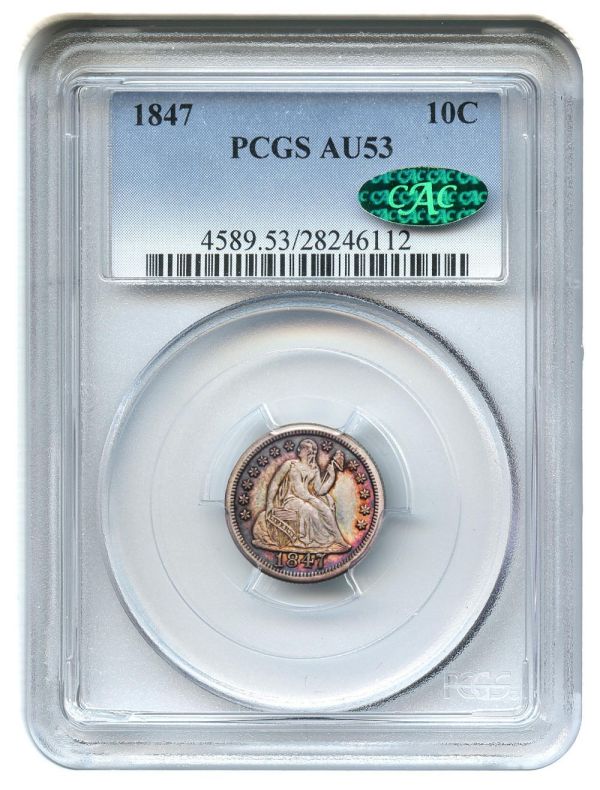 |
| |
Replies: 35 / Views: 4,125 |






 First Page


 Posted 05/08/2016 4:33 pm





