| Author |
 Replies: 15 / Views: 1,336 Replies: 15 / Views: 1,336 |
|
|
Valued Member
Germany
303 Posts |
Hi, in one of the lots I purchased ( https://goccf.com/t/260266) I found this little gem and wanted to know how you'd grade it and how much this piece roughly could be worth. Best regards from Berlin  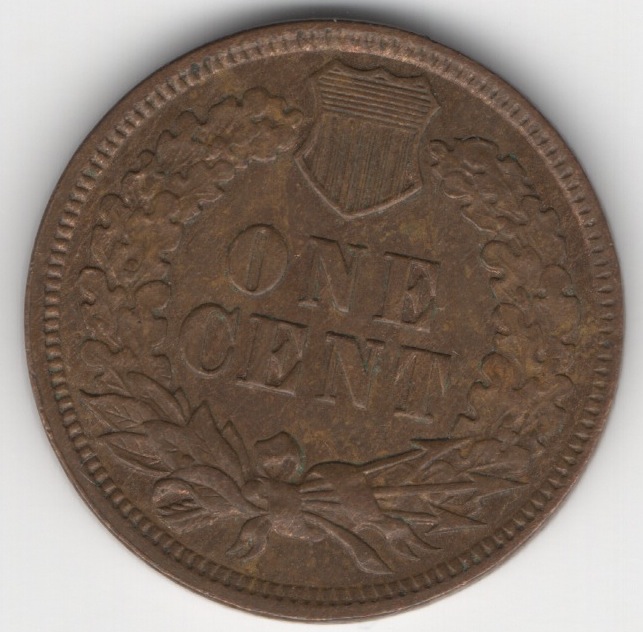 |
|
|
|
Rest in Peace
United States
18456 Posts |
Looks AU-55BN . I'm not into IHC Varieties but I think it's a Bold N . About $400-$500 USD.  |
|
Valued Member
 Germany
303 Posts |
Well that sounds nice. So I guess it would be good to send it to PCGS for grading if I intend to sell it? Sometimes it is a shame I am not collecting coins from the US...
|
|
Pillar of the Community
United States
1499 Posts |
In the old days this would be an EF-45 since it does not seem to have any luster. Today it will make AU-55. When I was dealer I bought an 1877 Indian cent that was like this piece. The seller and I both agreed that the coin was an EF-45, but it came back from NGC as an AU-58.  I sold it to a want list customer for run of mill AU-50 money because I still thought it was over graded as an AU-58. |
|
Valued Member
Germany
303 Posts |
Well that is something I do not really understand. If a coin gets toning over the years without being circulated and therefore does not have any luster but still all details - why should this affect the grade?
Of course luster is much better for eye appeal but a toned coin still can be uncirculated or AU, right?
|
|
Pillar of the Community
United States
1499 Posts |
Quote:
If a coin gets toning over the years without being circulated and therefore does not have any luster but still all details - why should this affect the grade? Mint luster is an integral part in determining if a coin is Mint State or close to it. If you don't have mint luster, the coin is not Mint State period. If a coin could be Mint State with no luster, the whizzed, polished and corroded coins could all be called "Mint State." The term "Mint State" includes the concept of original mint surfaces, not just sharpness. |
|
Valued Member
Germany
303 Posts |
I get that but lets stick with the term uncirculated. A coin that has got toning without ever being in circulation would get what grade then?
|
|
Pillar of the Community
United States
6370 Posts |
A coin can tone and still retain all of its mint luster. That would be an UNC coin. Luster is microscopic metal flow lines created when the dies strike a coin. When sulfur atoms bond to the surface of the metal, the microscopic metal structures remain unchanged except for the fact that some of the metal atoms are now bonded to sulfur atoms. I see no luster on your coin, so it can't be UNC.
|
|
Valued Member
Germany
303 Posts |
I was not saying that this one is uncirculated. It was just a general question on theory. This coins has got some tiny marks which is why I'd call it XF.
Edited by Potsdam
05/21/2016 09:23 am
|
|
Pillar of the Community
 United States
5828 Posts |
Looks XF to me...
By the way, it doesn't become XF by the marks. MS-63 coins can have huge marks, but are still uncirculated.
|
|
Pillar of the Community
United States
4992 Posts |
Agree with AU-55BN nice look
|
|
Bedrock of the Community
United States
94367 Posts |
I would say AU-50 at best. I think anything higher than this implies some sense of retained luster (not necessarily traces of red), even if the coin is fully BN.
|
|
Pillar of the Community
United States
3843 Posts |
|
|
Bedrock of the Community
Canada
10743 Posts |
Nice hard to get date in that condition and yes, I agree with AU-55, nice coin..  |
|
Bedrock of the Community
United States
18932 Posts |
|
|
Bedrock of the Community
Canada
11922 Posts |
|
| |
Replies: 15 / Views: 1,336 |
|







 Posted 05/21/2016 07:41 am





