|
This page may contain links that result in small commissions to keep this free site up and running.

Welcome Guest! Registering and/or logging in will remove the anchor (bottom) ads. It's Free!
To participate in the forum you must log in or register. | Author |
 Replies: 6 / Views: 1,312 Replies: 6 / Views: 1,312 |
|
|
Valued Member
United States
236 Posts |
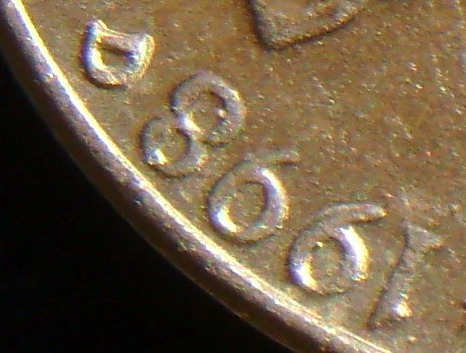
Question for mainly for C.C., Coop, FIR & whomever else can answer. So, I've been doing my home work, about MD's, DD's, RPM's, Etc. Copper & FIR just recently had that very educational topic & breakdown of the systimatic way coins are made and how certain errors or so can happen. Now, if you have a typical MD, say around the date & the MM, should't the MD be visible at least from the ending numbers to the MM; or Around the edging letters and so forth. How about just doubling to the MM on the harder metals. My experience with working with hard tempered type metals is that if you vibrate one portion of the metal upon strike, then you should have some residual damage or other MD type anomolies to the surrounding areas within close proximity of the say RPM type of anomoly. Confused yet.  .... Ok now.... after learning more & more about the Dies/Hubs being made, there does seem reasonable possibilities, even with todays technology "without the improbable notion", that a certain hub, could have doubling to just the MM; is this correct? Or are we still sticking with the MD assessment without any MD evidence to the surrounding areas? The only reason why I ask, is because, I recently posted a pic of one of my Quarters w/doubling.......was stated it was MD. I then posted a similar pic from Ken Potters web site of similarity to mine, and someone came along and said the same thing "MD"..... K.P. said his Pic is Hub doubling, yet someone was convinced it was MD. Just rying to make one point, and trying not to stir the pot too much. We all know that pics DO NOT do justice for the real deal. This whole topic stemmed from investigating and seeing reactions. The pic below is why I questioned MD vs RPM. There's an ongoing hot topic that's been mediating back and forth on the very subject of validity. I just question the slight rotation noted, WITHOUT any residual or peripheral anomolies happening to any where else. Remember, first glances aren't always what they seem. This is still more than likely an MD...... just trying to make a point though. Image:  1998-DDJefferson.jpg 1998-DDJefferson.jpg78.14 KB |
|
|
|
Bedrock of the Community
United States
12437 Posts |
Your nickel is without a doubt not an RPM since the mintmarks have not been hand punched since 1989 or so, thus rendering the process that creates RPMs extinct. As far as any peripheral doubling on coins, that currently will almost always be Machine Doubling or Die Deterioration Doubling. Since the Mint has gone to a "single squeeze" hubbing process(not sure when, early 2000s?), the chance of a dramatic doubled die occurring is virtually nonexistant. At first, it was thought that this process would completely eliminate the chances of a DD occurring but it still happens- just look at all of the Minnesota quarter DD varieties. The problem is that most of those varieties need high magnification just to see the slightest doubling so they are really minor. Also notice that the doubling is confined to the center of the coin and not on the peripheries. It is hypothesized that during the process, the die makes a slight initial contact with the hub before it is fully seated thus creating slight doubling only at the center. Remember that the die steel is not a flat surface, it is concave so only the center can make that slight initial contact. |
|
Bedrock of the Community
United States
62064 Posts |
On the Nickel image I'm not sure what your referring to? Die wear show excessive on Nickels as the planchet is harder and wears the dies faster. But I can tell what for sure you are seeing. Machine Doubling can appear on one device or many. Sometimes on Obverse or reverse. Sometimes on both. If you have a OBW roll of coins, you will notice on machine doubled ones coming from the same die, varying degrees of doubling. So stronger, others weaker. The play of the machine determines on each strike how they will look. Normal/minor/major. Common happenings, you soon figure out how you can tell the difference. On a post 1990 doubled die you can have both the date and mint mark doubled that was hubbed into the die that way. But most of the time when you see the date and mint mark doubled in the same direction, it is Machine Doubling. There is a 1996-D doubled die that is a doubled die with the mint mark doubled, but these cases are rare occurrences. A hub doubled die will have some evidence that it is not machine doubled. Notching, wider letters, or doubled letters with separation. Usually machine doubled coins the devices are the same size, but the metal is moved to make an appearance of Machine Doubling. Sometimes we want to hold on dearly thinking we have a machine doubled coin and it is nothing. Other times we have what we think is nothing and is a variety. Knowledge is the beginning of wisdom. Reading here, asking questions and others sharing is what makes this hobby so interesting. Hands on varieties will help a lot with recognizing them from machine doubled coins. So purchasing the different types of varieties will help a lot. Seeing what makes it a variety in hand helps with what you've learned. You train your eye to spot the difference and soon you can tell the difference. It just takes time. OK, another question? 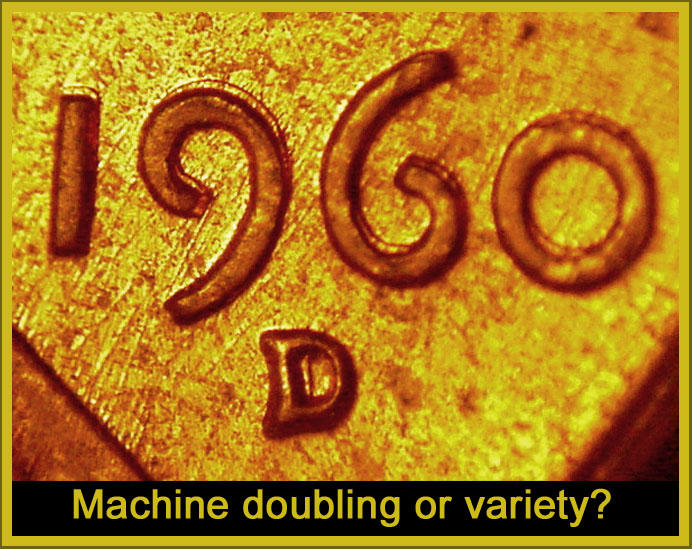 What do you think? Edited by coop
02/25/2008 3:53 pm
|
|
Pillar of the Community
United States
1934 Posts |
|
|
Valued Member
 United States
236 Posts |
I'm not trying to re-verify the 1998-D Nickle I actually know it's an MD from researching and asking questions. I posted it as a question of how a single device has been effected, and asking why there is not any peripheral doubling occuring. The whole point of the topic is how one person novice or expert looks at one thing, when it turns out to be completely different. This is why added the comment about K.Potters coin from a previous post and the answer I received. If you get five Doctors to assess a patient; your going to get five different answers. I know... I'm a nurse and I've seen it time and again. These Doctors are supposed to be experts with several years of schooling yet mistakes happen. There's no such thing as an expert! Just someone who is well educated and experienced giving their own personal assessment based on analysis of what they have in fron of them.
I'm not an expert in coins, frankly don't want to be. It's a very interesting hobby that I got into, not realizing that we as individuals take for granted of what we carry around on us from day to day.
That's all folks. I do really appreciate the information though. I love to debate, and this is such a good forum to get to the facts about. I guess you could call yourself "Coin Lawyers"...... maybe not, to political.
Eric
|
|
Pillar of the Community
United States
3507 Posts |
Here is the basic premise that should answer your question. Machine Doubling is a damage that occurs during the striking process. The damage or damages can occur in many ways for many reasons. I like to say that Machine Doubling has a tendency to be "consistently inconsistent". By That I mean that any or all details on a coin can show Machine Doubling or due to happenstance Machine Doubling can be visible only on parts of a coin. While it is most usual , for example, for Machine Doubling to be visible on many parts of a coin, it is also (because it is somewhat random although common) possible to be on the L of LIBERTY and the T of LIBERTY without it being on any other letter. Machine Doubling can be on one digit of the date and no others. Again, it often effects an area of the coin but it could be anywhere on a small detail or it could be responsible for a doubled look to a large area of the coin. I often see, for example, Machine Doubling on the earlobe of Lincoln with no evidence of Machine Doubling anywhere else. You have to recognize the details of a coin in order to recognize Machine Doubling. It is important to be extremely familiar with the width of letters and numerals so that you can determine the movement of metal on a digit or letter. It is really a science and it is not guesswork. remember though the basic premise of Machine Doubling as being "consistently inconsistent" Take that D on the nickel for example. When a coin is ejected from a die, it is not necessarily this "smooth as silk" process that we might imagine. Some slight nick in the metal could have caused that D to hang up and be the very last, miniscule portion of the coin to separate from the die. It could have twisted the slightest fraction of a fraction of a millimeter and the D would have that look to it. That is how Machine Doubling is. It can be miniscule or it could be massive. Thanks, Bill Edited by foundinrolls
02/25/2008 7:25 pm
|
|
Valued Member
United States
236 Posts |
FIR, I totally get MD, sometimes we need to put other things into perspective. What you discribed is what I believe a lot of new coin hobbiests are looking for. That is an excellent visual description. Even though it's nice to find any type of doubling when searching, the need of proper insight of what we are really looking for also needs to be there.
Hey......Thanks a lot.
Eric
|
| |
Replies: 6 / Views: 1,312 |
|
To participate in the forum you must log in or register.
Disclaimer: While a tremendous amount of effort goes into ensuring the accuracy of the information contained in this site, Coin Community assumes no liability for errors. Copyright 2005 - 2026 Coin Community Family- all rights reserved worldwide. Use of any images or content on this website without prior written permission of Coin Community or the original lender is strictly prohibited.
Contact Us | Advertise Here | Privacy Policy / Terms of Use
|
| Coin Community Forum |
© 2005 - 2026 Coin Community Forums |
| It took 0.32 seconds to rattle this change. |
 |
|
| |
| |







 1998-DDJefferson.jpg


 Posted 02/25/2008 3:51 pm


