Years ago I noticed quarters 1980-D, 1981-D, 1982-D, 1983-D, and 1984-D all come with reverses where the letters, especially EPU, are quite thin. The field on these quarters is also much more reflective than normal quarters. The same thinness appears on the proof quarters of these same years. I can not say if this represents a new reverse die variety or not. I sent an example to Cion World Collector Clearinghouse and they came to the conclusion that this was caused by overpolishing. This may be true but I believe there is more to the story. Why only at the Denver mint? Also the numbers are quite high. For 1983-D about 40% of finds in my area have this "variety". The art work does seem to be the same, although I haven't studied this for some years. The question that still interest me is, were the proof dies prepared differently enough to change the appearance of the art work and were some of these dies used for circulation strikes like the type B reverse quarters of 1969-D through 1972-D? Whether or not they are a different variety I do have an example in my collection.







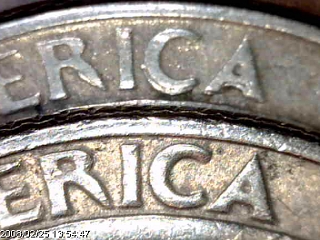 wq1.jpg


 Posted 02/26/2008 09:27 am


 qfullam.jpg
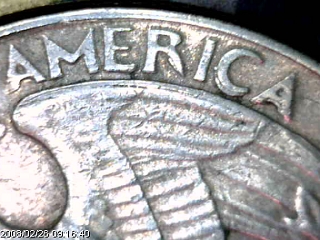 qfullam.jpg
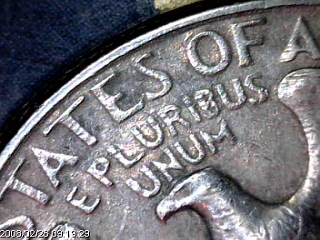 qfwd.jpg


