| Author |
 Replies: 35 / Views: 4,977 Replies: 35 / Views: 4,977 |
|
|
|
Moderator
 United States
14463 Posts |
|
|
Pillar of the Community
United States
584 Posts |
A different type of collapse, but a failure (fractional reserve gold standard) nonetheless... 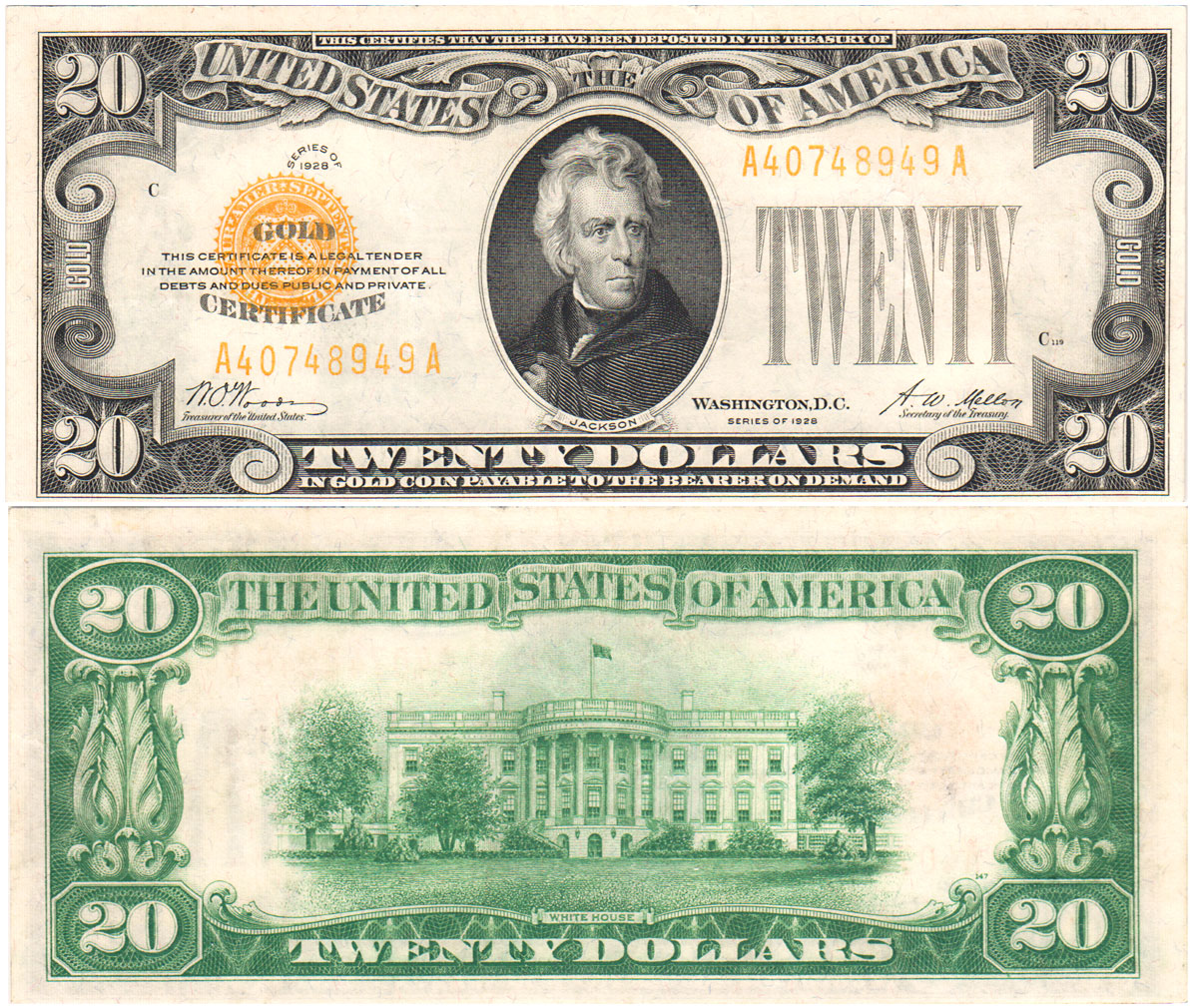 |
|
Pillar of the Community
United States
6370 Posts |
I like this one.   |
|
Pillar of the Community
Poland
3201 Posts |
I'd guess these are bundles of the small 1 mark notes (1000 each), still in their bank wrapping.
But what is the boy holding in his hand? A US note perhaps (to compare the value)?
|
|
Pillar of the Community
United States
6130 Posts |
Can't be a US note--they took a more or less "modern" look well before the Weimar inflation... that note would have been from the 1880s or earlier if it was US.
One of my favorite examples of inflation was with Brazil. The reis a useless amount when they gained independence, and steady inflation led to some very interesting denominations (960 reis), yet they still made coins in silver all the way up to the 20s or early 30s.
|
|
Pillar of the Community
United States
6370 Posts |
Quote:
But what is the boy holding in his hand? A US note perhaps (to compare the value)? Yes. It is a Series 1917 $1 United States note.  Quote:
Can't be a US note--they took a more or less "modern" look well before the Weimar inflation... that note would have been from the 1880s or earlier if it was US. No. The 1917 $1 United States Note was still commonly used until 1928, though the look was "modernized" in 1923. |
|
Pillar of the Community
Poland
3201 Posts |
Thanks for identifying that bill! |
|
Pillar of the Community
 United States
4883 Posts |
Interesting that the Hungarian episode of hyperinflation was mentioned. I stumbled across this table the other day: 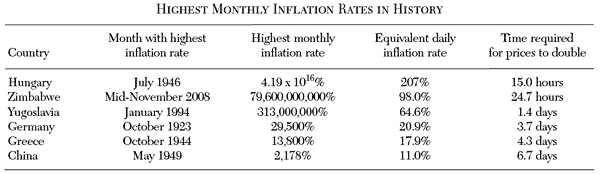 Colligo ergo sum
|
|
Pillar of the Community
United States
6130 Posts |
Guess I'll have to go buy a hat and eat it now. Good call TypeCoin; I guess I have more gaps in my knowledge of early 20th centry US notes than I thought.
|
|
Pillar of the Community
United States
4883 Posts |
Quote:
Does anyone know what the inscription says? It's not standard German I presume you're referring to what's on the "2". I suspect that it's some sort of colloquialism and/or slang, perhaps muddied further by being presented phonetically to mimic some sort of dialect and/or accent. An example in American English would be if we saw "Aw, shaddup!" we'd recognize that as a regional phonetic rendering of "Oh, shut up!" which itself is slang for "Oh, be quiet!" So deciphering this will likely require somebody who's a native speaker of German. Proceeding on that basis, I'd interpret the reverse inscription as "What does that cost?" with "Bat" being substitued for "Wat" probably as a humorous reference to some alternate pronounciation typical of the locality. I'd be willing to bet that the obverse inscription is also meant to be funny in both content and the manner in which it's expressed. "Geld" obviosly is "money" and I think "nix" actually is a stand-in for "nichts" meaning "nothing" but beyond that I'm stumped. By the way, my research indicates that's a pretty rare piece of notgeld. Colligo ergo sum
Edited by Lucky Cuss
07/09/2016 01:12 am
|
|
Pillar of the Community
Poland
3201 Posts |
I agree with your take on it. Since the image has dropped out of sight already, and for the possible benefit of any future searches, I'll transcribe the inscriptions.
The 1923 Menden 2 million mark notgeld coin reads:
BAT KOST DAT?
GELD STOYF ! OVER NIX TE BOYTEN
There also is a 5 million mark with the following inscriptions:
ET IS I M OLLEN LECHTE BAT SALL DAT GIEBEN
ik ame Kääl!
Who can handle translating these?
|
|
Pillar of the Community
United States
4883 Posts |
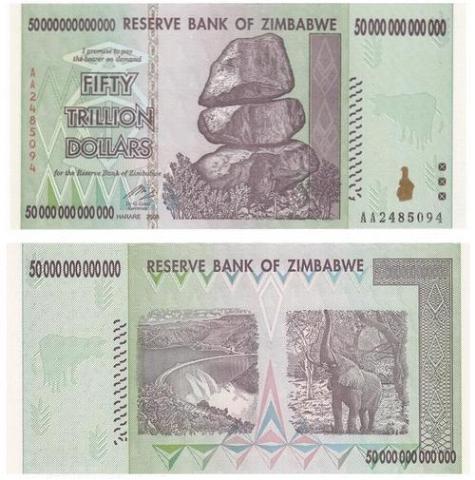
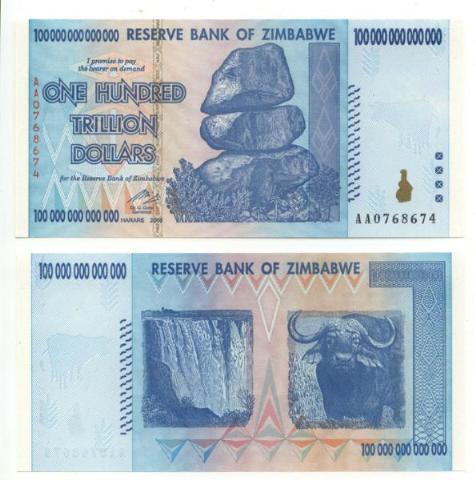
I happened to run across these today, which clearly circulated before the 2008 debacle. Funny that I've never seen other examples in the "junk bin" before. 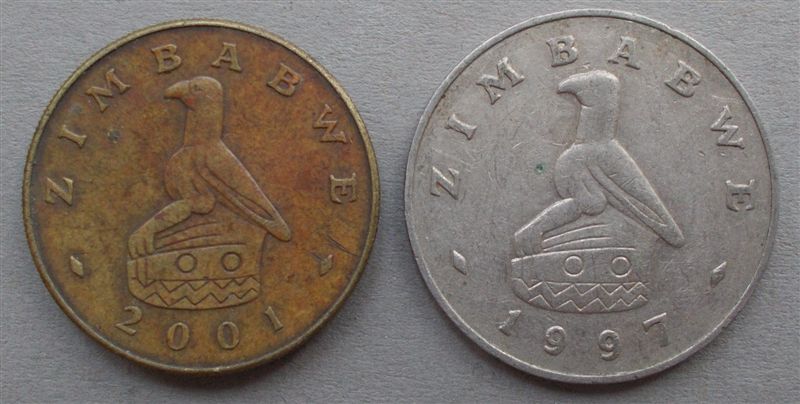 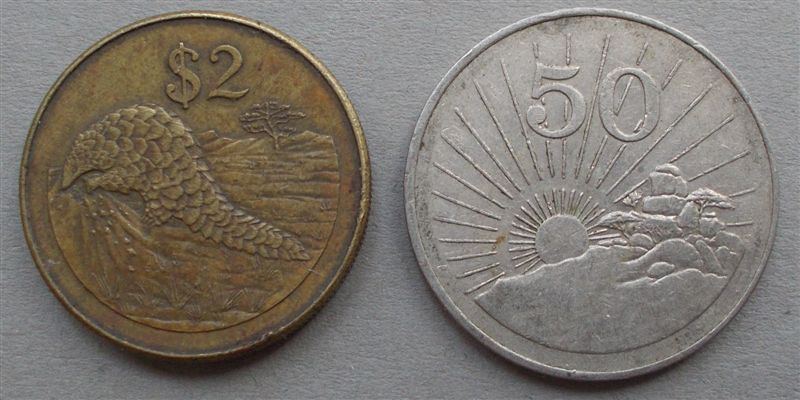 Colligo ergo sum
|
|
Pillar of the Community
 United States
1950 Posts |
Here are my two Menden pieces: 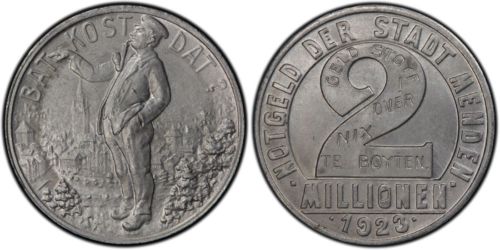 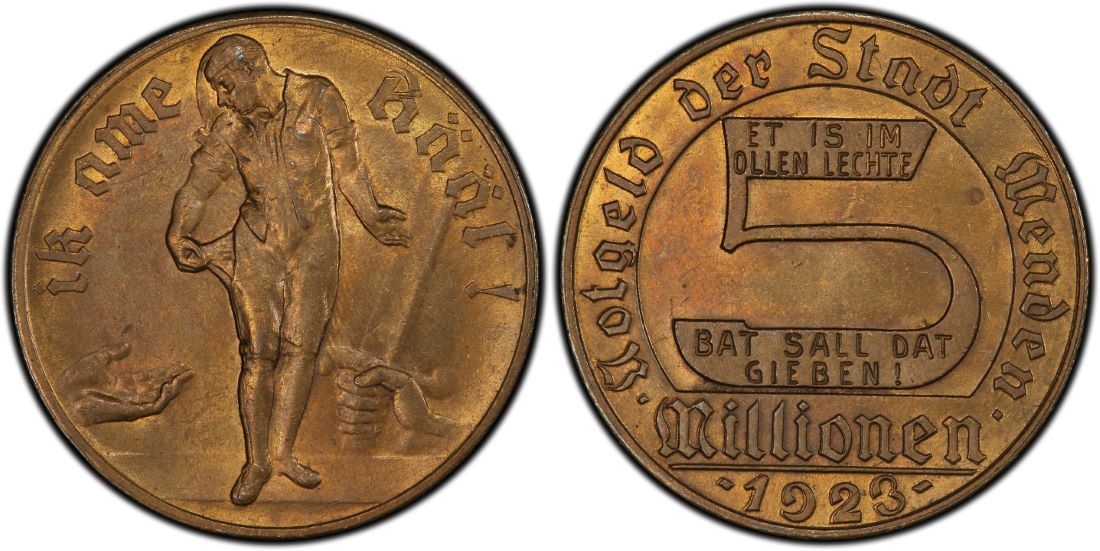 I cannot figure out the exact translation, but I would also guess it may be slang/dialect... I have seen a hyperinflationary medal which I could not figure out, and showed it to a native German speaker, and it turns out that the idiom used on the medal was a sort of 'bathroom' humor comparison of the German Mark... |
|
Pillar of the Community
United States
573 Posts |
Here are a few German stamps that show the results of the currency collapse. The two on the right are overprinted. The top one started as a 500 mark stamp and was overprinted as 250 thousand mark. The one on the bottom started as 400 mark and was remade as 100 thousand mark. The other two are 100 million mark and 500 million mark stamps. 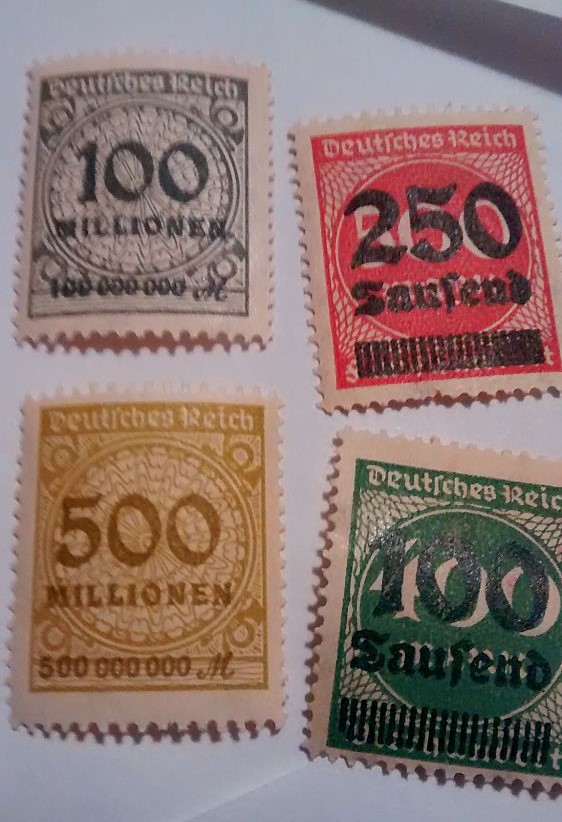 |
|
Pillar of the Community
United States
711 Posts |
Fun fact.
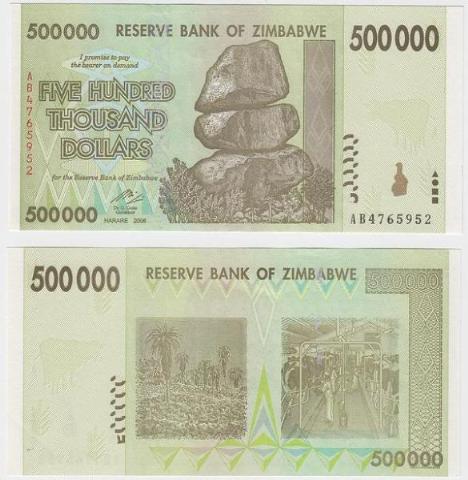
Zimbabwe finally stopped printing money out of thin air (like all countries do sadly) only when they realized they could sell the blank paper for more money than their printed money.
They were actually harming the value of the blank paper by printing their monetary symbols on it so they finally stopped.
|
| |
Replies: 35 / Views: 4,977 |




 First Page




 Posted 07/08/2016 09:45 am





