




 First Page
 Previous Page


 Posted 07/18/2016 9:33 pm


What came out on the other side of the demise of the nearly worthless Papiermark of late 1923 was the Rentenmark. With crushing debt and no gold reserves, the Weimar government actually had a sensible idea, which was to issue a revised currency backed by what assets tha nation could muster, which turned out to be land and industrial facilities. To a degree, this construct was rather fanciful, but a populace weary of fiscal insanity was more than ready to accept such a plan, and the Rentenmark (which cost 1 trillion of the hyperinflated mark being discarded) exchanged hands at rates almost identical with the pre-WWI mark. While it was never intended to be more than a stopgap measure (the equally valued Reichsmark was introduced in 1924 as the permanent new currency), the Rentenmark actually retained its utility and worth and remained in circulation all the way into 1948.
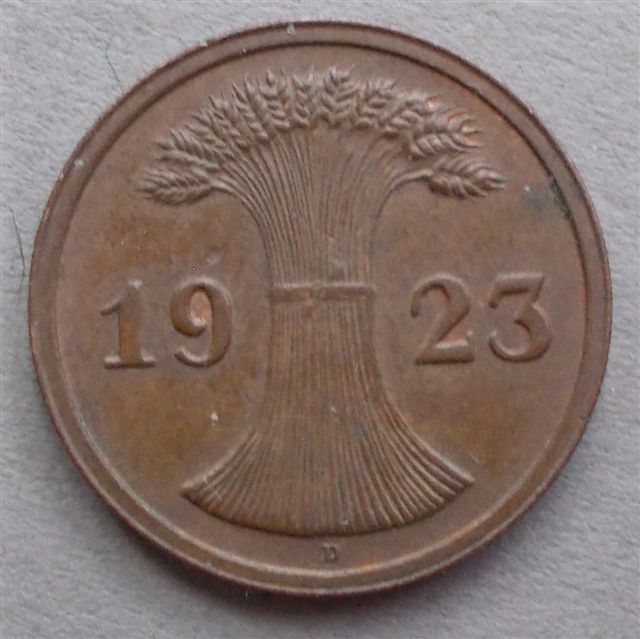
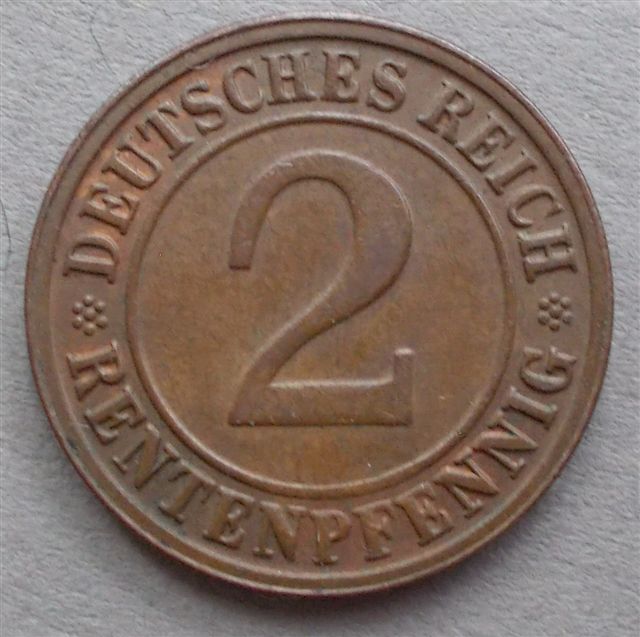
Pictured below is a 2 Rentenpfennig coin from late 1923, reassuringly of a size and composition, and more importantly with the buying power, of what a generation of Germans had come to expect of such a denomination. The "D" mint mark indicates it was struck in Munich.
Pictured below is a 2 Rentenpfennig coin from late 1923, reassuringly of a size and composition, and more importantly with the buying power, of what a generation of Germans had come to expect of such a denomination. The "D" mint mark indicates it was struck in Munich.
Colligo ergo sum


