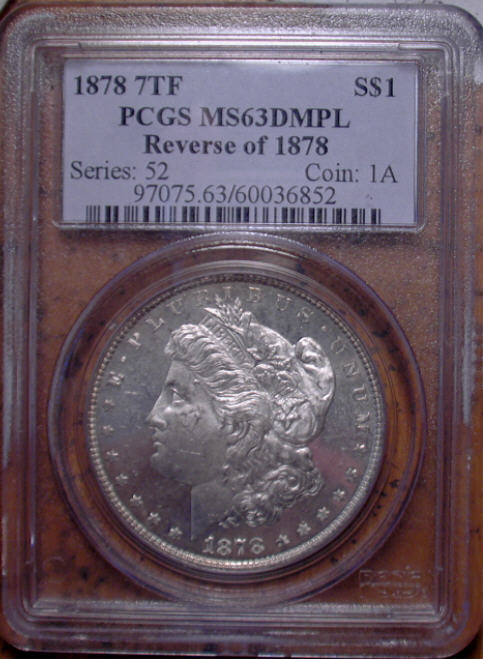
Counting 1921's, something like 650,000,000
Morgan dollars were minted. It's not hard to find a year/mint combination which has 50,000 examples combined in PCGS/NGC slabs. This is a wonderful thing, in that it makes these shiny silver cartwheels accessible to thousands of collectors. On the other hand, there's a loss of exclusivity inherent in collecting such a common issue, unless one reaches into the upper condition ranges, where my wallet fears to tread.
Another outgrowth of such high mintage numbers is the wide diversity of
Morgan dollar varieties, called
VAM's. This acronym stems from the last names of A. George Mallis and Leroy Van Allen, the two gentlemen responsible for the codification and labeling of these varieties. Every known Morgan die combination is assigned a
VAM number, each year/mint combination starting at VAM-1 (a "normal" coin) and proceeding upwards with new numbers assigned to each new variety as it is discovered. Sometimes, a known variety is discovered with an additional feature that sets it apart from the original. For example, the 1878-P VAM-33 is characterized by the strongly doubled legs of the eagle. However, at some point in its' life the dies used to produce this variety clashed, and coins produced after that clash showed evidence of it. These later, clashed coins are designated VAM-33A.
Some
VAM's are as common as grains of sand, and carry no additional value. Others bring a huge premium over normal pricing. The reverse die of the VAM-33 I mentioned before was also used with a different obverse, one which was hugely tripled in the leaves and cotton bolls. This variety, VAM-44, is known as the "King of
VAM's and if you can find one, any one, it's going to cost you thousands of dollars to own. The 1921-D VAM-1X, showing a huge rim
Cud on the obverse, is unique - only one is known. If you find another, you can set your own price.
In 1997, Dr. Michael S. Fey, PhD and Jeff Oxman published a listing of popular and collectible
VAM's known as the Top 100. These were chosen not so much for their rarity, although some certainly are extremely rare, as for their striking departure from "normal." Although some are fairly common, carrying little premium over standard varieties, there's still a cachet associated with owning such a coin. Many hundreds, possibly thousands, of Morgan collectors specialize in Top 100
VAM's. Both PCGS and NGC have separate Registries dedicated to Top 100
VAM's.
Now, to the point of my story (for those of you who have been able to struggle through my long-winded post). Top 100
VAM's are accessible to any of us - you need not have deep pockets to add one to your collection. Presented below are two examples, neither of which cost me any more than the "average" price for that date and grade.
Occasionally, moisture is able to accumulate in a die while in the press, and the surface of the die rusts. This is almost always found on the reverse die, since it's the bottom one. The rust eats away at the metal of the die, and coins struck by that die show raised dots called "pitting." One example is the 1897-P VAM-6A, showing pitting below the eagle's tailfeathers and down to the D in DOLLAR. I was able to acquire the one shown below at no premium over a normal variety; this is a very common
VAM and supply exceeds demand.
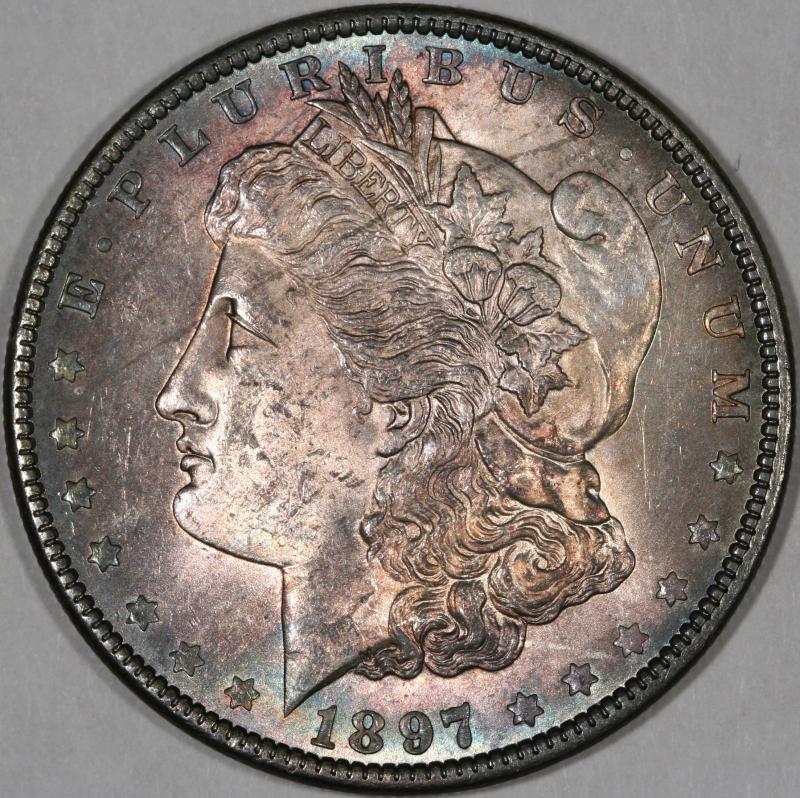
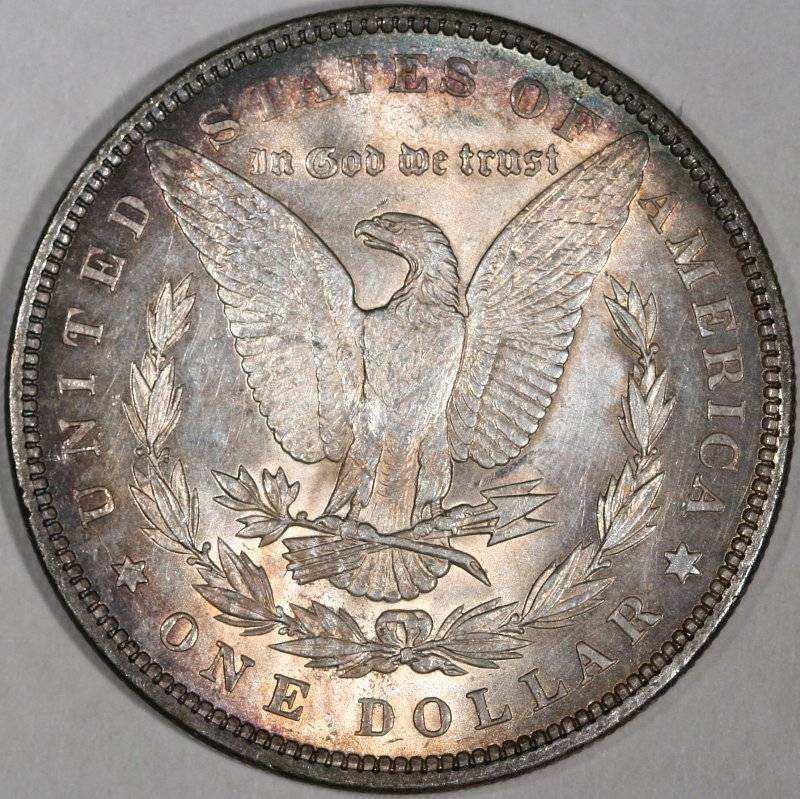
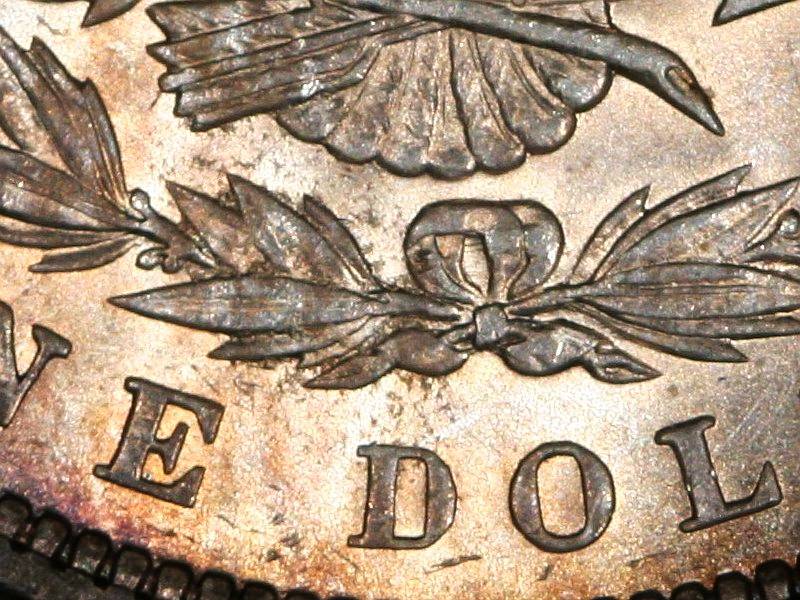
For those who would ask, the two lines across the obverse are "on" the coin, and not "in" it. I could remove them, but it would be at the cost of the coin's color, which for me forms its' character.
The most significant pitting is to be found on the Philadelphia issues of 1921. These dies had a hard life - over 20,000,000 Morgans were minted in Philadelphia that year, and
VAM's abound which show serious die cracking and/or pitting. The 1921-P VAM-41A is the absolute leader of the pack when it comes to a messed-up die. The lower reverse is dramatically pitted, and this after the Mint discovered the rusted die and polished it to within an inch of its' life to remove the pitting. All the lines you see in the pics below are actually part of the die, raised from the surface of the coin. This is my all-time favorite
VAM, and more than a dozen have passed through my collection. They're relatively common; the one pictured below is in a PCGS MS63 holder, cherrypicked from a prominent online dealer.
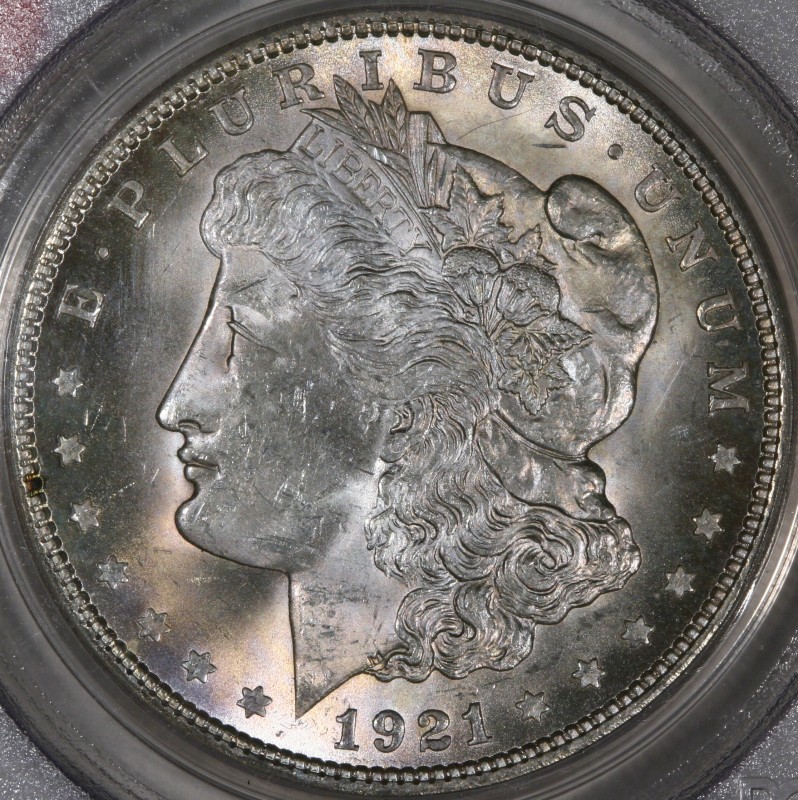
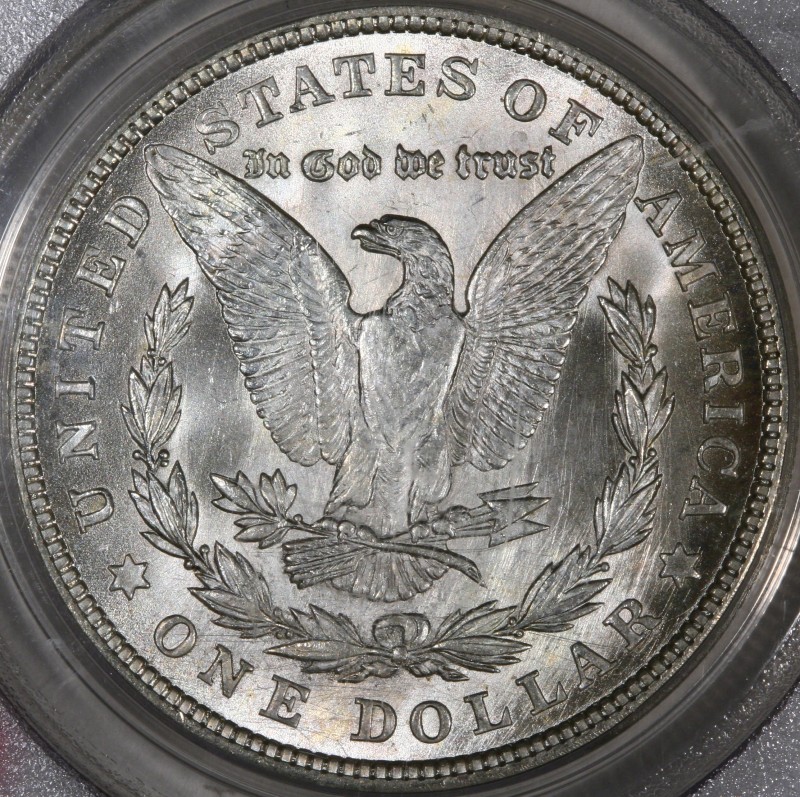
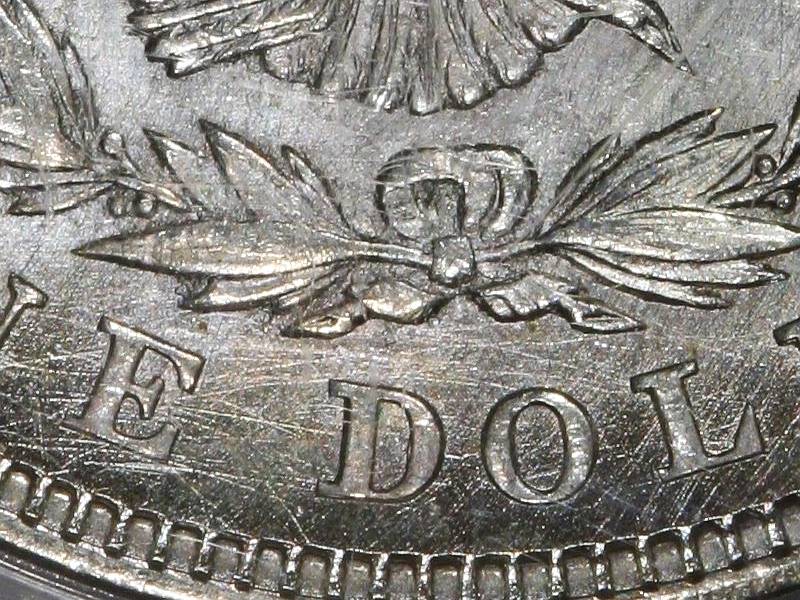
Both of these coins were not attributed by the seller. That's the point of my story. Although the 1897 was fairly priced (I informed the seller of the
VAM before buying it, and the original price was honored), the 1921 is probably worth three times what I paid. Neither coin cost as much as $40. Deals like this abound. With a little money and a little knowledge, you, the collector, can go out and add significant varieties to your collection at an affordable price.
So go out and do it before I buy them all.












 Posted 03/02/2008 01:53 am