Coin Community Family of Web Sites Join Thousands of Coin, Bullion, & Money Collectors
Royal Canadian Mint products, Canadian, Polish, American, and world coins and banknotes. Vancouvers #1 Coin and Paper Money Dealer Coin, Banknote and Medal Collectors's Online Mall Join Thousands of Coin, Bullion, & Money Collectors 300,000 items to help build your collection! Specializing in Modern Numismatics Shop for APMEX Bullion on eBay!


Username:
Password:
Save Password
Forgot your Password?


This page may contain links that result in small commissions to keep this free site up and running.

Welcome Guest! Registering and/or logging in will remove the anchor (bottom) ads. It's Free!

Electrum Vs. "Low Purity Gold"

To participate in the forum you must log in or register.
Author Previous TopicReplies: 6 / Views: 3,896Next Topic  
Pillar of the Community
Finn235's Avatar
United States
6130 Posts
 Posted 08/03/2016  12:06 pm Show Profile   Bookmark this topic Add Finn235 to your friends list Get a Link to this Message Number of Subscribers
Interesting trend that I have noticed.

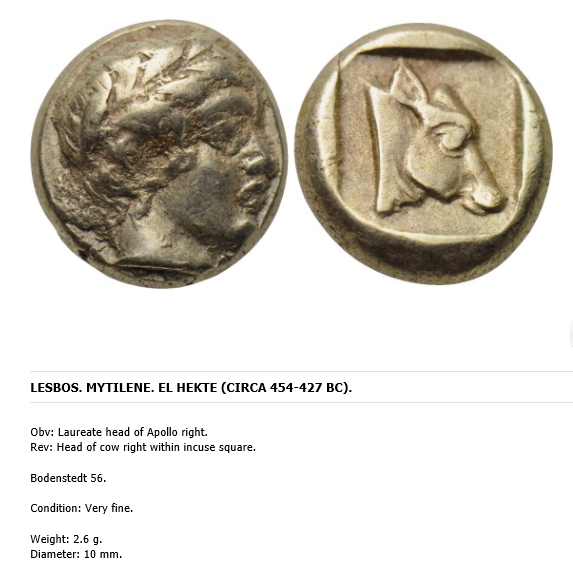
The very first coins minted (in the Mediterranean, before TypeCoin comes in to prove me wrong with China) were made of the abundant natural electrum in the Anatolia region. Progress in refinement technology allowed the purity to be controlled, leading to the divergence into "gold" and "silver" although electrum stuck around and made a few reappearances throughout antiquity.

After the Byzantine age, it was generally accepted that gold coins should be reasonably pure, usually in the 80-95% range. "Electrum" ceases to be a major player in the composition game at this point.

Flash forward to late 1850s Japan, where the isolationist bubble has just popped. Gold coins were very rare in circulation there, but they did exist. 4,000 mon (cash) made a Ryo, which was a big oval of gold, worth enough to feed a family for about a year. There was a mismatch in the relative supply of gold and silver in Japan versus the rest of the world, meaning that people flocked to snatch these coins at about 1/3 of their actual value in the world market. As a result, the purity of these coins was forced to plummet until it hit about 22% when Meiji took power and modernized the country's monetary supply.

This issue is by far the most affordable "big" gold coin, equal to 1/2 of a Ryo. You can get one for just barely over $50 if you are patient and lucky.

http://en.numista.com/catalogue/pieces88796.html

At any rate, I am confused why the Japanese coins from about 1850-1869 are always listed as "gold" and not "electrum", despite having less than half the gold by weight of the Lydian stater.

Anybody care to weigh in?
Pillar of the Community
oriole's Avatar
Canada
5240 Posts
 Posted 08/03/2016  12:56 pm  Show Profile   Bookmark this reply Add oriole to your friends list Get a Link to this Reply
My Krause, 19th century, 3rd edition, does not call them "gold" or "silver", just lists the fraction of gold and silver in each coin.
Pillar of the Community
Learn More...
Canada
9864 Posts
 Posted 08/03/2016  3:32 pm  Show Profile   Bookmark this reply Add DBM to your friends list Get a Link to this Reply
Most modern Canadian 14k and 18k gold coins contain gold with more than 20% silver thus technically, by many accepted definitions, they are electrum.
Some dictionaries define electrum as a naturally occuring alloy not man-made.
We as collectors reserve the term electrum to describe ancient coins.
"Dipping" is not considered cleaning...
-from PCGS website
Pillar of the Community
DavidUK's Avatar
United Kingdom
2624 Posts
 Posted 08/03/2016  4:16 pm  Show Profile   Bookmark this reply Add DavidUK to your friends list Get a Link to this Reply
I worked in a jewellers for many years, and nobody every used the term electrum.

The three common standards of gold in the UK are 9ct, 18ct and 22ct and with 9ct being the cheapest and the hardest wearing of the three that is what we are most familiar with... it is made of 9 parts out of 24 parts gold, and the remainder is a mix of silver and copper - it can be considered to be similar to electrum in colour and perhaps purity. Really I only know the term electrum from coin collecting... I only own the one coin made of it though.


Electrum-Vs.-
Edited by DavidUK
08/03/2016 4:17 pm
Moderator
Learn More...
Sap's Avatar
Australia
16827 Posts
 Posted 08/03/2016  6:27 pm  Show Profile   Bookmark this reply Add Sap to your friends list Get a Link to this Reply
"Electrum" is a vague term, without a robust, technical definition, other than "gold that has been debased with silver". The word is kind of analogous to the word "billon", meaning "very debased silver". There isn't a robust, technical definition for "billon" either, but it is often used in situations where the actual intended fineness is either unknown or it actually varies considerably from coin to coin.

Thus, the Mexican pesos of the 1960s that were .100 fine silver, or the American " War Nickels" (.350 fine silver) are almost never called "billon", even though they are very debased silver, because the fineness is known and consistent at those levels.

For these Japanese coins, I suspect the problem is threefold:
- The gold is debased with a mixture of silver and copper, not just silver as would be expected for "electrum"
- While the standard of fineness varied greatly within the series, for each specific type and variety, the fineness was quite tightly controlled.
- Coin collecting is quite popular in Japan, so the terminology used is, in all likelihood, Japanese terminology that has been translated into English, rather than an English terminology that has been forced onto Japanese numismatics. So, we call them "gold" because collectors in Japan have always called them "gold".
Don't say "infinitely" when you mean "very"; otherwise, you'll have no word left when you want to talk about something really infinite. - C. S. Lewis

Bedrock of the Community
Conder101's Avatar
United States
17884 Posts
 Posted 08/03/2016  8:16 pm  Show Profile   Bookmark this reply Add Conder101 to your friends list Get a Link to this Reply

Quote:
This issue is by far the most affordable "big" gold coin, equal to 1/2 of a Ryo.

"Big" is a relative term here, these tend to be about a quarter inch by 3/4 inch. On interesting thing about them is they come in several types and several varieties within each type. Most US dealers don't completely or correctly attribute them and I have bought several of them as common pieces that turned out to be rare varieties that catalog for hundreds of dollars.
Pillar of the Community
Finn235's Avatar
United States
6130 Posts
 Posted 08/03/2016  10:16 pm  Show Profile   Bookmark this reply Add Finn235 to your friends list Get a Link to this Reply
"Big" is certainly a relative term, but compared to the other "under $100" gold coins out there, these are pretty huge. The only competition would be the various other Japanese coins (2 shu being the cheapest) and the Indian fanams. Most of these would fit neatly on top of a US cent with room to spare.

You do raise a good point, Sap. But, to counter, we often call the post-Aurelian antoninianii of Rome "billon" even though they were tightly controlled at a 1:20 ratio. And as for the War Nickels, I had assumed it was always because the silver was added not necessarily for value, but so that the coins would work in vending machines--thus they were never "debased" because you can't debase a cupronickel coin to .350 silver.
  Previous TopicReplies: 6 / Views: 3,896Next Topic  

To participate in the forum you must log in or register.


Disclaimer: While a tremendous amount of effort goes into ensuring the accuracy of the information contained in this site, Coin Community assumes no liability for errors. Copyright 2005 - 2026 Coin Community Family- all rights reserved worldwide. Use of any images or content on this website without prior written permission of Coin Community or the original lender is strictly prohibited.
Contact Us  |  Advertise Here  |  Privacy Policy / Terms of Use

Coin Community Forum © 2005 - 2026 Coin Community Forums
It took 0.3 seconds to rattle this change. Forums