| Author |
 Replies: 13 / Views: 5,450 Replies: 13 / Views: 5,450 |
|
|
Valued Member
Uruguay
217 Posts |
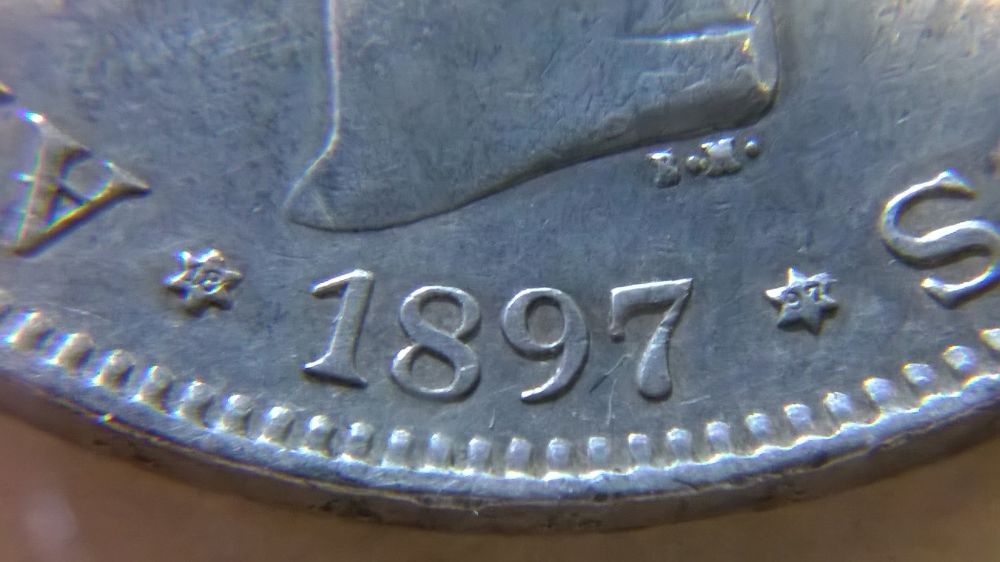
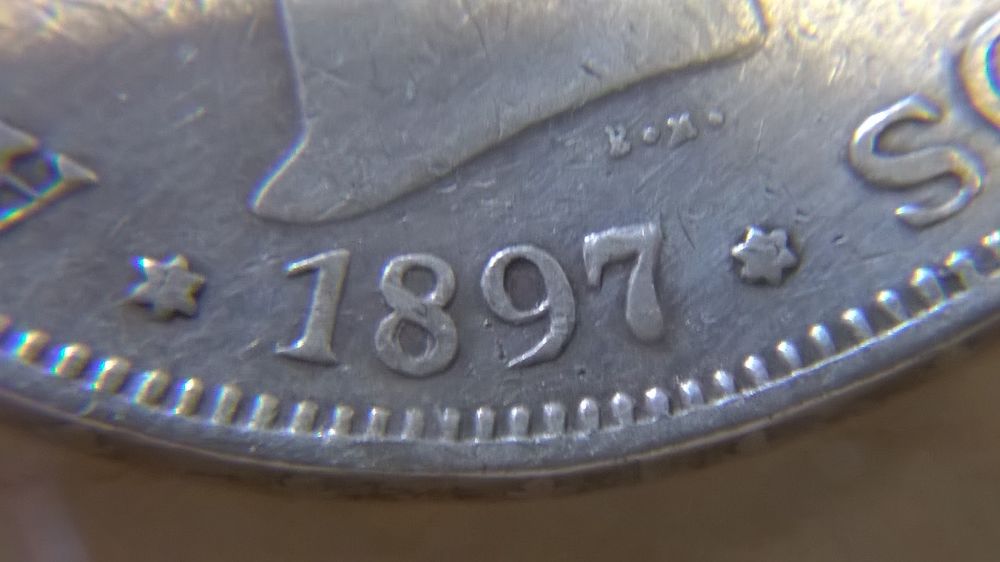
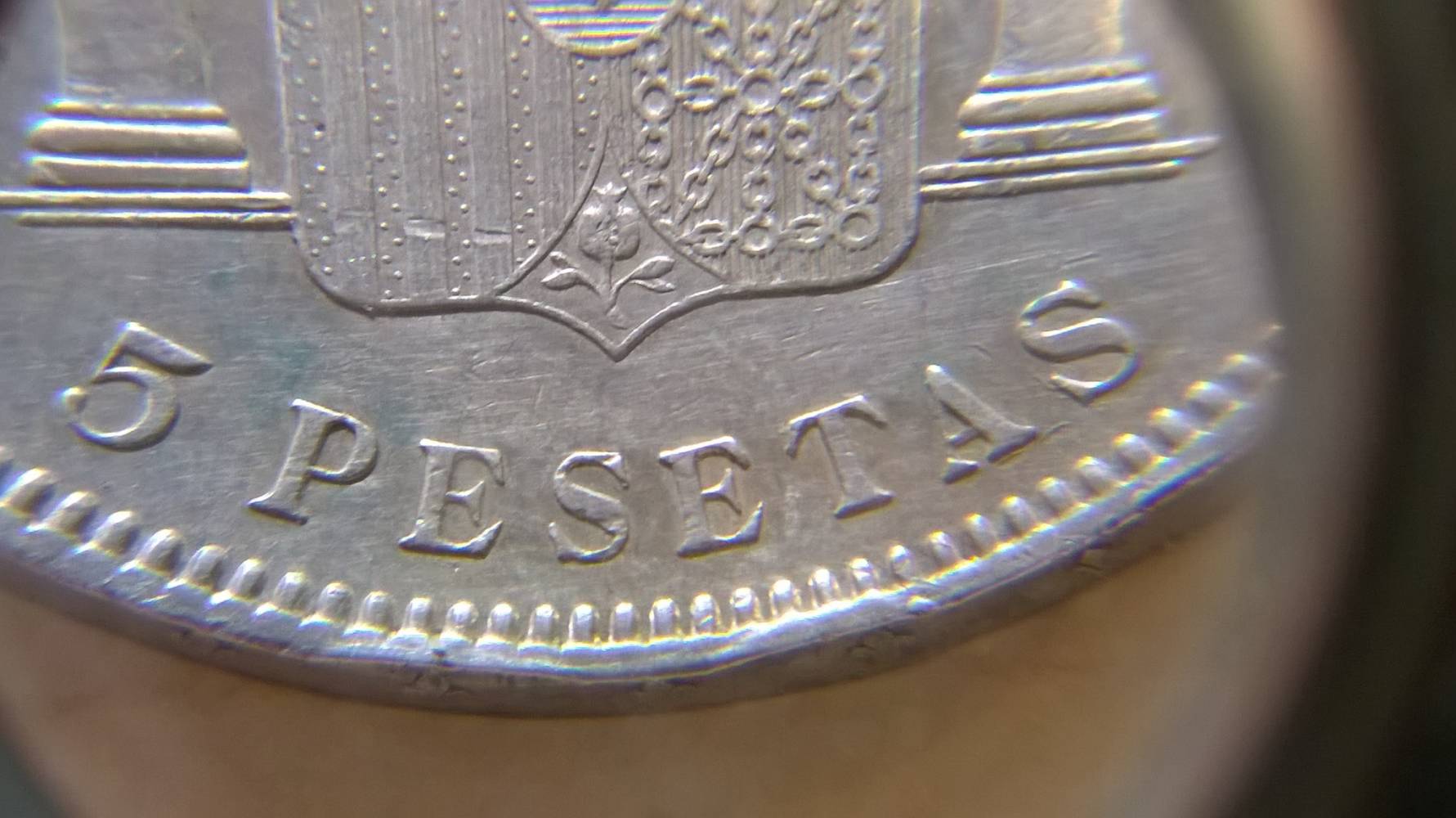
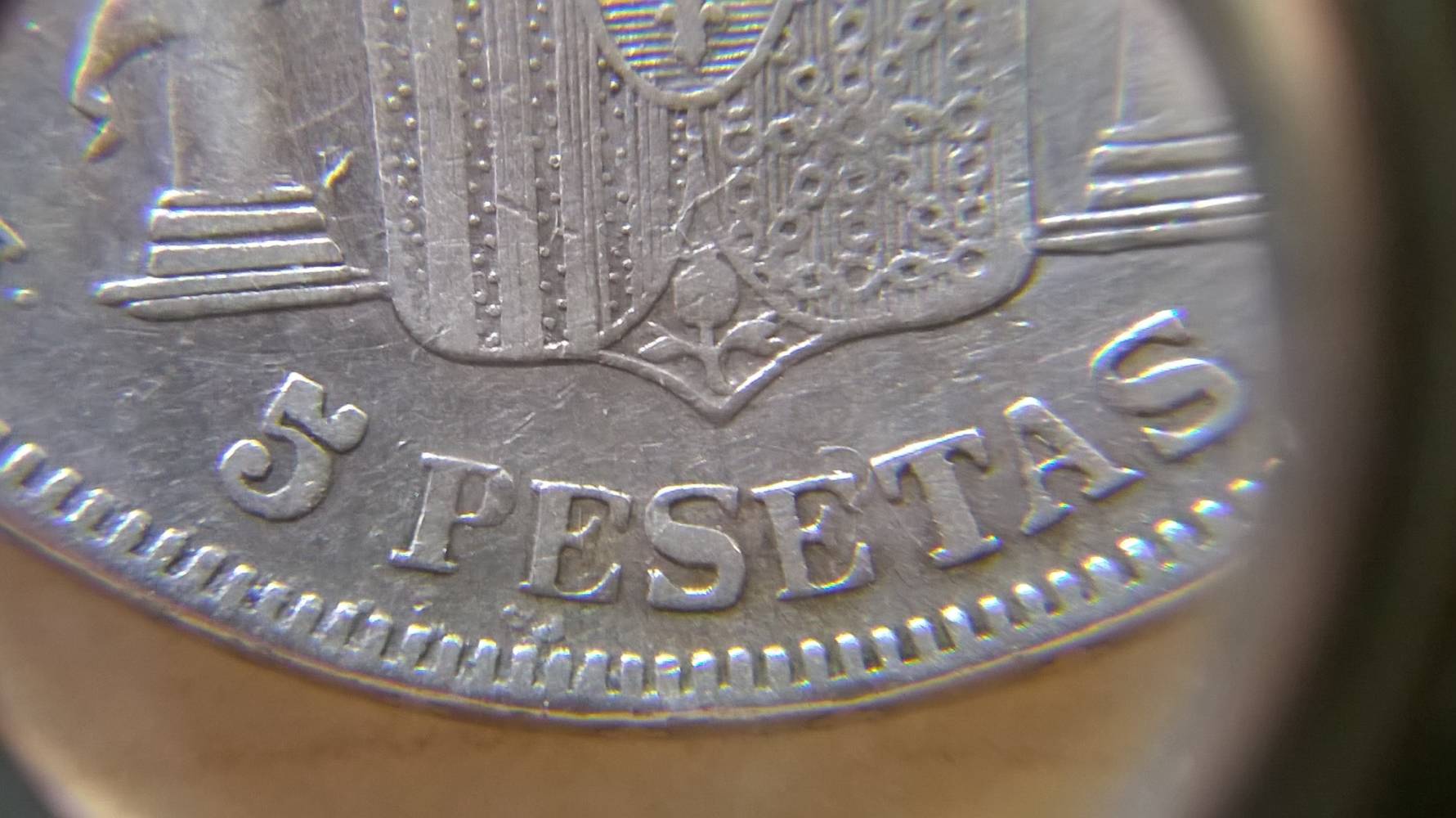
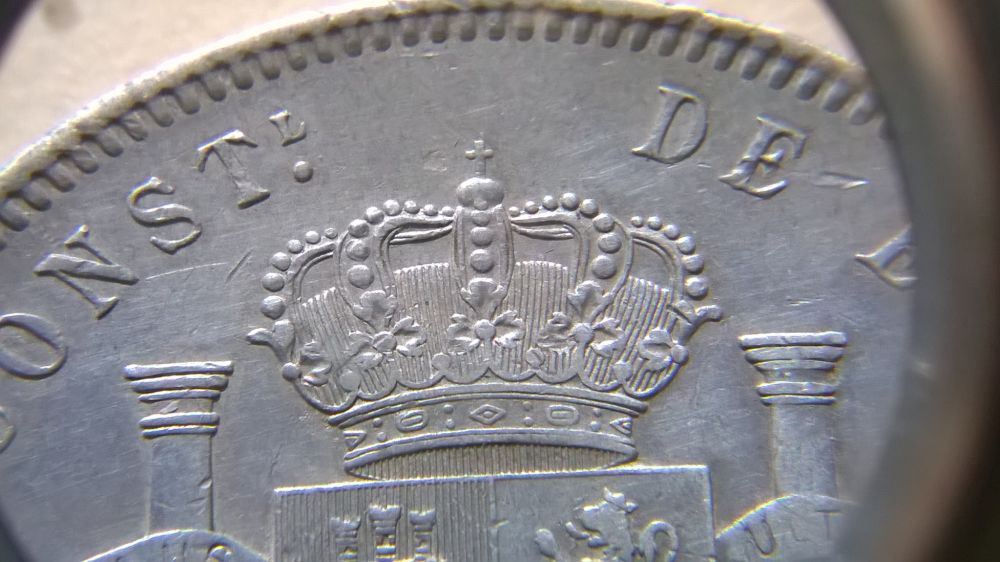
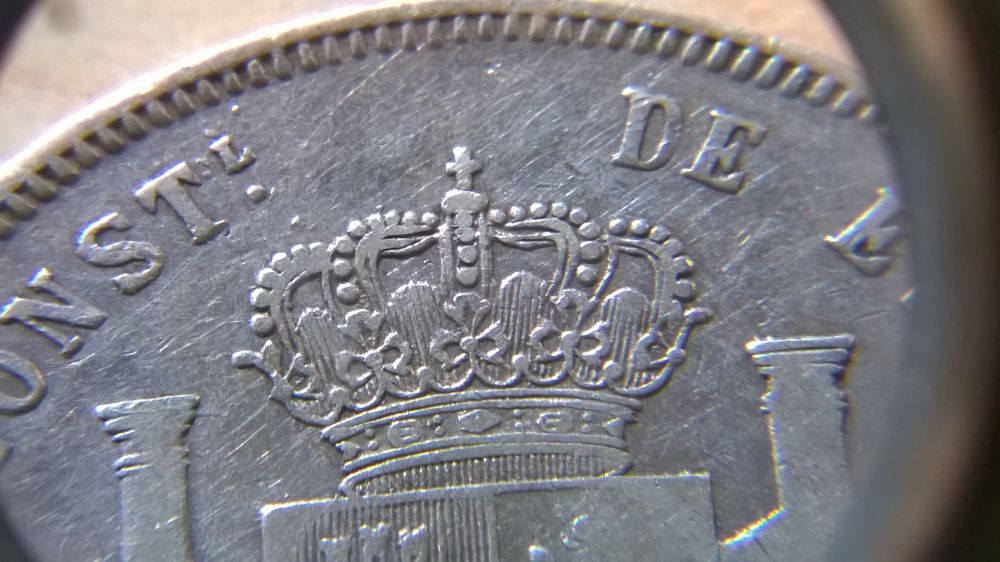
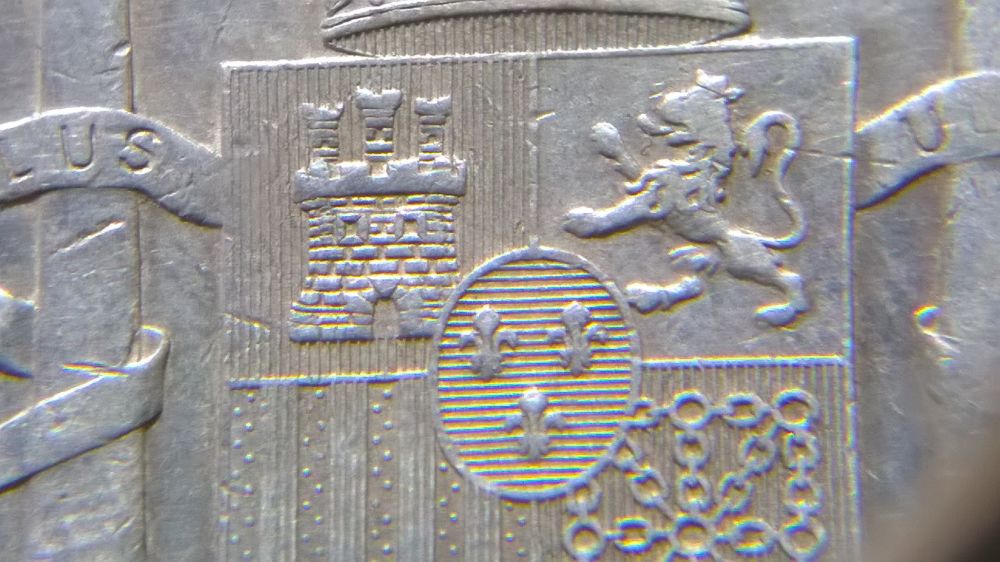
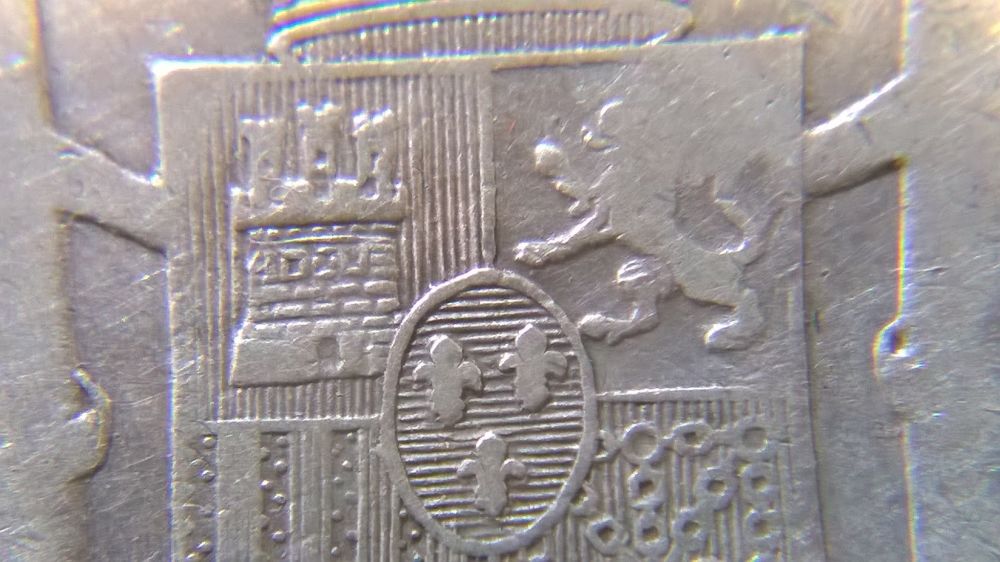
Here is my recent pickup, an example of a contemporary counterfeit 1897 5 Pesetas from Spain. In the pictures is to the right, compared to an authentic (left). In this case, despite the fact that it is made of silver, it is easily recognizable by: -The assayers's initials (M.S.- M.) are wrong for the date, they must be S.G.- V. -The number in "5 PESETAS" has the incorrect shape. Other less obvious differences are: - Weighs 23.5 g, instead of 25g - Letters's shapes and fine details, as you can see. - About 22 degrees rotated dies. 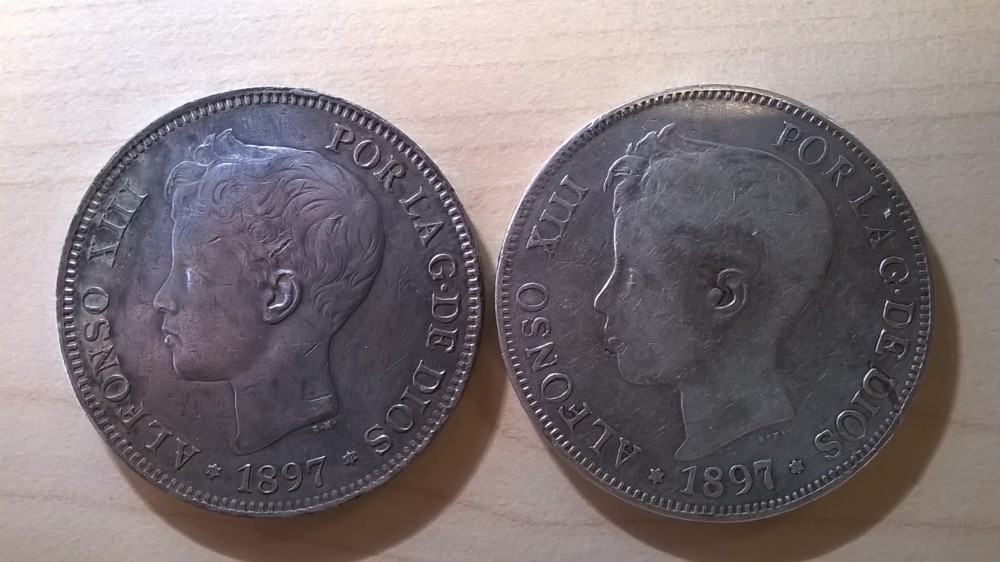 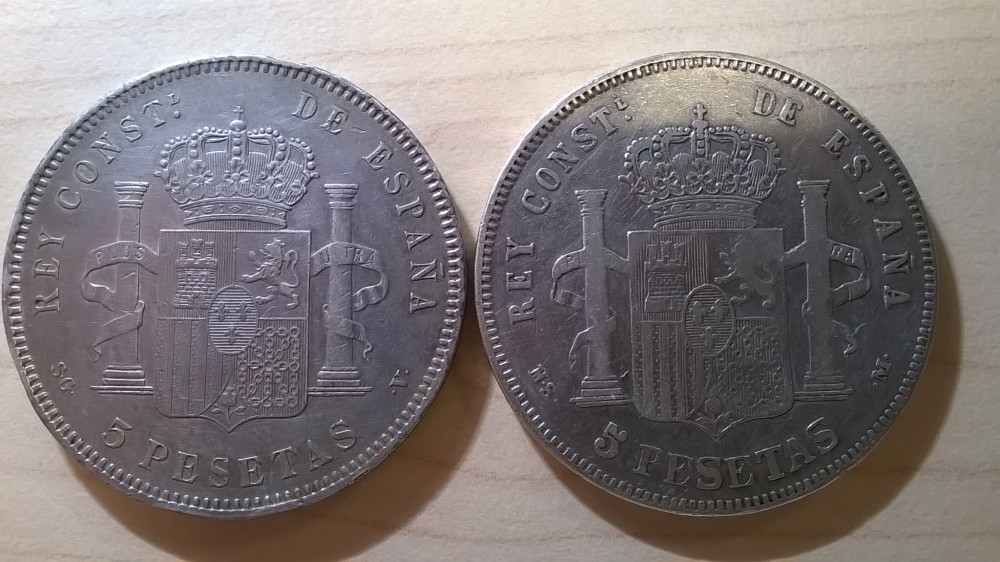 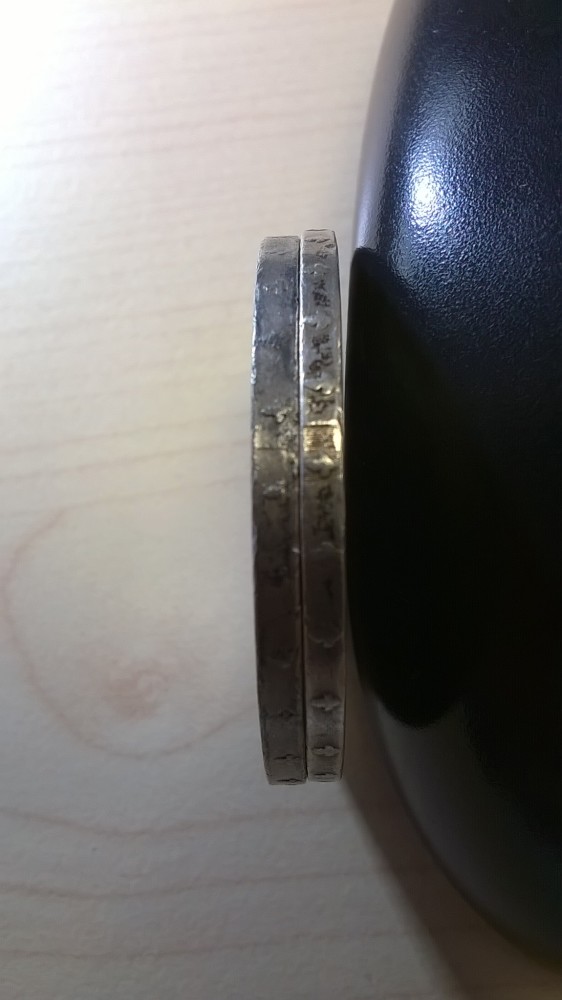 Some time ago, in Spain there was a saying applied when you doubted the authenticity of something, or you suspected that something was not real or it was not what it seemed: "Más falso que un duro Sevillano". It translated would be something like: "More false than a Sevillan silver crown". In Spain, the "5 Pesetas" coin (25g, Silver 0.900) is called "Duro", but why this saying? Actually, that is a refference to the contemporary counterfeits of that time. I will try to translate for you some parts of this article: http://www.abc.es/abcfoto/revelado/...3022009.html"....From 1876 all the Pesetas coins in circulation in Spain had to be made of silver. The depreciation of this metal in the late nineteenth century caused the five-pesetas coin, the "Duro", to have an intrinsic value of two pesetas and a half. This favored the government, which had the monopoly of coin minting, and took advantage of the circumstance to try to inject more money into the economy.
But it also benefited the counterfeiters, who were able to stop using silver-plated calamine or copper for their forgeries and use silver in the same proportion and characteristics as the state-owned one: 25 grams and 0.900 finness. They were also made with great quality, which made it difficult to detect them, even for the technicians of the official mint. They were known as "Duros Sevillanos" by the legend that was a Sevillian nobleman who was behind their coinage, with the approval of the government, and because it was believed that it was Seville where they appeared for the first time. The truth is that today it is known that the counterfeiters were spread all over Spain.
On July 16, 1908, a Royal Order was issued, in which "notorious good faith" people were allowed to exchange the counterfeited "Duros" for a receipt with their market value, that is, two and a half pesetas. The result of this measure so curious was that the next day, the "Duros" stopped circulating. It was necessary to rectify with a second Real Order the next day and a third one on July 29. It was taken the measure of exchanging each counterfeited coin for other legal tender . Only the first day, 47,258 counterfeited "Duros" were collected in Madrid. In fifteen days they changed more than thirteen million of "Duros".
The "Duros Sevillanos" were legitimized, with this surprising measure, although did not end their suspicions. Even today, it is common to hear or read the expression that something is "más falso que un duro Sevillano." After this, was taken the measure that had to have taken many years before: control the domestic silver market and imports......"
Edited by cara
11/17/2016 4:18 pm
|
|
|
|
Bedrock of the Community
United States
11951 Posts |
Very good write up. Thanks for posting.
|
|
Rest in Peace
United States
17900 Posts |
Very interesting read. I enjoyed it. Thank you for taking the time to post it.
|
|
Valued Member
 Uruguay
217 Posts |
|
|
Pillar of the Community
United Kingdom
2490 Posts |
I learnt the term in the Sunday coin market in Valencia, it was said by a trader to his friend as he handed me a colonial 8 reales. He'd spoken in Valenciano, with just the duro Sevillano in Castillano.
Moneda hermosa, muy rara he said, smiling.
Muy chino tambien, I replied, walking on.
|
|
Moderator
 United States
34562 Posts |
Great post-thanks!
"If you climb a good tree, you get a push."
-----Ghanaian proverb
"The danger we all now face is distinguishing between what is authentic and what is performed."
-----King Adz
|
|
Pillar of the Community
Hong Kong
1270 Posts |
@cara, Silver is the real money for all commoners. What you posted so-called counterfeit is likely Class 2 CC rather than numismatic forgery.
|
|
Valued Member
United States
264 Posts |
Great write up! Thank you! Side by side photos are most helpful when explaining differences between two apparently similar coins. Well done and thank you for this. I was familiar with the expression regarding the 5P, but your explanation added some good detail.  |
|
Valued Member
Uruguay
217 Posts |
I have just performed the Specific Gravity test: It is 10.16 (Silver 0.800 more o less) for the "Duro Sevillano" and 10.33 (Silver 0.900) for the legal tender "Duro". I have purchased another good example of a Contemporary silver counterfeit of Spanish 5 Pesetas coin, so called "Duro Sevillano".  I will share it with you as soon I receive it. |
|
Pillar of the Community
United States
5362 Posts |
Great write up and another example of the 1890's silver crisis in action.
That was also a time period when US dollars were forged for the identical reasons.
Thank you for another example of this critical time period when counterfeiting flourished around the world.
I will start looking tonight.
|
|
New Member
Spain
5 Posts |
muy bonita cara, y en parece que muy buen estado
de hay el dicho de - es más falsa que un duro sevillano -
that's good looks like, in excelent condition the real and the false
Debido al descenso del precio de la plata motivado por la exportación de grandes cantidades de ese metal desde los Estados Unidos, resultó que el valor intrínseco de las monedas de plata en circulación pasó a ser mucho menor que su valor facial. Por ello, aparecieron numerosas acuñaciones irregulares, realizadas al margen del Banco de España. Las más celebres fueron las de las monedas denominadas duros sevillanos , duros falsos realizados con una aleación de plata de igual o a veces incluso mayor valor que la aleación de los de curso legal, pero cuya acuñación se hacía al margen de la ley. Algunos tenían la "F" de Alfonso más corta y 22 rayas en lugar de las 21 oficiales, dentro del escudo de las flores de lis del reverso.1 2
Los duros sevillanos fueron tan famosos que incluso llegaron a ser sinónimo de falsedad. Existe la expresión
Eres más falso que un duro sevillano
Due to the decline in the price of silver motivated by the export of large quantities of this metal from America continent, it turned out that the intrinsic value of the silver coins in circulation became much smaller than their face value. For this reason, numerous irregular coinage appeared, carried out outside the Bank of Spain. The most famous were those of the so-called hard Sevillian coins, fake hard made with a silver alloy of equal or sometimes even greater value than the alloy of legal tender, but whose coinage was done outside the law. Some had the "F" of Alfonso shorter and 22 stripes instead of the 21 officers, inside the coat of the fleurs de lis on the back.
The tough Sevillians were so famous that they even became synonymous with falsehood. There is the expression in Spain, and Sevilla :
You are more false than a sevillian duro -
Edited by andres41
12/02/2016 09:32 am
|
|
Pillar of the Community
United States
1962 Posts |
There were (are) a huge amount of contemporary counterfeits/falsas de epoca of peninsular Spain coinage throughout the entire 1800s (and back into the 1700s). I can't think of a era that isn't well-represented by this...
-- Ferdinand bust 2R (and Char IIII before that)
-- Joseph Nap. 4R de vellon
-- the various obsidional types of the Napoleonic era
-- Ferd. 1821 10R de vellon (Barcelona)
-- Isabel II reales de vellon (4R, 10R especially)
-- any/all of the peseta coinage, right from the first Provisional Govt. issues. Obviously the 5 Pesetas such as seen here, lots of 2 Ptas also... and have even seen a fair amount of CC Alfonso 5 and 10 centimos.
|
|
Pillar of the Community
Philippines
1156 Posts |
very informative close up of the two stars on either side of the year date numbers come out very clear.. nice post thanks!
|
|
Valued Member
Uruguay
217 Posts |
Sorry for the delay, I have located a couple more of examples of these contemporary counterfeits ,also called "Duros Sevillanos". In this case are 5 Pesetas 1891, the type Alfonso XIII baby. Coin N ° 1: Authentic type 1890 (I do not have 1891) Assayers: PG-M Weight: 24.87 g S.G .: 10.32 Coin N ° 2: "Duro Sevillano" 1891 Assayers: MS-M Weight: 24.44 g S.G .: 10.18 Coin N ° 3: "Duro Sevillano" 1891 Assayers: PG-M Weight: 24.38 g S.G .: 10.1 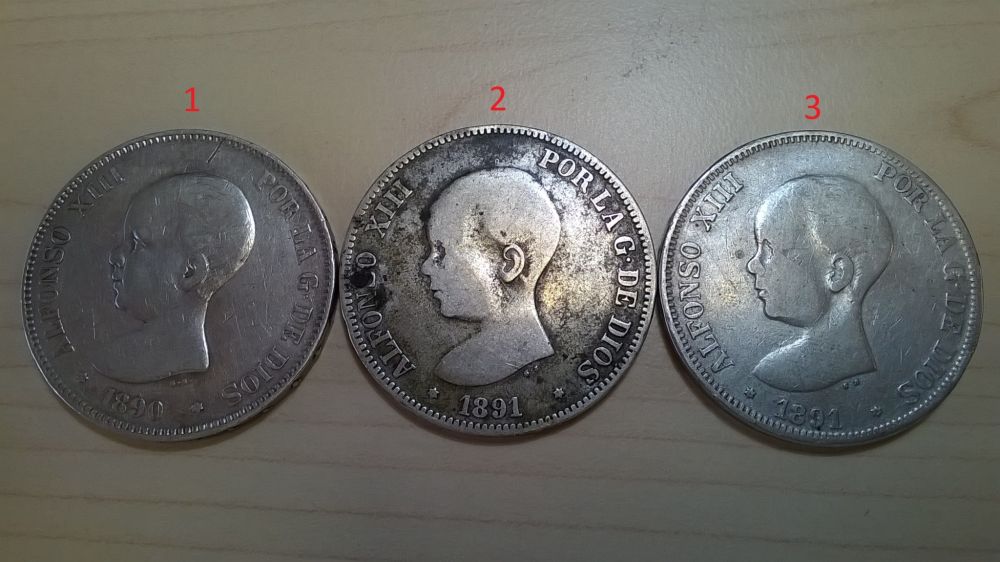 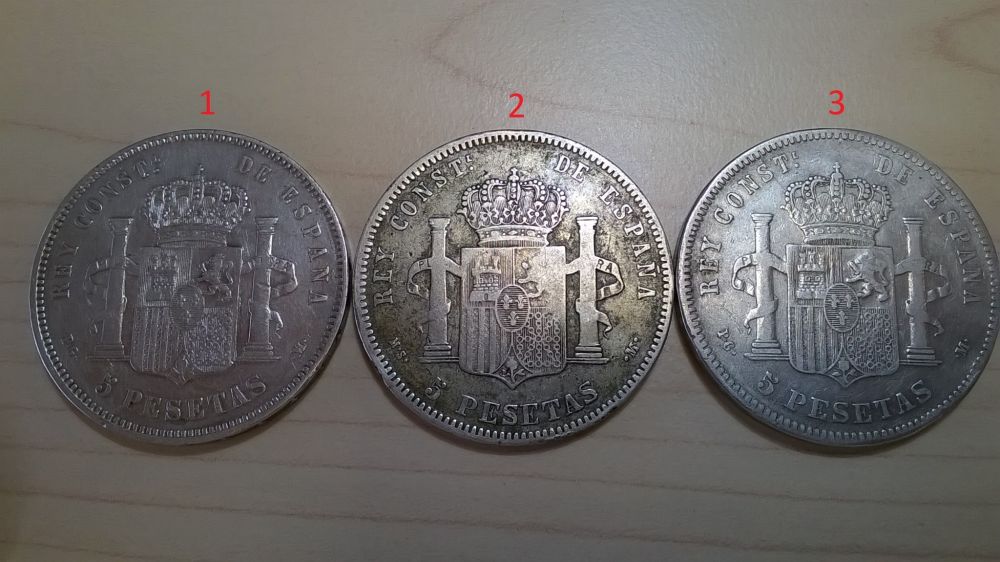 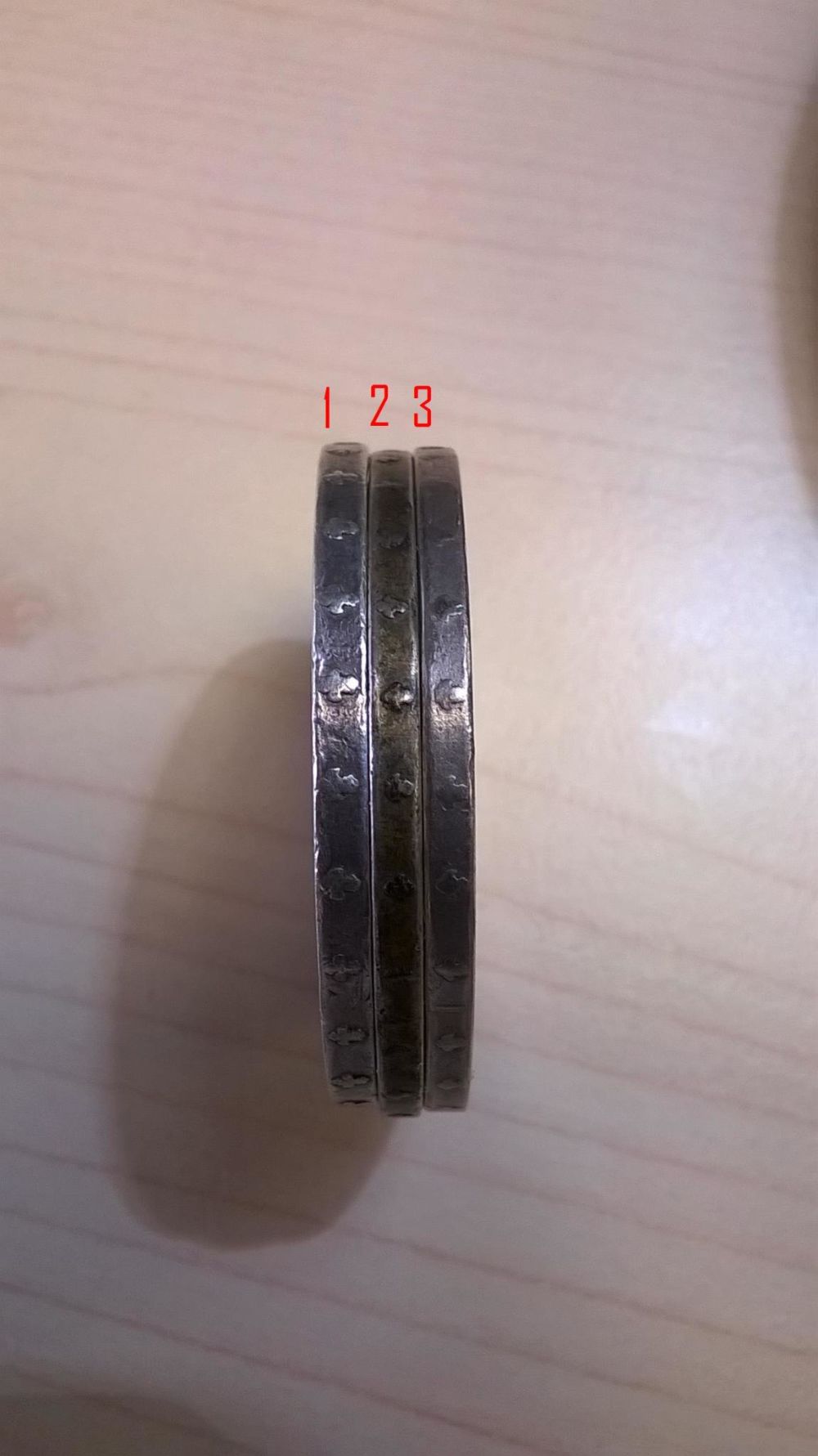 Although coin N° 2 is quite well made, it is easy to determine as counterfeit since the assayers are wrong (must be PG-M), in the specialized catalogs it is called "non-coincident Sevillano". For coin N° 3, the assayers are correct, it is a "coincident Sevillano". In these cases to determine that it is a counterfeit we must look at other details, like: The shape, size and spacing of the letters (like the "F" in "ALFONSO" or the "5 PESETAS" phrase). 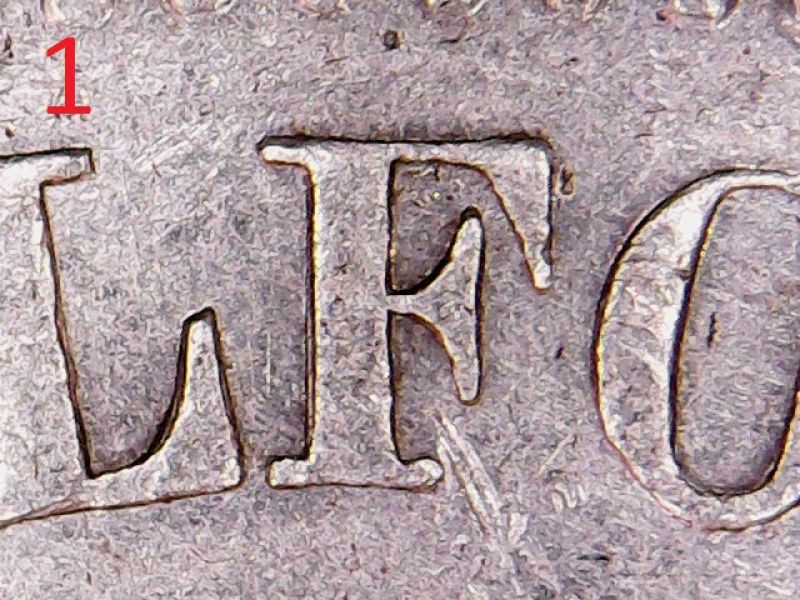 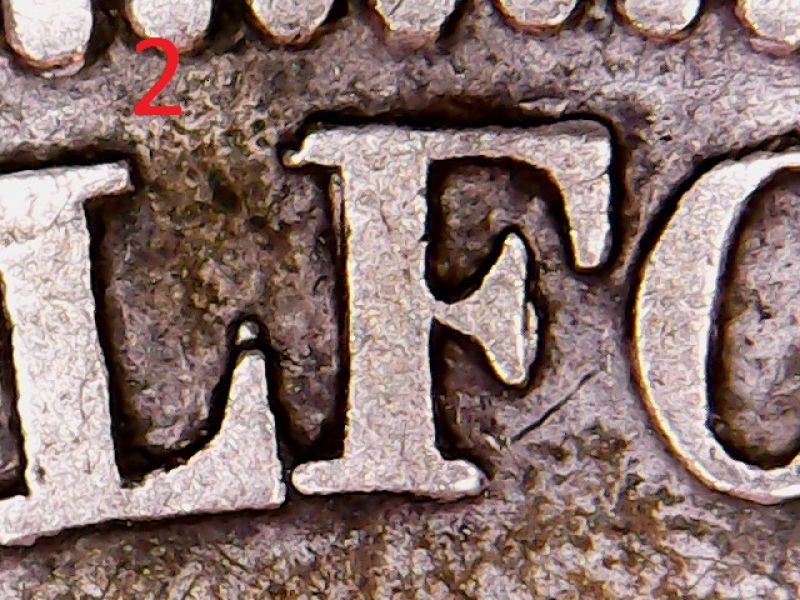 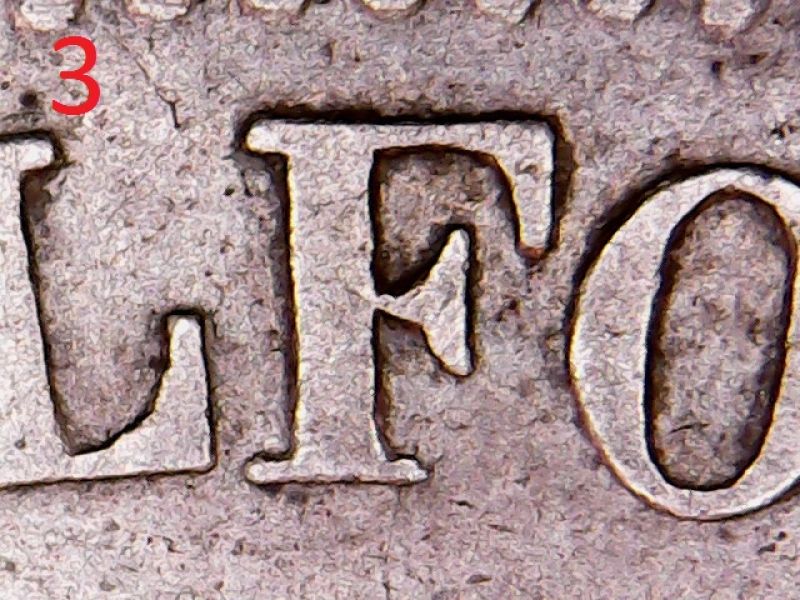 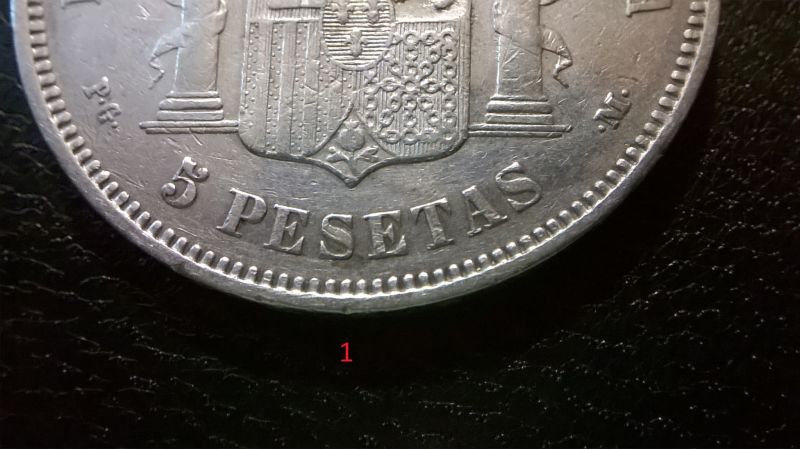 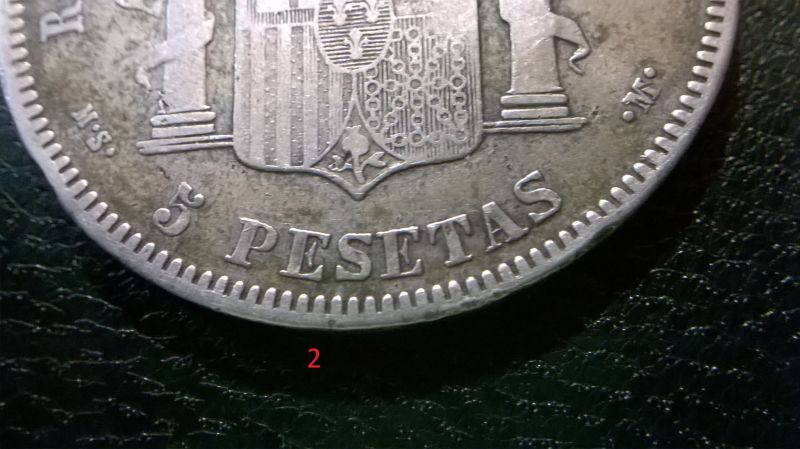 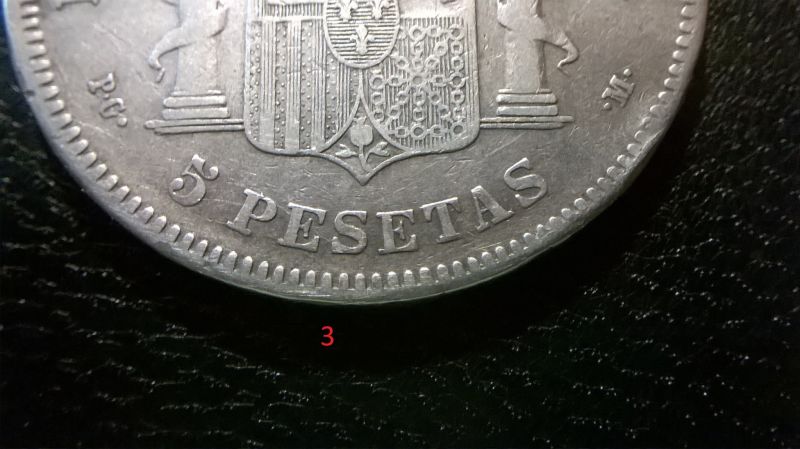 The number of horizontal lines in the fleur de lis shield, on the reverse, there are 21 lines in an authentic coin and 22 in the counterfeit one. 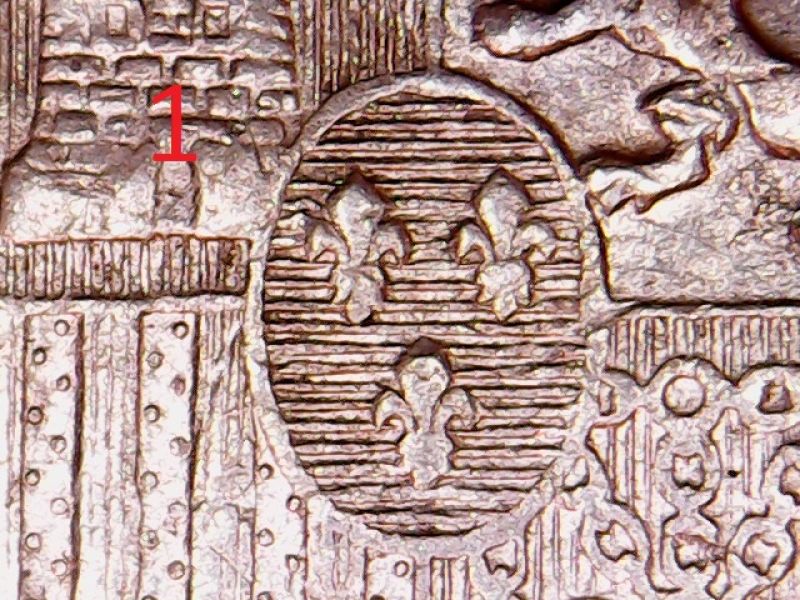 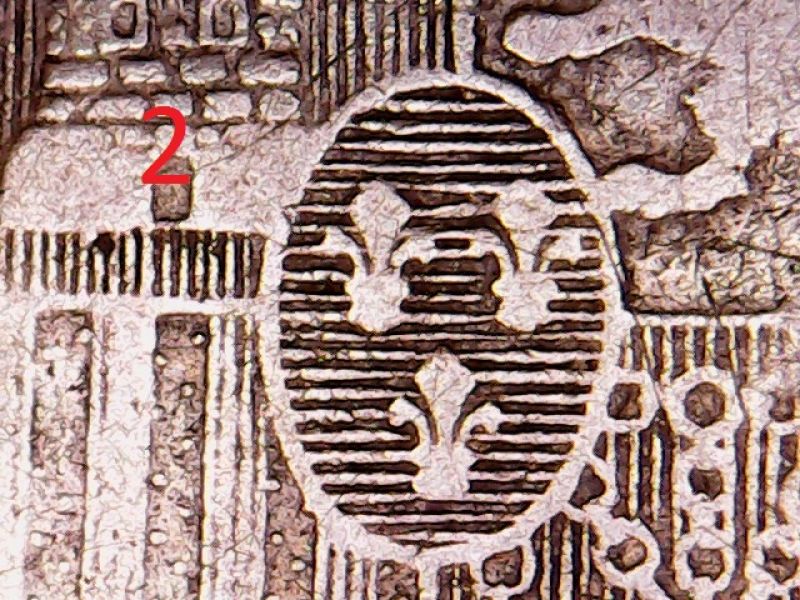 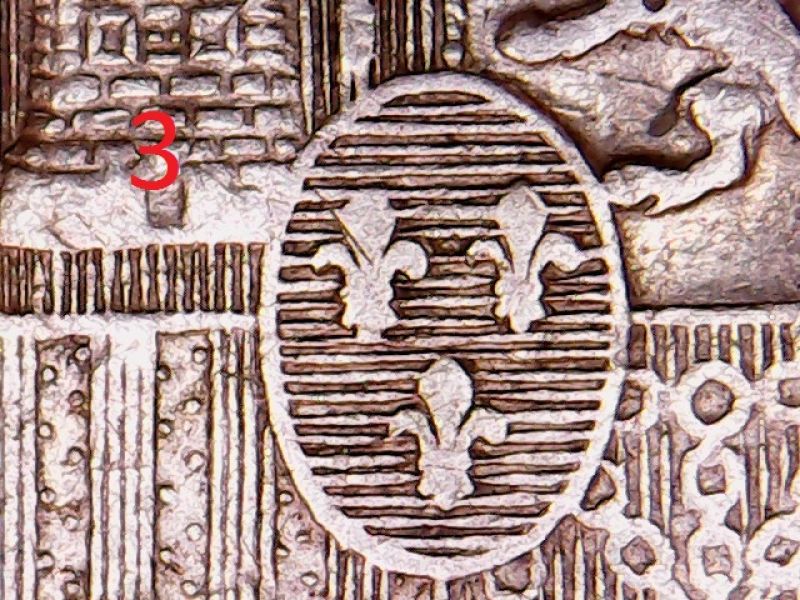 Details of the castle. 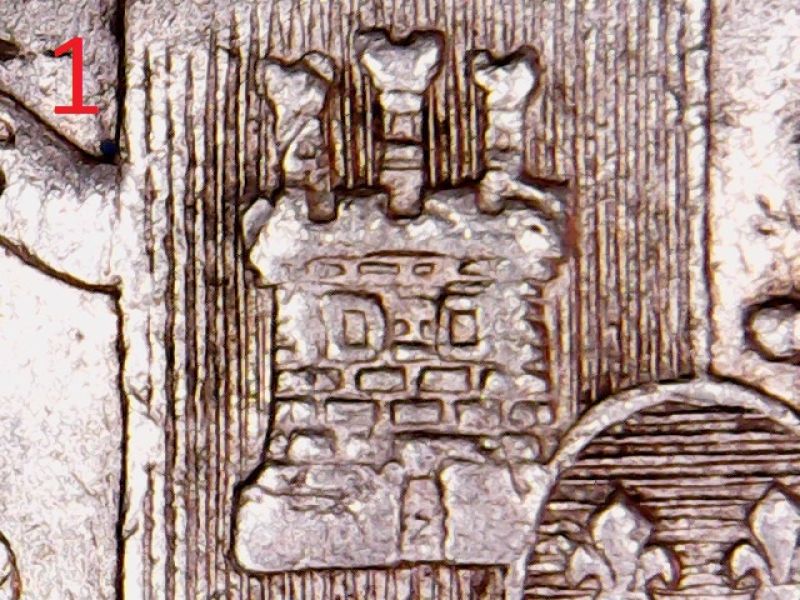 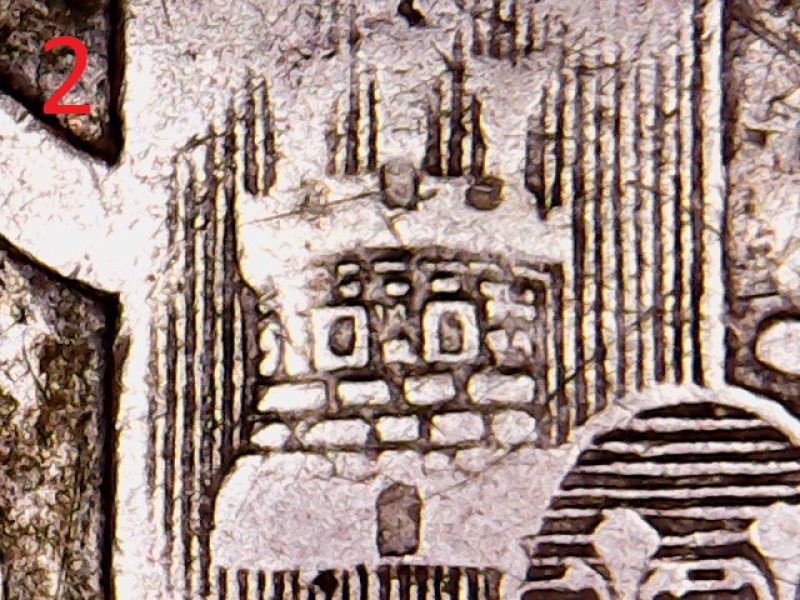 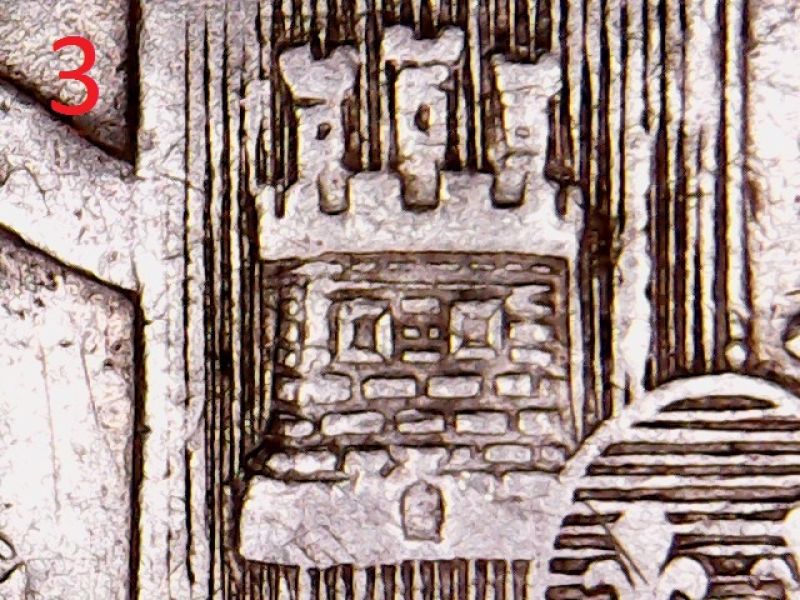 Finally, I would like to share with you an article about a counterfeiter of "Duros", catched in Seville, which worked with the facade of a metallic beds factory. To the factory, called "Cobián Foundries", the silver arrived from France hidden in metallic tubes that were used to make headboards. The following paragraph was translated from: http://numespa.blogspot.com.uy/2016...illanos.html".. It is very curious the procedure they had used to enter the Silver blanks (planchets) and then take out the "Duros" from Sevilla. The transfer was carried out in the beds's tubes of iron that had a similar diameter.They entered the material imported from France (iron tubes and silver blanks without struck) and were taken out with the finished beds. But, how was a Sevillian Duro distinguished of an authentic one? After a little time could appear a yellowish tint or oxidations. What happened? Although the silver content was correct and the dies had been very well done, the machinery was of the craftsman type, so let's not forget that the workshops were clandestine and had to go unnoticed. It was necessary to heat the blanks to proceed with its coinage, and the effect of that heating was subsequently translated into these refered imperfections ....." Edited by cara
01/27/2017 9:28 pm
|
| |
Replies: 13 / Views: 5,450 |
|







 Posted 11/17/2016 6:47 pm