| Author |
 Replies: 12 / Views: 1,232 Replies: 12 / Views: 1,232 |
|
|
Pillar of the Community
Canada
891 Posts |
Doing some sorting today and came across a few of these with what looks like a bunch of tiny bubbles just wondering what causes this,Thanks 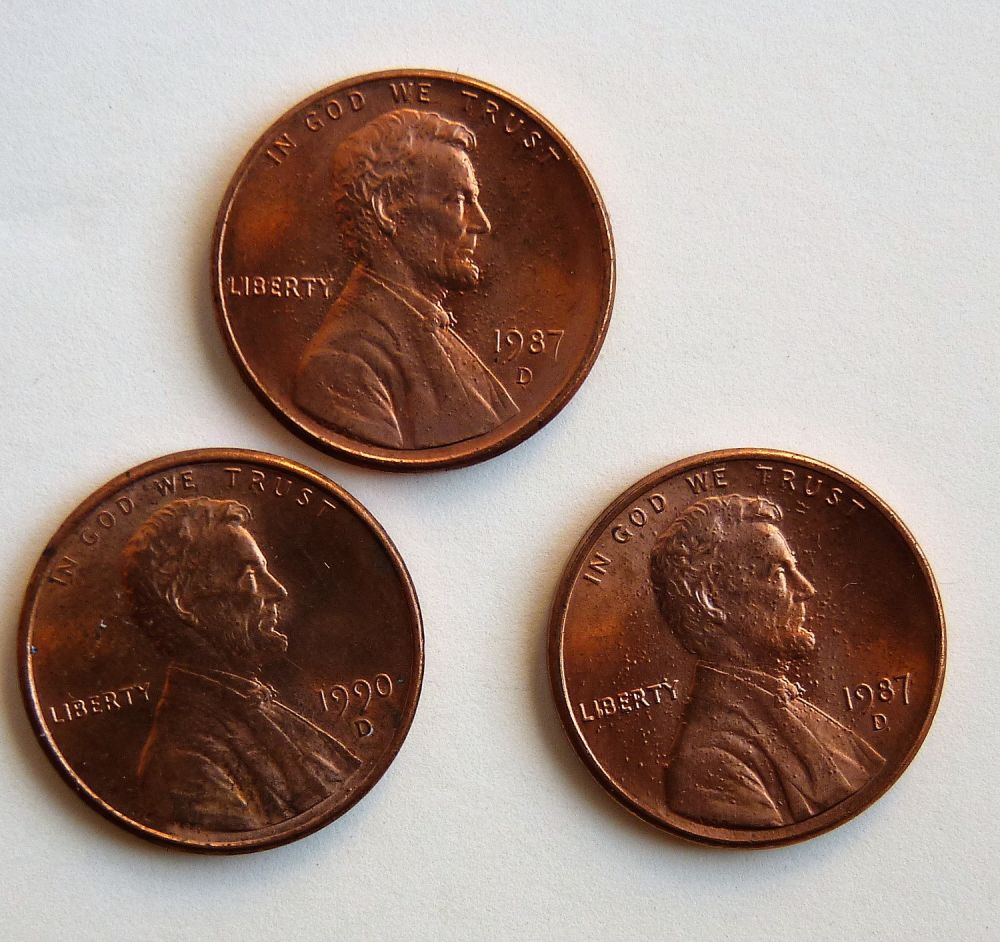 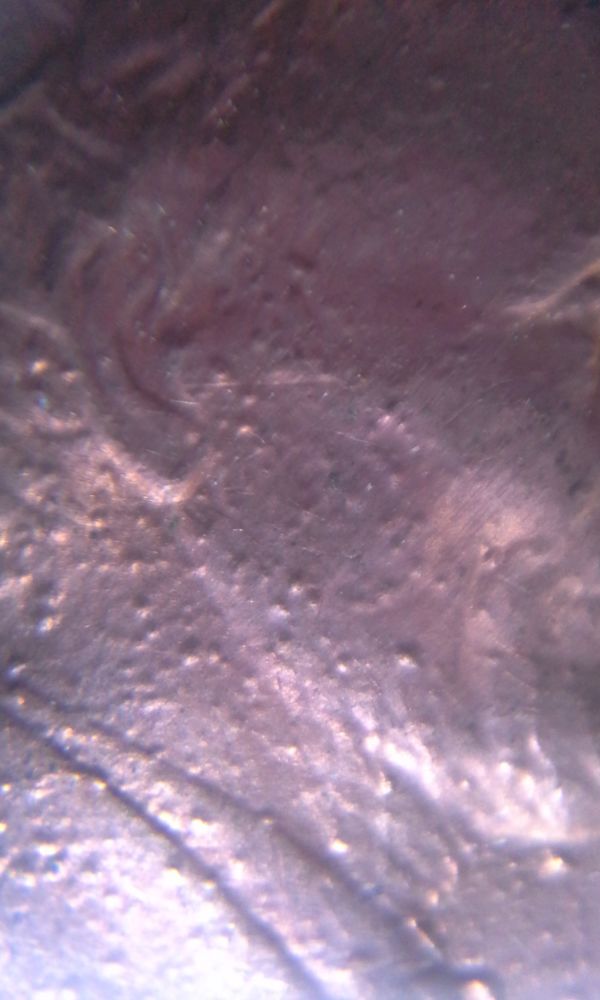 |
|
|
|
Pillar of the Community
United States
1609 Posts |
They are bubbles of sorts. Caused by oxidation of the zinc under that oh-so-thin layer of copper on Zincolns ( > 1982).  That's a heck of a close-up! Is that through a microscope (trinocular?) or _________ ? Edited by Biedercoins
12/06/2016 06:22 am
|
|
Pillar of the Community
United States
3363 Posts |
The copper plating is only 8 microns thick!
|
|
Moderator
 United States
56855 Posts |
I think it is contamination on the blank before the copper plating. John1  |
|
Rest in Peace
United States
17900 Posts |
|
|
Pillar of the Community
United States
3363 Posts |
Quote:
Zinc measles.  |
|
Bedrock of the Community
United States
62064 Posts |
 It is zinc dust that did not come off in the rinsing of the planchet. They got better on it later on, but is still found every now and then. spendable |
|
Pillar of the Community
 Canada
891 Posts |
Thanks for the info, learning more every day , for close ups I made one of those microscopes for a cell phone from a laser pointer from the coin photography post on this forum
Edited by oldmike
12/06/2016 11:07 am
|
|
Moderator
United States
56855 Posts |
Just thinking,if the blank had the "dots" on it before platting why do the "dots" not flatten out after the die strikes the planchet? John1 |
|
Pillar of the Community
United States
3363 Posts |
For what its worth: Quote:This was caused by problems with the plating process and is most common on cents minted in the 1980's, but can be found on any cent minted after 1982 when Copper plating was first used. Gas bubbles would become trapped beneath the Copper plating and cause these raised areas. They seem to be more common on cents from the Denver mint. Solid-alloy cents minted in 1982 and earlier can have occluded gas bubbles caused from heat generated when a planchet is struck. The expanding gas pushes a layer of metal towards the surface of the coin, resulting in a raised area or bubble. Occluded gas bubbles are much rarer than the blistered plating found on newer cents. http://lincolncentsonline.com/miscellaneous.html Is the plating applied before or after the strike? |
|
Bedrock of the Community
United States
17884 Posts |
Blanks are plated before striking.
|
|
Pillar of the Community
United States
3363 Posts |
The implication here is that plating is before the strike: Quote:Many of the 1982-83 cents showed raised bumps from gas trapped between the layers. When compressed during the coining process, these gas occlusions formed tiny pimples that were unsightly and hinted at bigger problems. These soon manifested themselves when the coins entered circulation, as they quickly formed dark swirls on the brass surface. More seriously, the striking process sometimes flattened the brass plating so much that the underlying zinc was exposed. Since zinc is a very reactive metal when exposed to finger oils and other environmental triggers, corrosion became a highly visible problem. T http://www.ncscoin.com/news/enews/2...article1.asp |
|
Pillar of the Community
United States
4211 Posts |
GREAT pics Mike! Happy hunting  |
| |
Replies: 12 / Views: 1,232 |
|





 Posted 12/06/2016 06:25 am





