Recently I just learn a bit about engraved dies. I always thought the dies during the 20th. century we more or less, just hubbed and that was it. But I learned that some of the 1946-S cents were touched up a bit to make them acceptable. The dies for that year were created for the Denver and Philadelphia Mints first. This left the San Francisco mint to get the dies from the worn hubs. So they touched then a bit to strengthen the date designs. On some dies the design was very poor at first and got worse as the dies were starting to get some age on them. So they engraved a bit on them to strengthen the design on the dies. I tried to find some images on different sites, but the err-var.com site had the best examples:
http://www.error-ref.com/?s=touching+the+date 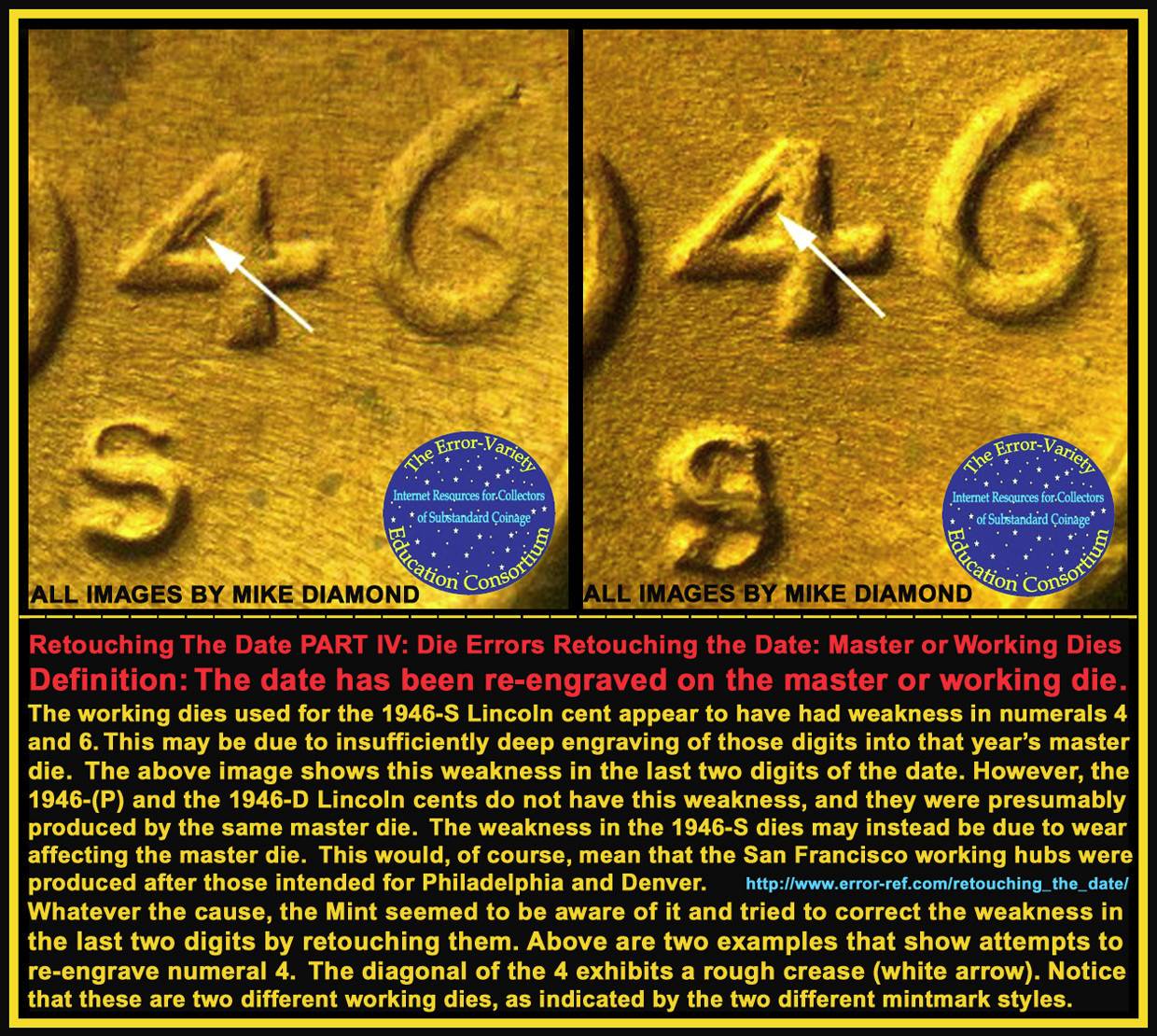
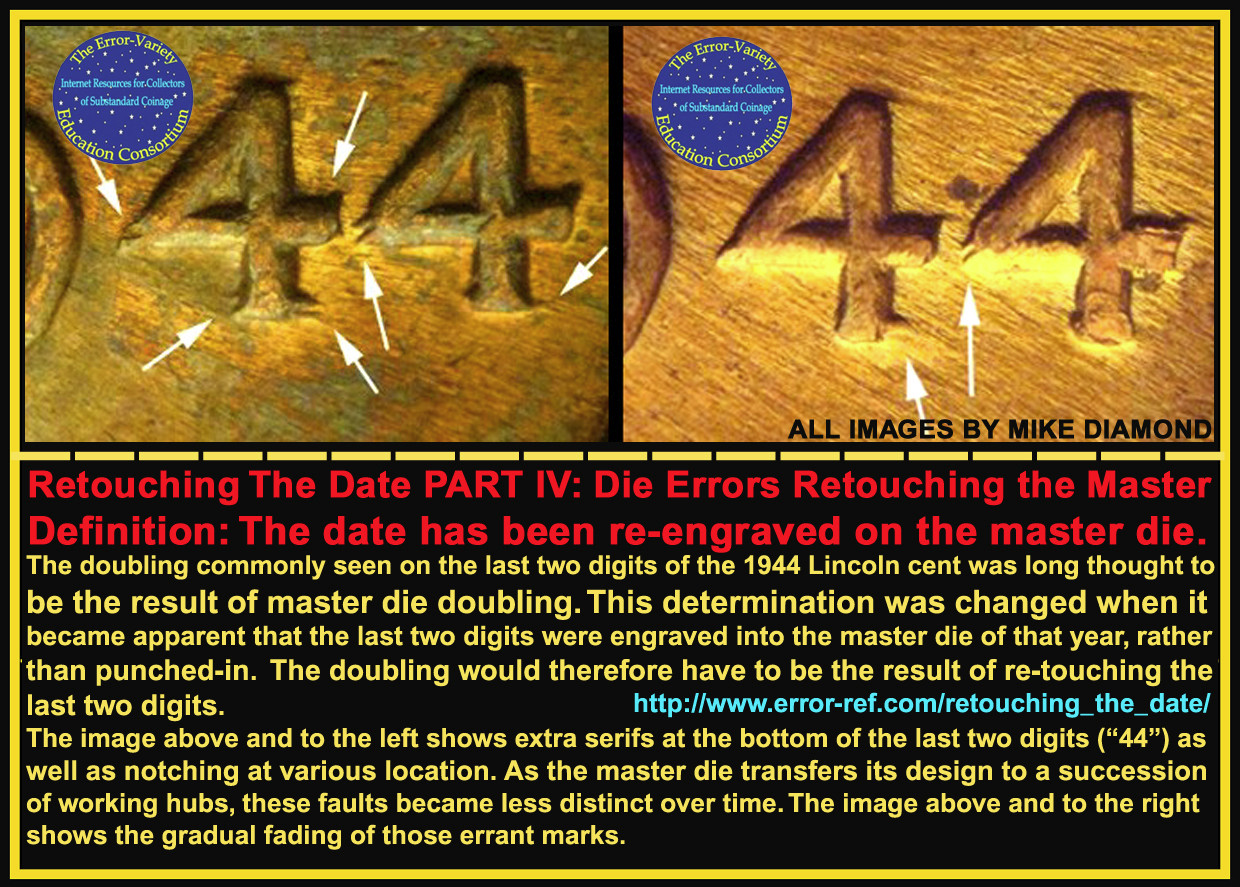
The same article mention a master die also was altered for the 1944 year as well.
http://www.error-ref.com/?s=touching+the+date The difference between altering a die is that less coins will be affected, but to alter a master die, that would mean a lot of coins would be affected. So what was affected on this years coins:
I really enjoyed this link. So I thought I would also include an image of an Re-Engraved-Die nickel. So I looked up the image I had and thought. There must be more to this story than just an image. So I searched the internet to see what I could find. Wow. There was a lot more to this story.
The dies affected were for the 1938 proof nickels. It seems the design needed a bit more done to them after they were created. So some re-engraving was one on a few of the dies. There is one that is considered very desirable. Even though the engraving seems minor, the interest caught on.
On site mentioned a conversation with Ken Potter and few others about this engraving done on the dies. In fact the image I had was from him. With just one image it seemed real vague to me. So I jumped in to see what I would find.
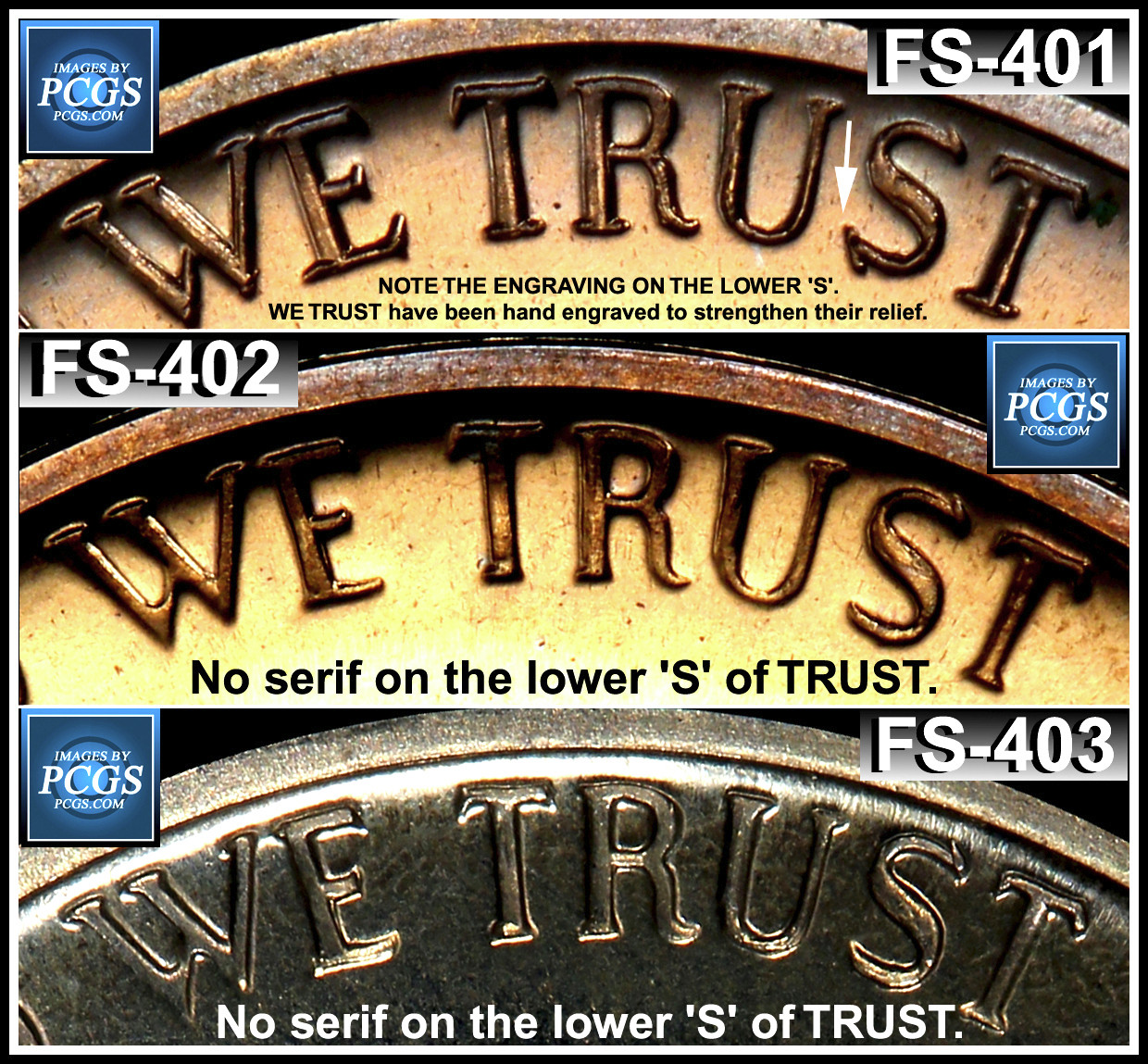
http://www.numismaticnews.net/artic...h_serif_seenThe coin has a serif at the lower end of the 'S' in TRUST as compared to no serif on the previously known examples.There were several other differences in the look and thickness of the serifs and on the numerals in the date to make me believe that this was significant enough to seek other expert opinions, Fey said.
Lange sent the coins to variety expert Tom DeLorey. DeLorey stated, "My initial impression was that there were two different obverse hubs used on the 1938 proofs. The lower serifs on the 'S' of TRUST and the 'L' of LIBERTY are very distinctive, and on the normal Obv. of '38' the designs adjacent to where the serifs appear on the so-called 'Obv'. of '39' are strong enough to prove that the missing serifs are not the result of overpolishing. There are strong indications of hand-engraving in particular on the 'E' of WE and the 'L' of LIBERTY and 'S' of TRUST (the strongest and most prominent differences in the two dies) and more evidence of some touch-up on most of the
other letters and '1' of date that are apparently not seen on any 1938 nickels from other dies."
"However, I have to assume the 1938 master die most probably had more detail but that the hub made from it was overzealously polished and then subsequently used to make working dies missing some of the details found on the master or if that was not the culprit that the hub may have been raised up (hubbed) insufficiently from the master die," Potter surmised.
"Either scenario could have resulted in the awkward-appearing, top-heavy, weakened characters we see on the obverse working dies for 1938. This does not seem a condition I think the designer, engraver or Mint would have intended nor do I believe it is what would have been seen on the master die and/or the original galvano. In looking at
the 1939 business strike I think we are looking at what the original master die or galvano used for the 1938 obverse
would have looked like perhaps identically to what it (they) looked like but unfortunately was not transferred sufficiently to the working dies."
Potter added, "As such I feel the 1938 proof with enhanced detail is not representative of a distinct obverse of 1939 (there are extensive differences that precludes this) but I do believe it is a rare example of extensive touch-up engraving to strengthen an isolated die for reasons we can only guess at. I also do not see any evidence of it representing a prototype I believe the '39' is simply what the '38' most probably started out to be on the master or at the very least on the galvano."
"It could simply be that this 1938 proof die was weaker than most and was touched up at some stage in its use. If the die was touched up late in its use the variety could be very rare. I consider it a potentially rare and clearly desirable variety of a very infrequently encountered type. The only other strong examples of this type of variation that I know of
on modern coins are the re-engraved tail feather varieties on the 1952 proof (Superbird), 1953 proof and 1957-D
Washington quarters, and the 1944-D
Walking Liberty half dollar with re-engraved designer's initials. I guess we could call this one the enhanced serifs variety. It's nice to add another one to the list," Potter said.
So while lengthy, that was what I found on the internet. But what are we looking at on these coins that makes them so interesting? Some dies have the devices touched up a bit to enhance something that would/could be on the 1939 and forward dies. (Keep in mind that the 1938 year was the first year for the
Jefferson nickels)
But Variety Vista has a listing with information on these nickels. How to tell them apart.
http://varietyvista.com/Variety%20M...JN%20RED.htm1938 PR 5c RED-001 : Description: Re-engraved Obverse lettering. All the letters of IN GOD WE TRUST, LIBERTY, and the '19' of the date have been hand engraved to strengthen their relief. A serif has been added to the lower 'S' of TRUST;
FS-05-1938-401. 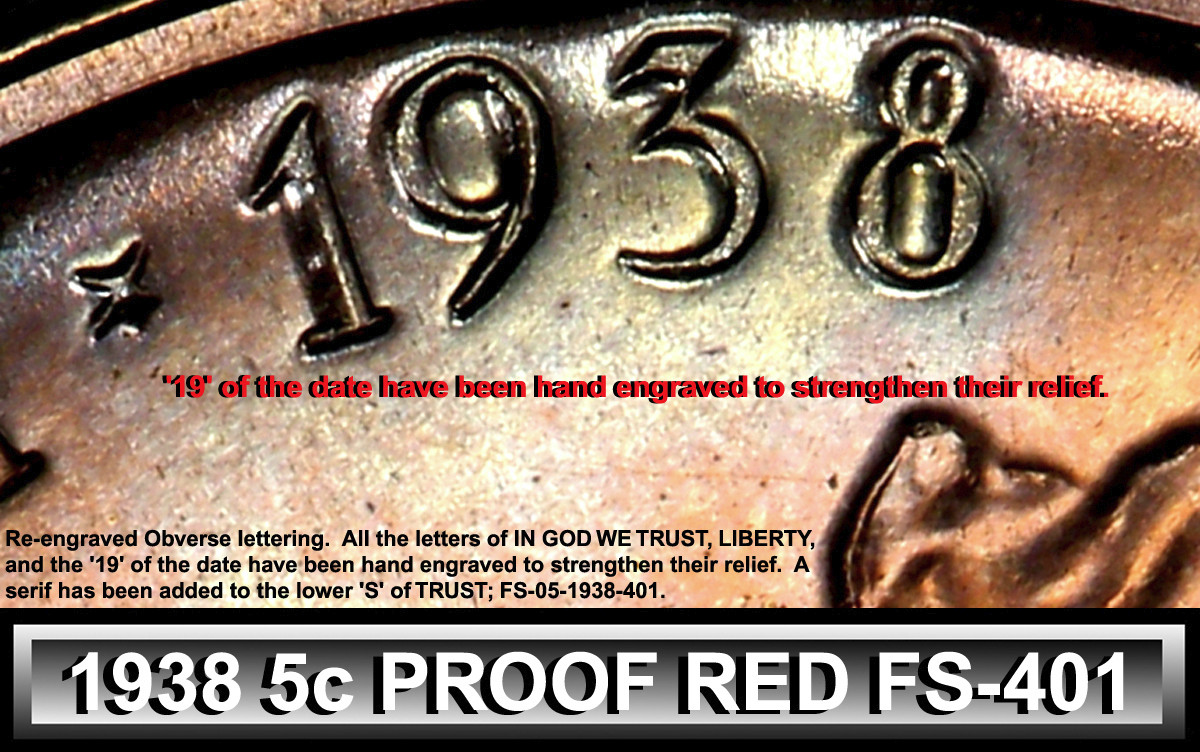
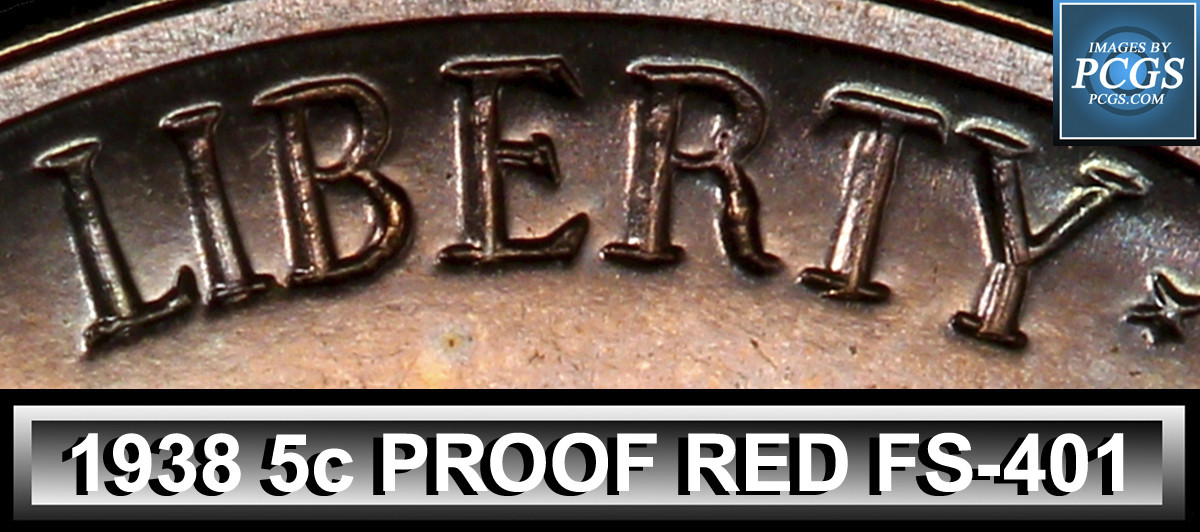
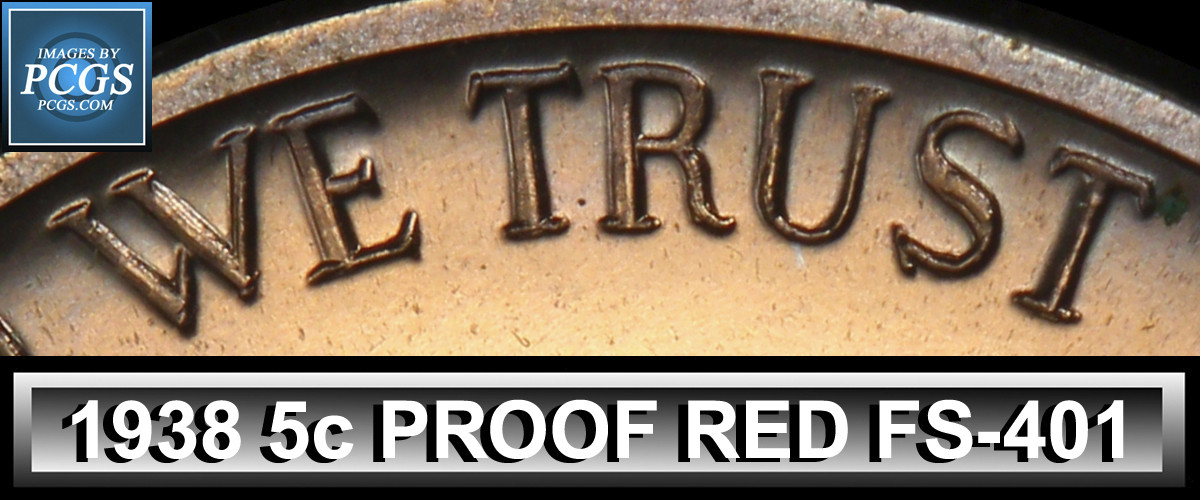
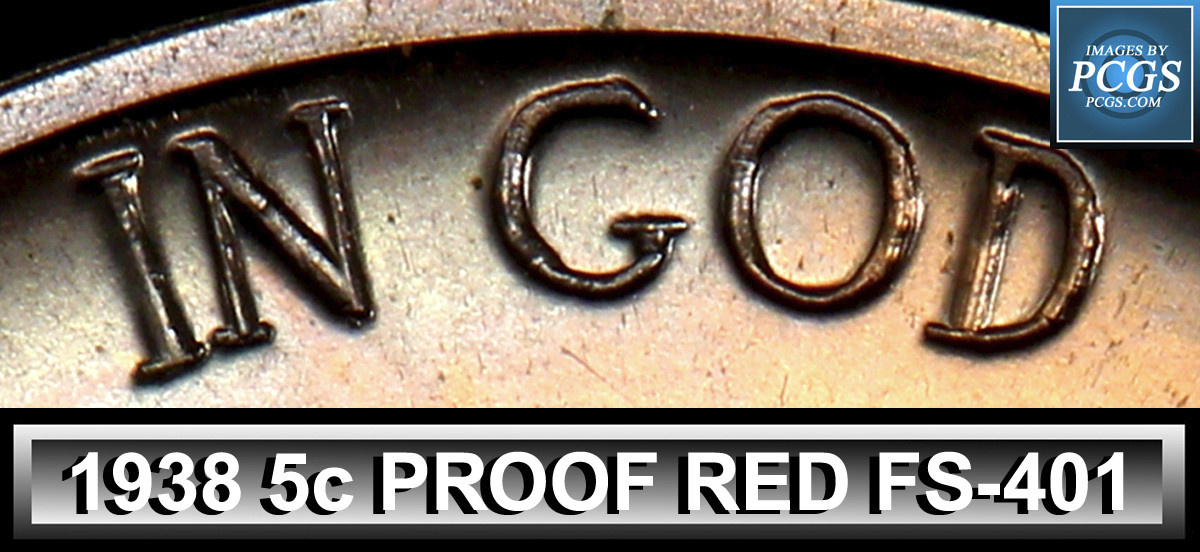
A serif on the lower 'S' of TRUST;
FS-05-1938-401.
1938 PR 5C RED-002 :
Description: Strongly re-engraved ribbon. A serif has been added to the lower 'S' of TRUST.
(sorry no images of this one yet)
1938 PR 5c RED-003:
Description: Strongly re-engraved ribbon. No serif on the lower 'S' of TRUST
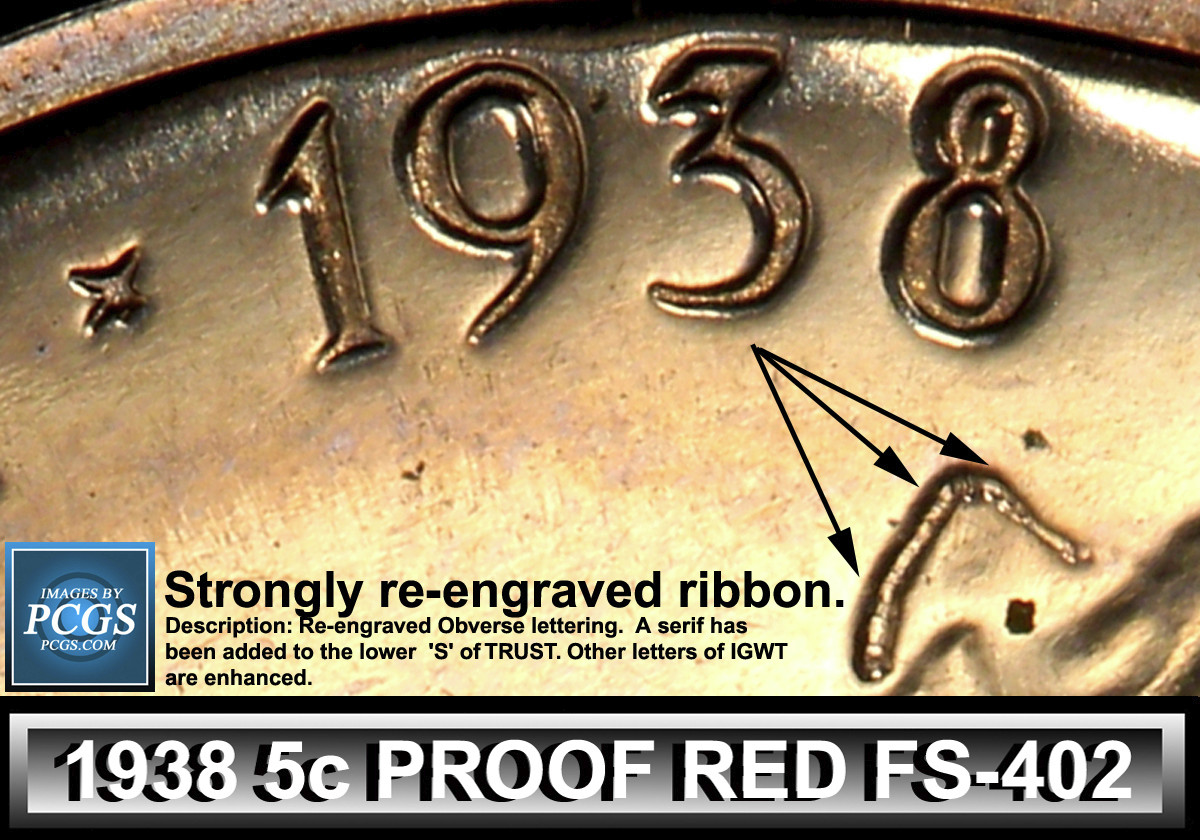
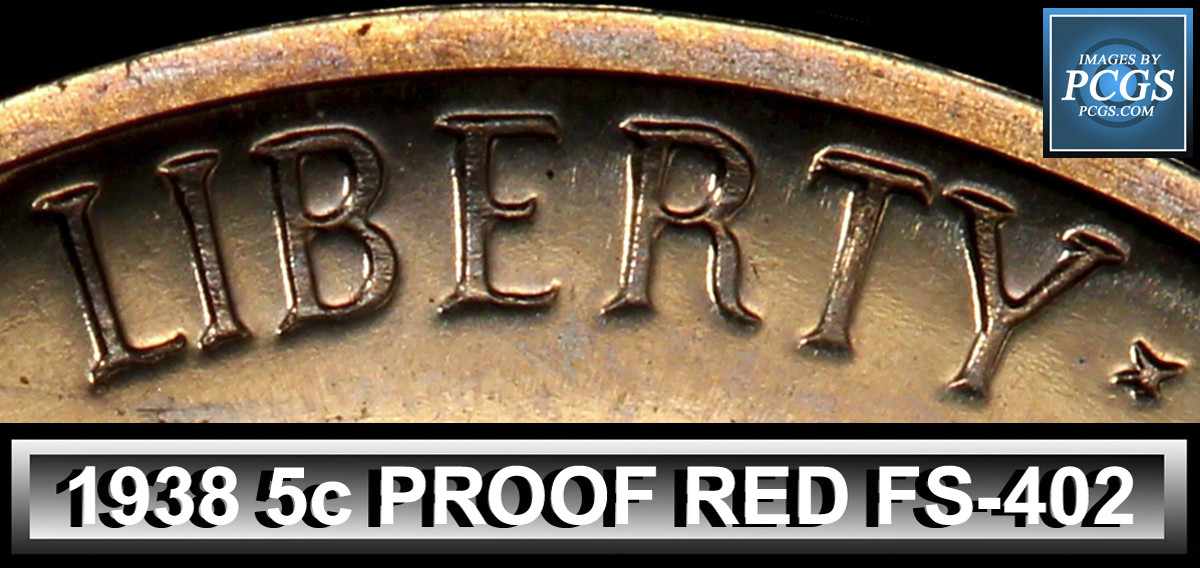
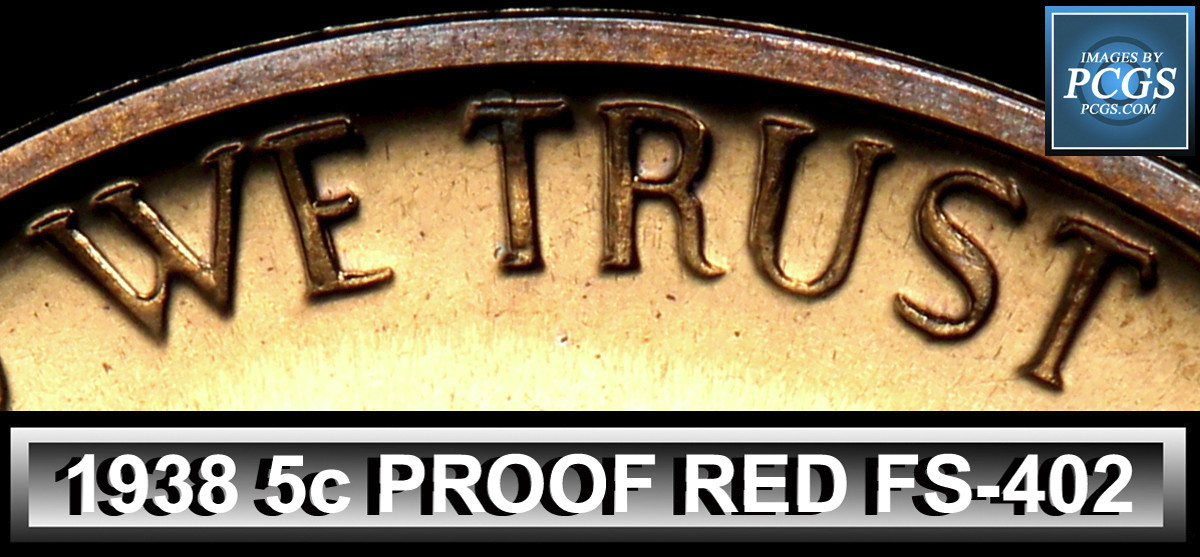
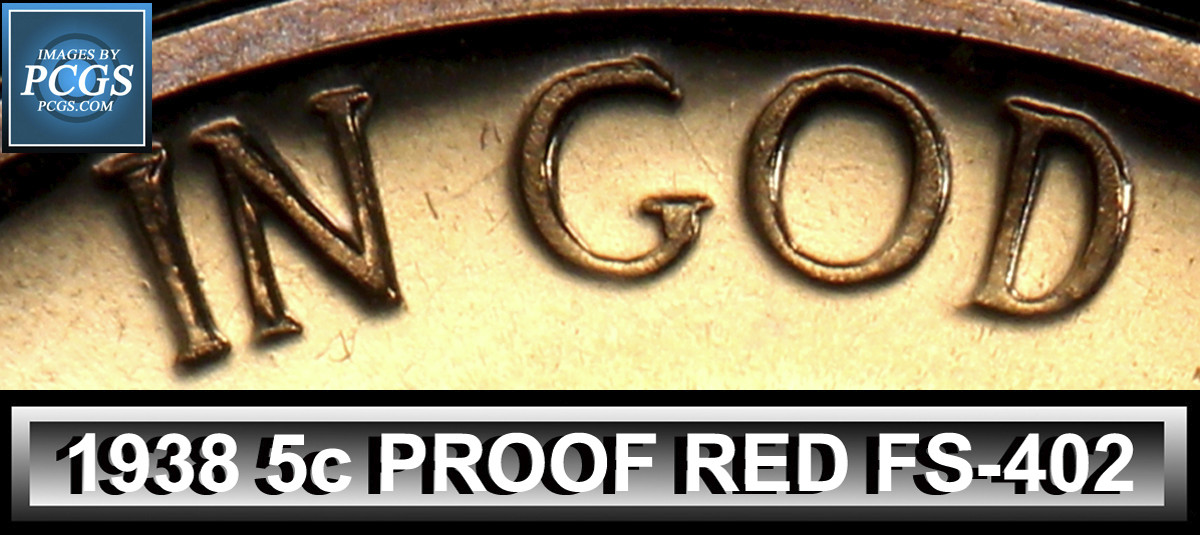
No serif on the lower 'S' of TRUST;
FS-05-1938-402.
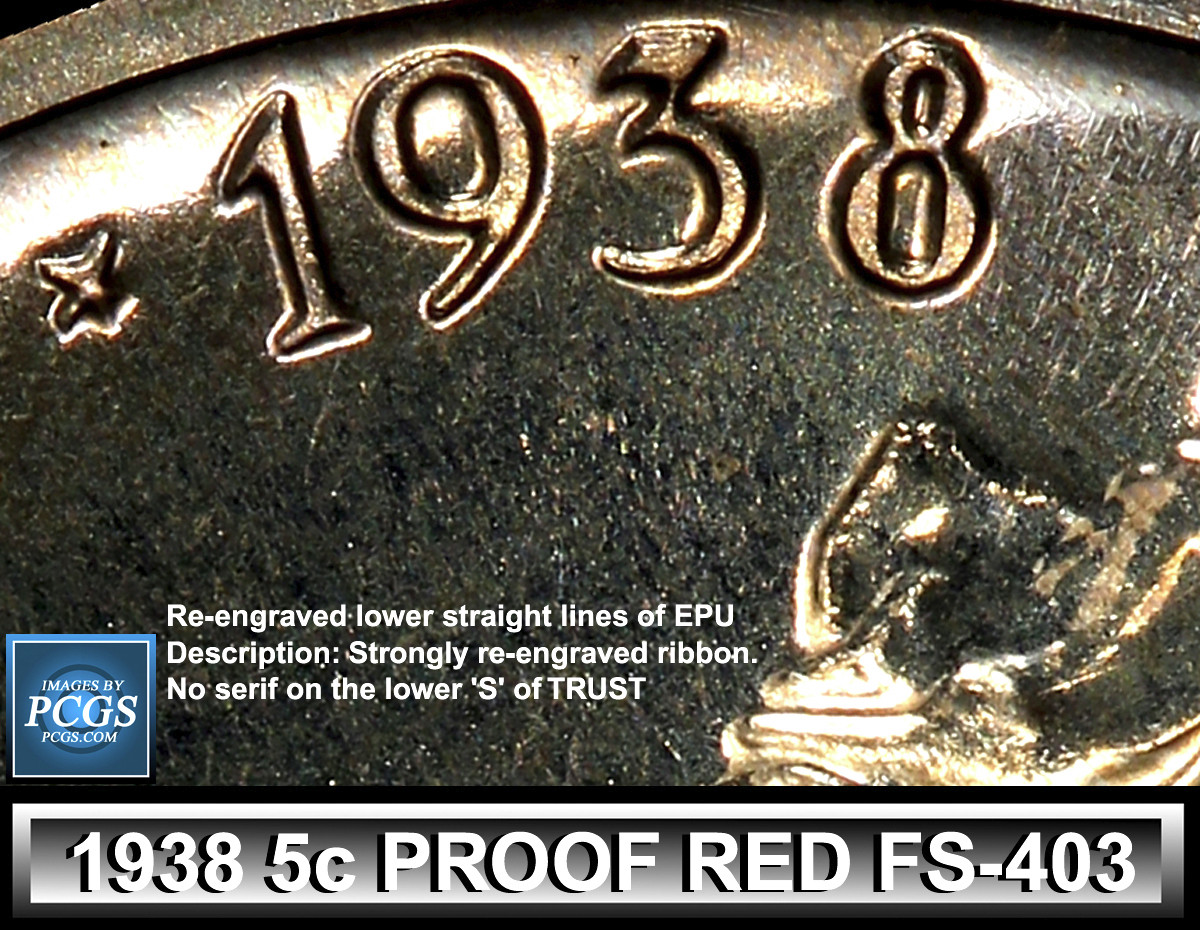
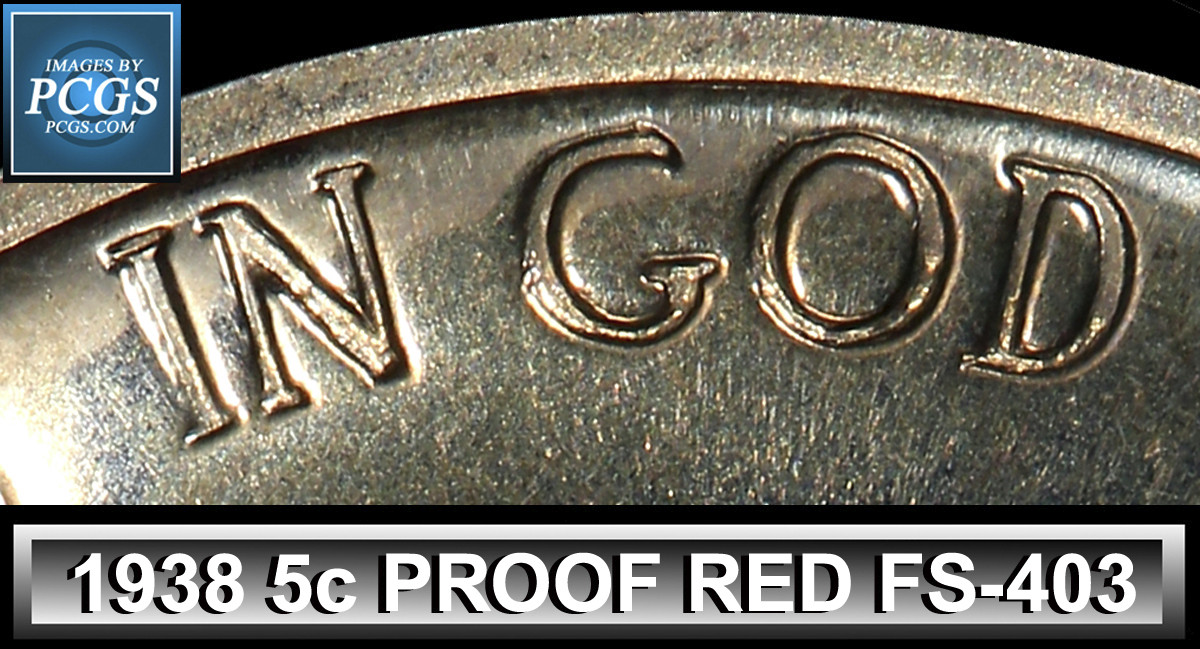
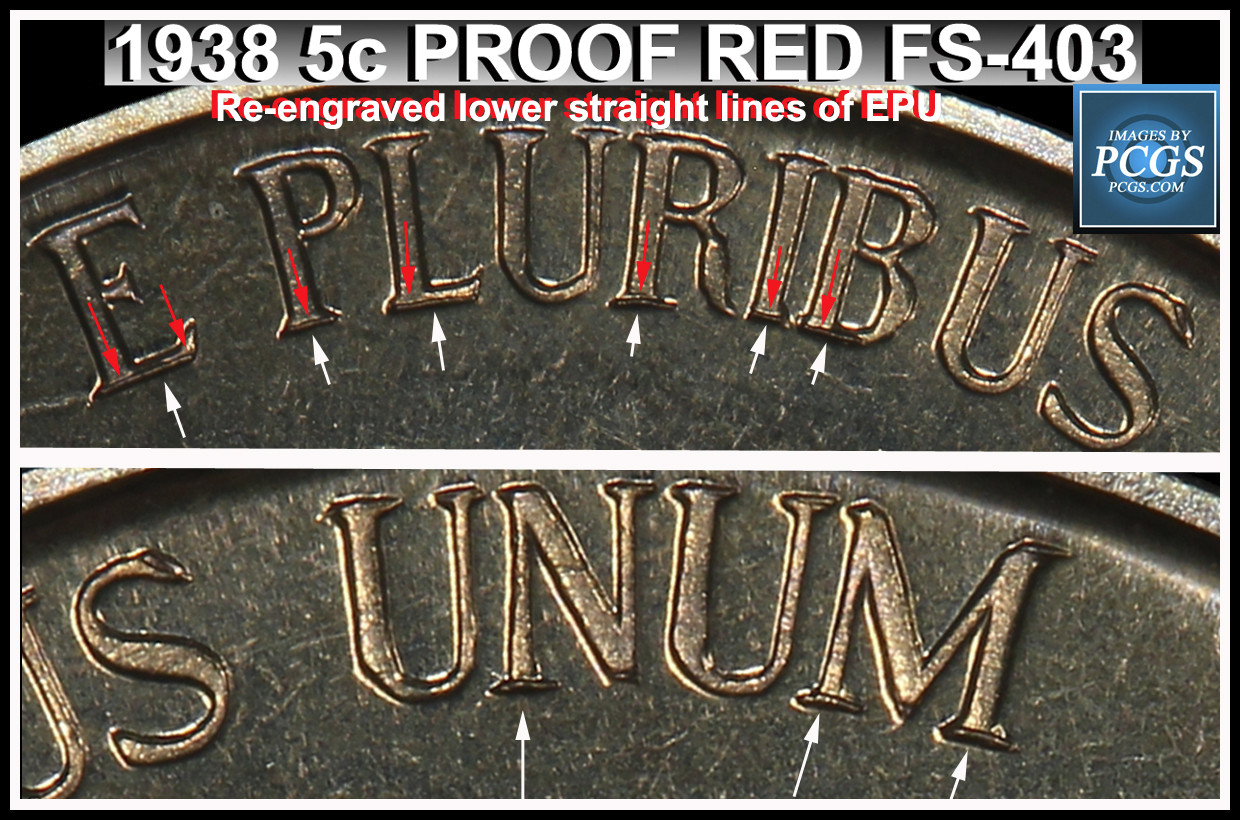
1938 PR 5c RED-004: Description: Lightly re-engraved ribbon. IN GOD and 'LIB' have been enhanced. No serif on the lower 'S' of TRUST;
FS-05-1938-403. Re-engraved lower straight lines of 'EPU' - EDS. Re-engraved lower Right leg of the 'R' of PLURIBUS

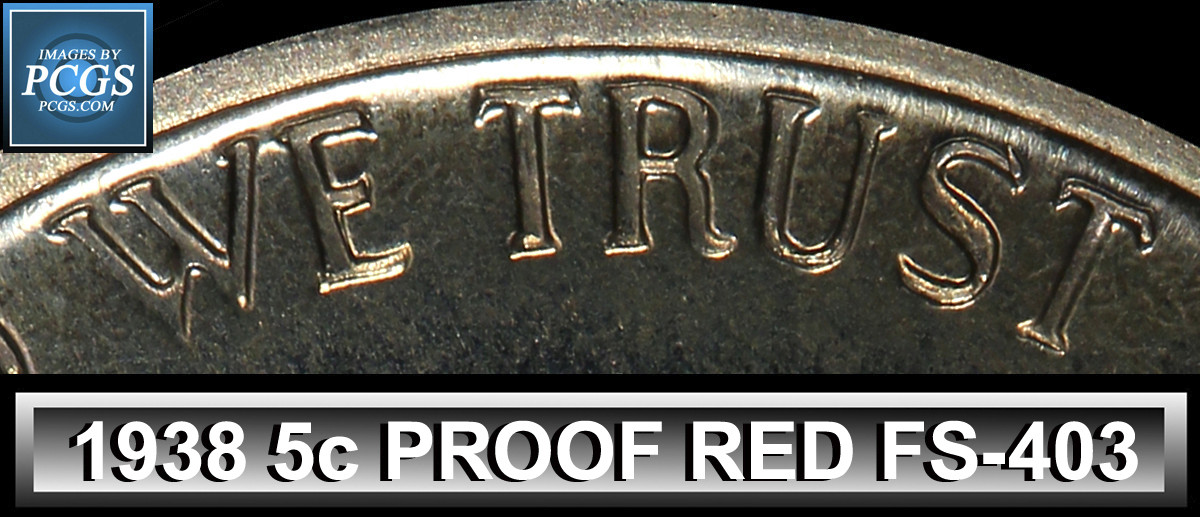
 1938 PR 5c RED-005
: Description: Re-engraved lower 'GO' of GOD and 'TY' of LIBERTY. No serif on the lower 'S' of TRUST.
(sorry no images of this one yet)
Variety site with images:
http://www.varietyvista.com/04a%20J...s%201938.htmA lot of missing images on this site, but in time they will add more when people submit the missing coins. So how do we tell the three I mentioned with the
FS-401, 402 amd 403 numbers? There are some differences on the date areas on some, but on the other three area I've prepared a side by sides of the differences.
'LIBERTY' 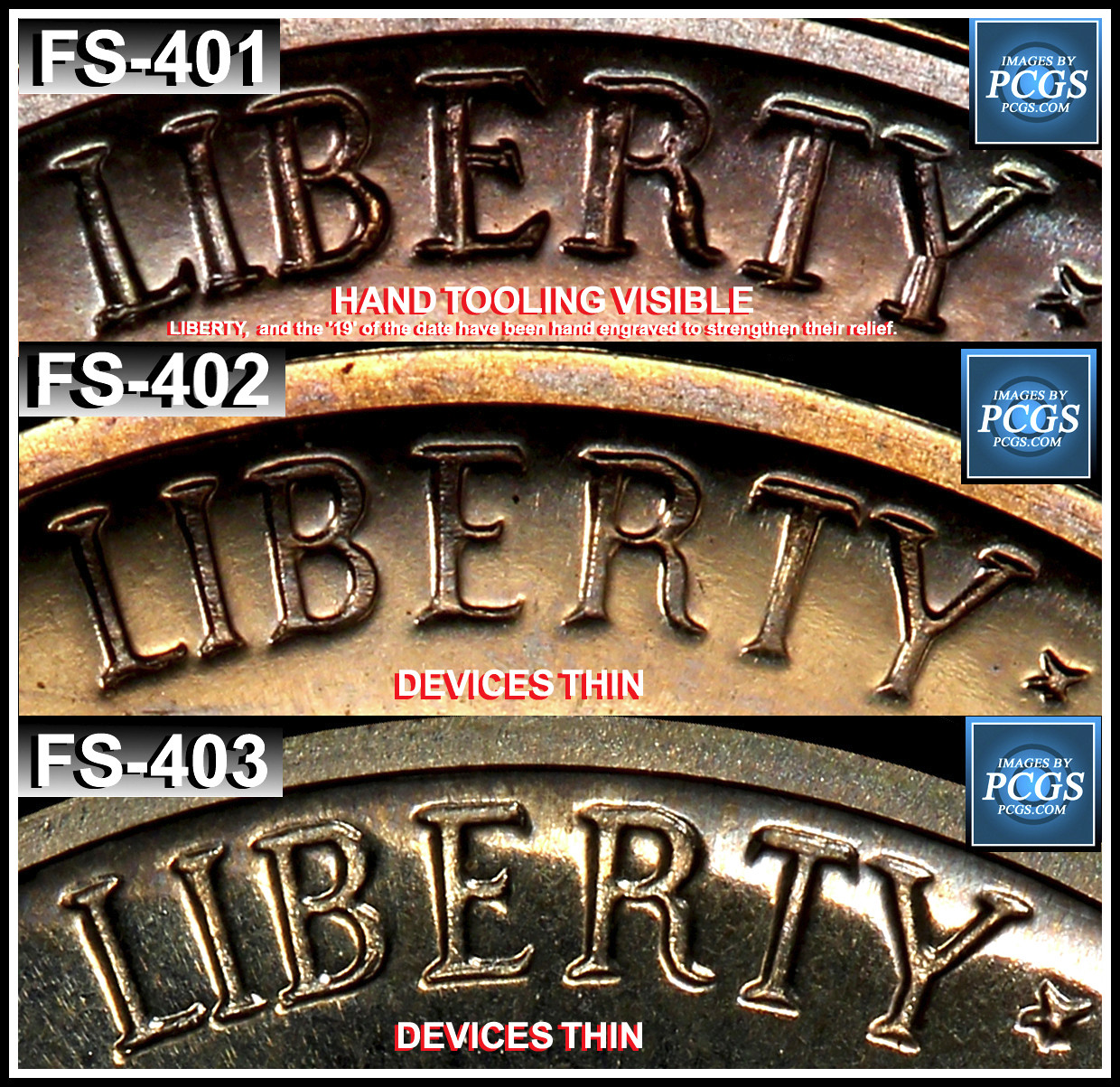 'WE TRUST'
  'IN GOD'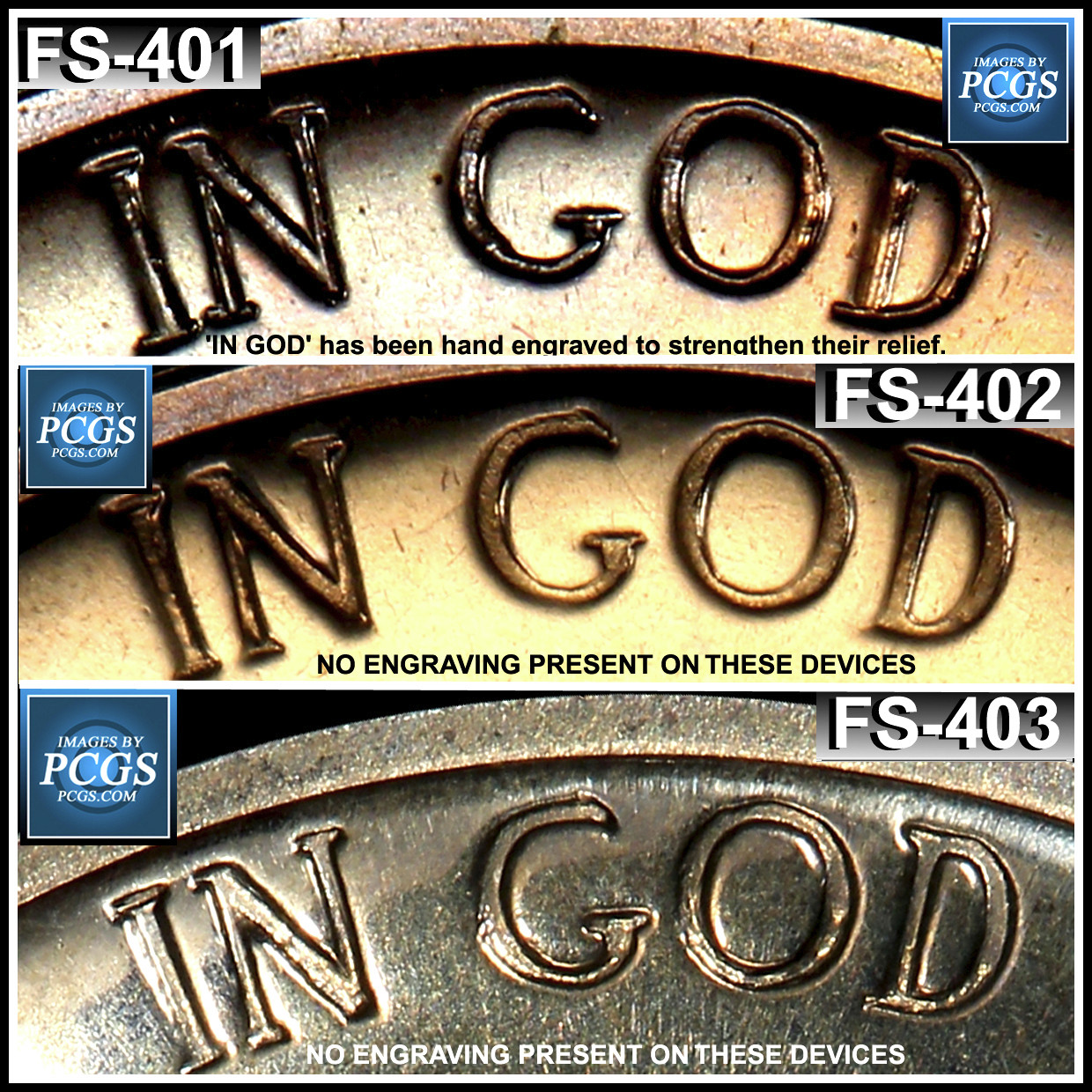
A marker for the FS-403 (CONECA 1938 PR 5c RED-004) is the engraving on the bottom of the
EPU:
Also on the
CONECA 1938 PR 5c RED-001 on the date you can see engraving on the '19'.
So now we know the story of them. Now we just have to find them and know what to look for. Happy hunting










 Posted 12/20/2016 10:39 pm


