| Author |
 Replies: 9 / Views: 1,226 Replies: 9 / Views: 1,226 |
|
|
New Member
United States
11 Posts |
I found these 7 Roosevelt dimes the other day while coin roll hunting for silver dimes. I don't know much about error coins, but would like to know if any of these could be valuable or not? None of them are silver, so I am trying to find out if their colors are a mint error or just worn out over the years or exposure to some kind of chemical or element. Here are some photos I took of them. 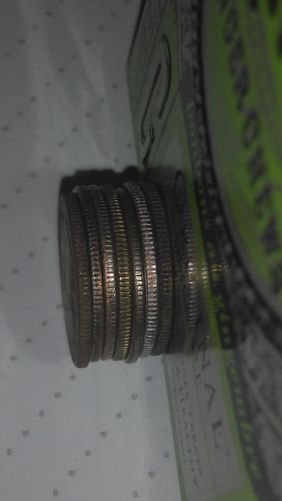 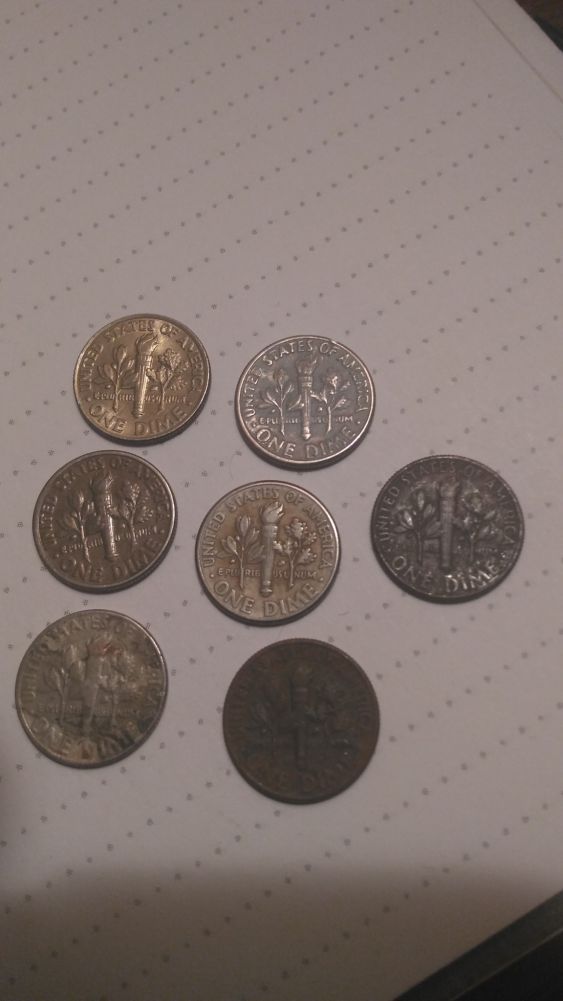 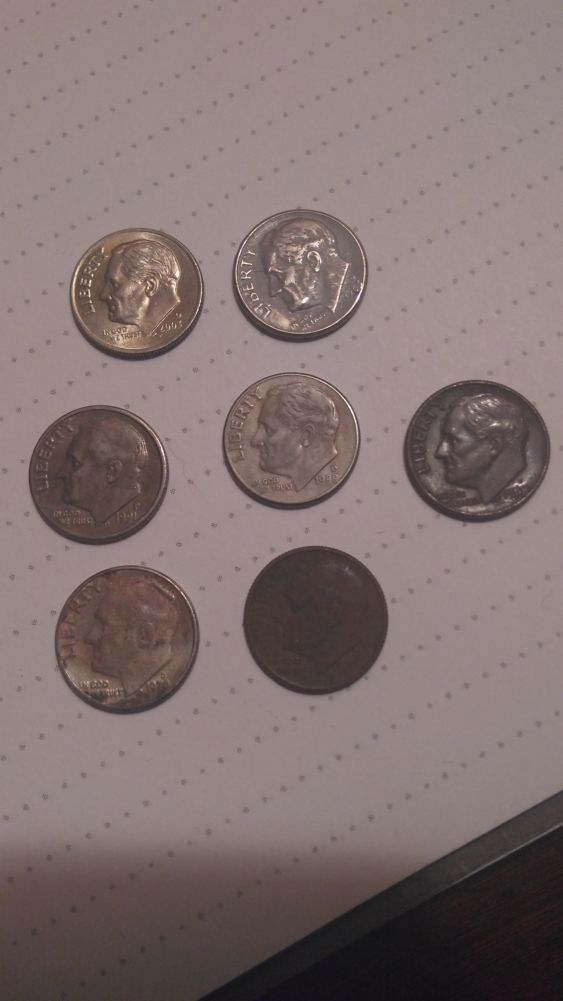 |
|
|
|
Pillar of the Community
United States
1608 Posts |
 to the forum, Roman. What aspect of these makes you think they are errors? With one exception, they look like grungy clad dimes. The exception may be one that looks like a pre-1965 which would be made of coin silver (90%). It would be the one in the stack that looks all white, no red coppery line. And on second examination, I'm not sure I see that either Coins get very dark like these from being in the ground for some time or in contact with certain chemicals. Good pictures, though, and in the future with pics, crop away all the non-coin stuff so we can see features better. |
|
New Member
 United States
11 Posts |
Thanks for the advise. The one that looks white is a 1983 so it's not a silver, one of the dark ones looks like it's just rusty, but I'm mostly interested in the dark one and gold looking one. I was thinking the dark one is missing a clad layer on both sides because it doesn't look dirty, and it is smooth and shiny not rough like the rusty one. The gold colored one just looks like a gold color on both sides, I don't think it's an error, could it be gold plated?
|
|
Pillar of the Community
United States
1608 Posts |
Gold plating is certainly a possibility. There are chemical tests to confirm or reject that hypothesis but they're destructive so I wouldn't mess with that. The darker ones can't be actual "rust" because there's no iron in clad coins. They could have been in a steel can with nuts/bolts & stuff and take on a rusty color.
Most times clad coins that go dark like that turn up in metal detector finds. Or come from mixed metals as the copper reacts to the environment. There's also the case of improper annealing errors where the planchets (or metal that goes into making blanks) aren't processed correctly so coins turn dark, but that's usually seen in nickels (which are 75% copper).
So, I can't give you a definite answer for the whole lot. I think the darkest are from exposure as you hypothesized.
Edited by Biedercoins
01/02/2017 05:33 am
|
|
New Member
United States
11 Posts |
|
|
Pillar of the Community
United States
8529 Posts |
Like to see a close up of the bottom left coin. If you can.
Oregon coin geek.....*** GO BEAVS ! ! ! ***
|
|
New Member
United States
11 Posts |
Here's some close up pics, this coin looks like it might have been painted or something because the flame is orange on the reverse. 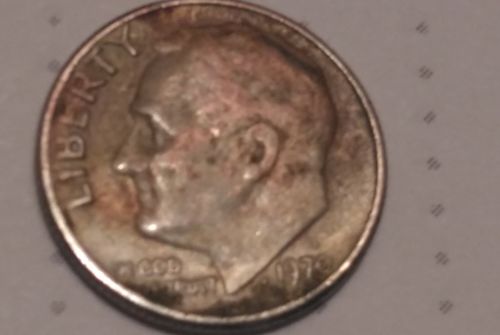 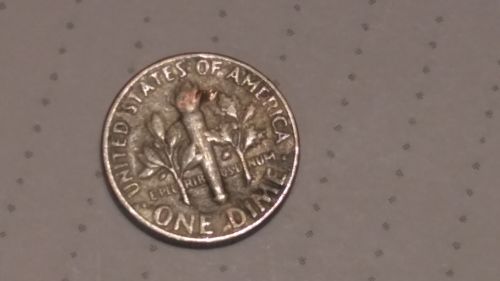 |
|
Pillar of the Community
United States
8529 Posts |
It looked like something on his head but hard to tell.
Oregon coin geek.....*** GO BEAVS ! ! ! ***
|
|
New Member
United States
11 Posts |
It looks like his hair is kind of painted orange as well as the flame
|
|
Pillar of the Community
United States
8529 Posts |
Somebody was having fun or bored.
Oregon coin geek.....*** GO BEAVS ! ! ! ***
|
| |
Replies: 9 / Views: 1,226 |
|










 Posted 01/02/2017 04:28 am


