On the 1943 cents it is good to help us realize that the die are made of hardened steel but the planchets this year were also steel. This created an unusual event on the dies. Most of the time with the copper planchets, they did not affect the dies as much, as copper is a softer metal. But with the steel to steel combination, the dies wore out a lot faster. This breakdown was so evident that even on a higher grade coin, this die wear can be spotted easily.
But what affect did this wear have on the coins? These coins show heavy die flow lines earlier on the coins struck. The devices wore in a pattern not seen until the copper planchet coins were in their very late die states. (VLDS) So how can you tell die wear on these coins? They heavy die flow starts earlier on and the devices and they start distorting quicker. On the date area (what the images I picked for this thread) the die flow lines are in the SE direction which is normal for all coin die wear patterns)
But note how the SE edges of devices are also affected? The mint marks are even affected quicker as they are closer to the rim area. So when searching for RPMs, you have to keep this in mind that this
SE areas on the mint marks will be affected first.Lets see how this die flow is pictured below. It is nice to see several examples as they give you a better general idea on what this can look like.
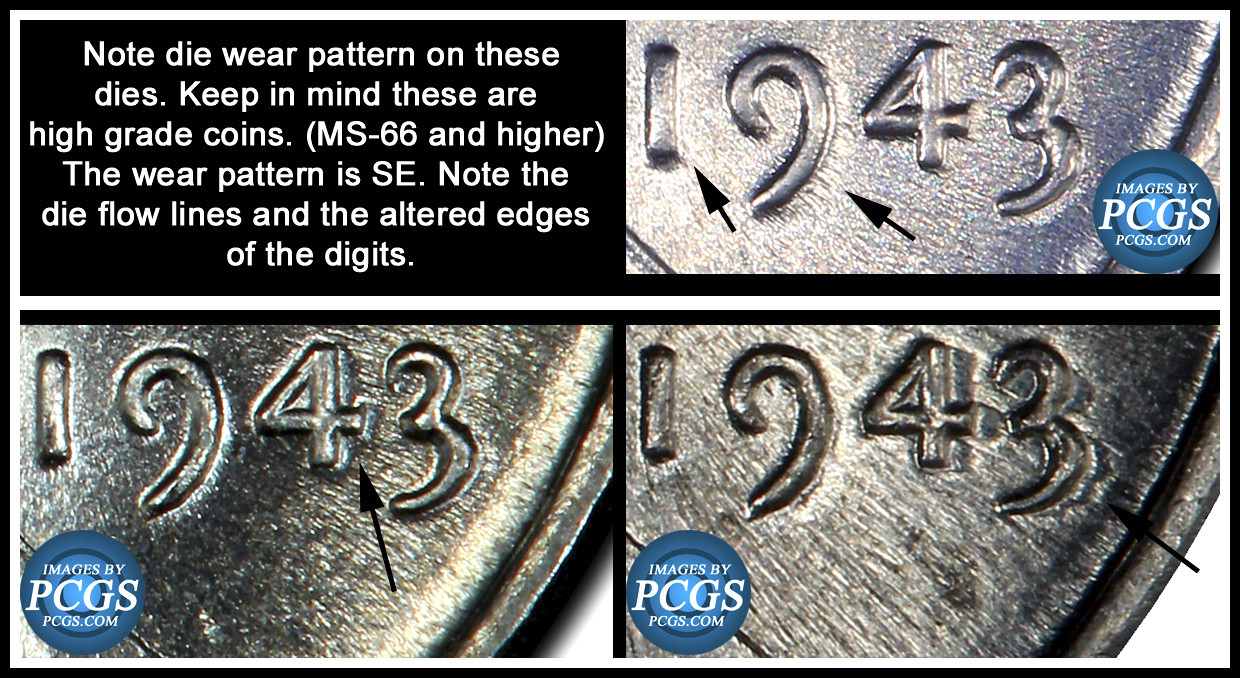
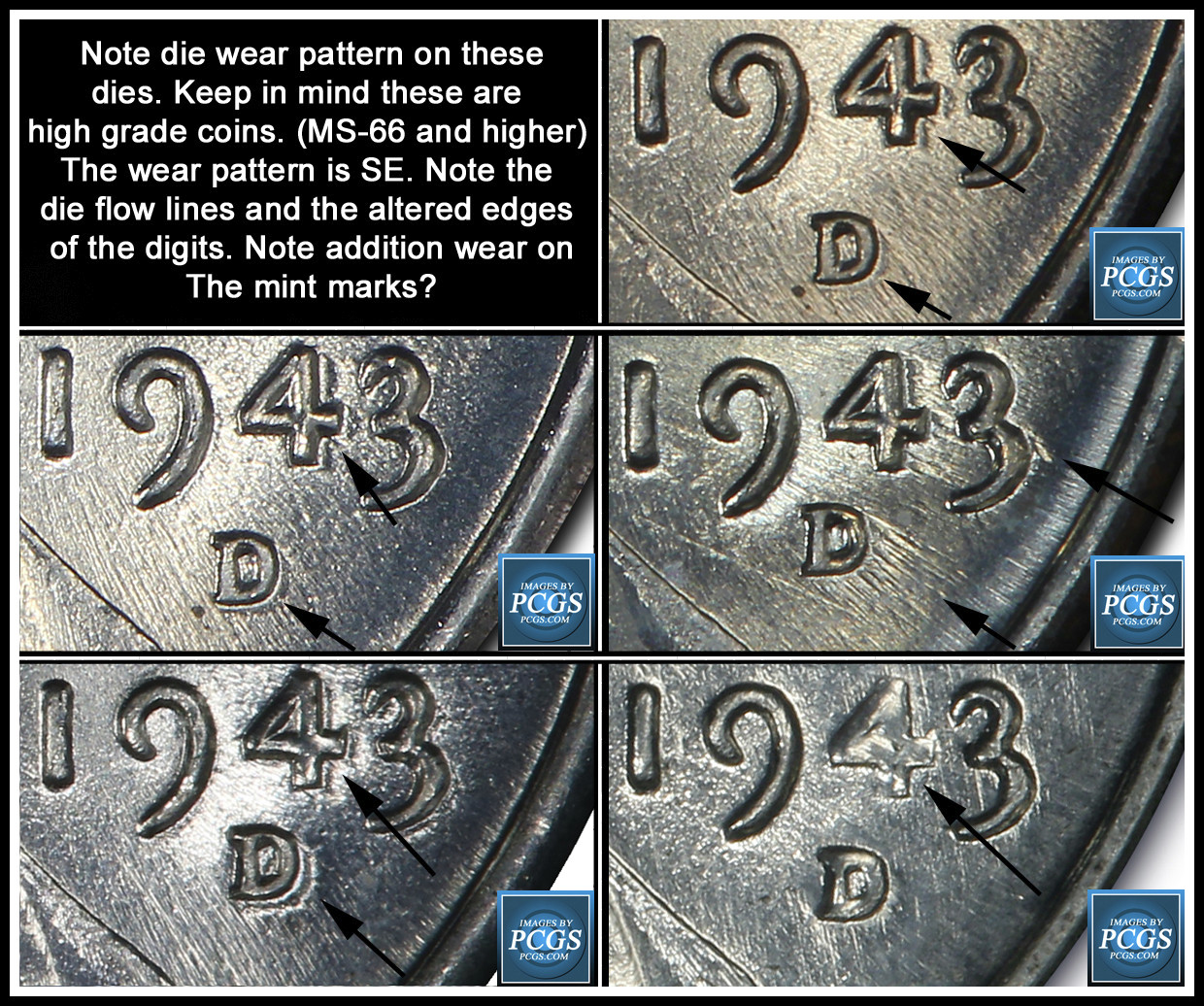
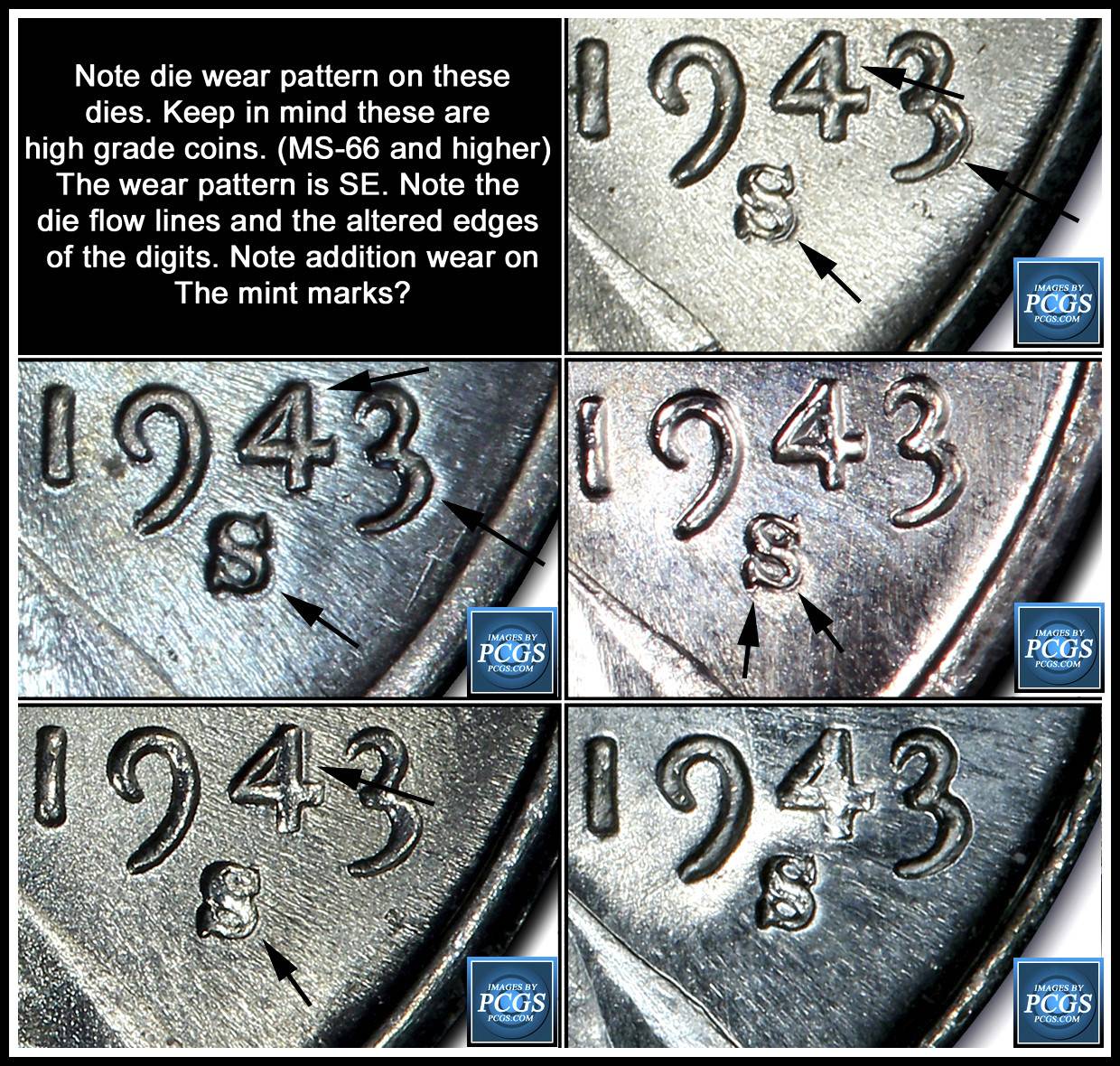
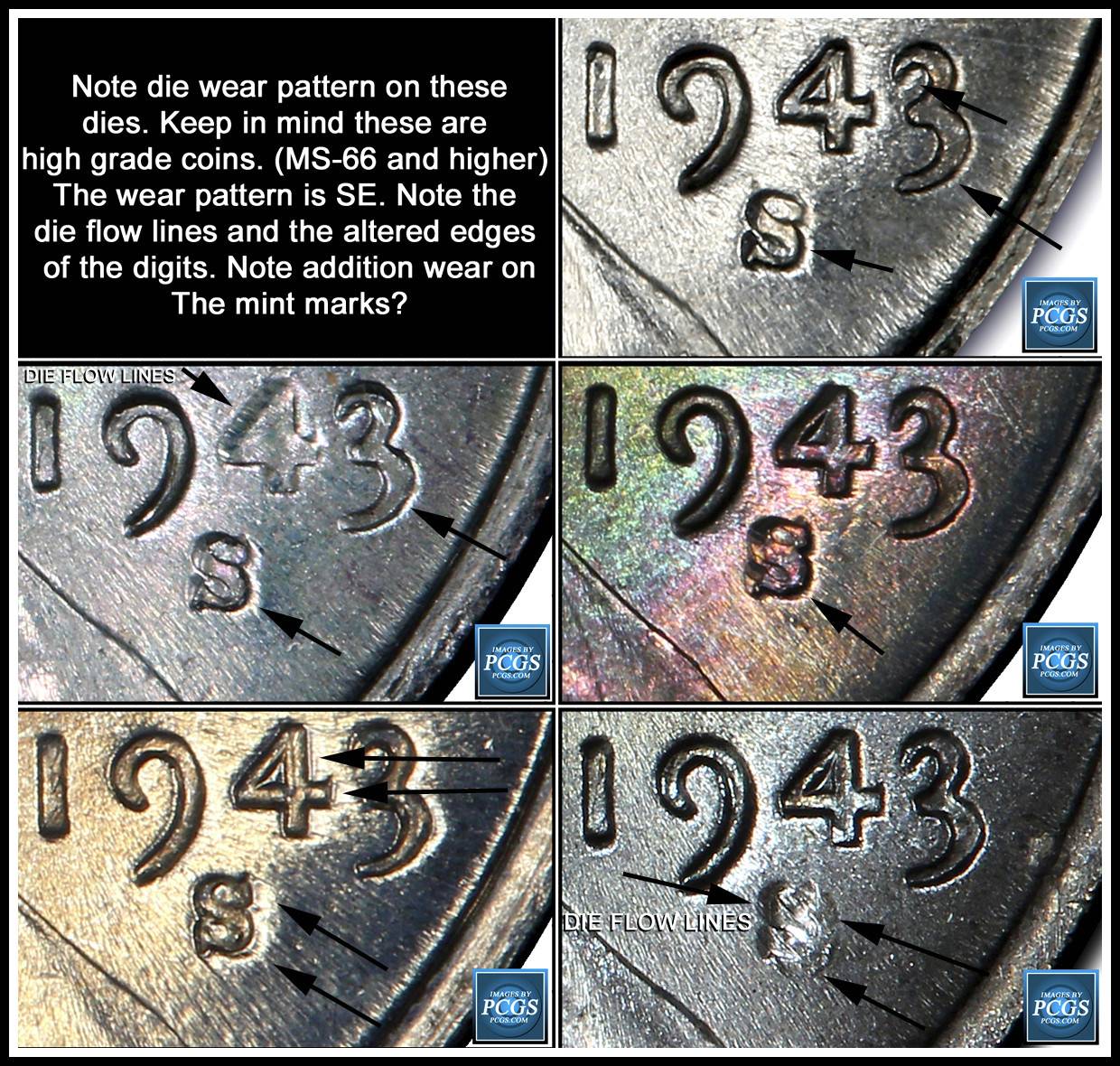
This subject came up recently on a thread, so I felt it would be good to have this information in mind on searching for RPMs on the 1943-D and 'S' cents.
None of these coins are graded as a RPM. Keep in mind that the coins the images came from are the MS-66 or higher grades.
Keep in mind also this die wear can be apparent on doubled dies as well, but they are not a hubbing issue if they are in the same direction to the SE. It is just die wear most of the time. The tell tale sign is the uneven edges.
While searching for these images I was shocked at some that were graded MS-66 that look like they should have been a lower grade. But evidently they took in consideration the time period involved and the quality of the coins from that one year. Hope this helps with your searches.
coophome=







 Posted 03/13/2017 1:11 pm


