| Author |
 Replies: 10 / Views: 973 Replies: 10 / Views: 973 |
|
|
New Member
United States
37 Posts |
|
|
|
|
Bedrock of the Community
United States
62064 Posts |
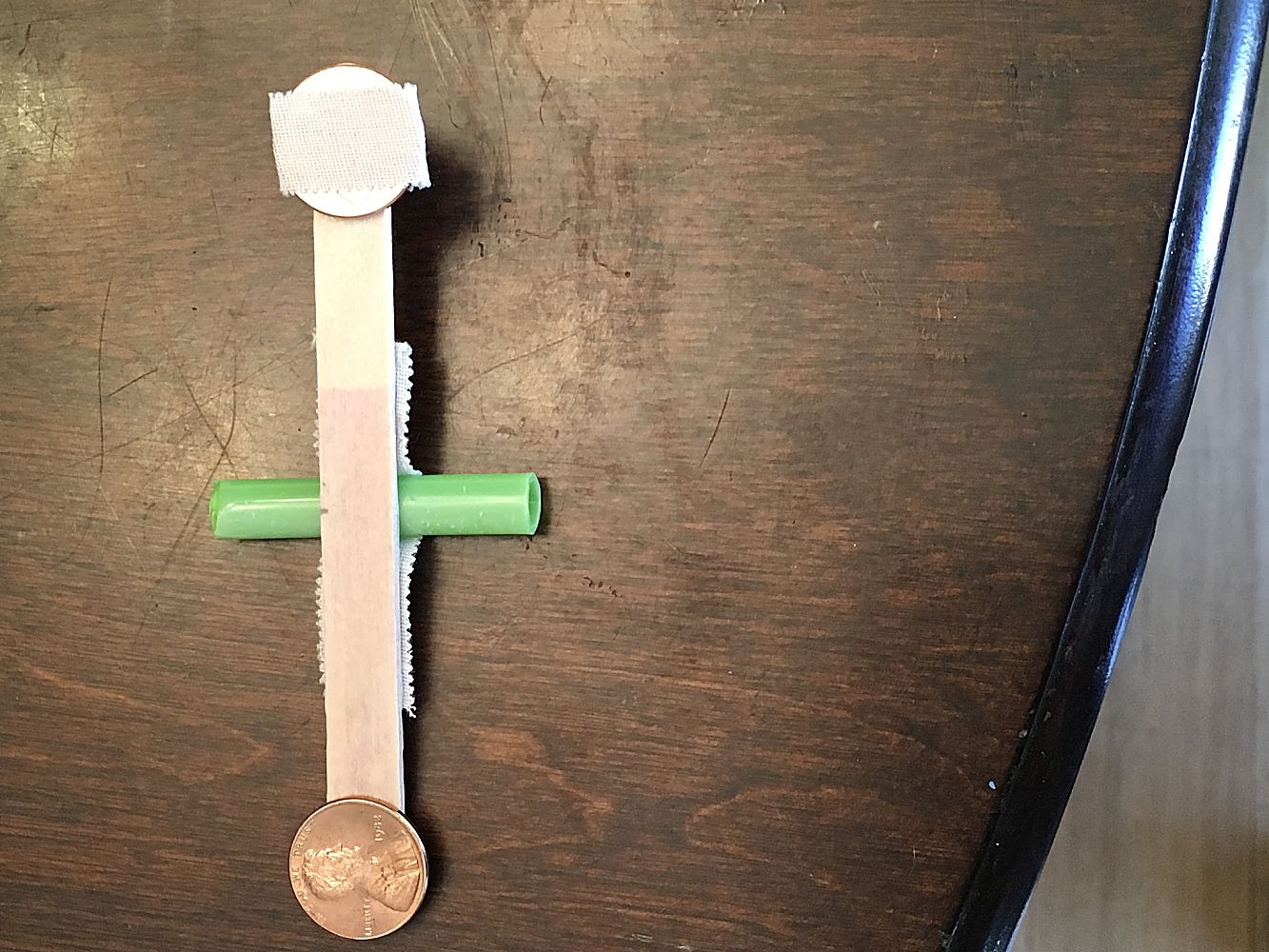
 When you do the test with the stick, you need to figure out the balance point. Use two known coins. 2 pre 1981 ones will see if you have the location correct. When the two balance, then you have the right spot. Mark those areas with a pencil. Then you know where the balance spot is. Then try a pre 1981 and a post 1983 one to see how the balance is off. Then you know you are on the right track. Then use if to test with. Graded coins are tough to figure for prices. When they go up grades as they get to the higher grades, the prices double sometimes with each step upwards. But the 1982 BU coins are not real expensive coins. There are some varieties that are worth a lot more. But the normal coins can be bought in BU rolls. The weight issue I can tell by holding two which one is light or heavy with one in each hand. I can tell from color and what to look for on each to determine if it was a plated zinc or a copper coin. It just take some time to be able to tell the differences. LOL Lincoln cooper. (funny to me because that is my last name) I know you meant copper. Edited by coop
04/02/2017 7:05 pm
|
|
Moderator
 United States
14463 Posts |
|
|
Pillar of the Community
United States
1000 Posts |
1982 D small date copper is the rare one. I'm not positive from the pictures, but I think that's a large date. I can see it's not a Denver coin though!
|
|
New Member
 United States
37 Posts |
Yeah I did the test with pre and post 82's and the test turned out correct, coop. So are you saying 82P BU coppers are not real expensive? And I know of a few varieties, such as the 82D small date copper(brass) just found, the DD, and apparently the 82P zinc, but just not sure if you're saying 82P in certain conditions are valuable or the other mint makes in general can be more valuable?
Fuzzy317, sorry I'll crop it next time.
|
|
New Member
United States
37 Posts |
Small date for sure Druu, I'll send another pic
|
|
Bedrock of the Community
United States
62064 Posts |
The large date copper for this year looks like doubled dies, but they are not. The real DDO is a lot wider when you look at them closely with a normal coin to compare with: 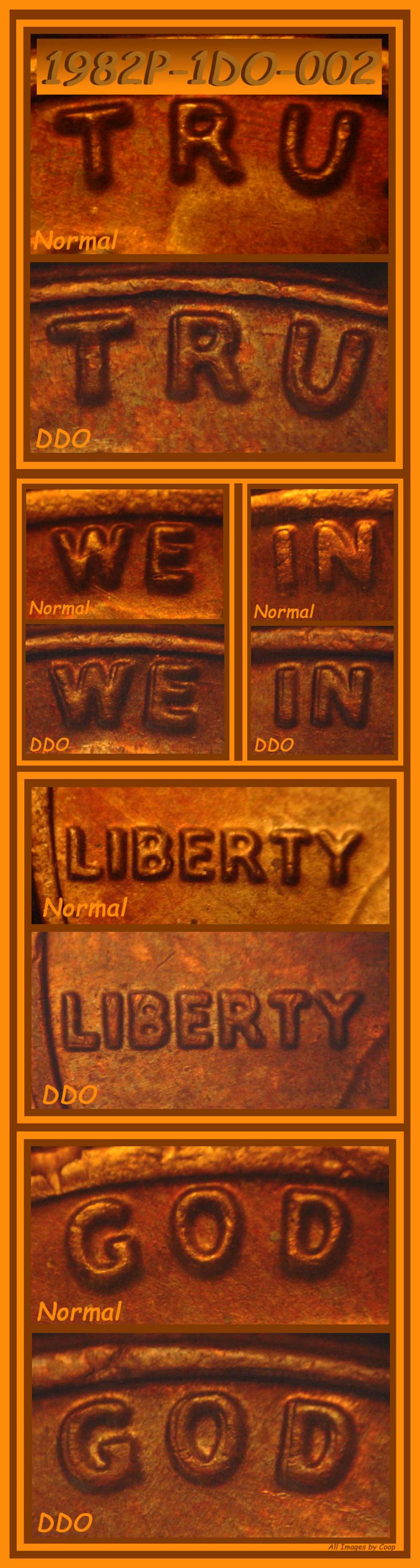 |
|
Rest in Peace
10197 Posts |
Prior to a scale, made a teeter/totter like that, glued a copper cent on one end, balance point meant zinc, all down was copper. Only thing I regret now is didn't balance the 7 or 8 rolls of small 1982D's that I dumped back into circulation early last year...BEFORE I knew of checking for a copper one! Those were just the XF's and better of 750,000 Lincolns searched! I'll forever wonder,...did I miss one?  |
|
New Member
United States
37 Posts |
Here's a better shot, druu. 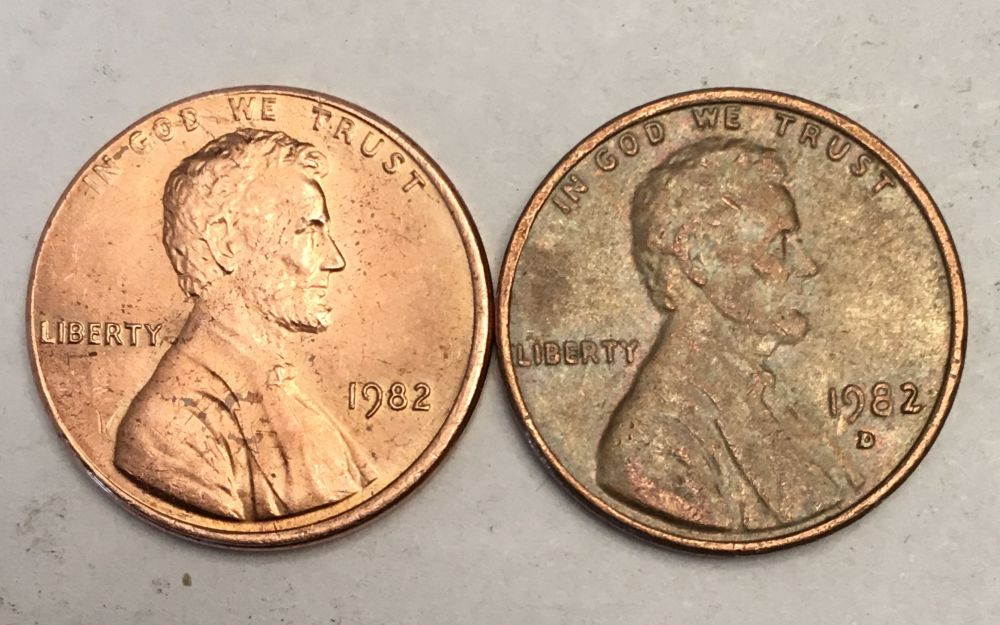 |
|
Pillar of the Community
United States
3463 Posts |
I am thinking that since this is a Cooper coin, Coop would be the one to ask about it.  Part of the reason that high grade coins from 1982-1983 are more valuable is because the U.S. mint did not issue any uncirculated mint sets those years. The Washington quarters seem to hold the most value in uncirculated condition, the cents not so much, but they are still considered rarer in uncirculated condition. Maybe the reason the cents aren't as rare is because of 1982 being a transitional year and many dealers put sets of the cents together to sell to collectors, making up for the mint not issuing uncirculated mint sets. There were also "Souvenir" sets issued by private dealers to help curb the shortage of uncirculated sets. Edited by cwb
04/02/2017 8:27 pm
|
|
New Member
United States
37 Posts |
Sorry, I don't know if this changes anything but this is a philly SMALL date copper. I didn't mention that in the first post. So the philly that are not coppers are not expensive. I wasn't sure if philly coppers small dates were valuable. I saw a RD on PCGS in 68ms and it was thousands. Maybe it's the fact that it's a RD. Thanks for the replies!
|
| |
Replies: 10 / Views: 973 |
|







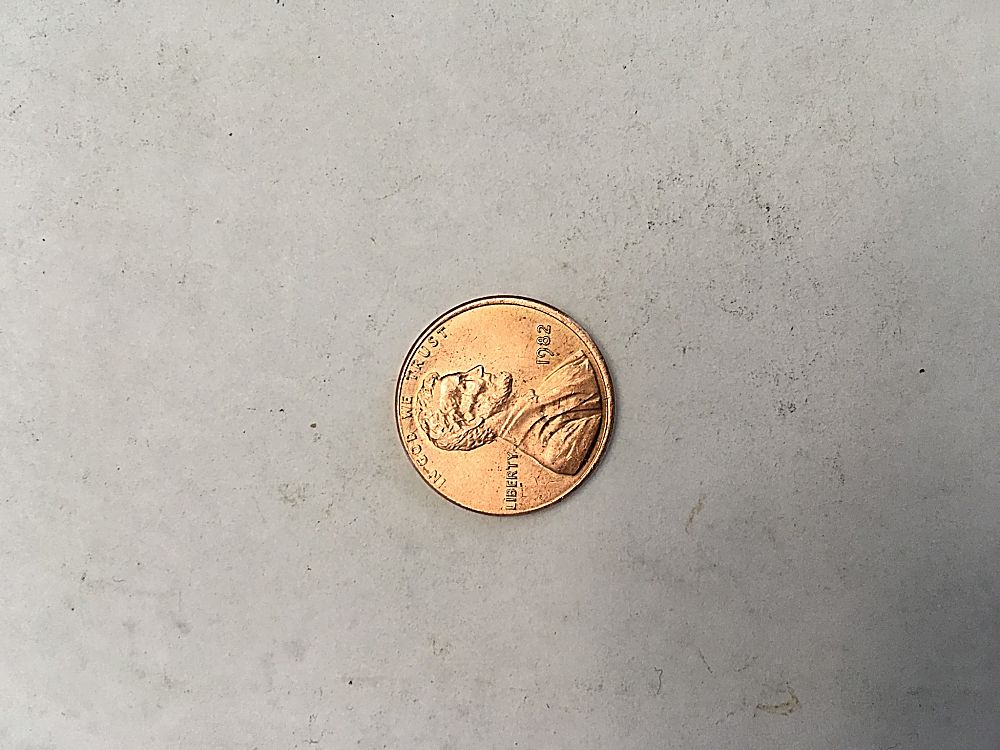
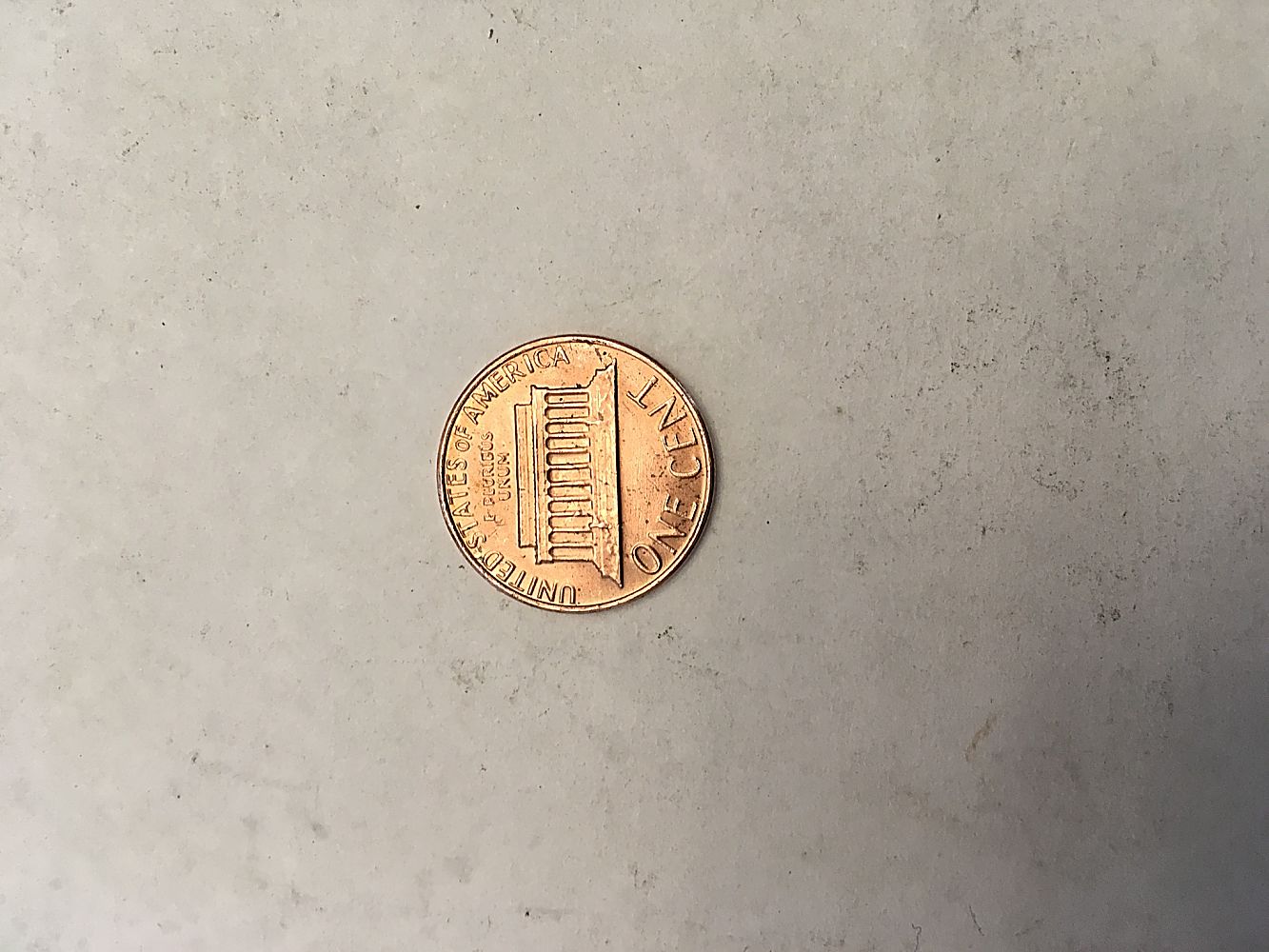


 Posted 04/02/2017 7:13 pm





