| Author |
 Replies: 11 / Views: 2,429 Replies: 11 / Views: 2,429 |
|
|
New Member
Australia
28 Posts |
Hi, just wondering about the cross pistareens (from Spain, but used in several other places). Does anyone know when they started minting them? and at which mints in which years (in particular Segovia) Thanks for your time.  *** Moved by Staff to a more appropriate forum. *** *** Moved by Staff to a more appropriate forum. *** |
|
|
|
New Member
 Australia
28 Posts |
This type of coin, not the monogram one. 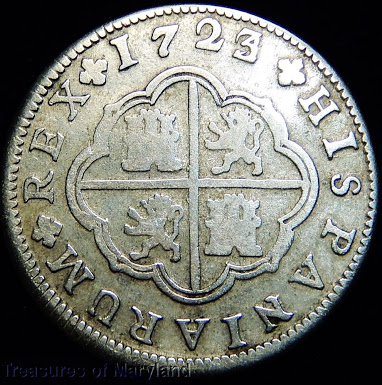 |
|
Valued Member
United States
309 Posts |
The cross design originated in the 1580s at Segovia and monogram style Pistareens were minted since the War for Spanish Succession. Cross Pistareens aside from a rare version from Valencia, were made in large numbers starting in 1716 through 1771. They were made at Seville and Madrid with branch mints at Segovia and Cuenca shutting down production by 1730. A majority of the Pistareens and their cut pieces (sharp silver) found in archeological sites from Colonial America are dared 1721, and were minted from silver recovered from the wreck of the 1715 Treasure Fleet in Florida. They circulated in America until the War of 1812 and would have been familiar to all the Founding Fathers of America.
|
|
New Member
Australia
28 Posts |
Thanks for the reply! So were the cross pistareens minted in 1711 at Segovia?
|
|
New Member
Australia
28 Posts |
*(The octolobe/cross design)*
|
|
Pillar of the Community
United States
2645 Posts |
Quote:
They circulated in America until the War of 1812 I thought Spanish silver was legal tender in the US until the Coinage Act of 1857. |
|
Pillar of the Community
United States
1962 Posts |
There IS no 1711-dated Segovia mint "pistareen" (milled shield 2R)...
There's a 1708-dated Segovia mint 2R with shield on one side and MONOGRAM on the other - in the name of the new disputed king, the Bourbon Philip V. There was not another Segovia 2R until 1716 or 17.
Generally the only peninsular SPAIN 2R you'll encounter for 1711 was out of Barcelona in the name of the Hapsburg pretender "Charles III" - featuring the (Hapsburg) shield and a Charles monogram.
There IS also apparently a 1711-dated MADRID mint milled 2R for Philip V... but it's a quite a scarce type (I see just one in recent auction archives and one in the catalog).
Rather than the open-ended "tell me everything about every pistareen" request... let's have a pic of what you're wondering about and we'll see what we see. Perhaps you have the date and/or mint wrong, or it might be a contemporary counterfeit.
|
|
New Member
Australia
28 Posts |
Yeah, probably should have just asked in the first place. Anyway, here it is (sorry about the capsule and the bad photography skills, I'll put a better one up): 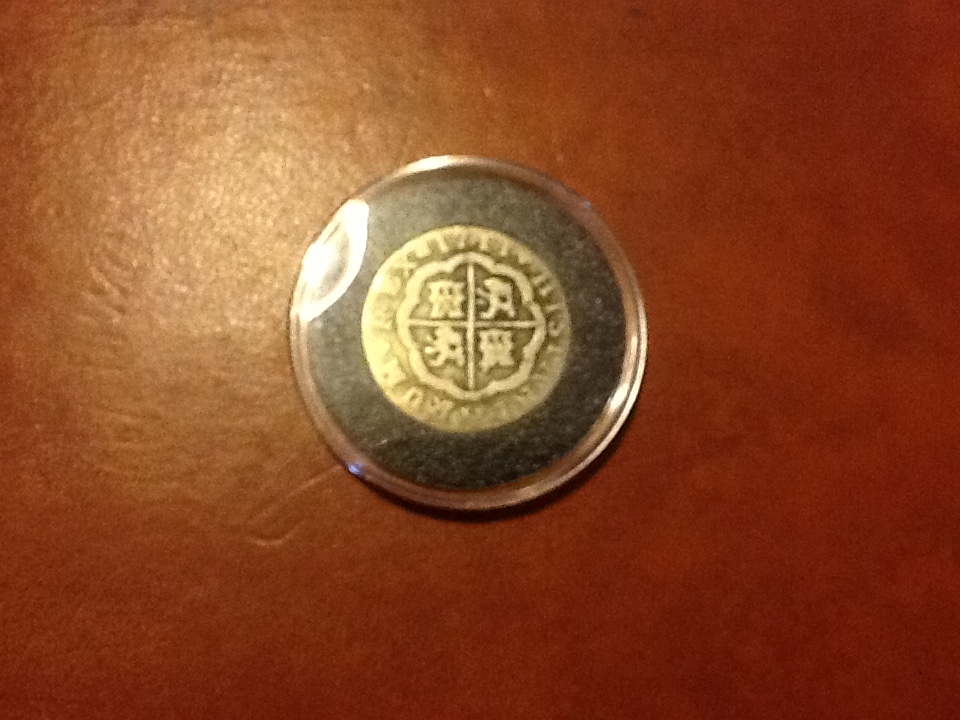 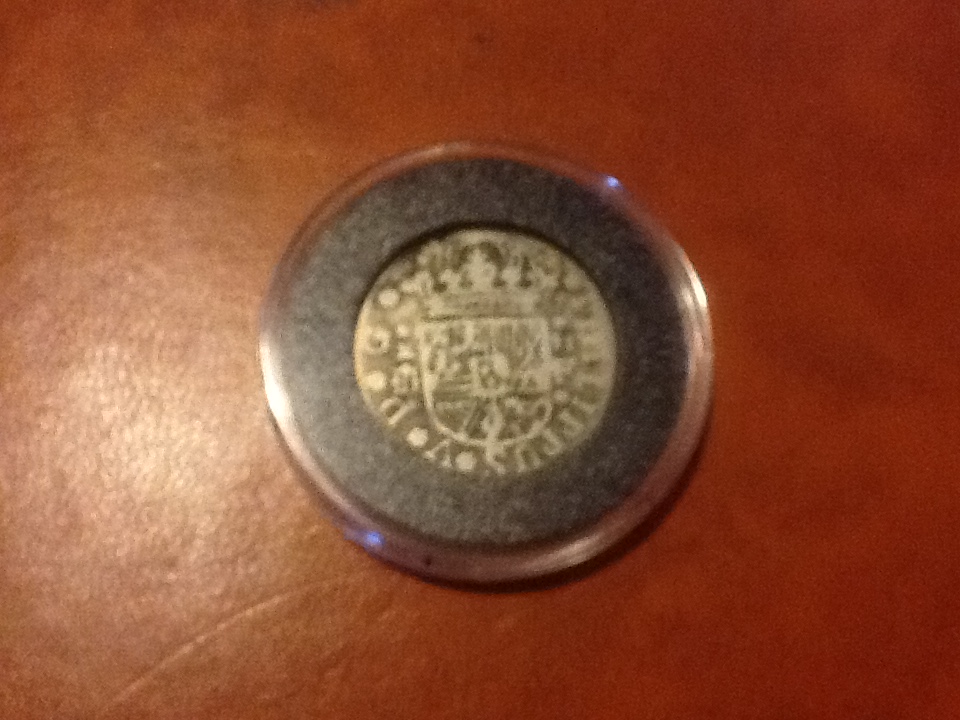 |
|
New Member
Australia
28 Posts |
These should be a bit better: 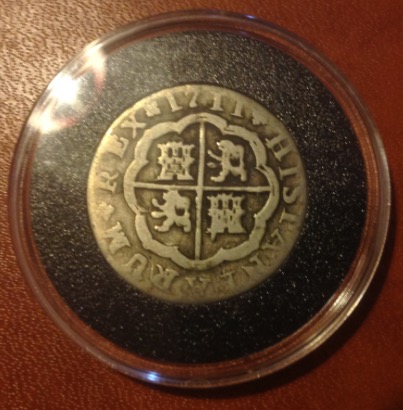 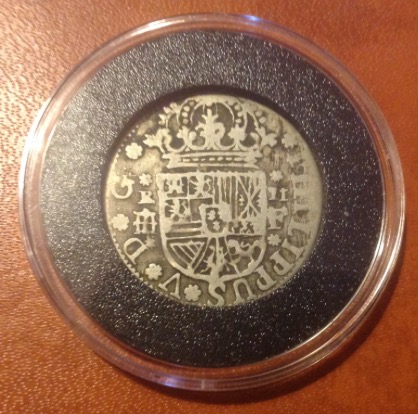 |
|
Pillar of the Community
United States
1962 Posts |
Indeed the Segovia mark, indeed 1711 date... and indeed appears to be a nice contemporary counterfeit... of course a common occurrence in this series. Not one I recall seeing before, offhand.
Should get ColonialJohn in a tizzy... he's been on a kick with these lately.
|
|
New Member
Australia
28 Posts |
Okay, thanks! So how old would you suspect it to be? if these were being used right up till 1857 it could be a lot younger than I originally thought.
Also, does it appear to be plated or coated with silver around a copper core? or is it solid silver?
|
|
Pillar of the Community
United States
1962 Posts |
"Continued" defined as repost and repost and repost until someone answers basic "but why?" questions that could LARGELY be addressed by you doing some of your own legwork and reading prior threads about contemporary counterfeit pistareens/shield 2 reales.
As general unsolicited advice to anyone reading this - you can't want to know everything about what you have and expect people to tell you all about it... when you clearly don't want to bother looking anything up yourself :->
The one thing I'll offer as a direct answer - this appears to be solid alloy rather than plated base metal. Presumably it's some low-silver admixture "white metal" alloy.
Because this type circulated not just in Spain but also in a lot of other places (particularly the British colonies/realm) over a good period of time, by their nature, you're never going to know "exactly when it's from" (again, some background research and that should be understood). If you delve seriously into the metallurgy, you may be able to glean ideas on a more narrow time-frame based on the exact alloy involved (maybe something which definitively wasn't available BEFORE a certain date)... BUT if it's of an alloy/stylistic technique that was available from an early date, that doesn't work.
So, really, it could be anywhere from just after 1711 to perhaps as late as 100 years after that. Not really after that, as the type was rather long in the tooth by that point...
And the most basic guess, of course, would be Spain as a point of origin... but it could in theory be out of England (some of these did end up there through a backflow of colonial trade)... or perhaps U.S./Canada IF a late enough, severely backdated issue.
|
| |
Replies: 11 / Views: 2,429 |
|







 Posted 05/14/2017 09:26 am


