| Author |
 Replies: 19 / Views: 3,743 Replies: 19 / Views: 3,743 |
|
Pillar of the Community
Canada
9821 Posts |
I'm working with a Canon XS for close ups I use a 35mm with extensions, this pic has the 0-1-2-3 ext. What do I have to do too get closer pics? I want the D 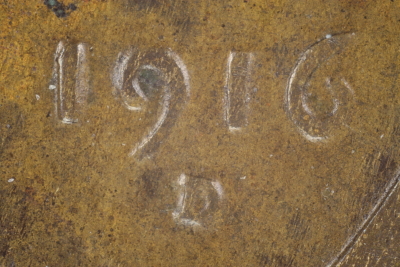 |
|
|
|
Pillar of the Community
 United States
4051 Posts |
|
|
Pillar of the Community
United States
1915 Posts |
I quit using my Canon for close-ups and went to a Dino-Lite product. Here is my D on a stained cent: 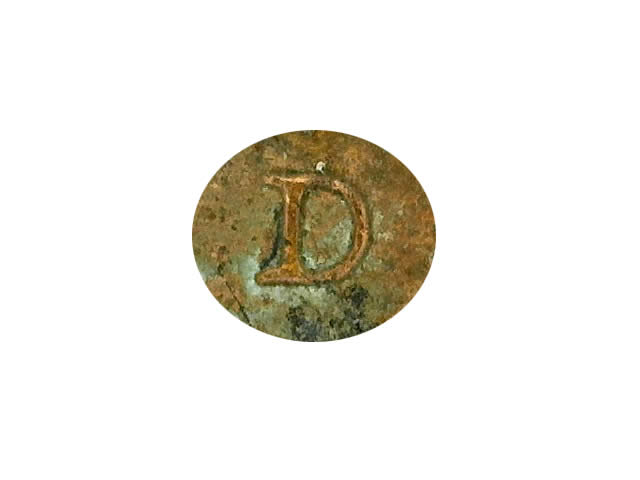 |
|
Pillar of the Community
 Canada
9821 Posts |
Thanks guys, so either way I will have too put out more $$$ :(
|
|
Pillar of the Community
United States
4051 Posts |
Contact me for photographic equipment or visit my home page at: http://macrocoins.com |
|
Pillar of the Community
United States
9395 Posts |
With extension tubes, I always had a hard time getting sharp close-up shots. Here's an example, taken with a reversed Micro Nikkor 55mm f/2.8 lens on lots of flimsy improvised extension tubes, with the camera mounted on a tripod: 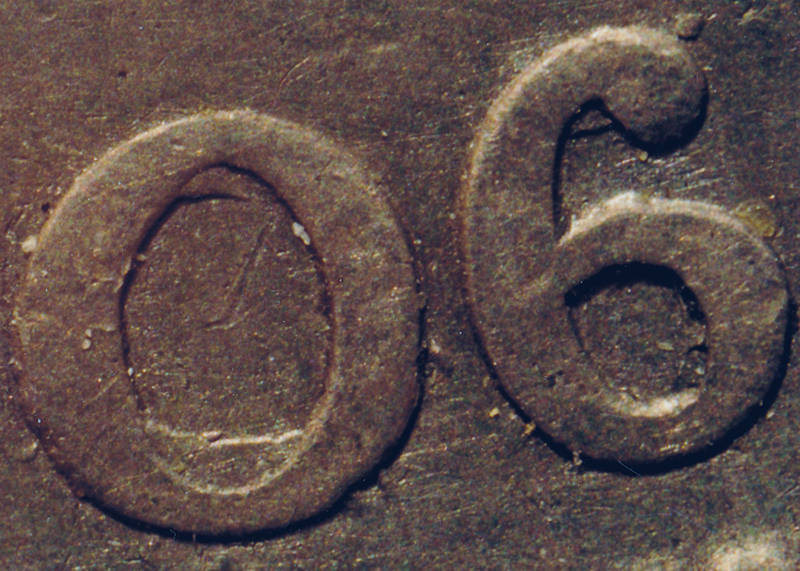 This is a scanned-in film print (taken decades ago), so you might do somewhat better with a DSLR on a rigid copy stand, etc. (This is an 1806 overdate half dollar.) I should probably mention that the uncropped photo covers the whole "1806" date. Edited by pepactonius
05/29/2017 01:17 am
|
|
Pillar of the Community
United States
4051 Posts |
That's not a bad image at all. Most folks would be perfectly happy with it, even today. It's similar to the best that can be produced by the USB "microscope" cameras. It's not sharp because the effective aperture is pretty small, so diffraction is making it blurry, yet the depth of field is good. This is the tradeoff today...if you want a sharp macro image, you must accept shallow depth of field, and solve that problem by stacking multiple photos. This was not really possible/practical in the days of film.
Contact me for photographic equipment or visit my home page at: http://macrocoins.com |
|
Pillar of the Community
United States
9395 Posts |
Quote:
It's not sharp because the effective aperture is pretty small, so diffraction is making it blurry Another reason it's not sharp is due to focusing problems with old film SLRs. With the lens reversed and on long extension, the effective f ratio is small, so the central split-image rangefinder prism is completely blacked out, as is the surrounding ring of microprisms. This blackout starts around f/8, IIRC. The only way to focus is with the ground glass screen, which is pretty imprecise. For coin imaging, modern DSLRs have so many advantages over the old film cameras. I wonder if anyone on this forum still uses film? |
|
Pillar of the Community
Canada
9821 Posts |
So Ray if I go with the 10x objective and the cone I will have to focus stack right.
Will the camera stand that I got from you with the adjustable table work?
|
|
Pillar of the Community
United States
4051 Posts |
Yes, you'll need to focus stack.
The Leica Z-stage is fairly precise, so you can do stacking at 10x with it. You won't be able to adjust it in precise steps, so the process will be to focus to the lowest in-focus plane and snap the shot, then move a little higher until the next features are in focus, and keep moving higher, snapping shots at each relevant point where key parts of the coin are in focus. Then use a program to render the stack.
|
|
Pillar of the Community
Canada
9821 Posts |
This may be a fall job.
But if you put markers where the table moves what measurments would you need?
Edited by mcshilling
05/30/2017 8:38 pm
|
|
Pillar of the Community
United States
4051 Posts |
I don't understand what you're asking, please clarify.
|
|
Pillar of the Community
Canada
9821 Posts |
The table moves up or down with the side knobs, so where the table move and the support is stationary you could put some kind of marking system on each side, but what size measurement would you need,mm or some thing else.
|
|
Pillar of the Community
United States
4051 Posts |
The movements you need to make are very small, around 10um for each step. Will be very tough to put in any sort of scale. A dial indicator might work.
|
|
Pillar of the Community
Canada
9821 Posts |
OK like I said before this may be a fall job.
|
|
Pillar of the Community
United States
4051 Posts |
You don't really need to make precise focus steps unless you plan to do 3D rendering. It's actually better for 2D rendering to focus on the key areas you want to be in focus in the final image. I often do 2-image or 3-image stacks where I focus on the field, on the top surface of the MM or other feature, and maybe one step in between (especially if the field is not flat). No measurements needed, just decide on the focal planes by eye.
|
| |
Replies: 19 / Views: 3,743 |







 Posted 05/28/2017 02:59 am





