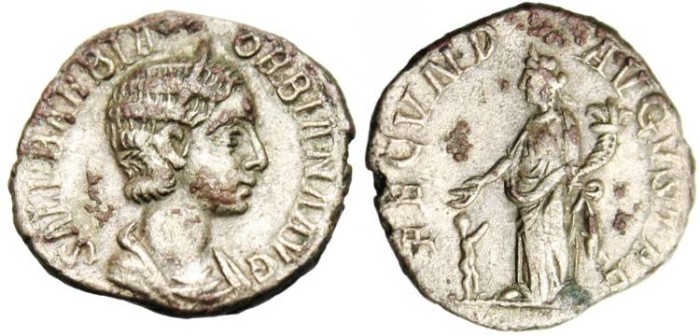
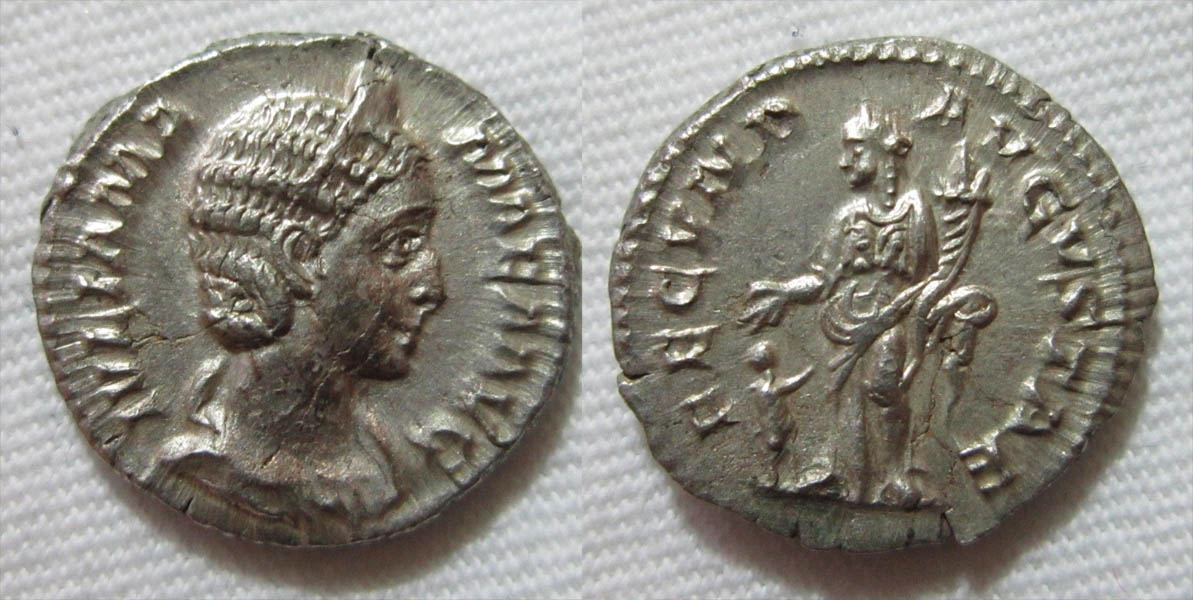
Seia Herennia Sallustia Barbia Orbiana Augusta (fl. 220s), also known as Barbia Orbiana, was only briefly the wife of Emperor Severus Alexander and an Augusta of the Roman Empire.
Marriage issue, 225AD. (BMCRE 288-290; RIC 319; RSC 1)
SALL BARBIA - ORBIANA AVG
CONCORDI-A-AVGG
Concordia enthroned left holding patera in r. hand, and double cornucopiae in left.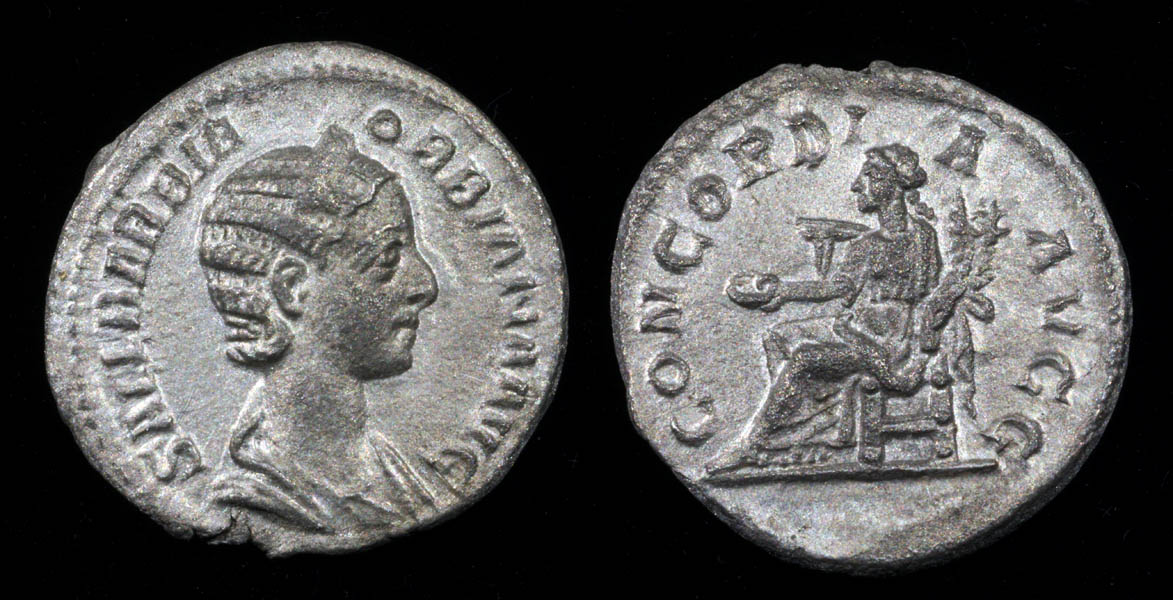
Orbiana was born to influential Roman Senator Seius Sallustius in the early third century CE. In August 225, at about the age of 16 years, she wed Roman Emperor Severus Alexander in an arrangement organized by the emperor's mother, Julia Mamaea. Her father, Sallustius, is believed to have been appointed as a Caesar and intended successor. However, after Orbiana was given the title of Augusta, Mamaea grew jealous of the strong bond beginning to develop between Orbiana and SAlexander, and she treated Orbiana cruelly, forcing her to seek refuge with her father. Sallustius consulted with the Praetorian Guard for protection of Orbiana, and in a defensive/protective move made an attempt on the life of his son-in-law. That act was determined to be treasonous, and in August 227, Sallustius was executed. Thereafter, Orbiana was stripped of her title, divorced and exiled to the province of Libya in North Africa. Through all this Severus Alexander had the power to intervene, but chose not to, preferring the companionship of his mother. Apart from Orbiana no other woman was depicted on his coins as Augusta.
In the listings of the
BMCRE VI the coinage for Orbiana is limited to a single special issue at the time of her marriage to Severus Alexander (see example above). The details are vague and disputed in the ancient sources, but Robert Carson in
BMCRE volume VI presents the case, especially on the evidence from the Alexandrian tetradrachms of year 5 of his reign, that her coins are to be dated to 225 A.D. The British Museum catalog lists only this one type for all the denarii of Orbiana, but adds a supplemental listing of six hybrids using reverses common to the coins of Caracalla, Plautilla, Julia Maesa and Julia Mamaea.
RSC similarly differentiates the hybrids, identifying the reverse sources, but the
RIC (the oldest research) makes no discinction. Since the hybrids are rarely seen at market, it seems best to disregard them generally.










 Posted 05/27/2017 7:54 pm


 and wonderful write up lrb.