| Author |
 Replies: 10 / Views: 2,009 Replies: 10 / Views: 2,009 |
|
|
Pillar of the Community
Singapore
631 Posts |
Hi all, I think this is a 5000 Dinars 1879 or 1880 but can't be sure. Does it look ok and any idea of value as there aren't many records of realized prices online. 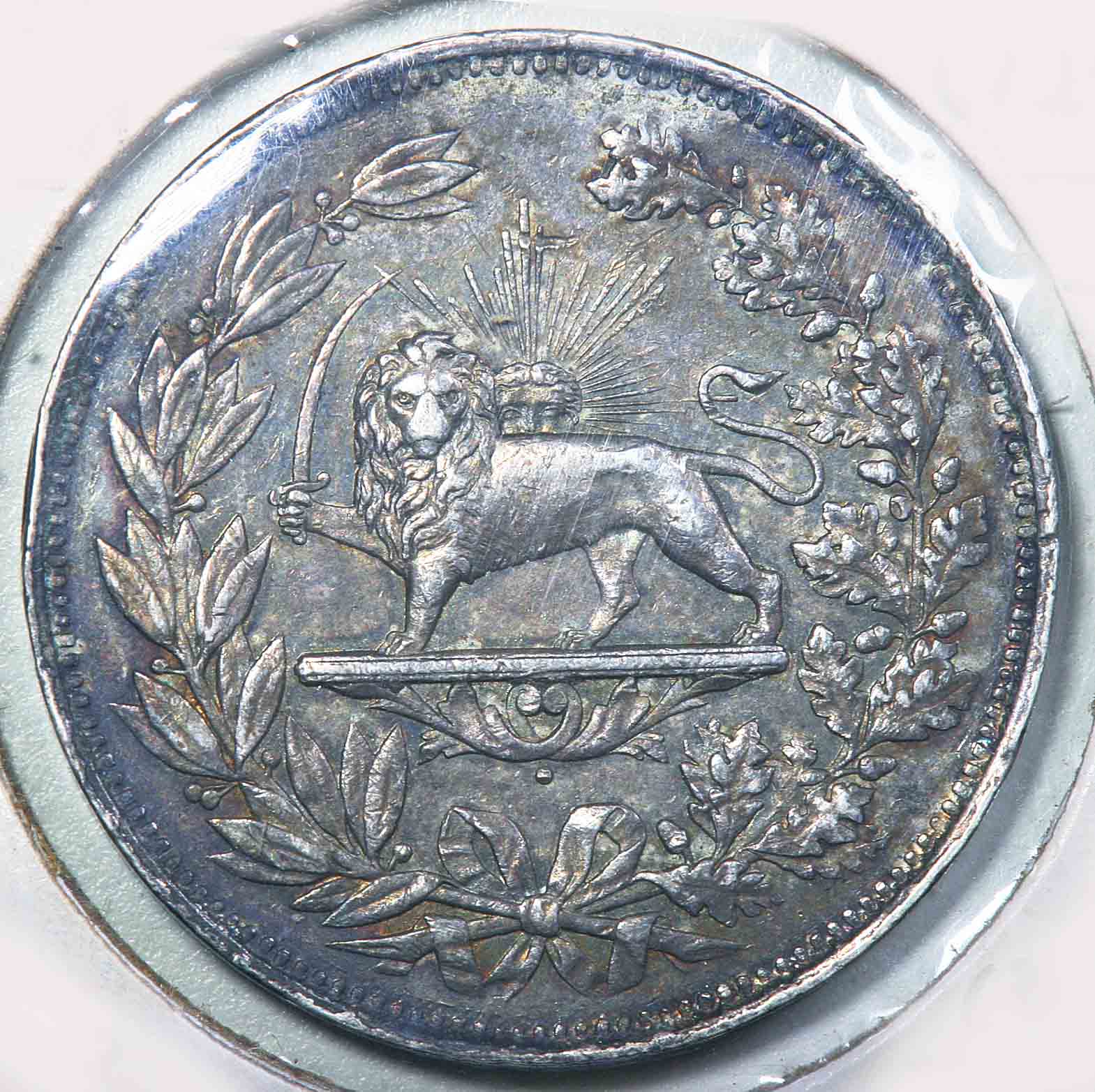 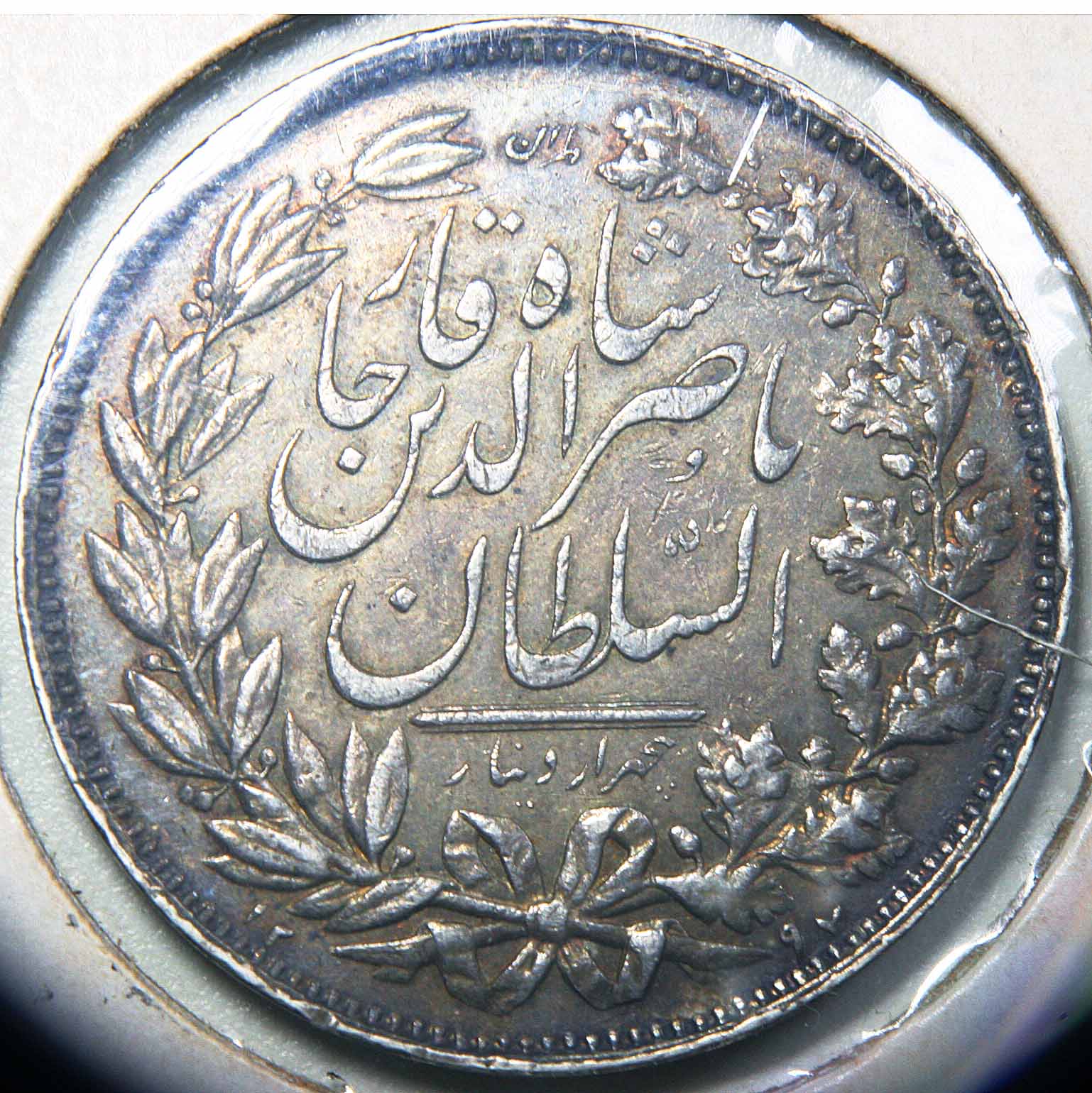 |
|
|
|
Bedrock of the Community
Australia
21792 Posts |
I am unfamiliar with the die varieties of these, but the details seem to be certainly sharp enough for this coin to appear genuine.
To check further compare with Google Images, and insert the title of this thread in your search.
|
|
Bedrock of the Community
Canada
11922 Posts |
Look at the bow on the reverse. On either side of it, located against the rims, are some numbers; on one side is 12, and on the other is 97. 1297 would correspond to 1880 in the Gregorian calendar.  |
|
Pillar of the Community
 Singapore
631 Posts |
I couldn't think of a more obscure place for a date.
|
|
Moderator
 United States
34562 Posts |
@numister, this is well outside my area of knowledge, but the area along the rev rim from about 4 to 6 o'clock looks odd to me. Perhaps someone can explain how a partial double-rim can be struck like this. I agree with @sel that the details are nicely crisp.
"If you climb a good tree, you get a push."
-----Ghanaian proverb
"The danger we all now face is distinguishing between what is authentic and what is performed."
-----King Adz
|
|
Pillar of the Community
Hong Kong
1270 Posts |
Besides the year of issue, can anyone tell the inscription above the date? Thanks a lot!
|
|
Valued Member
United States
264 Posts |
Quote:
@numister, this is well outside my area of knowledge, but the area along the rev rim from about 4 to 6 o'clock looks odd to me. Perhaps someone can explain how a partial double-rim can be struck like this. I agree with @sel that the details are nicely crisp. I am not familiar with this particular series, but on coins of mid 19th century Spain a similar phenomenon appears on authentic coins. In those cases it appears to be the result of a portion of the collar being loose during striking or a die fracture in which that portion of the collar die cracked and was either retained or fell away. The amount of extra metal seen on the coin depends on which of these circumstances occurred and the severity of the issue. For the Spanish coins I suspect it was a habitually loose collar as it appears with some frequency, especially on the larger silver coins. This 5000 dinars looks to me like VF35. A quick auction search indicates that uncirculated examples bring quite a bit, but no listings for anything in VF condition in the last decade or so. Based on the AU and EF listings in the last 8 years I'm inclined, in this case, to say that Krause Catalog is probably pretty close. My catalog shows $100 in VF, $200 in EF. Hope this helps. |
|
Bedrock of the Community
Canada
11922 Posts |
Quote:
I couldn't think of a more obscure place for a date. Yeah, it is in an odd location; I thought it would be located in the centre legend, so it took me a couple minutes to see where it actually was. Quote:
Besides the year of issue, can anyone tell the inscription above the date? Thanks a lot! Numista has the legend translated, and its page can be found here. |
|
Pillar of the Community
Singapore
631 Posts |
In Numista's page it says the edge is reeded but mine is smooth, hmm.
|
|
Pillar of the Community
Norway
1358 Posts |
Numista isn't always correct. According to NGC it's a smooth edge: https://www.NGCcoin.com/price-guide...duid-1505237But then, they have a different reverse for the same KM#... Maybe there's more than one variant or maybe 1879 had a reeded edge? I agree that the coin looks sharp enough to be real, and the details seem at the correct places. If measurements and weight make sense, then I'd assume it's genuine. |
|
Bedrock of the Community
Canada
11922 Posts |
Quote:
But then, they have a different reverse for the same KM#... Maybe there's more than one variant or maybe 1879 had a reeded edge? That picture is of KM#A914, which has the date of 1293 written on it. The link found here, as well as many other links I found, state that this coin has a plain edge. So, I guess I will request a change on that Numista page to prevent any future confusion. |
| |
Replies: 10 / Views: 2,009 |
|







 Posted 08/01/2017 10:41 am





