| Author |
 Replies: 20,371 / Views: 962,020 Replies: 20,371 / Views: 962,020 |
|
|
|
Pillar of the Community
New Zealand
1679 Posts |
1714 Chinese copy of an English farthing 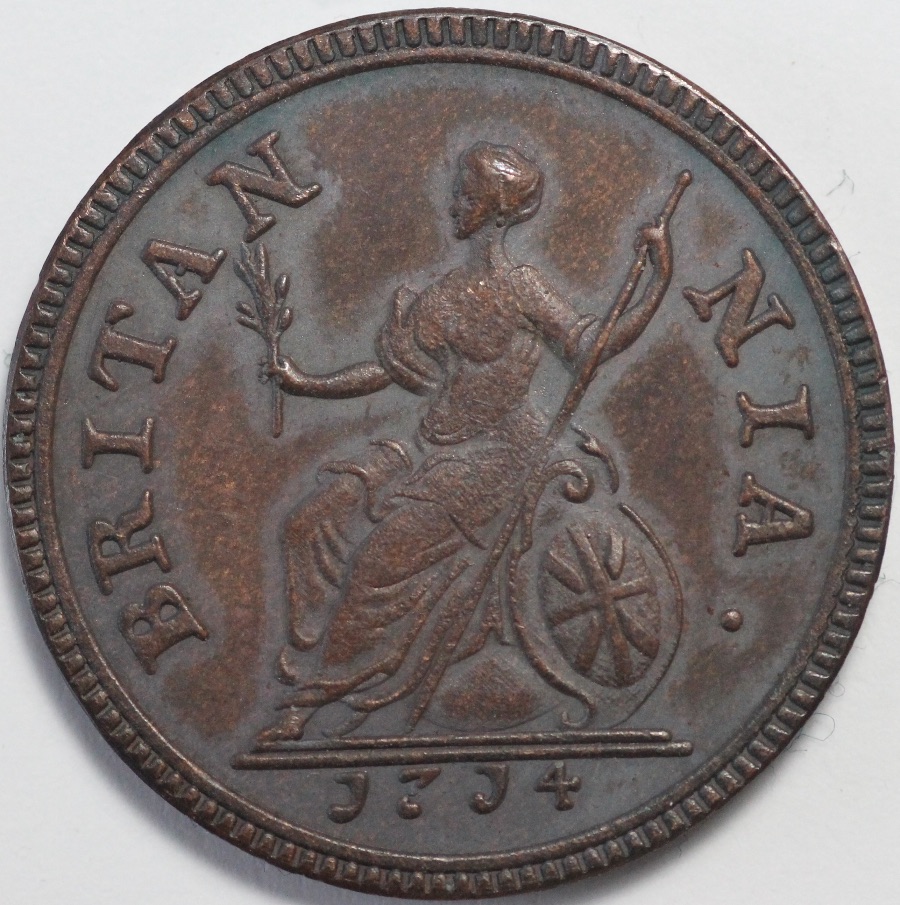 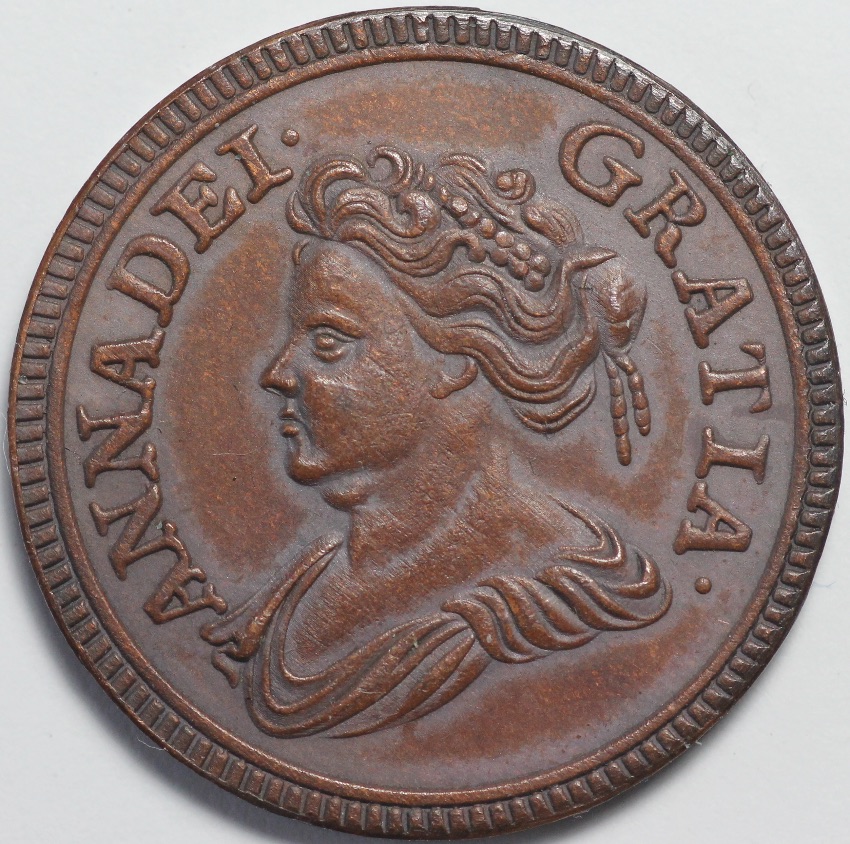 1500 pounds ef cond but unc who knows? Cheers Don
Vickies cents and GB Farthings nut.
"Old" is a figure of speech and nothing more
|
|
Pillar of the Community
United States
2403 Posts |
Hmm. I got no fakes or copies. I don't even have any chocolate coins to play on this one. This is just begging for one of those...considering the time of year.
|
|
Bedrock of the Community
United States
12477 Posts |
Are you sure that's a fake, fourmack?  Quote:
I don't even have any chocolate coins to play on this one. This is just begging for one of those...considering the time of year. Those are certainly game for this. I didn't specify composition.   In Memory of Crazyb0 12-26-1951 to 7-27-2020
In Memory of Tootallious 3-31-1964 to 4-15-2020
In Memory of T-BOP 10-12-1949 to 1-19-2024
|
|
Pillar of the Community
New Zealand
1679 Posts |
Quote:
Are you sure that's a fake, fourmack? Made of brass and cost $12.50nz Yes I am sure Cheers Don
Vickies cents and GB Farthings nut.
"Old" is a figure of speech and nothing more
|
|
Bedrock of the Community
Canada
24885 Posts |
Congrats spruett001  |
|
Bedrock of the Community
Canada
24885 Posts |
@ Joseph7420 Quote:
The votes for these coins were pretty spread out, so the winner of this round won by one point. With a total of three votes, the winner is... Could you indicate, participants and scores? just curiosity |
|
Bedrock of the Community
Canada
24885 Posts |
"The Rarest Carson City Morgan" Only about 2% of all Morgans minted were struck at the Carson City Mint. In addition, vast numbers of precious 'CC' Morgans were melted down to support the war effort in WWI. As a result, the value of the scarce surviving 'CC's' has increased dramatically. An 1889 'CC' Morgan recently auctioned for $881,250! Now you can own your own copy of the 1889 'CC' Morgan recreated as a privately minted, non-monetary Tribute Proof clad in 71 mg of .999 Pure Silver at the tiniest fraction of the original's price, 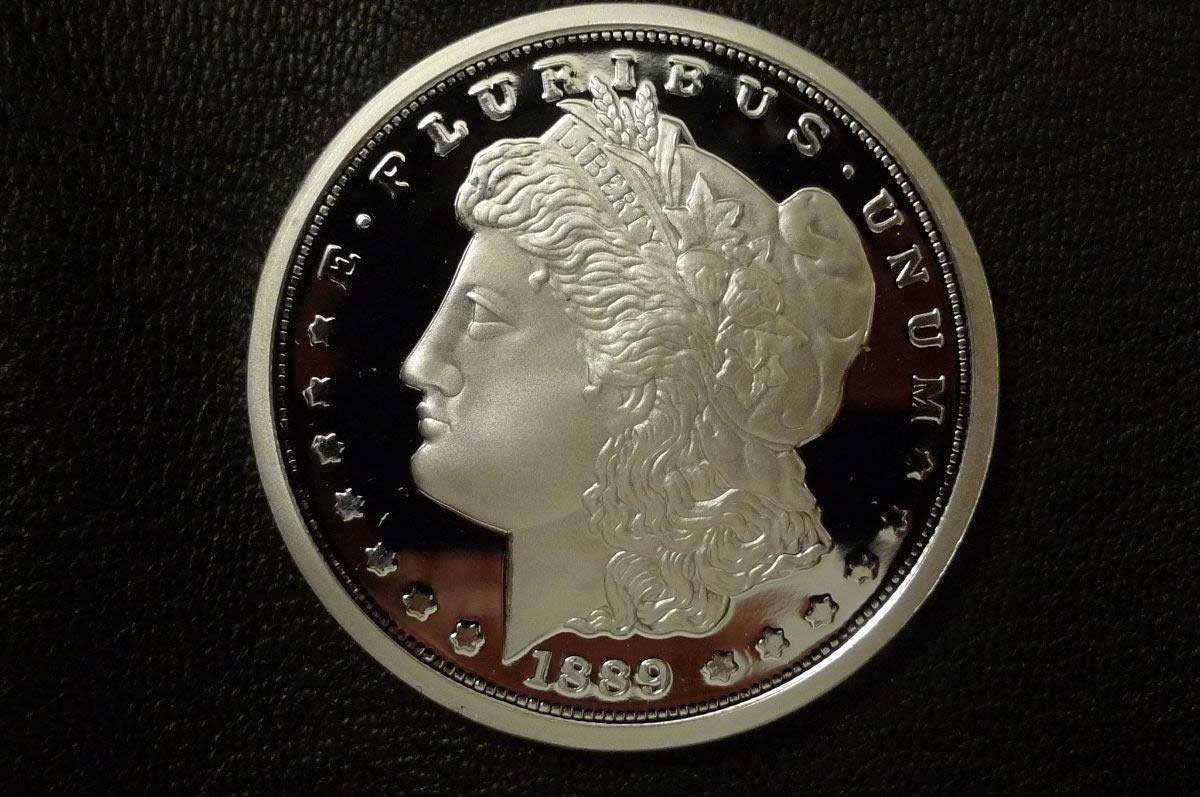 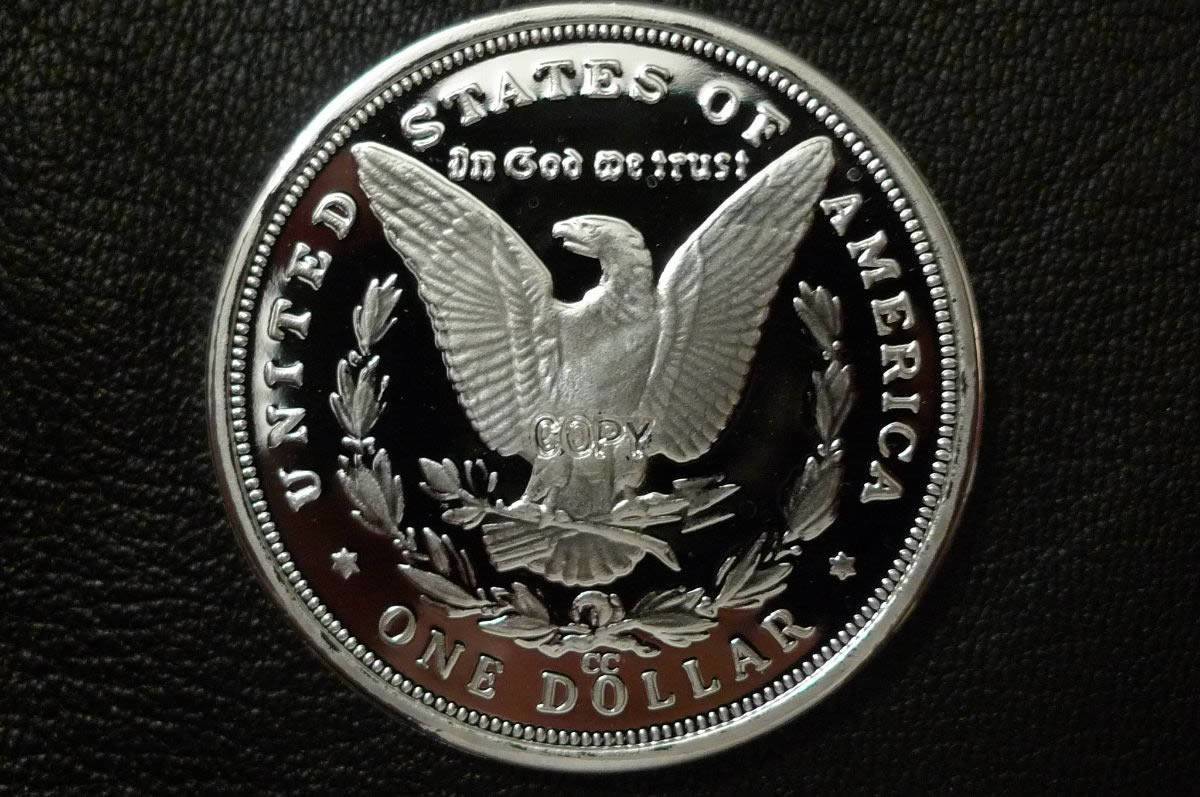 |
|
Bedrock of the Community
Canada
11922 Posts |
Hm... my most expensive counterfeit. That is a tough one. I guess I will go with this one: 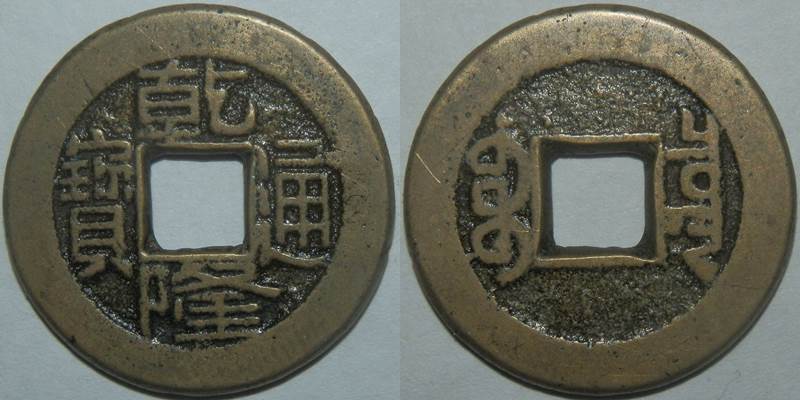 A counterfeit example of a Qianlong Boo-Chiowan Chinese cash coin. At most, it is probably worth twenty-five cents. Okay, maybe that is not my most expensive one. I have a few other counterfeit coins, and this one is probably my least 'valuable' example. I just do not know what a rough value for all of the other ones would be. Same goes for practically all of my real coins.  |
|
Bedrock of the Community
Canada
11922 Posts |
Quote:@ Joseph7420 Could you indicate, participants and scores? just curiosity I already deleted the word document I was tallying everything up on.  Sorry about that, Dorado. But if I recall correctly, you and MontCollector both got two votes. And aside from the winning coin, all other entries who got votes only had one vote (although they did not vote for themselves ). |
|
Moderator
 United States
34532 Posts |
"If you climb a good tree, you get a push."
-----Ghanaian proverb
"The danger we all now face is distinguishing between what is authentic and what is performed."
-----King Adz
|
|
Bedrock of the Community
Canada
24885 Posts |
@ Joseph7420 Quote:
I already deleted the word document I was tallying everything up on. Sorry about that, Dorado.
But if I recall correctly, you and MontCollector both got two votes. And aside from the winning coin, all other entries who got votes only had one vote (although they did not vote for themselves ) Your response is appreciated. |
|
Pillar of the Community
 United States
1905 Posts |
According to CoinQuest: Quote:Genuine gold coins from the Oregon Exchange Company are basically priceless for most of us normal folks. The catalogs report $30,000 to $300,000. If you have a genuine piece, it is certainly a magnificent treasure. Almost 100 percent of the pieces you find are replicas, worth zero. DO NOT CLEAN YOUR COIN. CLEANING RUINS VALUE. The catalog values above come from The Red Book, 'A Guide Book of United States coins' by R. S. Yeoman. The only decent pictures of a genuine coin (that I can find) are from the Smithsonian, found on Flickr at this link, and at this one for the other side. Acknowledging the Smithsonian as the source, we have small versions of those images here: From Heritage Auctions 9/2002 sale (sold for $126,500): Quote:
1849 Oregon Exchange Company Ten Dollar Rarity, K-2, XF40 PCGS
1849 $10 Oregon Exchange Co. Ten Dollar XF40 PCGS. K-2, High R.6. Production of Ten Dollar gold coins by the Oregon Exchange Company started after the first Five Dollar pieces reached circulation. Engraved by Victor M. Wallace, the dies omitted the errors of their Five Dollar predecessors by changing T. O. to O. T. (for Oregon Territory) and correcting John Gill Campbell's initial from G to C at the upper obverse border. Interestingly, the initials for George Abernathy and William H. Wilson were removed because, despite their status as co-founders of the Oregon Exchange Company, they did not provide any of the money required to purchase the coinage equipment.
A total of 2,850 Oregon Exchange Company Ten Dollar gold pieces were produced before the company ceased coinage operations on September 1, 1849. These coins, as well as the Five Dollar examples, were not deliberately alloyed with either copper or silver. Instead, the coiners used "pure" gold from various districts in California. As a result, the coins were usually worth 8 to 10 percent more than Federal issues of the same denominations, but it also made their actual value difficult to determine because of questions regarding the purity of the metal. While the coins proved popular in Oregon, where they were welcomed with open arms by merchants and others, their high intrinsic value made them susceptible to melting in California. The softness of pure gold (as compared to alloyed gold) and its susceptibility to rapid wear, abrasion, and/or damage also helps to explain the rarity of these Oregon issues in today's hobby.
Only six Oregon Exchange Company Ten Dollar gold coins have been certified by PCGS (7/02), and this is the first example to appear in one of our auctions. The surfaces display their fair share of abrasions, but the overall appearance is quite a bit smoother than one would expect for a non-alloyed Territorial gold coin that saw 20 points of wear. Struck from the native silver alloyed gold, and as a result the surfaces have a lime-green tinge. Average striking for the coin with usual weakness in the center. This rarity displays the normal number of small abrasions throughout. Although the beaver's fur is not evident, all the devices and lettering are distinct. Jack Klausen thought this specimen was About Uncirculated, but we agree with the grading service that it is a good, all around Extremely Fine specimen. Either way it is one of the finer specimens known. Based on our (Don Kagin's) three decades of research, we count only 17 known specimens with a half dozen impounded in museums and only 3 graded higher (the two finest are AU55). Listed on page 300 of the 2002 Guide Book.
From The Estate of Jack L. Klausen. (NGC ID# ANJW, PCGS# 10291)
From oregonlive.com news (sale price 257000+): http://www.oregonlive.com/pacific-n...5-year-.html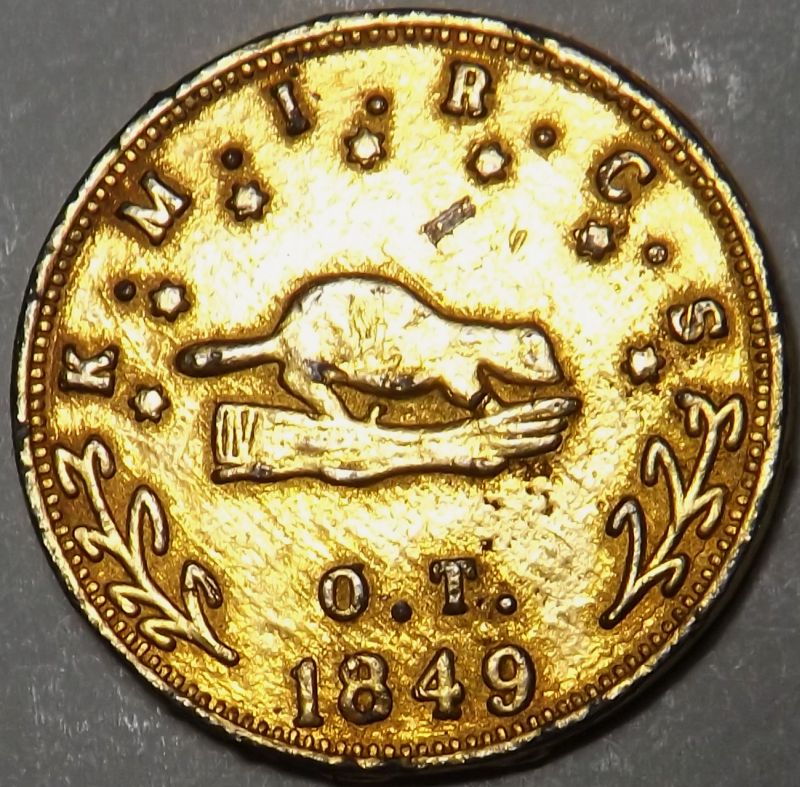 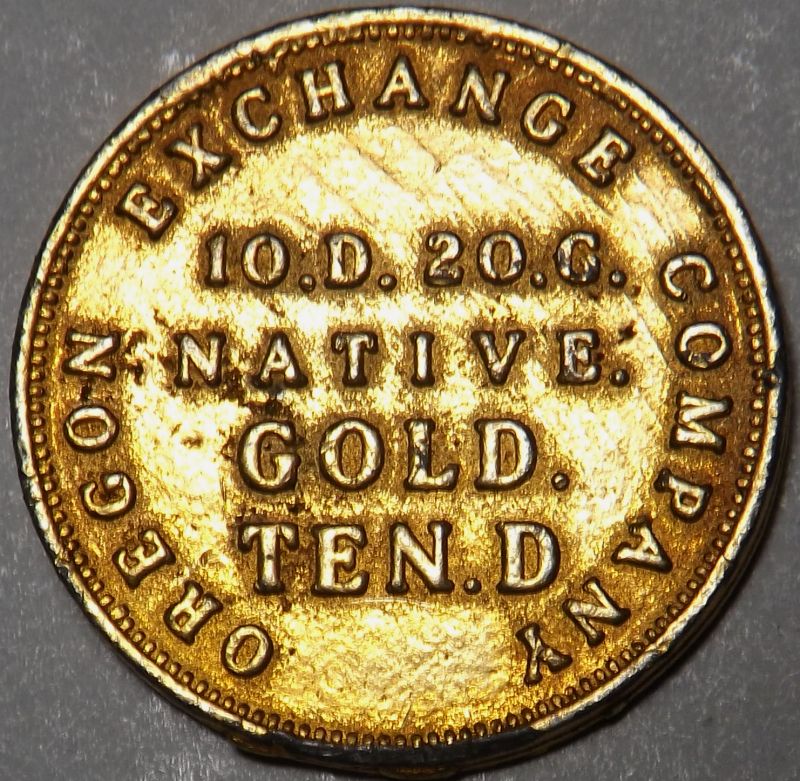 I also have a fake Brasher Doubloon around here somewhere, but it might take three days to find it.  |
|
Bedrock of the Community
United States
12477 Posts |
Nice submissions everyone! @mysilveryears What is your copy made of? In Memory of Crazyb0 12-26-1951 to 7-27-2020
In Memory of Tootallious 3-31-1964 to 4-15-2020
In Memory of T-BOP 10-12-1949 to 1-19-2024
|
|
Pillar of the Community
United States
1905 Posts |
Quote:
What is your copy made of? Sort of hard to tell.. some kind of plated pot metal, likely with a lot of lead in it because it is fairly heavy for a 'coin' just a shade larger than a quarter. Also it has a distinct casting seam around the edge. Note it is not marked or i.d.'d in any way as a copy, so it's probably not recent. |
|
Pillar of the Community
 United States
6130 Posts |
Not sure if this fully sticks to the rules here, but it's about as close as I have Kidarite Huns in Kashmir Vinayaditya c. 450-500 AD Debased gold dinar (usually rose gold or electrum of 15-30% fineness) Obv: "Formalized" portrait of king (the big thick shape in the middle, note the large nose, thick lips, eye, and dots representing hair) sacrificing at fire altar (cluster of dots left is sleeve), Brahmi legend (and tamgha?) at right: KiDaRa Jaya Rev: Ardoxsho/Lakshmi seated cross-legged on throne, legend Sri Vinaya Ditya 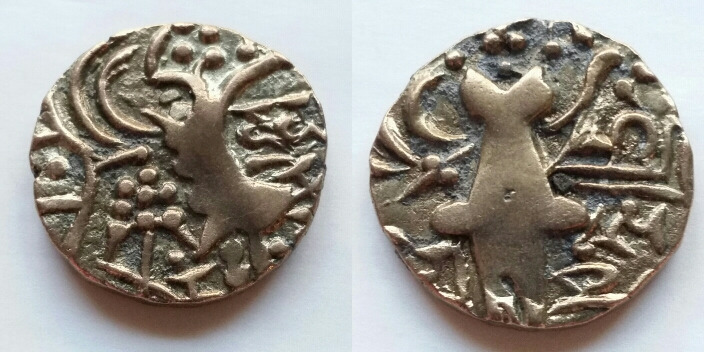 These coins are a late stage imitation of a Kushan dinar, which was a ~90%+ fine gold coin, and typically worth a thousand dollars or two: https://www.vcoins.com/en/stores/co...Default.aspxNot truly a "fake" but rather a testament of how slippery the "let's just debase it a little" slope is. |
| |
Replies: 20,371 / Views: 962,020 |






 First Page
 Previous Page


 Posted 12/16/2017 12:11 am