Wow - a post about Naples or Sicily pieces! Wonders never cease.
These copper grano pieces are hard to attribute because the legends are generally mostly off the planchet (small, compact flans)... and also because they are often found low grade/corroded. The silver, though still cob-like and crude (mirroring the reales coinage produced in other Spanish-controlled domains), is a lot easier to figure out, I find.
This site is a very good general reference:
http://numismatica-italiana.lamoneta.it/cat/W-RSUnder the monarch pages from Philip II through Charles II, look through the grano section(s) under each... and compare.
Firstly, though, a few basic things:
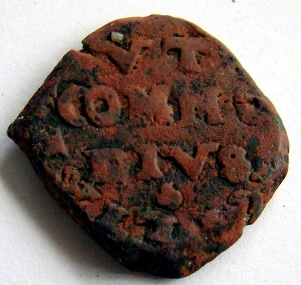
-- The motto in the center actually reads "UT COMMODIUS" (using "V" for a "U" in the Latin-style)
-- The ones with the date appearing under VT COMMODIVS are only the later 1685-87 style under Charles/Carlo II. They are rather common, which would probably explain you being familiar with those. Starting in the next decade, they modernized to a round, milled grano coin.
Before the 1680s, the date was placed in the upper left legend on the VT COMMODIVS side (between 9 and 12 o'clock). As noted, the legends on those are often missing/obscured, so often, the date is not visible.
If we go earlier (before 1608), the pieces of Philip II and early Philip III were not dated.
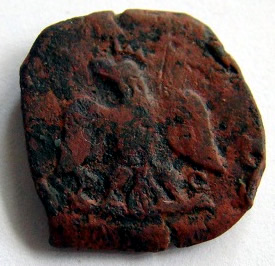
Looking at the catalog on the LaMoneta site... your piece's clearly visible "DC" mintmaster initials under the eagle's wings should make this a Philip III dated-style issue, 1608-1614, with the date not visible on your piece.
Their 1610 example shows the small cross under DIVS.












 Posted 09/25/2017 12:15 pm


