| Author |
 Replies: 58 / Views: 15,505 Replies: 58 / Views: 15,505 |
|
|
|
Pillar of the Community
United States
1801 Posts |
Coinworldtv, are you saying it is the color of the coins that leads you to believe they are fake? Are there features of the strike or features of the details that bother you as well? I ask because after staring at these for a significant period of time, I really can't see any indication of being a counterfeit...strike looks normal, surfaces look normal, shapes look like common late issue Mexican cobs. Color being wrong is an interesting concept to use to determine legit/not legit on a photograph or scan of a coin. What color would you expect these coins to be? I ask because in my collection I have cobs ranging from brilliant silver (salvaged cobs conserved by electrolysis) all the way to pitch black, exactly as they came off the bottom. I don't think color is really a good indicator of regal provenance. I would like for the original poster to give more background on how the seller came to possess these coins just for personal interest. The designation of a "wreck salvaged" coin does not add any value to the coin unless accompanied by a legitimate certificate, no cert, no direct link. All else is conjecture. Conversely, no cert does not mean the coin is a fake either. I have salvaged cobs with no certs that are as real as they get, and these coins trade in the collector market (and the "treasure" market) just fine, though at a somewhat diminished value to a similar coin with legitimate provenance.
|
|
Pillar of the Community
United States
8715 Posts |
They look real to me. When dealing with coins that are very old, such as these, you can't just look at the color when determining authenticity. Point out something about the details of the coin and tell me why it's fake. Color alone does not determine authenticity.
|
|
Pillar of the Community
United States
1962 Posts |
jfransch, everything you said... accurate. And, understand, this is from someone who knows his 1733 Fleet material. John, the one caveat, as you'd know with the 1733 Fleet - different sites (and different stages of salvage) are known for having different levels of preservation/types of conservation... which are sometimes very distinct and identifying. But yeah - toning/"look" can be a nebulous concept and is very hard to use to conclusive proof of forgery (again, as noted, wreck material is sometimes artificially toned if the cleaning strips them bare). Quote:
For me the cobs look cast and the pillar piece looks familiar to forgeries I had in my hands a couple of years ago.
I think, that this is a trap, a scam, nothing more, nothing less. But the ducatons - actually pricier coins than at least a couple of those (4) nondescript cobs - are genuine, right? What, because they have some shmoogm stuck to them, not just color? |
|
Pillar of the Community
Austria
566 Posts |
Guys, I think, that it is time for edge pictures.
Once they are uploaded you might very well agree with me.
Let us not be silly, let us have the edge pictures or is there anything to be hidden here?
Possibly the truth?
|
|
Pillar of the Community
United States
1962 Posts |
LOL... it popped up a few months ago, as I recall, still raw. I think he was asking about $1000, and then I believe he pulled it down after a few days - probably with slabbing it (with ANACS?!) in mind: https://www.ebay.com/itm/MEXICO-173...292763182181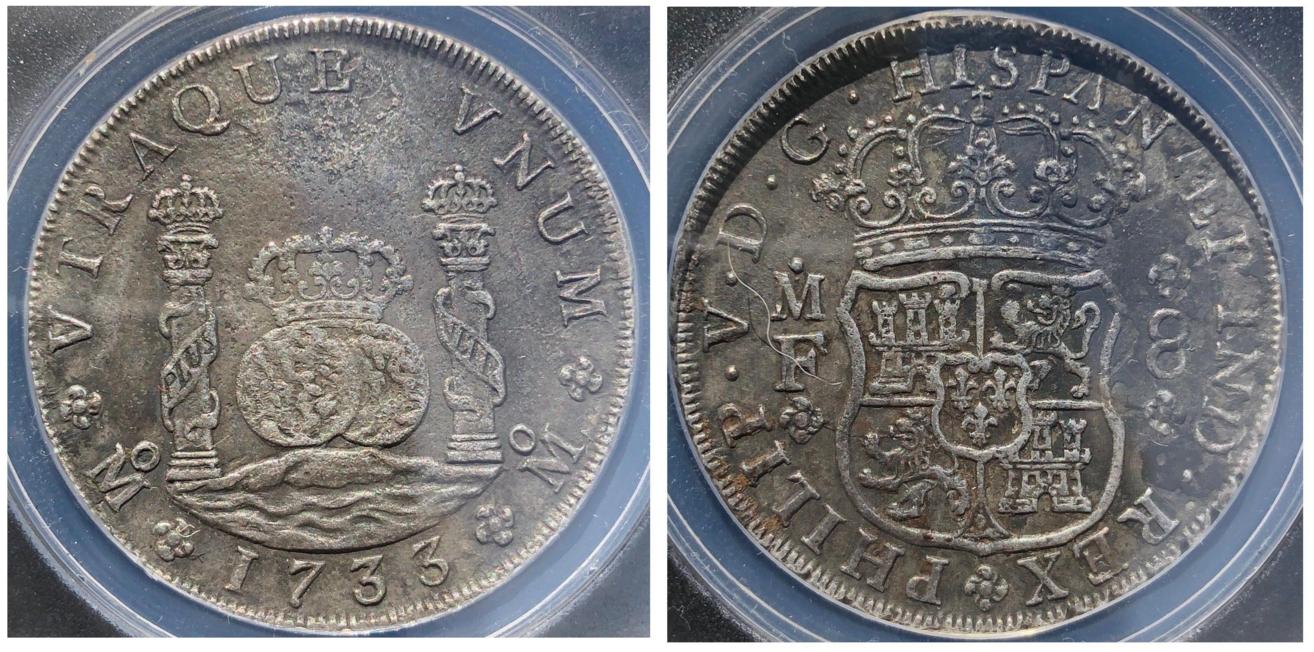 |
|
New Member
United Kingdom
1 Posts |
This coin is 100% genuine. Comments on the colour tone, the coin was wrapped in tin foil and cleaned using boiling water and baking soda then dulled using bleach. All the Mo MF coins I have, the V after Philip in this case/ coin on the reverse side is always spot on 9 o'clock and exactly in line with the centre of the gap between the M&F all the fakes, mostly on ebay the V is never at 9 o'clock always high or low. |
|
New Member
Canada
3 Posts |
Hello - I am posting what may be either be a Barcelona trinket or a 1733 Royal round klippe! My hypothesis is that this coin is a Royal round 1733/4 klippe from the Mexico city mint MF. That would mean it was a presentation piece. I have not seen another one like it. My research found the Mexico mint from 1732-34 did the following production types: 1 cobs (some level planchets of the Klippe technique) 2 Klippes 3 Klippe dies on cob planchets 4 Pillars 5 oddball trial Pillar planchets struck with Klippe dies Why I think it might be a Royal: 1) The strike for the cross is very strong. 2) It has a unique weight - 5.21 g but is about same size as a 2 reales. I don't think it is an altered 8 reals which was cut down because of its low weight. It is a thinner like a rolled planchet than the cobs but with the Klippe dies. 3) It has the same central images of the 8 reales 1733 klippe but is on a flat planchet. 4) The mint is clearly Mexico city M F assayer which made royal coins that year. 5) The lip around the coin was recessed and done professionally and has gold remaining from what appears to be the remainder of a border of real gold inlay. There is very small piece of a remaining loop as if it were to be worn. I can't see gold being used for cast copy or a mint test. 6) It is round! But... does the surface of the coin and die break could mean that it could be a token or commemorative? It is tough from photos but do you think it's real, a round Klippe or a Royal? It has been fun researching but now I need to put it out tpo the real pros! Thanks for your help. cheers, Bill 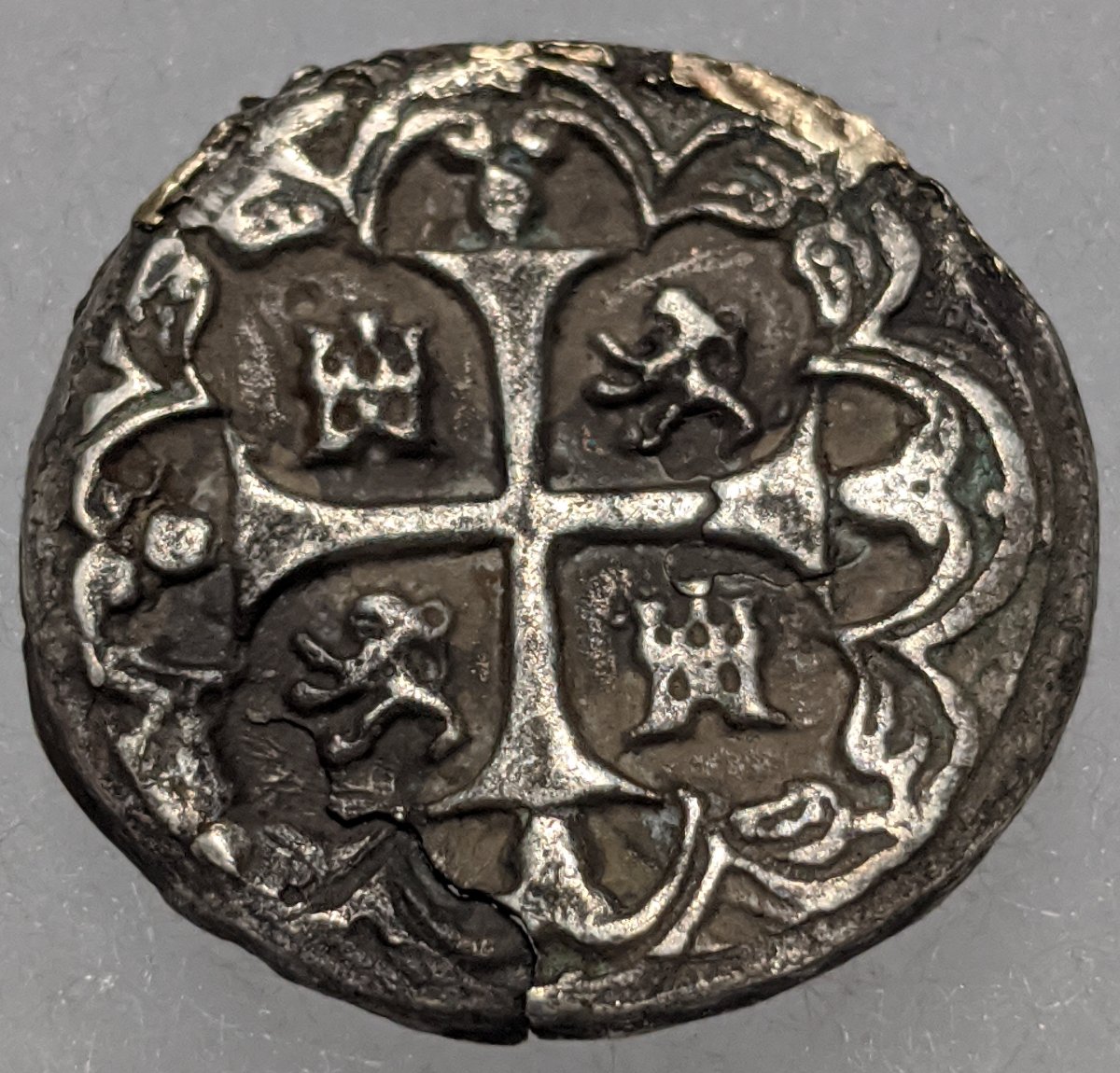 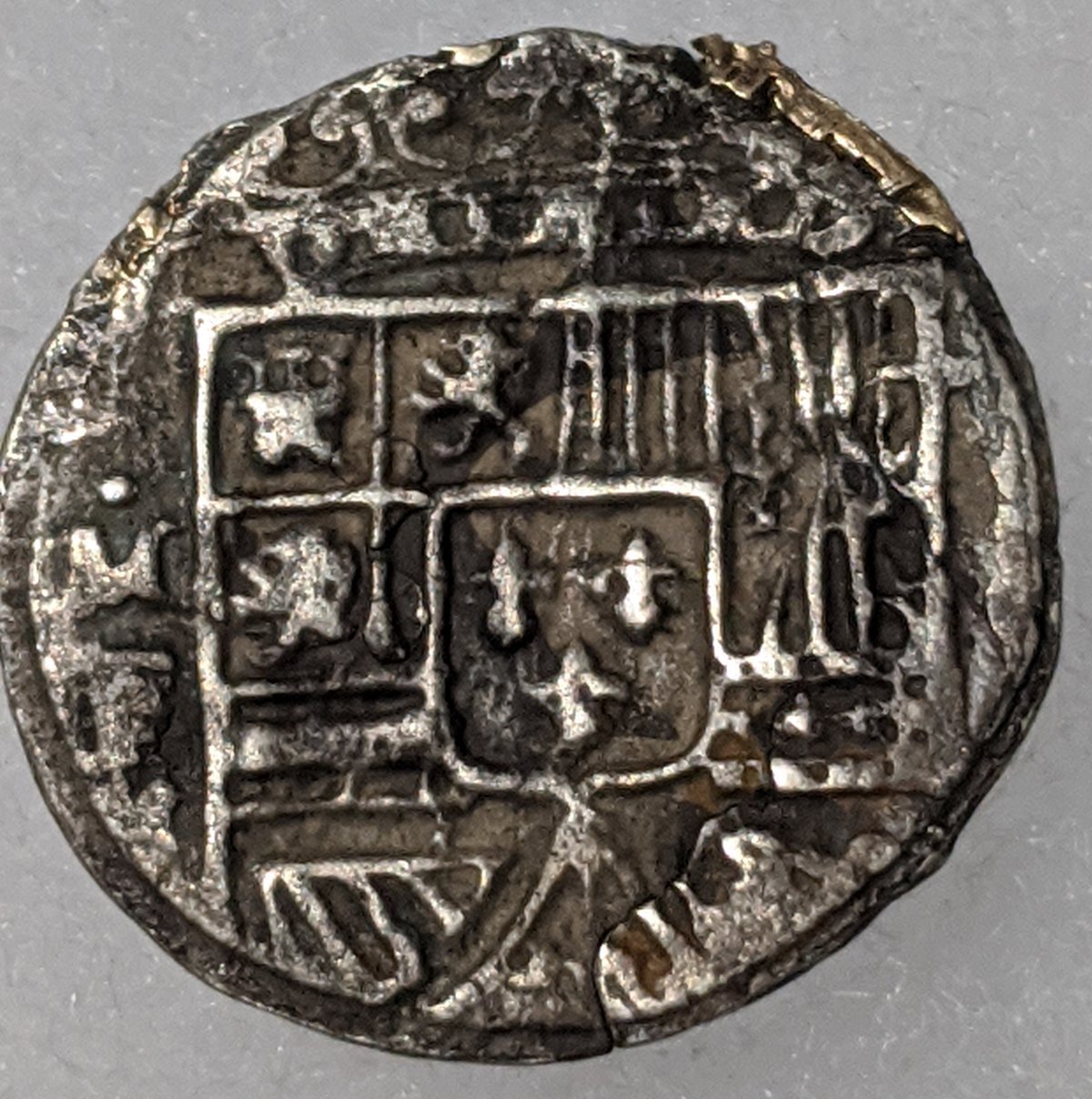 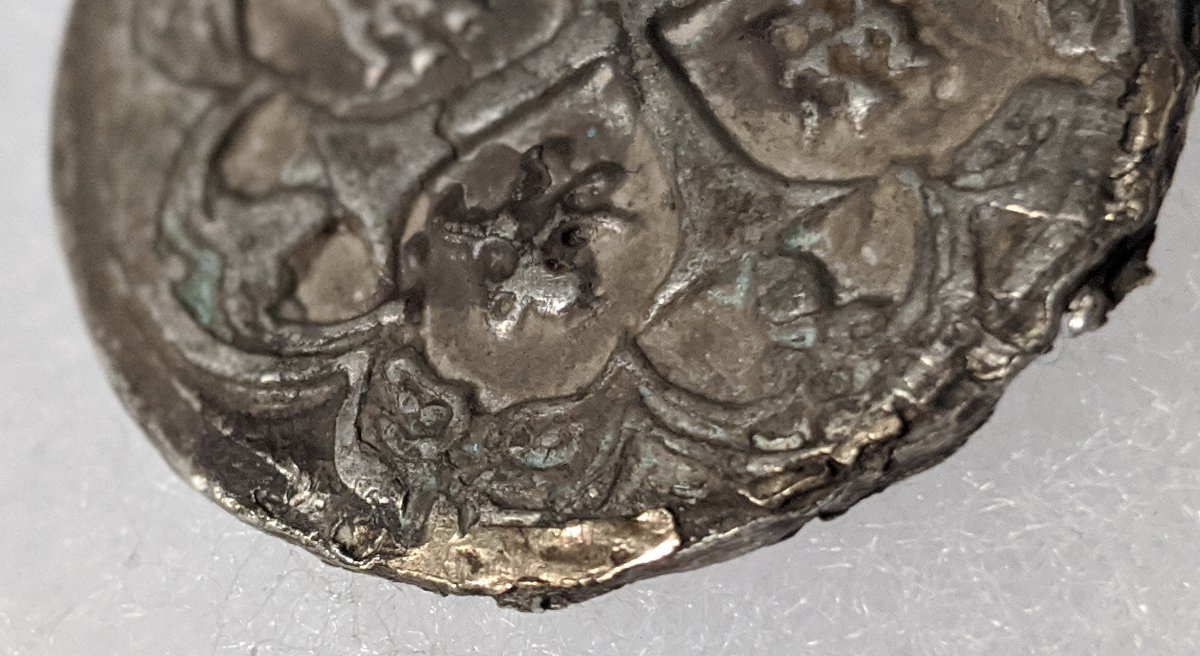 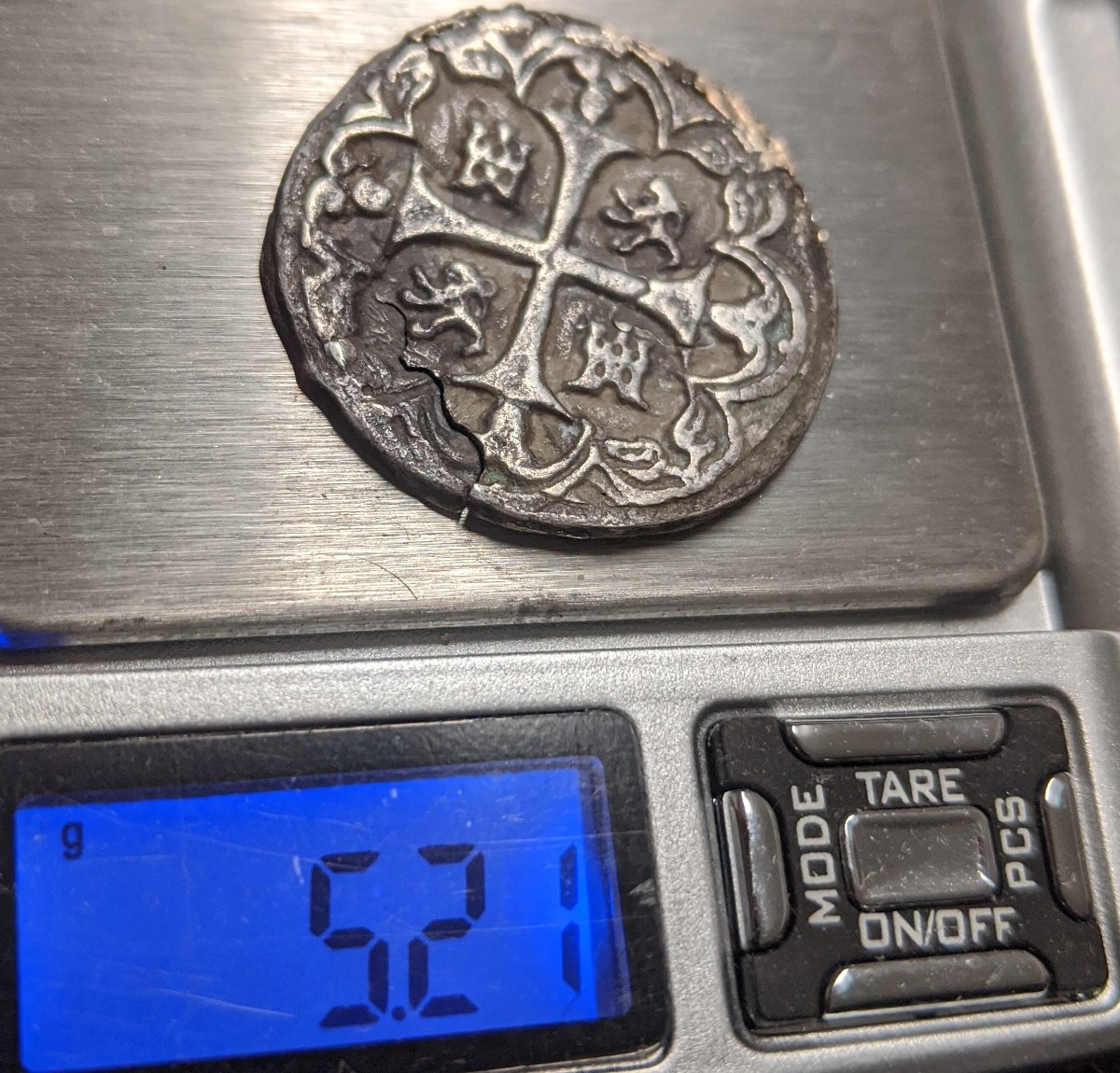 |
|
Pillar of the Community
United States
1962 Posts |
That is a rather commonly-seen jewelry-type imitation. This should be a separate thread. PS - This piece you just listed: https://www.ebay.com/itm/1687-Spani...324066428409Um, yeah... not so much. A well-known older crude cast, rather obviously cartoonish in its design elements. 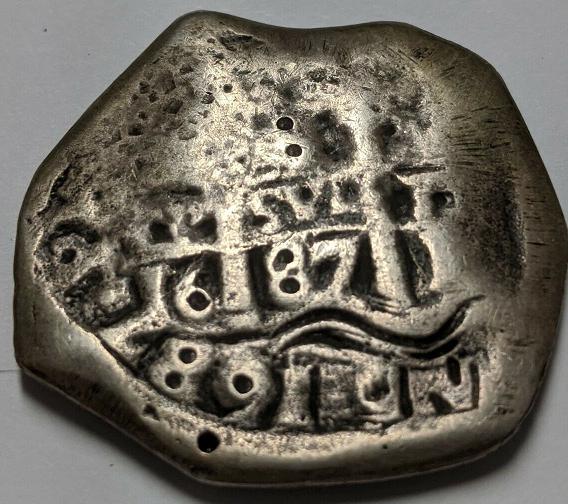 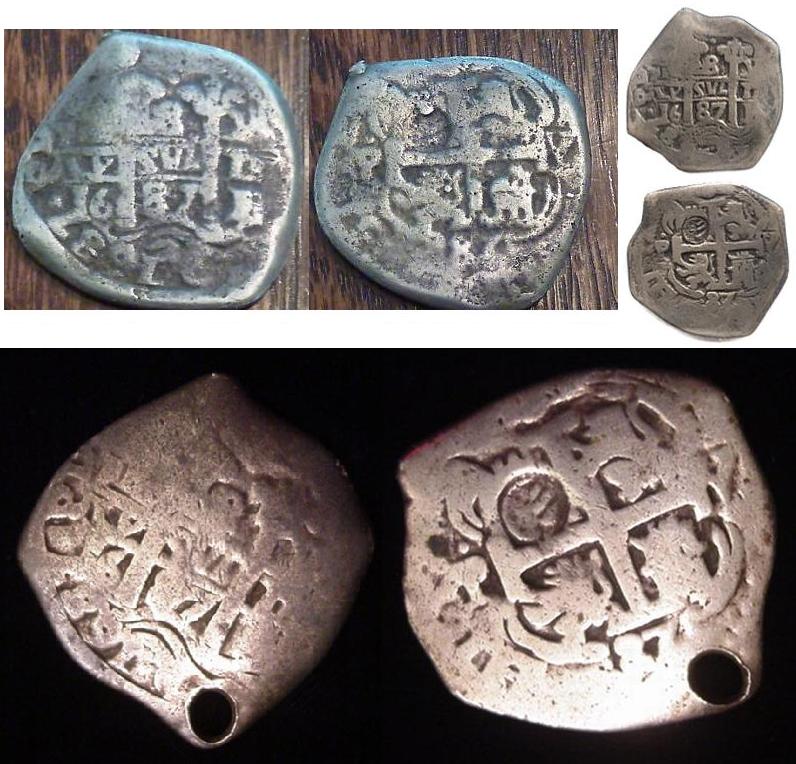 Edited by realeswatcher
02/07/2020 4:54 pm
|
|
New Member
Canada
3 Posts |
Thank you for the reply.
Yes, the coin with the gold edging seems to be a medallion.
The 1769 seems to be silver but I cancelled the listing.
Thanks, Bill
|
|
New Member
Canada
3 Posts |
Correction the "1687" coin listing has been cancelled based on your comment.
Thanks, Bill
|
|
Pillar of the Community
United States
1801 Posts |
Realeswatcher Going back to your post of 2/15/18 You are absolutely correct that the different groups that salvage the 1715 and 1733 wrecks all have different methods of "conserving" the coins. Color and appearance can be all over the map. When you find a 1733 that looks like the one below there is a 90+% chance it was salvaged by Stefan Sekora from the Coffins Patch wreck, an unidentified ship that was carrying a large quantity of freshly minted 1733 coins. Stefan was not diving under the Real Eight license or under the eventual Fisher licenses, he had his own license/permit for the Coffins Patch area until the courts closed the area to salvage due to a nasty lawsuit between two dive groups. Stefan conserved each coin carefully, one at a time using electrolysis and his coins all have this look (until dealers artificially tone them down. 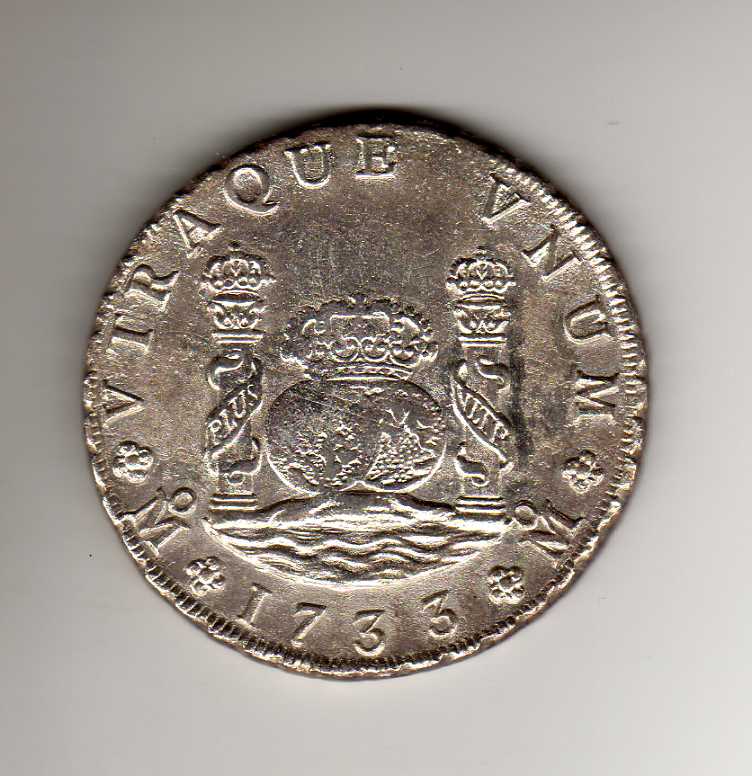 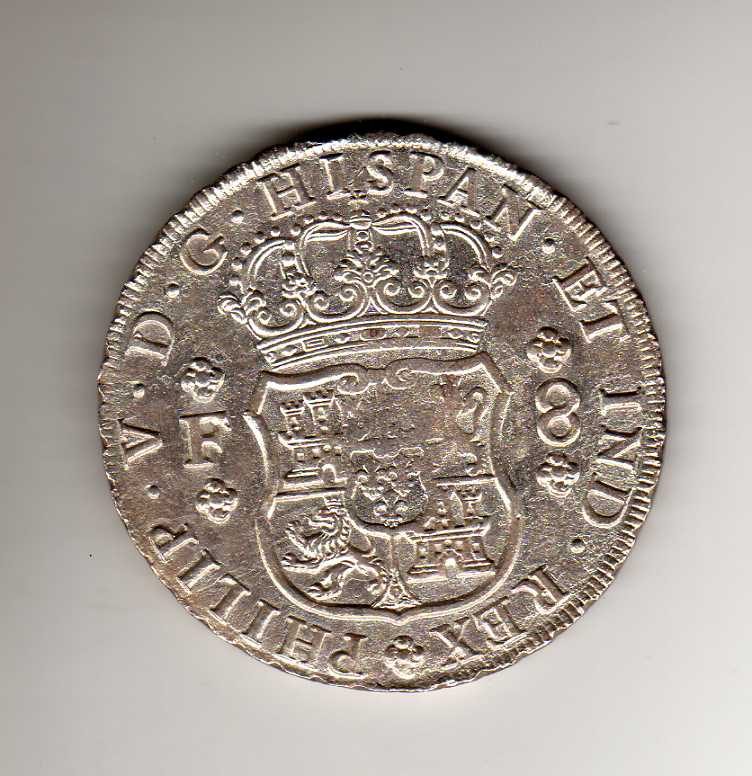 On the flip side, here are a pair of 8s that are 5 minutes off the bottom on the site of the Nieves wreck off what was called on my old, old maps "Colored Beach" in the Fort Pierce area. These are 1715 fleet finds straight off the bottom, no conservation of any kind. 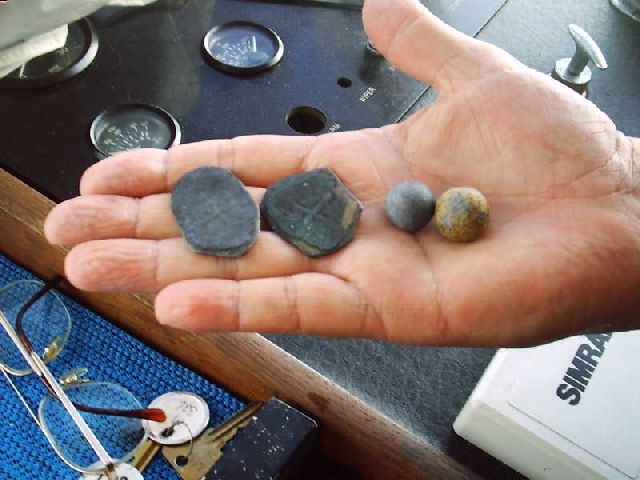 So here we have a color spectrum from black to blast white, and I have seen everything in between. Color is not the best indicator of real or fake, you need to look at the design elements and the way the way the coin was made. Edited by jfransch
02/09/2020 12:39 am
|
|
Pillar of the Community
United States
1962 Posts |
That 1733 was very nicely done... can actually discern some slight bit of original luster amongst the die rust!
|
|
Pillar of the Community
United States
1801 Posts |
Realeswatcher I have always liked this one where half the coin looks like undamaged uncirculated and the other half has the invasive salt water corrosion 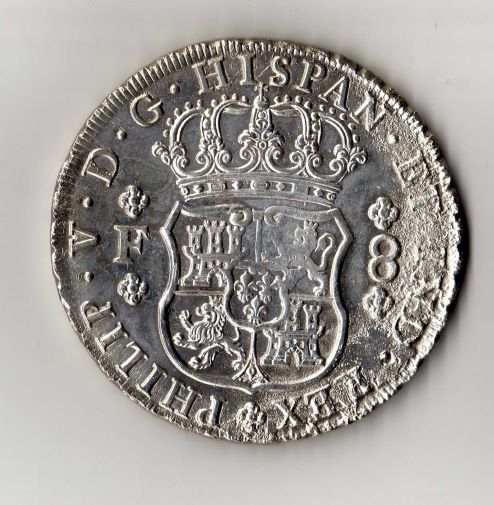 |
| |
Replies: 58 / Views: 15,505 |





 First Page
 Previous Page


 Posted 02/15/2018 12:21 pm


