| Author |
 Replies: 58 / Views: 15,506 Replies: 58 / Views: 15,506 |
|
|
|
Pillar of the Community
United States
1962 Posts |
Quote:
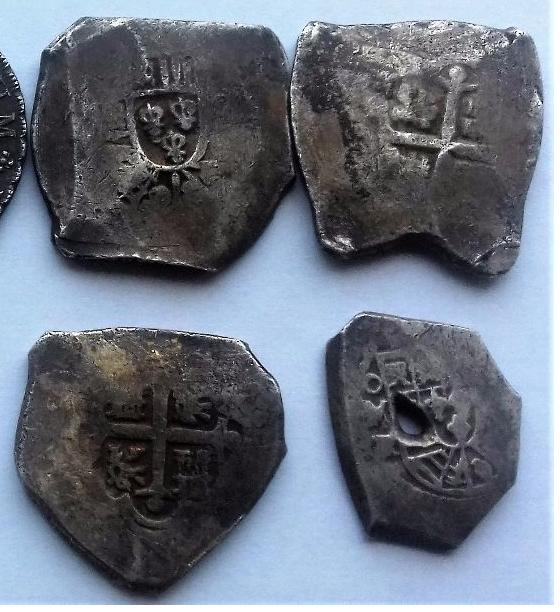
but the 1737 milled 8 reales and the four cobs right to it look a bit wrong to me Those are the least doubtful of the group! Looking back at this thread in its entirety... The cobs in particular would be most typical of what the ROOSWIJK has produced. The Hollandia had some cobs, but moreso pillars and ducatons (esp. 1742). However, just reviewing the ROOSWIJK Ponterio sale catalog, no ducatons that were offered... and Sedwick has never sold any from his Auction #5 to now. Ducatons (especially a mix of portrait Spanish Neth. type and "Dutch" rider type) would be much more easily attributable to the HOLLANDIA (or even other wrecks, Merestein, etc... but knowing this is British-sourced, sticking with the most sensible option here). So, in fact, there may be more than one wreck involved here - which wouldn't be horribly shocking, as the salvor types tend to run in one big circle of frenemy. I figured the 1733 pillar as HOLLANDIA based on what I was reading as blackish tone (plus more corrosion)... Seeing several different images in total now, I could maybe sold on them being ROOSWIJK (that wreck's material has been "conserved" in different ways by different groups, it would seem). And also, John, I don't know what to think about the various (!) diameters Spence has reported... but excellent data from your Fleet pieces, thanks. Was wondering why you didn't check in to this thread. Edited by realeswatcher
02/13/2018 8:23 pm
|
|
Pillar of the Community
Austria
566 Posts |
Quote: "Those are the least doubtful of the group!"
The least doubtful group of forgeries, well that makes sense.
I would not buy any of the reales pieces shown here.
As said the ducatons look authentic to me.
|
|
Pillar of the Community
Austria
566 Posts |
I think, that the "likely from ... shipwreck" is a good tactics when selling corroded coins, but it does not add much to their value, especially when they are possibly fake.
A good quality coin is always better than a maybe shipwrecked coin.
I hope, that we do not come to the day when people damage coins in order to pass them as shipwrecked ones.
This would be a loss for numismatics and a good gain for story tellers.
|
|
Pillar of the Community
Austria
566 Posts |
A third thing:
"even slabbed coins can be fake" = sad but true in 2 case of 10,000
"not slabbed coins can be fake" = sad but true in 10 of 1000 cases
"not slabed coins from a dubious or unknown(newbie) seller" = sad but true in 2 of 100 cases
"slabbed and not slabbed coins from an experienced seller" = sad but true in 1 of 10,000 cases
==============================================================================================
Concluseion = Nobody is perfect, but experience + technology could make things better.
|
|
Pillar of the Community
United States
1962 Posts |
 Quote:
Those are the least doubtful of the group! Quote:
The least doubtful group of forgeries, well that makes sense. Haha, is smartguy, ha. Of course, you also think this piece is "regal", soooooo...: http://goccf.com/t/303510To be clear, I have very little doubt those low-end cobs are genuine. Surfaces are absolutely fine (that pic is a bit grainy, if you look carefully)... and perfectly typical strike types for lower-end ca. 1730 Mex. Those few years, you see many pieces with very nice strikes (especially towards 32, 33)... and many pieces with HUGE flat peripheral areas. Go look through Sedwick's archived group lots of Rooswijk cob 8R. Quote:
I hope, that we do not come to the day when people damage coins in order to pass them as shipwrecked ones. Long since been done already (at least in terms of treating recent forgeries to look like such)... you know that. And of course there is some truth to/"yeah, already happened/happens" in the rest of what you said... but wreck material is a part of the market. It is what it is. If you like smooth surfaces, or don't trust anyone, or have zero ability to discern environmental effects, corrosion, etc. from casting porosity... avoid it. This material, though, it's not there as a selling sticker, and "possibly Rooswijk", "possibly Hollandia" isn't really bumping the value at all. Those lower-end cobs ARE either genuine wreck (and again, best bet for the cobs IS Rooswijk, though it's probable those ducatons are Holanndia or other)... OR meticulously forged and treated to look like such. That, of course, is possible in theory... but I personally like to factor in at least SOME common sense. WHY bother forging such low-end pieces? |
|
Pillar of the Community
Austria
566 Posts |
I am in the opinion, that here http://goccf.com/t/303510 listed cob above is a regal strike, made from crudely prepared dies, which is nothing unusual for the Potosi mint. I am very certain of that as I have examined the coin closely and not only from the pictures. These are rare though as even back then such crude dies would have been used for a short period only. Edited by coinworldtv
02/14/2018 10:58 am
|
|
Pillar of the Community
Austria
566 Posts |
I have very little hope, that they are authentic. I can only say it for sure by examining them in person.
The statement "they have been XRF tested" does not prove, that these coins are authentic, that they were tested at all and that the tests were correctly interpreted.
I do not like those four and the milled 8 reales beneath them (here cut out of the picture) too.
It is my opinion.
I hope, that you would allow that.
|
|
Pillar of the Community
Austria
566 Posts |
To "realeswatcher" my doubt is, that the coins are newly produced forgeries (numismatic forgeries), not just non-regal pieces.
It makes a big difference for the collector if he has just
"unusual, so-called non regal old struck pieces" => still collectable, maybe cheaper then authentic coins, but for some collectors more valuable => potential growth in value (if identified) => re-sellable = RISKY (possibly rewarding) investment
"deceptive modern struck numismatic forgeries" => still collectable, mostly expensive if passed as authentic => low to zero value => not re-sellable (if they are identified as copies) = TOXIC investment
Edited by coinworldtv
02/14/2018 11:18 am
|
|
Pillar of the Community
United States
1962 Posts |
Frankly, if you had more familiarity with Potosi shield-style designs, you would see CLEARLY - just from the photos alone - that that piece of yours is a contemporary counterfeit. Interesting piece, collectible - just not regal. More in that other thread... The only reason I brought that piece up was because you're not evaluating (at least) those (4) perfectly legit-looking cobs correctly either! Also, I'm not sure what the point is in your last post. Yes, everyone is aware - they are either genuine wreck material or modern numismatic fakes of wreck pieces. Perhaps some are the former and some are the latter. However, no one said anything about contemporary counterfeits FOR THESE PIECES... that is not a consideration here. ---------------- 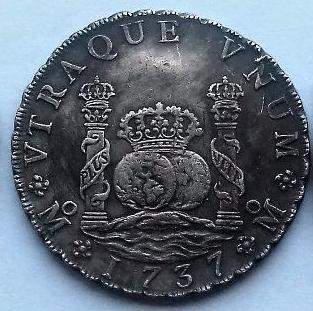 And what, you don't like the tone on this piece, for example? I could see that perspective out of caution and experience with what the Easterners are doing... BUT I would say spend some time (or don't if you don't want to bother with wreck material) reviewing the auction catalogues for some of these wrecks and then reevaluate. Different cleaning methods on differing environmental effects can leave behind curious patterns... AND, yes, sometimes retoning is involved... so sometimes, it's no coincidence that "toned" wreck material and Chinese fakes may share a certain similarity. Edited by realeswatcher
02/14/2018 12:46 pm
|
|
Pillar of the Community
Austria
566 Posts |
With all due respect I think, that "realeswatcher" has more interest in opposing my opinion than to figure out what is real and what not.
I see no point of answering to this thread anymore.
|
|
Pillar of the Community
United States
1801 Posts |
Coinworldtv, what are the features that make you so sure that the 4 cobs being discussed are fakes? Could you please explain so we can have an open discussion and share information, after all that is the purpose behind the forum.
|
|
Pillar of the Community
United States
8715 Posts |
 with jfransch. Please explain the reason you believe the coins are counterfeit. It will help us all learn. |
|
Pillar of the Community
United States
1674 Posts |
Quote:
With all due respect I think, that "realeswatcher" has more interest in opposing my opinion than to figure out what is real and what not. Highly disagree with you on this. And why write someone off as a hater simply because they have an informed opinion that is contrary to yours? That attitude hurts the hobby as a whole. |
|
Pillar of the Community
Austria
566 Posts |
Welcome to the discussion "Numismat", I think we met before in this forum.
As said I do not have the coins in my hands. They might be just darkened to look fake on purpose, but are in fact authentic (a new strategy to sell coins?).
A picture shows many weak points, but it takes more than a picture to be 100% certain of the authenticity of a coin.
Ask the guy who tries to pass them for GBP 3000 or more, he should be very fond of his stock.
For me the cobs look cast and the pillar piece looks familiar to forgeries I had in my hands a couple of years ago.
I think, that this is a trap, a scam, nothing more, nothing less.
Edited by coinworldtv
02/14/2018 7:45 pm
|
|
Pillar of the Community
United States
1962 Posts |
To employ some deduction here...
Looking back at all the pieces that were eventually shown... Given this material, out of the UK - assuming genuine - the Hollandia and/or Rooswijk almost certainly MUST be the sources. Perhaps, MAYBE, an older Vliegenthart ducaton could've mixed in (but wouldn't have sourced THOSE cobs, the klippe and pillars). But most probably, this is HOLLANDIA and/or ROOSWIJK.
As said above, the Rooswijk did not produce ducatons in any amount, so those really CAN'T be Rooswijk... but those cobs, the more I review material and look back at aucs with large hunks from that wreck, are really VERY typical Rooswijk (moreso like what was in the original Ponterio auction - less brightly cleaned that the second wave). As such, I think this material - again assuming genuine - is most likely a mix of two wrecks. These cobs COULD possibly be Hollandia (there were some), so the whole batch COULD be from that wreck... and of course that's what we were told initially (plus he called the supposed seller "old", more likely for Hollandia than Rooswijk people). It CAN'T all be Rosswijk, b/c of those ducatons in the mix.
So HOLLANDIA and/or ROOSWIJK, two wrecks salvaged - 34 years apart, on opposite sides of England - by the same Brit, primarily (Rex Cowan, who also did the Vliegenthart in between). As that might hint at, there is a a lot of path-crossing that takes place, so it's not at all inconceivable or unheard of that people who have some "connection" to the salvage field might possess mixed material.
Of course, anyone who was a simply a collector/buyer but not that careful with his paperwork could have estate mixes of these plus other wrecks like Rill Cove, Association, etc.
A lot of this UK-based wreck material has been steadily coming to market as Father Time marches on (as has been happening for some time here in the U.S. with 1715 Fleet stuff as that generation moves on). Some straight from heir/aging owner, some that you can guess went straight from heir/aging owner to local buyers... Others you see in more quantity from more pro-type dealers who are buying it from UK-based numismatic and often NON-numismatic (as this pillar and klippe were sold through) auctioneers - often in group lots, some surely coming from people who had some link to the salvage field.
What I have definitely noticed from this UK flow of material - often to my great frustration - is that the Brits don't seem to be greatly interested in (or good at) perfectly maintaining correct attribution and pedigree for this "Spanish" material. It's clear that people often have groupings of some coins, and some mixed paperwork, and occasionally things get obviously mismatched, but the Brits don't always know enough to spot it. The sure proof of this are "easy" situations where early, heavily seaworn Rill Cove material gets mismatched. "Dear Seller, no, that 5 gram 4 Reales ca. 1610 cob did not come from the 1740s Hollandia wreck"... "Oh, thanks, that's how they came to me. I don't know and I don't care. Cheers." I also recall a couple months back I saw an original Association COA paired with... a 1740 pillar 8R. Ummmmm... not possible.
Point is, UK wreck material often flows and blends together... so someone possessing a mixed "wholesale" type stash of wreck pieces is not necessarily dammning. That may apply here, it may not... just some general observations.
|
| |
Replies: 58 / Views: 15,506 |
To participate in the forum you must log in or register.
 
- 1975 D Lincoln Cent 2 Lincoln's Reverse Memorial And Obverse
- 1974 San Marino 20 Lire, PCGS MS-67, San Marino, Lobster
- 1795 Liberty Cap Large Cent, PCGS AU-58+, S-76 Struck Over 1794 S-71, Jeff Garrett Discovery
- 2026 Declaration Of Independence Quarter With July 4th Privy Mark, PCGS MS-66
- 1978 Mexico - 10 Centavos W/Straight Clip
- 2019 P Nickel: WDDR-005
- 1994-P Nickel Overpolished Die?
- 2022 10c Double Clipping Error
- 1871 Victoria Sovereign, London
- Possibly Merovingian 8th Century
- Specie Payments Suspension And Gold Coin Circulation After 1861 In The Usa?
- Looking For Nic-A-Date Pro's And Con's
- 2021-P Nickel With Feeder Finger Damage.
- 2025 P Nickel With DDR.
- 2021 - P Lincoln Shield Cent With Uncentered Broadstrike, Stiff Collar, And Ffd (Coin #3 Of 3)
- 2005 - D Lincoln Memorial Center With Broadstrike (Coin #2 Of 3)
- 2000 - P Lincoln Memorial Cent Wide AM Gift
- 1999 - P Lincoln Memorial Cent With Broadstrike (Coin #1 Of 3)
- 1872-H Off-Centre Double Struck 25 Cent
- 2026 Trump Dollar Coin - Strikethrough Or Ding?
- How Many Countries Do You Have Coins From?
- 20 Questions! (Forum Game) 11/04/24
- 1975 D Lincoln Cent 2 Lincoln's Reverse Memorial And Obverse
- 1974 San Marino 20 Lire, PCGS MS-67, San Marino, Lobster
- Guess The Price - Season 96 - Round 4
- Coinstar Finds! (Including Bank Counters And Other Machines)
- How Far Back Can We Go? Ninth Edition!
- How To Spike Interest In The Comic Art Series
- Explore Rare And Collectible Coins From Specialist Dealers On Ma-Shops.
- 1795 Liberty Cap Large Cent, PCGS AU-58+, S-76 Struck Over 1794 S-71, Jeff Garrett Discovery
- 2026 Declaration Of Independence Quarter With July 4th Privy Mark, PCGS MS-66
- Post Your United Kingdom (Great Britain) Coin Acquisitions.
- Purchased A Small Celtic Hoard
- Post Your Coins With Coats Of Arms, Shields, Crests, Crowns, Etc.
- Around The World With Coins - A Coin Geography Game
- Specie Payments Suspension And Gold Coin Circulation After 1861 In The Usa?
- New Coin Purchases, Slerk
- 1623 2 Thalers, Germany, Constance, D-5175, PCGS XF45
- 1978 Mexico - 10 Centavos W/Straight Clip
- 2019 P Nickel: WDDR-005
Disclaimer: While a tremendous amount of effort goes into ensuring the accuracy of the information contained in this site, Coin Community assumes no liability for errors. Copyright 2005 - 2026 Coin Community Family- all rights reserved worldwide. Use of any images or content on this website without prior written permission of Coin Community or the original lender is strictly prohibited.
Contact Us | Advertise Here | Privacy Policy / Terms of Use
|
| Coin Community Forum |
© 2005 - 2026 Coin Community Forums |
| It took 0.38 seconds to rattle this change. |
 |
|





 First Page
 Previous Page


 Posted 02/14/2018 07:04 am


