| Author |
 Replies: 11 / Views: 2,473 Replies: 11 / Views: 2,473 |
|
|
New Member
United States
26 Posts |
These fakes have been lurking in my junk box for a couple decades. The Otho is a bit obvious and is much too light. The Croesus could fool an unpracticed eye. Btw... I purchased both knowing they were fakes but made nice placeholders in my collection. 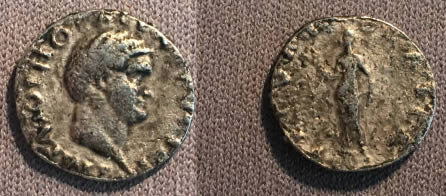 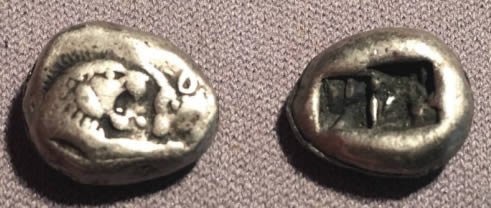 Edited by t501tx
10/30/2017 10:02 pm
|
|
|
|
Pillar of the Community
Canada
5298 Posts |
Is the Croesus made of silver or just a good lookalike?
|
|
New Member
 United States
26 Posts |
|
|
Moderator
 United States
34567 Posts |
@501tx, first welcome to CCF. Second, while posting these pieces is great, please make sure you understand the rules around buying and selling coins here.
"If you climb a good tree, you get a push."
-----Ghanaian proverb
"The danger we all now face is distinguishing between what is authentic and what is performed."
-----King Adz
|
|
Moderator
United States
23731 Posts |
 to the community I want to echo what Spence said about the rules about buying and selling. |
|
Valued Member
Australia
205 Posts |
Welcome!
I recommend making sure that these fake coins never make their way back onto the market.
Also, make sure to share with us some photos of authentic coins in your collection!
Peter
|
|
Pillar of the Community
United States
7067 Posts |
Quote:
The Croesus could fool an unpracticed eye. Indeed. I would not have spotted this as a fake. Style is fine. Wear appears authentic. What is the giveaway here? Weight? |
|
Pillar of the Community
United States
949 Posts |
Before coming to judgment on the Croesus, have you ruled out alternatives? These came in several denominations. I'll echo Bob's question, what are the giveaway details that tell you it is fake?
Also, the Otho looks like it could be a fouree, which is an ancient counterfeit but not a fake. So, here again, what tells you it is fake?
There is a numismatic "sin" that is worse than identifying a fake coin as genuine; that is to identify a genuine coin as fake.
Edited by lrbguy
10/30/2017 11:46 pm
|
|
Pillar of the Community
United States
7067 Posts |
Quote:
These came in several denominations. Exactly. Not just gold but also silver staters, 1/2 staters, 1/3 staters. I'm curious what the red flag is here. |
|
New Member
United States
26 Posts |
In the wild hope it was real, I actually sent the Croesus off to David Sear for authentication in the 90s. He confirmed it was forgery. It has been so long ago now I do not remember any of the details. There does appear to be a seam like from a mold in some areas around the edge.
The Otho is a full gram light (2.1g) and the edge of the coin has a spot or two that look like round drops.
Edited by t501tx
10/31/2017 12:23 am
|
|
Pillar of the Community
United States
949 Posts |
@t501tx do you understand what a fouree is? ancient forgeries were often made in antiquity with a thin silver coating over a base metal core of copper, tin, or debased silver (potin). Because a fouree is truly ancient they are not classed as fakes (which are modern). Today these are eminently collectable and collected by many numismatists who handle ancients. The weight of the coin is of course going to be light, and there may be anomalies to the surfaces, including ruptures to the silver jacket, or even no silver at all.
|
|
New Member
United States
26 Posts |
Yes, Irbguy, I fully understand what a fouree is. Perhaps it is...or not.
I would be more than glad to send the coin to someone who would like to judge it one way or the other.
|
| |
Replies: 11 / Views: 2,473 |
|




 Posted 10/30/2017 6:28 pm





