Might as well cross post the write up for the two coins above!

At the beginning of 211, Rome was ruled by Septimius Severus, one of her last capable rulers. On campaign in Britain against marauding Caledonians (Scots), his health was poor, and he fell ill and died on February 4. He was to be succeeded by his two sons, Caracalla and Geta. Outwardly a happy family, the two young men loathed each other. Severus' last piece of advice for his sons was to get along with each other, pay the armies well for their loyalty, and disregard all others.
Throughout 211 the brothers attempted to get along and honor their father's wish, but their differences were apparently irreconcilable. They ended up dividing the imperial palace in two, the intersections guarded and each brother forbidden from enteeing the other half. Despite pleas from their mother, the brothers resolved at last to divide the empire in two. Their mother Julia was able to stop these plans, and on Saturnalia (Roman Christmas, observed Dec. 23) Caracalla and Geta tried to poison each other.
On December 26, Julia begged the brothers to meet in her home for a peace meeting. Caracalla somehow managed to sneak a dagger in his cloak, and stabbed Geta to death in front of their mother.
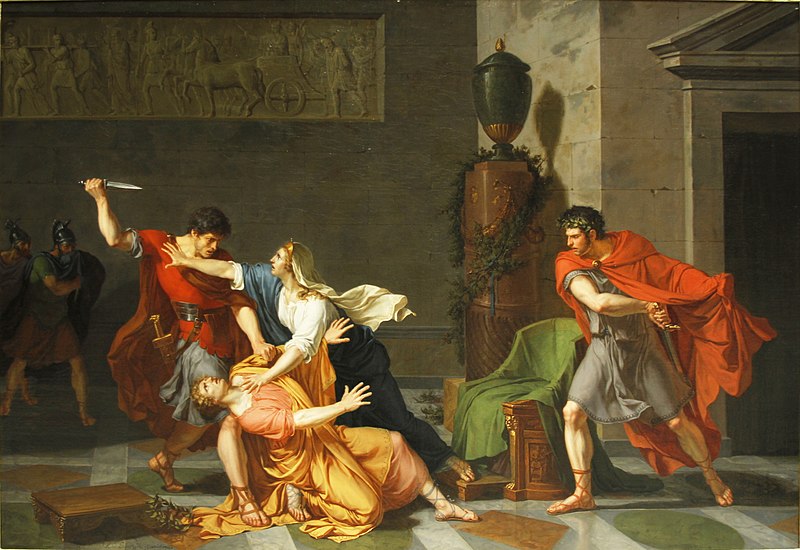
Following his brother's death, the official press release was that Geta had been the aggressor, and Caracalla acted in self defense. Geta's name and memory was condemned, and he was (almost) totally erased from history. It became a capital offense to even mention him, leading to the death of thousands, from common citizens to senators and even the last surviving child of Marcus Aurelius. Of the few surviving artefacts of this period, perhaps the most famous is the Severan Tondo, a painting dating to about the middle or end of Severus' reign:

After 211, Caracalla went on to be an infamously ruthless and bloodthirsty tyrant, and was finally deposed in 217 at the machinations of his chief of bodyguards, Macrinus.
About the coins: the left is Caracalla (ANTONINVS PIVS AVG GERM), whose real name was Antoninus Pius--Caracalla is the name of a Germanic cloak that the emperor was fond of. Historians use that name to avoid confusion with the emperor who had ruled nearly a century prior. This coin actually dates to after 211 (I think about 215) but shows the emperor's trademark "military scowl" which was his favorite facial expression.
The coin on the right is Geta, these bearded portraits with the title P SEPT GETA PIVS AVG BRIT being attributed to his brief co-rule during 211. They were extraordinarily common in their day, but the only ones to survive the melting pot were those buried before Geta's death.





 Posted 12/23/2017 12:23 pm








 Merry Christmas everyone


