| Author |
 Replies: 11 / Views: 2,103 Replies: 11 / Views: 2,103 |
|
|
Pillar of the Community
United States
1328 Posts |
These are the seller's photos. I don't know if they're adequate. Had trouble with the reverse image. 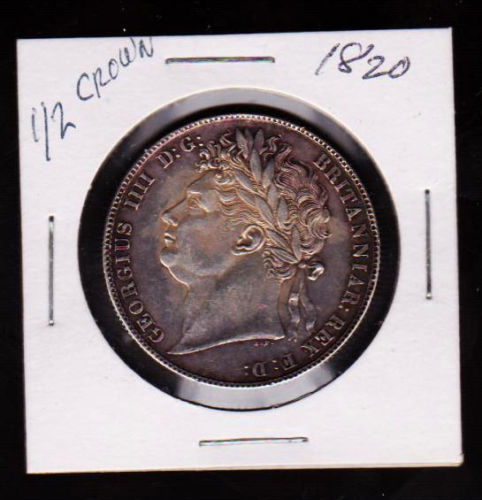 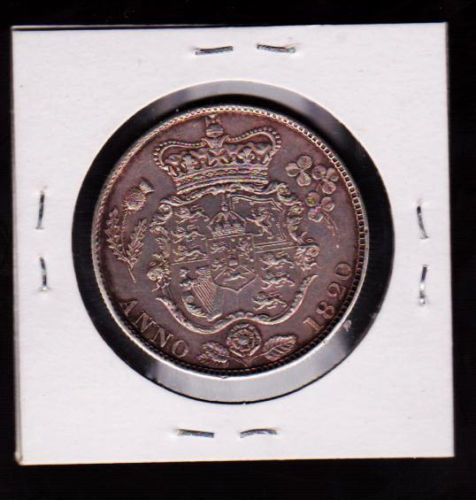 |
|
|
|
Bedrock of the Community
Australia
21794 Posts |
Looks OK from the pictures, but I always like to see a coin in hand before making a decision to buy. Weight should be 14.14 grams. VF condition (British grading), perhaps I would grade it good VF, maybe even a bit higher, if I could see it in hand. Need to examine the high points of the design with a loupe, looking for wear. Should be a compulsory rule that all ebay buyers have a return option. That is how it always works for public auctions, if the lot is found to be mis described, or mis represented in any way. It appears to be a reasonably nice George 1V First Issue Half Crown. (C) common in this condition, on a 12 step scale C3 - extremely common to R7 - unique. I have a complete type set of Half Crowns George 11 - Elizabeth 1, average condition good Fine for the silver coins. This coin a full grade or perhaps a little better, than my example. A reasonable value guide for British coins: Search: Values of Coins of the U.K.Edited by sel_69l
01/29/2018 05:29 am
|
|
Pillar of the Community
 United States
1328 Posts |
Thanks again for sharing your expertise, sel_691. The seller, who is filipino, does have a free return policy. I have already made the purchase. I could not resist at a price of $59.
|
|
Rest in Peace
United States
17900 Posts |
That was a good buy. Congratulate yourself both on asking opinions here first, as well as grabbing that lovely example.
It's always a smart idea to ask BEFORE you buy, not after.
|
|
Pillar of the Community
United States
1776 Posts |
These are easy to spot as counterfeits - in my new book see below on the more notorious 3 Shilling Bank Token types as contemporary circulating counterfeits. Kindle APP is Free and Kindle E-Book to your desktop is only $3 U.S.. These types are very common in counterfeit status but this piece is unquestionably regal IMO. SPECIMEN #70 1815 GREAT BRITAIN 3 SHILLING BANK TOKEN TRACE MERCURY SILVER PLATE OVER A LOW ZINC BRASS ALLOY HOST Country: Great Britain. 1815. KM# Tn5; S. 3770; ESC-423 Type. 35.15 mm. 10.5 grams. Medal Turn Die Axis. Regal issues struck in silver at 92.5%. Obverse: George III Laureate Head facing right. Reverse: Legend within wreath. Issued by the Bank of England. XRF Analysis of Surface: Copper (74.83%), Zinc (5.82%), Silver (2.51%), Mercury (0.61%), Arsenic (0.58%), Tungsten (0.14%), Antimony (0.12%), Nickel (0.08%) and Bismuth (0.06%). Mercuric silver plate similar to Sheffield plate over a high copper/ low zinc brass alloy type. Sometimes mercury is used to prepare the planchet for better silver plate adhesion and not just as a mixture aid for better silver spread. Provenance: Great Britain Coin Show in 2012. Notes: As any collector of these issues can tell you these tokens were counterfeited seriously in great quantities. The principal reason behind these issues for the Bank of England Dollar Tokens and other tokens was the inability of The Royal Mint to pay the market price for silver to create regal silver coins. Not a desriable William Booth product who has been considered by some to be the principal forger of the Bank of England Dollars of 1804 (KM# Tn1) as he died in August 1812. He was suspected of counterfeiting all denominations of Bank of England tokens and was without a doubt the most prolific forger of the Regency Era. Some of these coins were found on his premises in Victorian times and are now in a local museum. In July 1811, the Government announced that counterfeits of the Three Shilling Bank Token were in circulation. The appearance is whiter and they sound very dull when rung. They are of copper, thinly plated and worth about a penny. On the whole they are executed nearly as well as those issued by the Bank, and it is much to be lamented that the execution of the Bank Token has admitted of so early and easy a counterfeit. Persons to whom they are offered will do a public service by endeavoring to trace the quarter from whence they first came into circulation. Public exasperation at the continuing shortage of silver coins had by that time pushed many provincial banks and not a few factory owners into issuing their own private silver tokens. Specimens of this caliber are worthy of any counterfeit collection. The student should realize the more silvering obviously the more desirable a counterfeit is of this bi-layer type. See Amazon Books (U.S. or U.K.) Lorenzo, John. The Forgotten Coins of the North American Colonies - 25th Anniversary Edition (p. 198). Kindle Edition. |
|
Bedrock of the Community
Australia
21794 Posts |
The first Three Shilling token I ever came across was brass fake, with almost all of the silvering worn off.
I came across a genuine example of the 2nd type Marchant design, which I bought from a dealer at a coin show in the late 1980's; it is in about the VG to Fine condition.
First type design of the Three Shillings was by Pingo.
Since that time, I have written the date and price paid on the 2x2; the Three Shillings must have been bought just before I began the good habit of recording acquisition details of any coin over about $20 in value on the 2x2.
Weight for genuine Three Shillings (30 pence value), both types is 15 grams.
Weight for the Silver Halfcrown of George 1V (25 pence value), is 14.1 grams.
The Halfcrown had more silver for face value.
The Three Shillings was withdrawn from circulation in 1820 after the Great Recoinage, when other silver denominations became plentiful. After 1820, they were accepted at bullion value only. From the silver for face value information one could draw the conclusion that the Three Shillings stopped circulating altogether.
I would imagine that, due to their short period of circulation, that average condition of survivors would be better than mine.
|
|
Pillar of the Community
United States
1776 Posts |
The various types are of at least a dozen in counterfeit. I once discussed this with someone. You could easily do a short book just on these contemporaries.
|
|
Pillar of the Community
United States
1962 Posts |
It wasn't the usually obvious contemporary types he was worried about, I would suppose...
Looks like a genuine piece, though that tone is a bit splotchy - wouldn't be shocking for that to have possibly seen a wipe.
Strong detail, though.
|
|
Pillar of the Community
United States
1328 Posts |
I just received this coin and am hoping I can revive this post. It has a reeded edge and a medal alignment. I have not been able to confirm that this coin was minted in medal alignment and would appreciate help.
|
|
Pillar of the Community
United States
1962 Posts |
"a medal alignment"
You sure of that? The Brits did not switch from coin alignment to medal alignment until ca. 1900 (not sure of the exact date, but right about there). Just quickly checking a few 1820 G. IIII pieces slabbed, all examples I see are COIN alignment...
|
|
Pillar of the Community
United States
1328 Posts |
Realeswatcher, thanks so much for responding. Yes, it is medal alignment and now I'm obviously questioning authenticity. I am posting new scans that I made. Coin is non-magnetic, but I don't trust my scale to get a reliable weight. Would appreciate feedback. 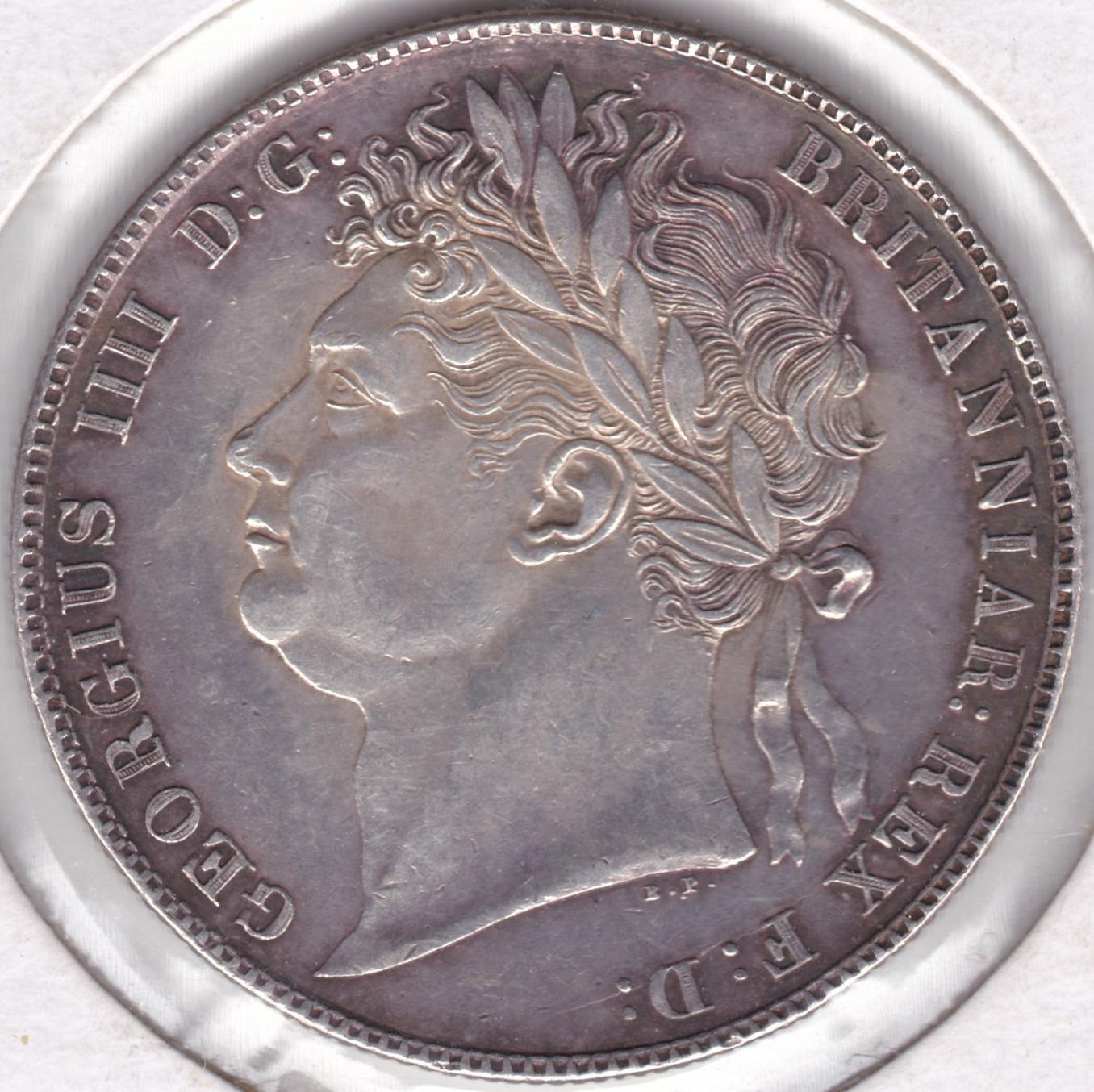 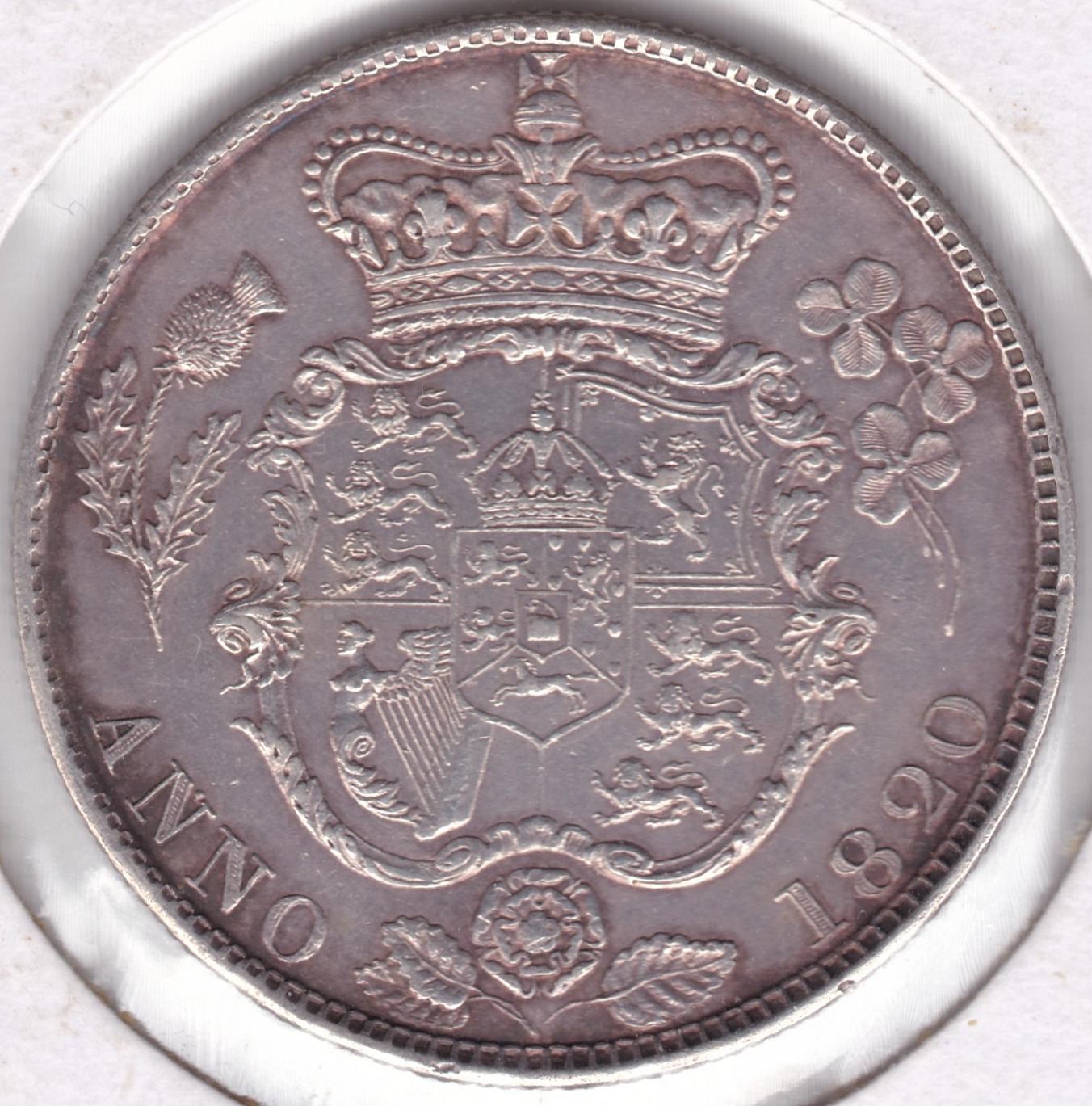 |
|
Pillar of the Community
United States
1962 Posts |
|
| |
Replies: 11 / Views: 2,103 |
|




 Posted 01/29/2018 06:29 am





