| Author |
 Replies: 14 / Views: 1,568 Replies: 14 / Views: 1,568 |
|
|
Pillar of the Community
United States
3343 Posts |
Someone at work brought me a few coins for help with identification. I've tried all the Chinese coin sites and it's all Greek to me (pun intended). Any help is much appreciated! Coin #1: 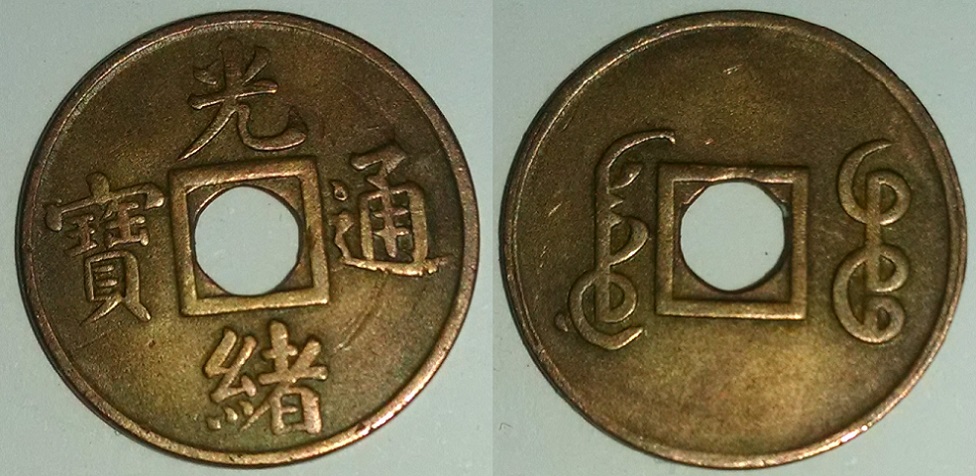 Coin #2: 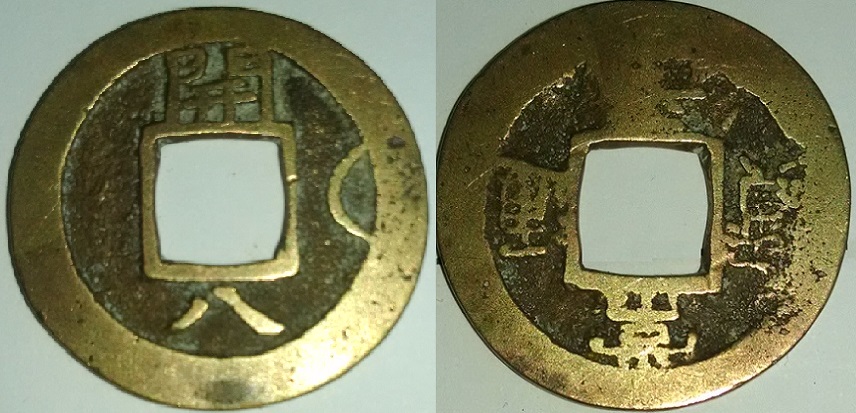 Coin #3: 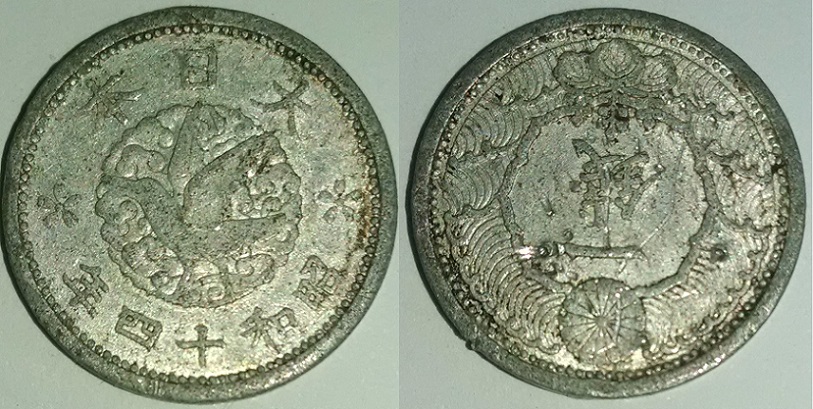 *** Moved by Staff moved to a more appropriate forum. *** *** Moved by Staff moved to a more appropriate forum. ***"Nummi rari mira sunt, si sumptus ferre potes." - Christophorus filius Scotiae
Edited by Bump111
02/06/2018 11:37 am
|
|
|
|
Pillar of the Community
United States
6130 Posts |
|
|
Pillar of the Community
 United States
3343 Posts |
Finn, dude! That's quick. You've helped me before and I really appreciate it. Thanks.
"Nummi rari mira sunt, si sumptus ferre potes." - Christophorus filius Scotiae
|
|
Rest in Peace
10197 Posts |
#1 Real? Don't think so, characters OK but the rim and hole aren't.
|
|
Pillar of the Community
United States
6130 Posts |
I think 1 is real, but it's not my specialty. The Chinese Empire was crumbling around the turn of the 20th century, and the mints were suffering from major quality control issues. This one in particular has a round hole, probably because they couldn't get a square punch and had to meet a quota. There is a type with a square hole that is a little more common; neither are valuable beyond a couple dollars.
Gxseries I think knows these better than I do. Hopefully he'll be along shortly.
|
|
Pillar of the Community
Belgium
2895 Posts |
#1: if you compare with the link on Numista, it seems ok.
|
|
Rest in Peace
10197 Posts |
The only stamped coin was the 1908/9 issue, so maybe OK?
Edited by Crazyb0
02/06/2018 2:47 pm
|
|
Bedrock of the Community
Canada
11922 Posts |
For the Korean mun coin, the second picture is upside-down. With that in mind, that coin would be a Sang Pyong Tong Bo one (which is the name of each character on the upside-down picture). On the other side, the top character is the mint. In this case, it is Kae (the Kaesong Township Military Office). Staying on that side, the left symbol is a crescent, while the bottom is the number eight. The eight means it is from Series 8, although I am not exactly sure what that means, and I am also not sure what the crescent means. It might have something to do with the year, but when it comes to coins from the Kae mint, I keep coming across the date of 1816. That might be the date of yours, but I am not exactly sure. And all of this information can be found on this site.  |
|
Pillar of the Community
United States
3343 Posts |
Joseph, thank you for that detailed info on the Korean coin. And thank you to the others for your continued insight. The owner of the pieces will be thrilled to hear.
"Nummi rari mira sunt, si sumptus ferre potes." - Christophorus filius Scotiae
|
|
Valued Member
Korea, Republic Of
489 Posts |
While Joseph7420 has most of the information right, I'll provide finer details. He is right that this is a Joseon Dynasty (Korea, 1392-1897) Sangpyeong Tongbo minted in Gaeseong in the early 1800s. At this point in Korean history, these types of coins had spread all over Joseon and saw widespread use. This coin (the sangpyeong tongbo) is the first successful coin of Korea. It also looks like someone took some brass/copper cleaner to it as well, as these coins are not supposed to be that shiny.
The character for "8" on the reverse doesn't mean its from series 8. Rather its the eighth coin out of a set; normally ten. They normally minted these coins in sets of ten, so this is the eighth coin. The "C"-looking character is the character for "moon". In this case it can mean many things. For example, a character may be placed there to indicate which furnace it was made in, to dictate the general time/date it was made, or (most likely) added to move the series for that coin along. When these coins are made to begin with, they almost always start with just the mint character up top and the number (out of 10) on the bottom. Then to move the series along, they can move the number to the left or right, or add a moon/sun/star, etc.
This fella you have is worth less than $1, but is a nice token of Korean history. When I get home I can give you the date that they started minting coins at Gaeseong and give you a better estimated date for this coin specifically.
|
|
Pillar of the Community
United States
3343 Posts |
Great info, lembafc! You and the others are great resources for the forum. The person who possesses these coins would be very interested in any other details you would provide. It happens that she has two of these Korean coins, both with the same characters. Apparently, her uncle picked them up while stationed there in the armed services. Thank you and the other responders once again.
"Nummi rari mira sunt, si sumptus ferre potes." - Christophorus filius Scotiae
|
|
Pillar of the Community
Australia
3841 Posts |
All coins look genuine to me. Unfortunately it doesn't seem like any of them have significant value. I think the Korean cash coin most certainly is the most interesting out of all of them.
|
|
Valued Member
United States
102 Posts |
The first coin is genuine (I have one just like it). It is from the reign of the Xuantong Emperor, 1908-1912, aka Pu Yi, the last emperor of China! The coin looks different from normal cash because they started switching over to machine-made, as opposed to cast, coins in the late 19th Century.
|
|
Valued Member
Korea, Republic Of
489 Posts |
Oh! Also I looked in my book and Gaeseong SPTBs were minted beginning in 1836. :) Sorry just remembered to look.
|
|
Pillar of the Community
United States
3343 Posts |
The continued info is appreciated. These coins are back home with their caretaker, but I will pass all the extra details along to her. The history of these world coins is really interesting. Thank you for schooling us!
"Nummi rari mira sunt, si sumptus ferre potes." - Christophorus filius Scotiae
|
| |
Replies: 14 / Views: 1,568 |
|






 Posted 02/06/2018 11:52 am





