| Author |
 Replies: 97 / Views: 13,353 Replies: 97 / Views: 13,353 |
|
|
|
Pillar of the Community
United States
3479 Posts |
You guys are hilarious. Where can I get that drum roll emoji, Jbuck? Here's a type I've been after for awhile but every time I find one, I either get outbid or a Seated dollar distracts me away from the auction. 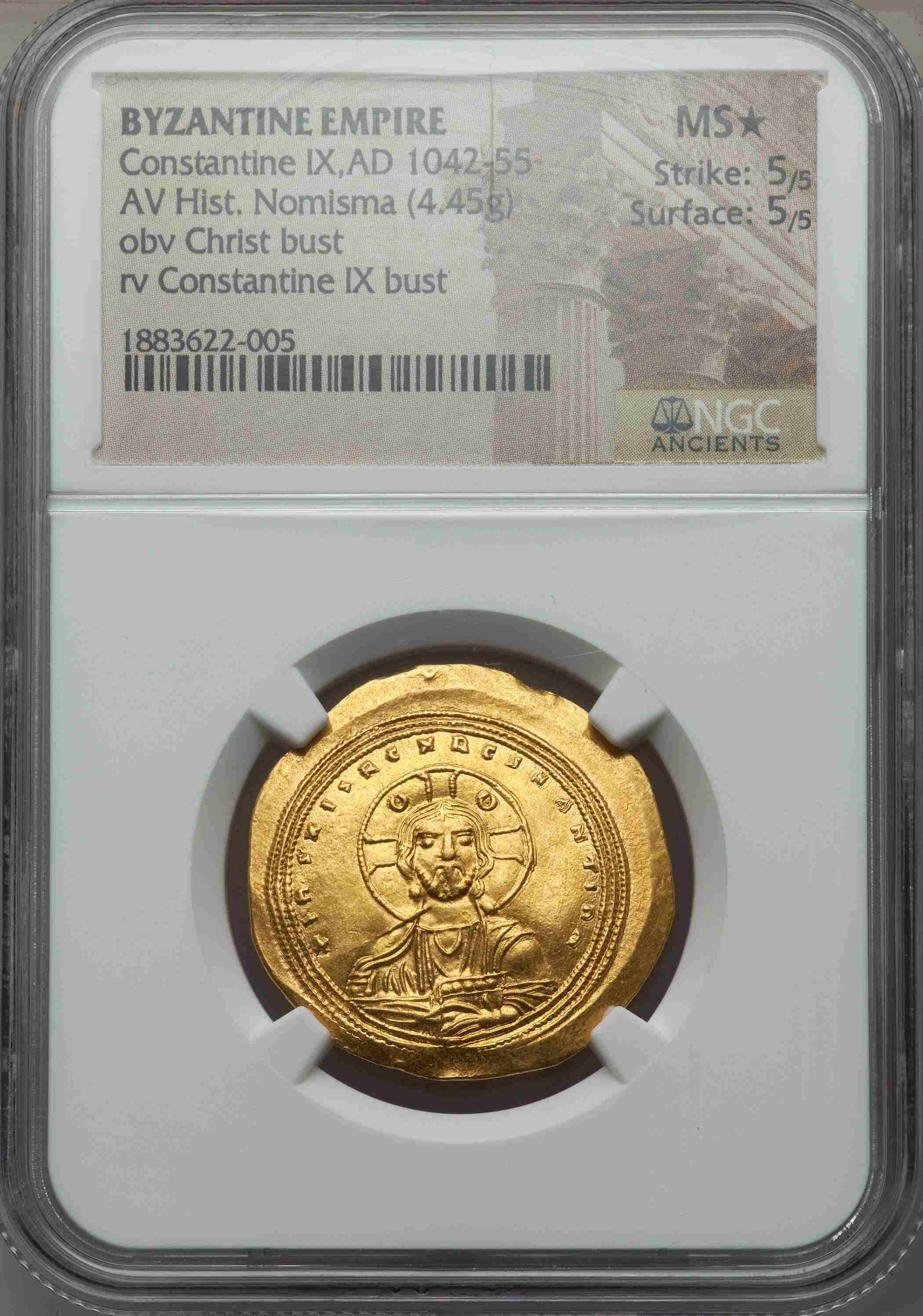 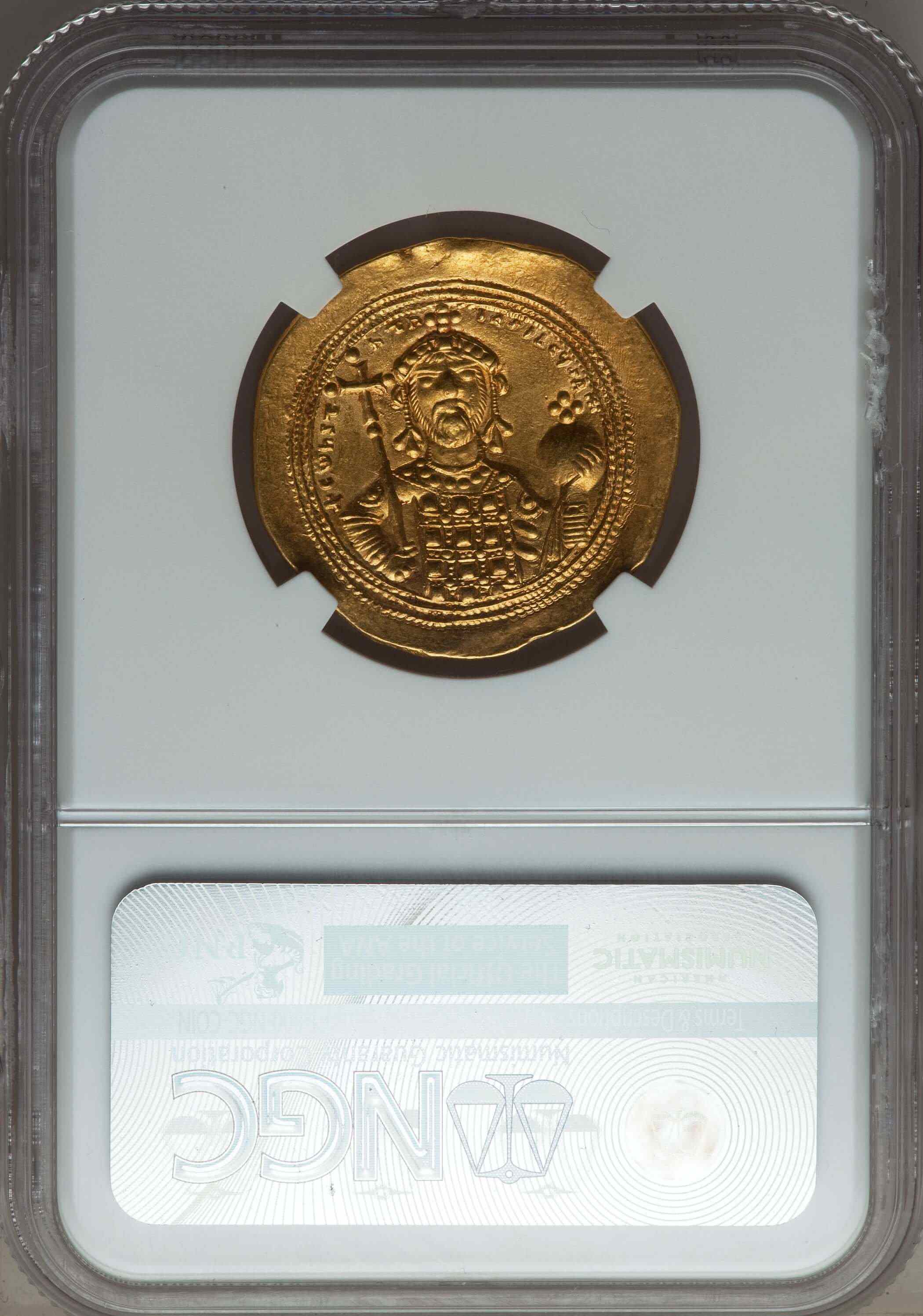 |
|
Pillar of the Community
Australia
9859 Posts |
1991 Isle of Man 50 Pence 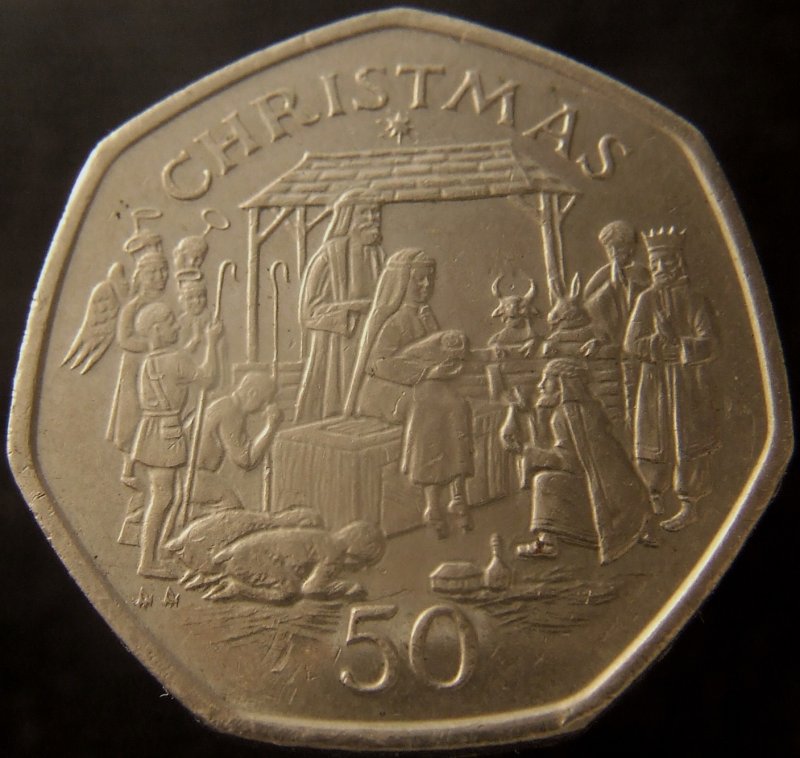 Steve  |
|
Pillar of the Community
United States
2645 Posts |
Venetian grosso with Christ on the throne on one side and St. Mark on the other. A particularly holy version. 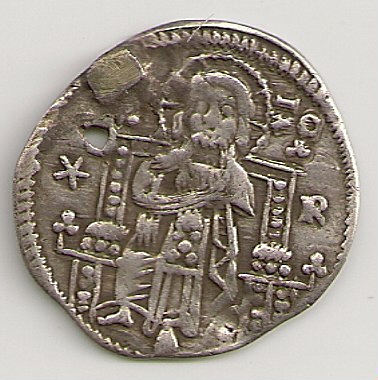 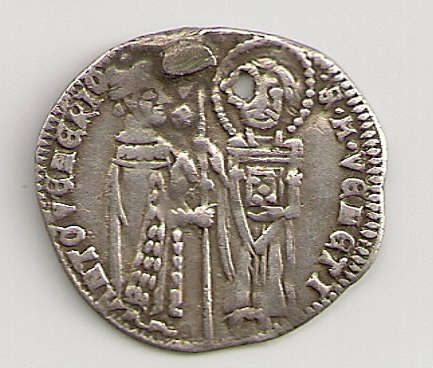 Edited by Arkie
04/13/2018 09:03 am
|
|
Pillar of the Community
United States
2645 Posts |
And here is Minerva Victrix 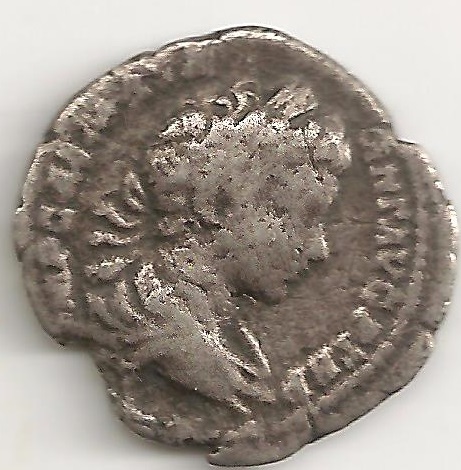 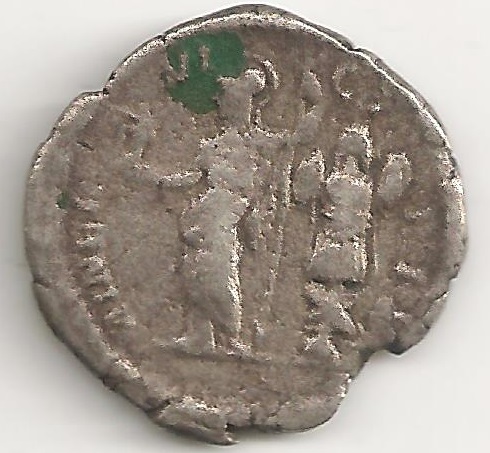 |
|
Pillar of the Community
United States
6130 Posts |
Here's a fun one from ancient Greece, a Gorgoneion:  Coalescing from uncertain folk myths, the Gorgons were three monstrous women with the ability to turn their foes to stone. Medusa is by far the most famous of the three traditional Gorgons, and as legend has it, she was slain by Perseus, who used her head as a weapon before surrendering it to the gods. For the ancient Greeks, the Gorgon's head, or Gorgoneion, was something like a talisman that was used to bring protection and ward off the evil eye and bad spirits. She was very common on coinage of the 6th, 5th, and 4th centuries BC, although her visage morphed from that of a monster into that of a seductress figure. Gorgoneion were placed on shields and armor to grant magical protection to soldiers, the most famous example being the breast plate of Alexander the Great, which was lost in antiquity, but survives via the Alexander Mosaic recovered from Pompeii. |
|
Pillar of the Community
 United States
8062 Posts |
Quote:
Venetian grosso with Christ on the throne on one side and St. Mark on the other. A particularly holy version Indeed, those Venetian grossos are a "twofer:" you get an image of Jesus, and an evangelist (St. Mark, the "modern" Patron saint of Venice). I have a couple of additional images of coins I have with St. John the Baptist. First, this 1 piastra coin of 1678 from Florence showing the baptism of Jesus (mentioned in three of the gospels): 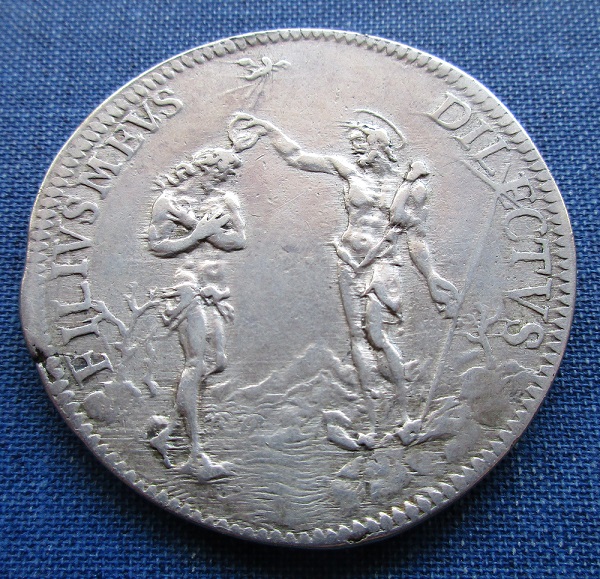 And John's beheading (Matthew 14):  Edited by tdziemia
04/13/2018 11:13 pm
|
|
Pillar of the Community
United States
2645 Posts |
Not to mention the hole in the coin -- but that's the kind of joke an Ohio State graduate would make.
|
|
Moderator
 United States
196778 Posts |
Quote:
Where can I get that drum roll emoji, Jbuck? I will see what I can do.  |
|
Pillar of the Community
United States
8062 Posts |
@finn, I enjoyed your comments on the development of the Gorgons in Greek mythology/religion.
As is obvious, I'm interested in the cult of saints in Christianity, and it, too underwent a lot of changes over the first few centuries of that new religion. At first, saints were revered as something like "heroes" of the new faith. Their martyrdom dates were celebrated annually (because the first saints were all martyrs), usually with clandestine eucharist celebrations held at their burial places. Those dates are still the dates on which those saints are honored, and many of those burial places later became the sites of churches dedicated to those saints. By the early medieval era, saints had been attributed with the power to intercede with God on behalf of the devout (something akin to the later beliefs related to the Gorgons you mention).
|
|
Pillar of the Community
United States
8062 Posts |
If you're a chronologcal type, we have covered the Annunciation, the Nativity, a few Madonnas, and John the Baptist (who prepared the way for Jesus ministry according to the New Testament). Key to Jesus ministry were his apostles. I think all but three appear on coins (Bartholomew, Luke and Judas Iscariot are the exceptions). Here is Peter, on a gros of Brabant (Louvain mint) from the 1300s:   St. Peter's image is found on medieval coins from many places, and of course on many coins of Papal States/Vatican City Edited by tdziemia
04/14/2018 5:46 pm
|
|
Pillar of the Community
Belgium
1194 Posts |
An obole from Laranda , Lycaonia ( Turkey ) , BC 324/323. Obverse : Baaltars sitting left , this local god is identified with Zeus .The presentation of Baaltars ( Baal of Tarsus), normal in this region of today Turkey , is typical and was the model for the coins of Alexander the Great. There are different models of stool , throne ... on the local and the Alexander coins , but all different in style from known Greek stools...of that period . Reverse :a protome of a wolf , the wolf here is a representation of Apollo Likeys , a local expression of Apollo . Likeys = likos ( Greek) = wolf . albert 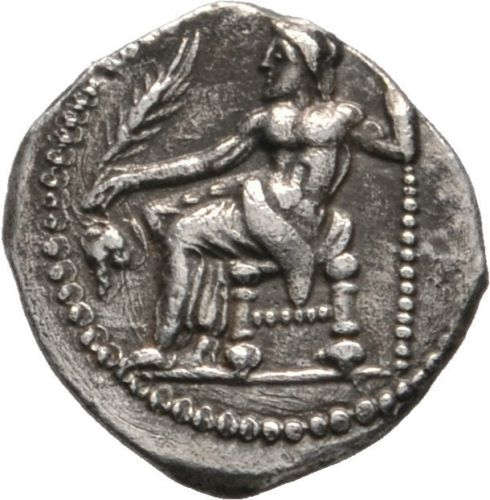 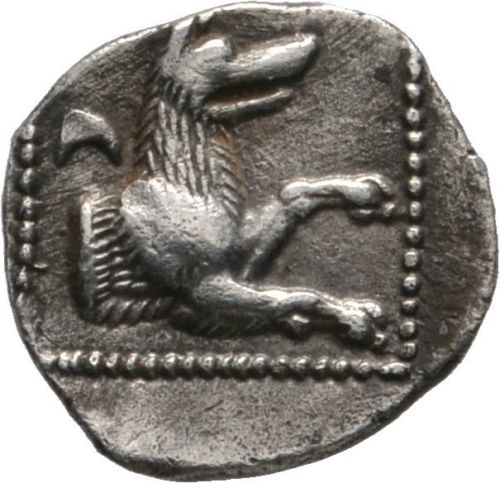 |
|
Pillar of the Community
United States
6130 Posts |
More awesome coins! Especially the Baptism scene - that is just good art right there! @Albert, that is an uncommonly nice Lycaonia obol there. I recently sold one - didn't make the "cut" as Baaltars was an indistinct blob. I always found those depictions interesting, namely because they are nearly indistinguishable from their Greek counterparts, and also the numerous and exceedingly negative connotations passed down to us from the Old Testament - Prophets of Ba'al and the like. I did some research some weeks ago and uncovered that Ba'al is actually a generic title that was applied to numerous chief deities of the ancient near east. Here is my own Baaltars, from an obol of Pharnabazos:  Here shown seated and holding a lotus-tipped scepter, rather than wheat and grapes. The bearded portrait is either Ares, the god of war, or the satrap himself. The image of seated Baaltars was transferred onto the oh-so-popular tetradrachms of Alexander the Great, here a lifetime issue with awkwardly uncrossed legs:  This image was to become so ubiquitously engraved in the numismatic art of the ancient world that it could still be found half a millennium later: (Silver denarius of Marcus Aurelius)  |
|
Pillar of the Community
Belgium
1194 Posts |
The last representation of Zeus , here Jupiter, in this way is on a coin of Maximinus Daza , Roman emperor from 310 / 313 . The coin was longtime not identified ( not in RIC , in Cohen attributed to Julian (361/363) . It is the last civic coinage in the Roman empire , together with the same type of coin in Nicomedia and Alexandria . These coins served the religious policy of Maximinus Daza , together with a similar coin ,representing Antiochia and Apollo .albert 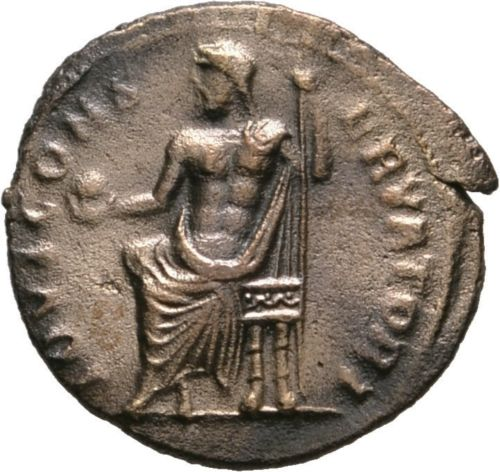 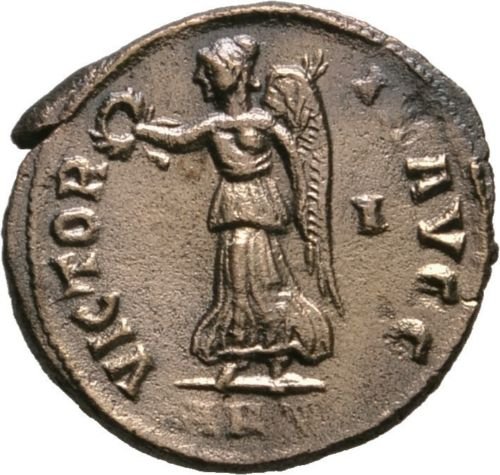 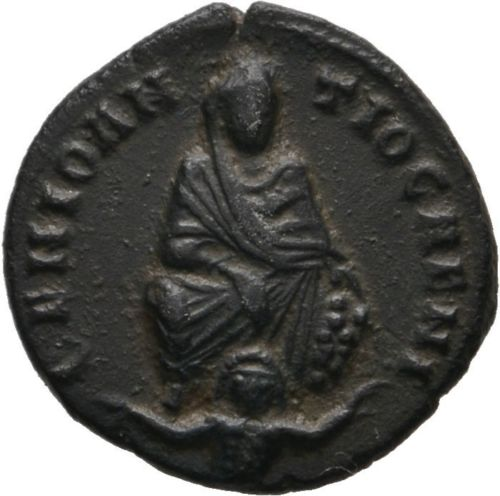 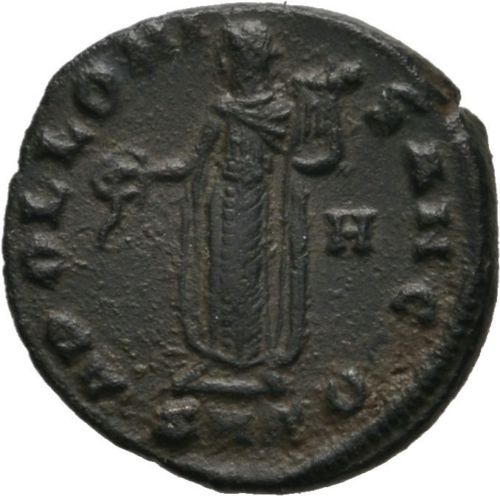 |
|
Pillar of the Community
United States
8062 Posts |
Quote:
Especially the Baptism scene - that is just good art right there! Thanks! There is a lot of nice religious art on 17th c. coins of Tuscany and Papal states. Likewise many German states. If I understand correctly, the Jewish purification ritual of New Testament times would have involved immersion in a mikvah, rather than what is depicted (essentially a Christian baptism). But that would have given the Renaissance engraver a lot less to work with! |
|
Pillar of the Community
United States
8062 Posts |
Quote:
This image was to become so ubiquitously engraved in the numismatic art of the ancient world that it could still be found half a millennium later That's a neat point (on the longevity of certain images). In Christian images on coins, I suppose Christ pantokrator, and the Madonna have also had exceedingly long runs. Between Mike F's byzantine gold upthread, and Arkie's Venetian grosso, we have a good 350 years between Christ pantokrator images. AND, antwerpen, such a great set of images of Roman gods/goddesses! Edited by tdziemia
04/15/2018 10:06 am
|
| |
Replies: 97 / Views: 13,353 |




 First Page


 Posted 04/13/2018 05:06 am





