| Author |
 Replies: 97 / Views: 13,355 Replies: 97 / Views: 13,355 |
|
|
|
Pillar of the Community
Sweden
1078 Posts |
Quote:
I consider this religious, as holey as it is As such, I think the Holey Dollar of Australia qualifies aswell!    On a more serious note, here's an Iranian coin:  Image courtesy of Numista.com |
|
Pillar of the Community
 United States
8062 Posts |
Nice!
I needed to look up the coin, and found it's also a twofer, with the Kaaba on the side you've shown, and Dome of the Rock on the other.
|
|
Pillar of the Community
United States
6130 Posts |
I actually have some cool early Christian coins to share, but no pics handy yet - planning to get better organized and take images this summer  Here's one from the heartland of Buddhism, displaying the famous religious inclusionism of ancient India Kuninda kingdom (NE India, Himalayas) Amoghabhuti, c. Late 2nd century BC AR Drachm Obv: Stag standing right, Lakshmi standing left holding flower. Brahmi "Rajnah Kunindasya Amoghabhutisya maharajasya" Rev: Six-mound stupa, surrounded by Triratna (top), Bodhi tree (right), swastika (top left), and a "standard" whose meaning has been lost. Kharosthi transliteration of obverse legend. 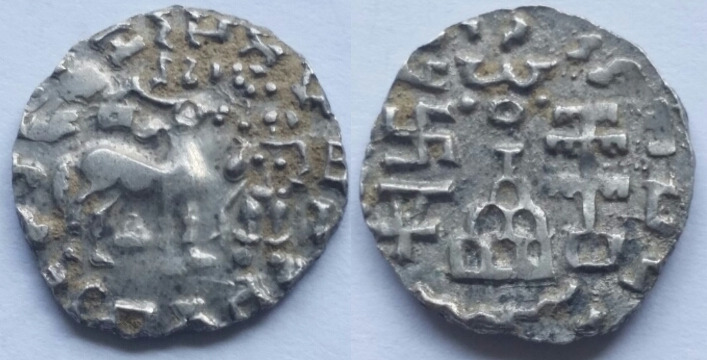 Lakshmi on the obverse is the goddess of wealth and consort of the Lord Vishnu; she is particularly popular on coinage of antiquity and the middle ages. Triratna: The Three Jewels of Buddhism: Buddha, Dharma (cosmic order and law) and Sangha (community and assembly). Depicted as a Trident and rod atop a lotus flower Stupa: A mound-like structure that hold sacred relics; a place for meditation Swastika: Symbol for the Buddha, or for the eternal cyclic nature of reality Bodhi Tree: Where Buddha achieved Enlightenment. It has been kept alive through clippings since 2500 BC, and traditionally has been surrounded by a fence to protect it from harm. The "standard" symbol has not survived, and is not convincingly been described in contemporary literature. |
|
Pillar of the Community
United States
8062 Posts |
Fantastic coin for this thread. So many religious symbols! So, I am stuck in Christian theme with the apostles (for now). Here is a St. Andrew, called by Jesus at the same time as his brother Peter, to become a follower (Mark 1:16). According to CHristian tradition, Andrew was martyred at Patras (present day Greece), but asked to be crucified in a manner diffeernt than Jesus, on an X-shaped cross (saltire). His medieval iconography usually contains this image. There are many coins of Brunswick-Lunenberg in the 17th/18th century with images of St. Andrew. Oddly, I've never seen his image on a coin of the U.K. Brabant, Florin Antwerp mint, Charles le Temeraire 1467-77 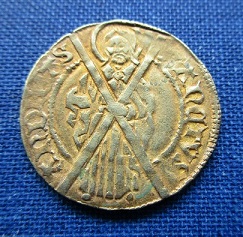 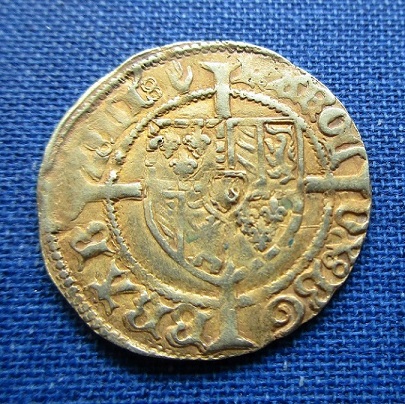 Edited by tdziemia
04/17/2018 9:42 pm
|
|
Rest in Peace
10197 Posts |
Huh, thought any mention of religion was a no-no?
|
|
Pillar of the Community
United States
8062 Posts |
I don't see that in the rules.  Religion is a part of the cultural and historical context in which coinage occurs. Part of my enjoyment of collecting has to do with relating the coins I collect to their context. I realize that's not true of all collectors, but I think there are a fair number who share that feeling to some extent. |
|
Moderator
 United States
196778 Posts |
Quote:
Huh, thought any mention of religion was a no-no?  In this context with numismatics it is okay. |
|
Pillar of the Community
United States
8062 Posts |
St. Thomas (also called Doubting Thomas) on a 20 Soldi coin of Parma. Thomas was another of the 12 apostles. According to John 20, when Thomas was told that Jesus had risen from the dead, he said he wouldn;t believe it unless he could touch him. According to Christian tradition, Thomas headed east to spread the word of god to Parthia and eventually India.  |
|
Bedrock of the Community
Canada
24885 Posts |
Vatican - 50 Lire - 1988 - Creation of Eve from Adam's rib John Paul II . 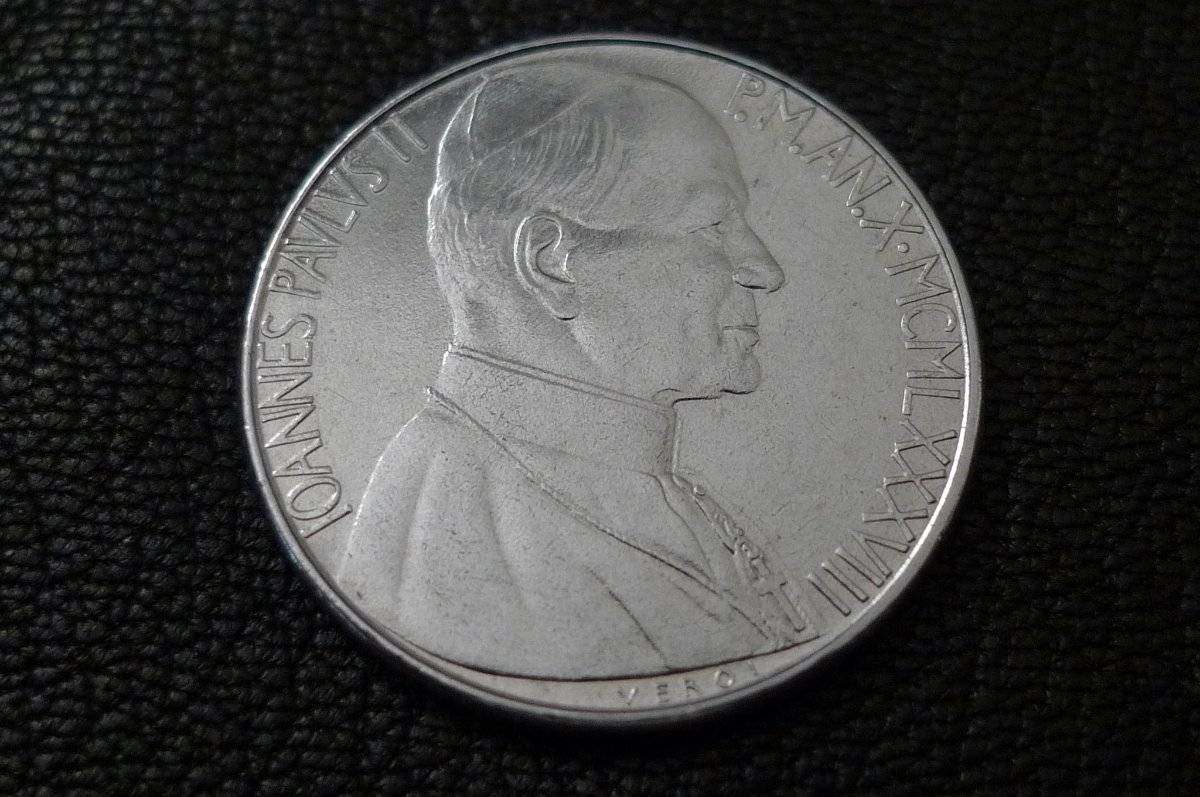 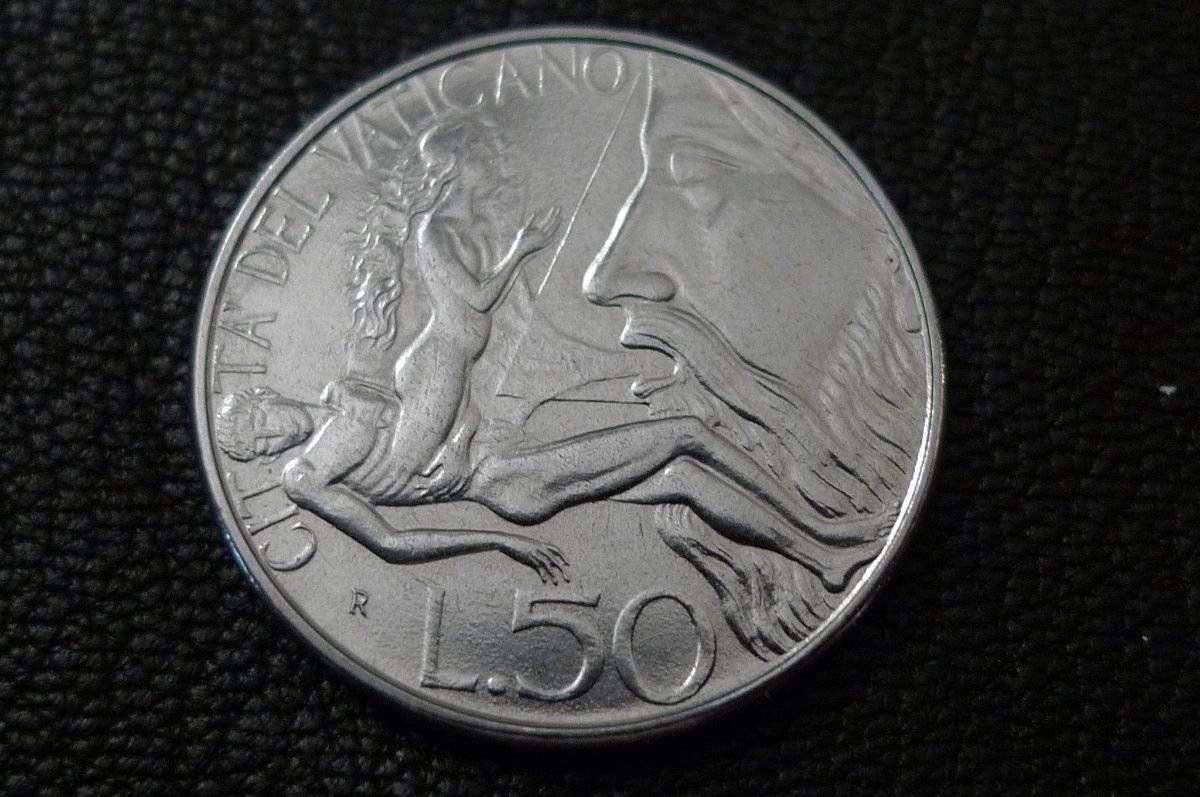 |
|
Pillar of the Community
United States
6514 Posts |
I don't think I have anything I could contribute. Thanks all for a really informative thread.  Check out my counterstamped Lincoln Cent collection: http://goccf.com/t/303507 |
|
Pillar of the Community
United States
8062 Posts |
That is a great coin, dorado! Not surprising that Vatican City (and Papal States before) have many coins with religious images, but most are Christian-themed. For Old Testament themes, on another thread, a link to a Roman coin with Noah's ark was posted: http://goccf.com/t/315143I'll post one of my only Vatican City coins, 5 Lire 1940, which shows St. Peter in a small fishing boat: 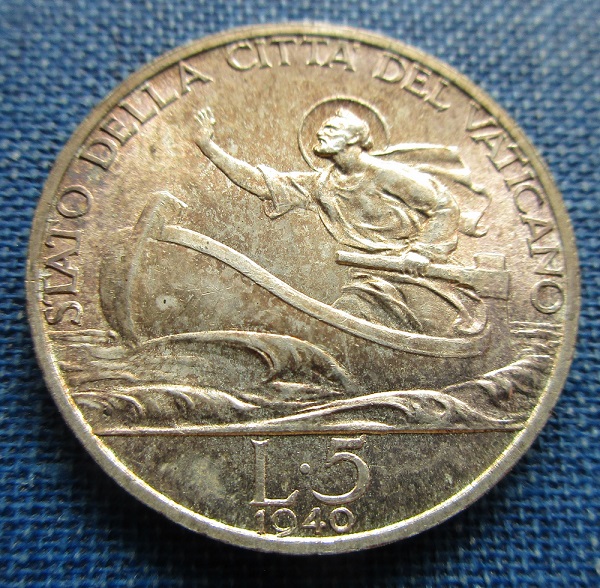 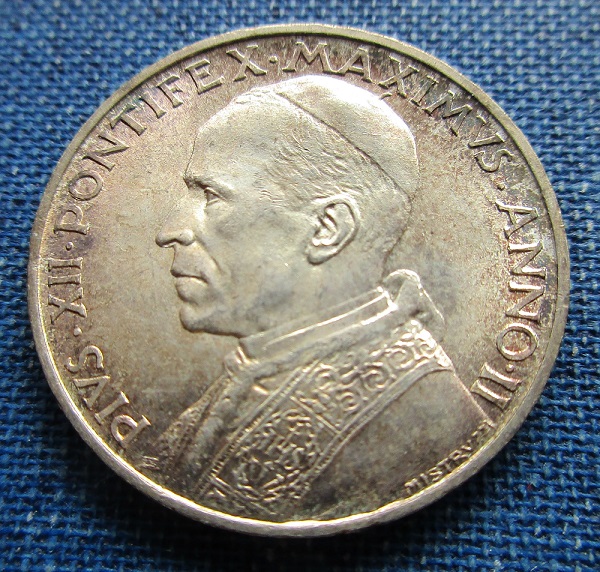 |
|
Pillar of the Community
United States
6130 Posts |
The Vatican has produced some lovely coins! I considered building a type set, but changed my mind... you guys are making me regret my decision!
|
|
Pillar of the Community
United States
6130 Posts |
Back to classical antiquity: Here is a silver denarius of emperor Caracalla (211-217) showing Asclepius, the God of Healing 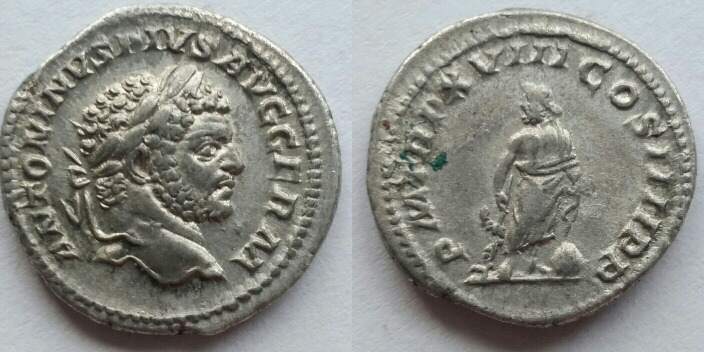 Asclepius was a son of Apollo, regarded in mythology as a demigod and hero until he was smitten (smoten?) by Zeus, who feared that humans would be immortal under his care. He was thereafter deified. His symbol is a serpent-entwined staff, still the symbol of medicine to this day. (Not to be confused however with the caduceus or double-entwined staff carried by Hermes!) Curiously, Asclepius is not a common sight on Roman coins, although his daughter Salus is one of the most common goddesses. Salus was the goddess of well-being and health (in the most vague use of the word) and her placement on coinage was either a testament to the health of Rome, or a promise to improve the condition. Her mythological job was to keep her father's snake fed and happy when it wasn't on magical stick duty. She is usually seen feeding it from a patera, or sacrificial libation dish:   |
|
Pillar of the Community
United States
8062 Posts |
Quote:
until he was smitten (smoten?) I always thought the past participle of smite was smut Great coins and great background. Collecting ancients would be a good excuse for me to start learning the mythology/religion. I'd better not get started. Edited by tdziemia
04/24/2018 4:20 pm
|
|
Pillar of the Community
United States
6130 Posts |
@tdziemia, come to the dark side!  Another one off the beaten path, from the Kushan Empire that controlled half of the Silk Road along what is today Afghanistan, Pakistan, Northern India, and a lot of Central Asia. Kanishka I (c.130-150) Bronze "Tetradrachm" Obv: Kanishka, full body, standing and sacrificing at an altar Rev: Athsho, God of Metals, holding diadem 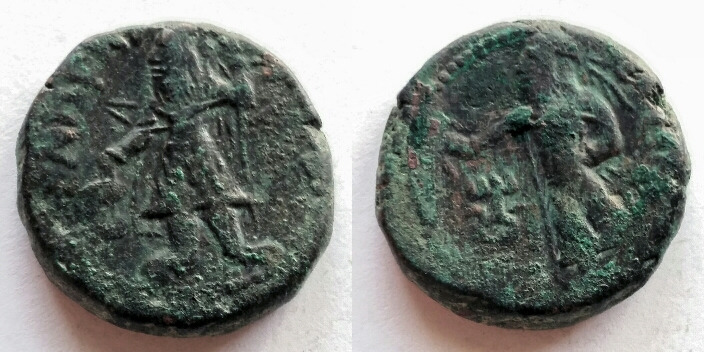 The Kushans were originally a confederation of tribes driven out of China by the destruction of the Han-Xiongnu wars (Timeframe of Disney's Mulan). They settled in northern India under the Greeks and Scythians until around the turn of the first century AD when they suddenly rose to become the dominant empire of the region. Initially imitating Greek coins showing Greek deities, they developed their own flavor of numismatic art, celebrating a pantheon of over 30 deities, including Greek, Hindu and pre-Zoroastrian Iranian gods, and even Buddha. Sadly, little remains of the details of their religion, except for coinage. Athsho was the "god of metals", believed to be a synthesis of Atar, a primitive Iranian fire deity, and the more familiar smith god Hephaestus/Vulcan. |
| |
Replies: 97 / Views: 13,355 |





 First Page
 Previous Page


 Posted 04/15/2018 7:23 pm


