| Author |
 Replies: 97 / Views: 13,314 Replies: 97 / Views: 13,314 |
|
|
|
Pillar of the Community
 United States
8062 Posts |
Quote:
Athsho was the "god of metals", believed to be a synthesis of Atar, a primitive Iranian fire deity, and the more familiar smith god Hephaestus/Vulcan SHAME on me for forgetting that Italy, always proud of its herit age, has featured their past gods on their modern coinage. 50 Lire coin 1959 featuring an image of Vulcan. 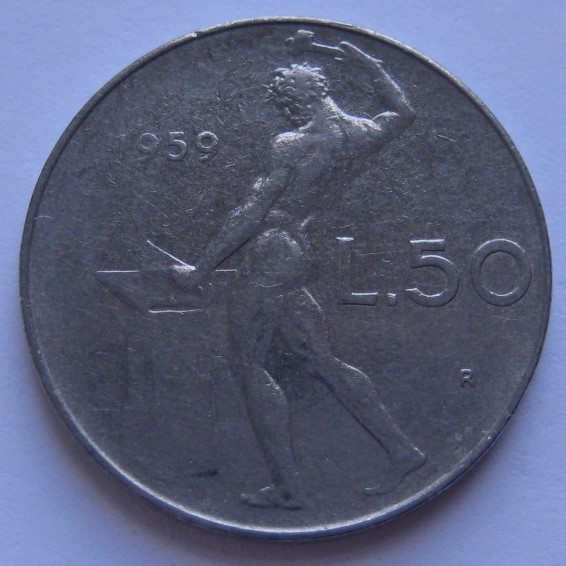 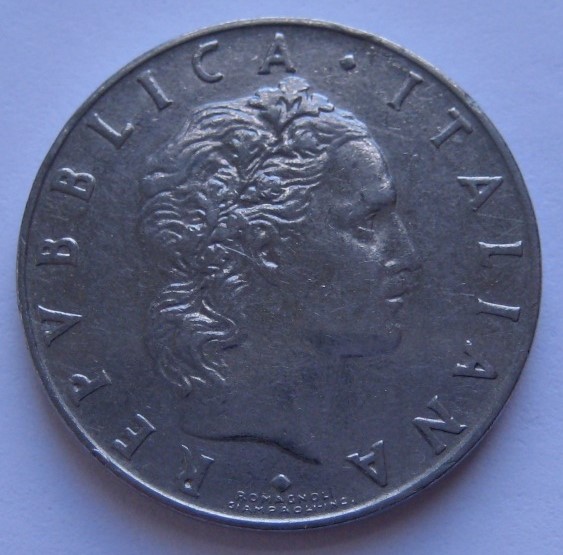 Edited by tdziemia
04/25/2018 8:26 pm
|
|
Pillar of the Community
United States
2645 Posts |
Here we have Ethiopia offering the Lion of Judah on a 1/2 birr.   |
|
Moderator
 United States
196572 Posts |
Quote:
SHAME on me for forgetting that Italy, always proud of its herit age, has featured their past gods on their modern coinage.  Better late then never.  Quote:
50 Lire coin 1959 featuring an image of Vulcan. Very nice!  |
|
Pillar of the Community
United States
6130 Posts |
I was thinking about this thread today, and started to wonder just how many distinct religions are represented on coins? I started compiling a mental list, grouped into two categories: Category 1 - Coins made as a reflection of genuine belief, usually a state religion Abrahamic: - Judaism: I believe some Revolt-era coinages (1st-2nd centuries) have overtly religious symbolism, and I know some modern coins have objects like the Menorah. - Christianity: Pretty well covered so far - Islam: Pretty well covered Non-Abrahamic: - Zoroastrianism - Covered, though I do have some more to share - Hinduism - I have some to share, lots of interesting themes here! - Roman/Greek paganism - Working on it; there's a huge base to cover - Egyptian - Absorbed into Roman beliefs, but some interesting coins produced until the time of Constantine. - Other non-Greek polytheistic beliefs: Semitic, Punic, Phoenician, Nabatean, Kushan etc - Far Eastern: I'll need some help here since there are a lot of grey areas, and I don't know the coinage of late Imperial/Republican China very well. At a minimim, the Japanese wealth-god Daikoku is portrayed on some mameita gin coins. Category 2: Minted as commemorative of heritage etc, but usually made under a Christian or Secular authority - Indigenous religions of European colonies: I know there are a lot of Polynesian gods out there, especially the Cook Island "Dong" Dollar - Mesoamerican religion/mythology on coins from Mexico - As mentioned by tdziemia above, lots of modern countries like to use Roman or Greek gods on coinage for a purely aesthetic or allegorical purpose. Maybe that list can get some cogs turning  |
|
Rest in Peace
10197 Posts |
|
|
Pillar of the Community
United States
8062 Posts |
Nice post!
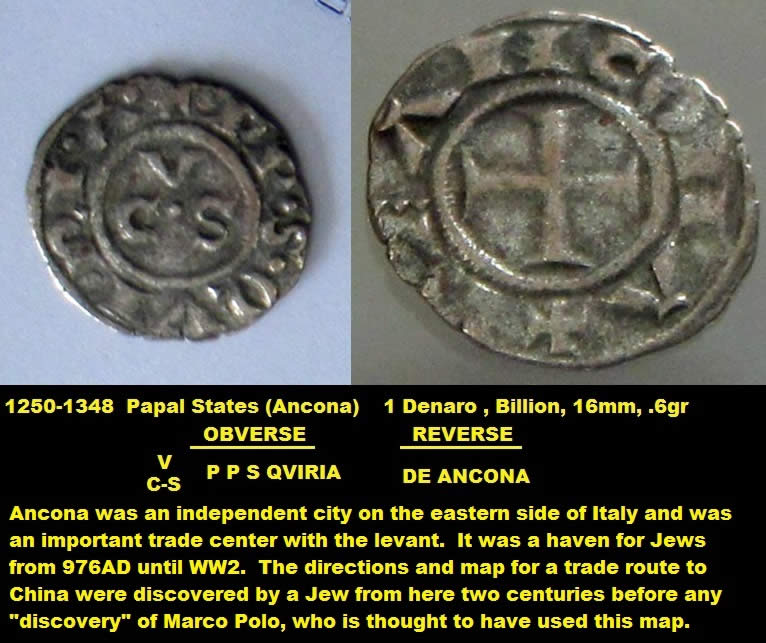
I know very little about the history of Jews in Italy, so I took a quick look at the wiki article, where Ancona is mentioned briefly.
|
|
Pillar of the Community
United States
6130 Posts |
Still need to image some of my Roman coins, but I had an image of this one handy: Rome, Julian II "The Apostate" 361-363 SECVRITAS REIPVB, two stars above bull Antioch mint 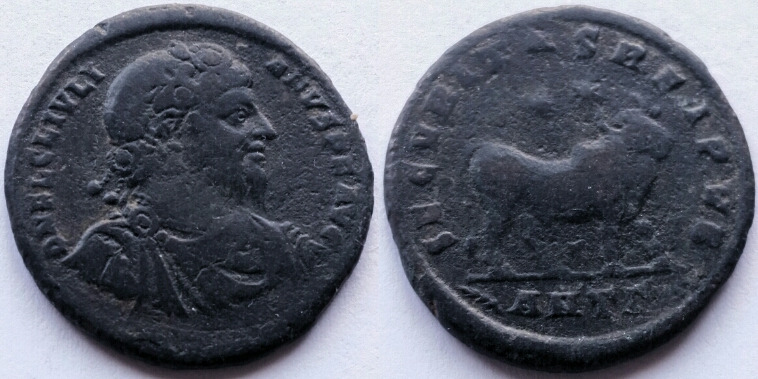 A bit of background: Constantine's father Constantius Chlorus was initiated into the Tetrarchy, destined to become emperor when senior emperors Diocletian and Maximian abdicated in 305 after their 20 year tenure. In order to secure the tetrarchy, he was compelled to divorce Constantine's mother Helena and marry Maximian's daughter Theodora. Constantine thus had numerous half-siblings, many of whom he placed at various prestigious posts in the government. When Constantine I died in 337, he was succeeded by his three young (teenage through mid 20s) sons, Constantine II, Constantius II, and Constans, but their older cousins were left in many positions of power. Thus, they secretly ordered the execution of the entire "superfluous" cousins from their grandfather's second marriage. Two young brothers were spared on account of their age; Gallus and Julian. The Constantine boys came to regret their actions, and Gallus and Julian were given a cushy upbringing in the imperial court. Unlike Gallus, Julian's tutor was a pagan. Over time, Julian came to distrust his Christian upbringing, and also to resent his cousins for their increasingly tyrannical rule. He was nominated as Caesar and heir to the throne in 355 when Gallus was executed for being an insolent twerp. Julian and Constantius II butted heads in 360, but Constantius fell ill and died before the civil war, nominating Julian as his successor. Upon becoming emperor, Julian shocked the whole Roman world by publicly denouncing his Christian faith; declaring that Sol was the "true" God, and that he would dismantle Christianity's privileged status while also "draining the swamp" and massively reducing the bureaucracy established by Constantine -- the ultimate goal being the reversion to the Principate style government of Marcus Aurelius. His vision was cut short when just two years later he took a spear to the liver while battling against the Persians. Julian was the last pagan emperor of Rome, and the only one to apostasize. The coin itself means "Security of the Republic" and is believed to represent an interpretation of a curious astrological event that happened in the early summer of 360 AD: http://www.faintich.net/planetsym.htm |
|
Pillar of the Community
United States
8062 Posts |
Following up on the earlier suggestion ... Quetzlcoatl, the Mesoamerican feathered serpent deity, on a Mexico 5 peso coin. 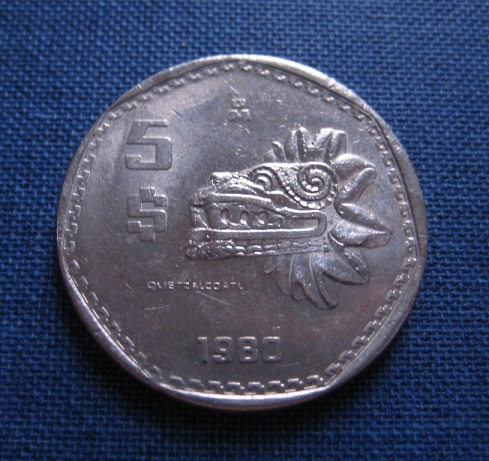 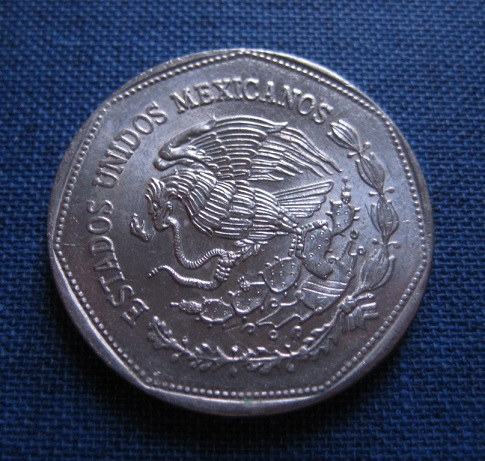 |
|
Pillar of the Community
Belgium
1185 Posts |
Copper Medal struck for the Assembly of the Clergy of France in 1735 " Religion and Peace" I found the description in an old French book "Mercure de France, dedie au Roy - Septembre 1735" - Guillaume Cavelier, Paris 1735, Avec Approbation & Privilège du Roy OBV: Religion impersonated & standing, to the left an altar on which burns the holy fire; to the right a "trophy of arms" - in the air a pigeon holding an olive branch REV: Angels holding an inscription that escaped the attention of the medal maker ? or was removed ? Perhaps it was: " Religion and Peace", a rather unusual combination of issues in many centuries of human history   |
|
New Member
Australia
45 Posts |
A bit late to the party, but this is my collection of Indian Hindu gods! 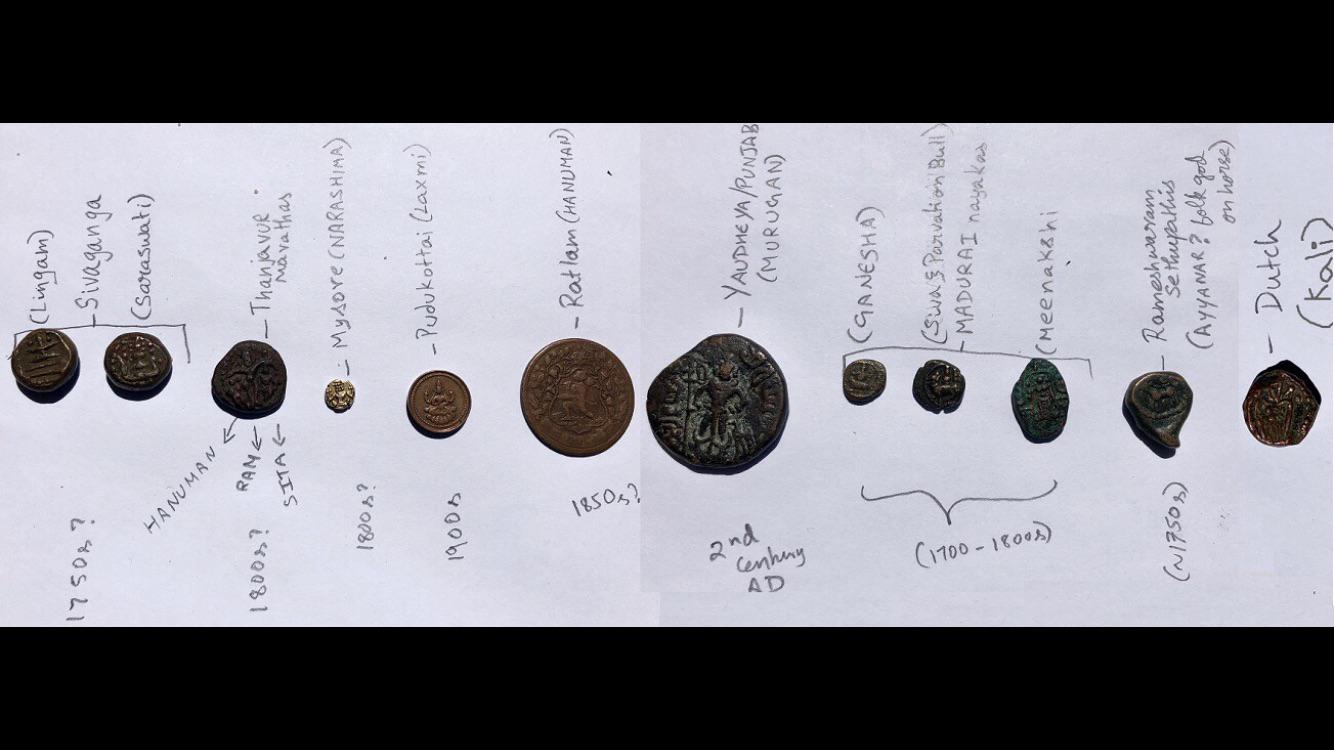 |
|
Moderator
United States
196572 Posts |
Quote:
A bit late to the party, but this is my collection of Indian Hindu gods! Very nice! |
|
Pillar of the Community
United States
6883 Posts |
1964 Vatican City 100 Lire 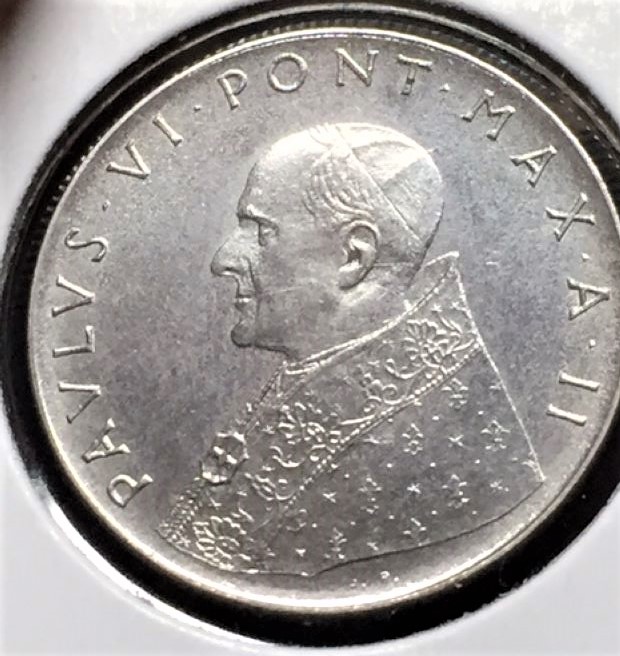 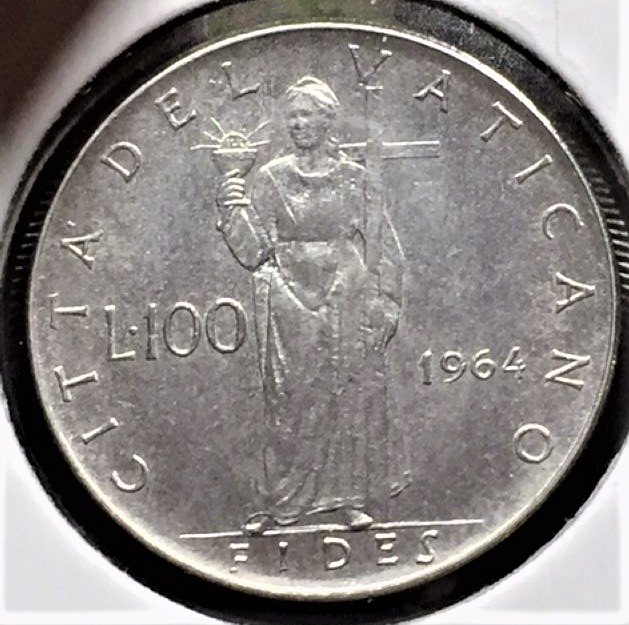 |
|
Pillar of the Community
United States
8062 Posts |
Interesting that the Vatican engraver (apparently) borrowed from an earlier tradition where fides was a pagan god.
|
|
Pillar of the Community
Belgium
1185 Posts |
maybe an attempt to rivive this thread a bit: the three pueces in my collection picturing Saint Stephan, Stephan (Ge), Saint Etienne (Fr), who is sometimes called protomartyr (the first martyr of Christianity) 1) Taler from Halberstadt, Germany dated 1544 2) Daalder from Nijmegen, the Netherkands, not dated, minted in 1562 3) Mereau for the poor from the parish of Saint Etienne in Lille, France, dated 1637; the four units probably mean the amount of bread the token could buy    Saint Stephan was stoned to death around AD 35, on coins and tokens he is typically represented with three stones (and a palm branch). |
|
Moderator
United States
196572 Posts |
Quote:
maybe an attempt to rivive this thread a bit... Well done! |
| |
Replies: 97 / Views: 13,314 |







 First Page
 Previous Page


 Posted 04/25/2018 9:42 pm