| Author |
 Replies: 13 / Views: 2,175 Replies: 13 / Views: 2,175 |
|
|
New Member
Norway
32 Posts |
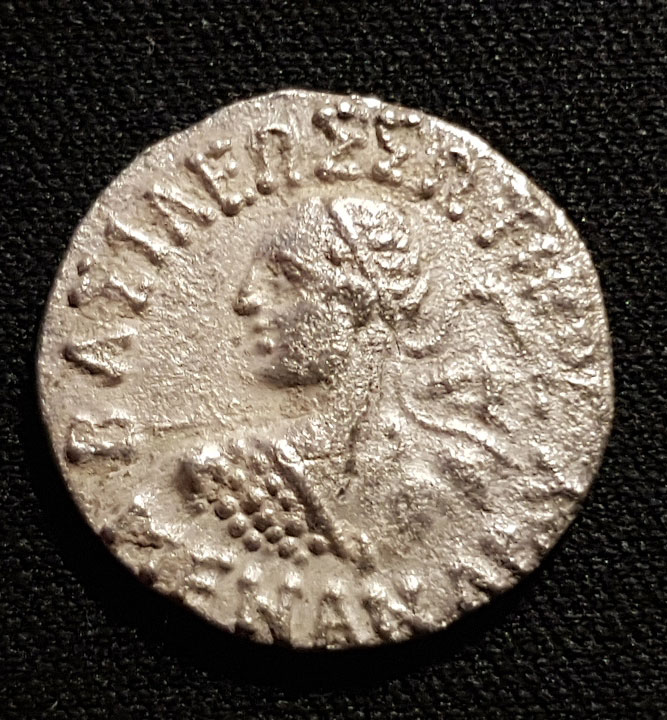
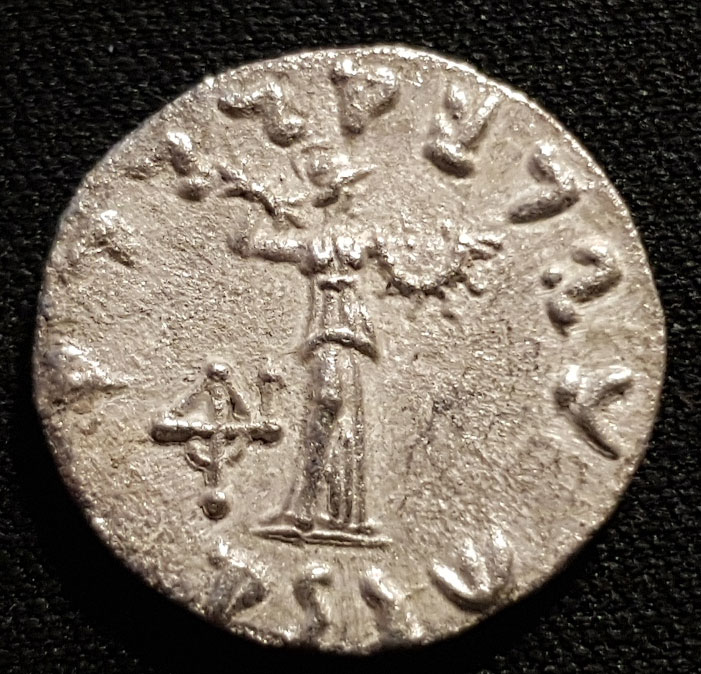
Hey! Can anyone please place this coin? Tried searching, but don't know nothing about it at all :) Thanks. 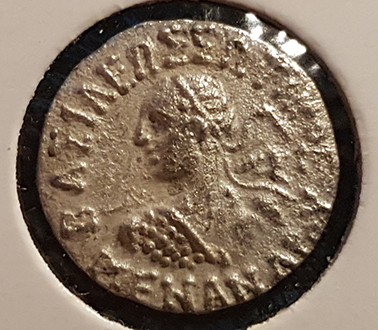 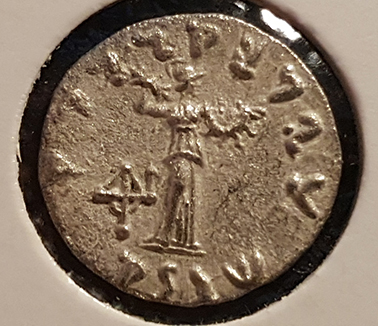 Edited by Exibit
04/13/2018 2:58 pm
|
|
|
|
Pillar of the Community
United States
1609 Posts |
Not even remotely an expert here, but it looks like a cast fake to me.
|
|
New Member
 Norway
32 Posts |
Not sure, hope not. The diameter is 17mm.
|
|
Pillar of the Community
United States
6130 Posts |
Indo-Greek kingdom, Menander I Soter silver drachm.
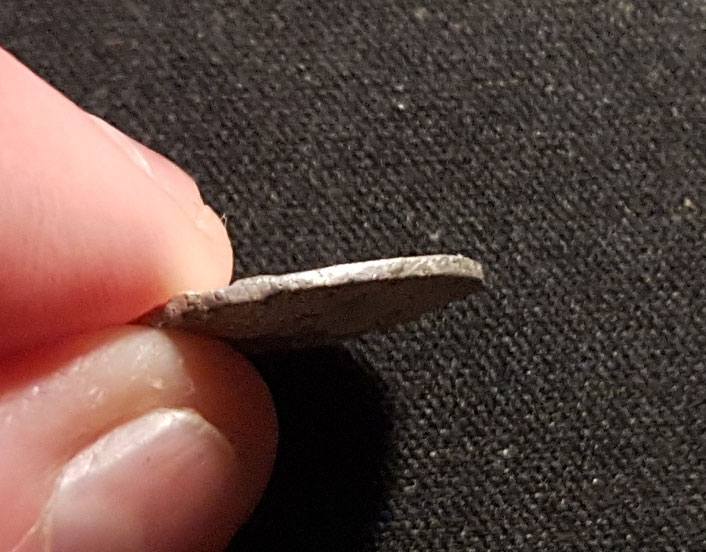
I'm up in the air. This is a common type, but also very much sought after and heavily forged. I'm leaning toward cast counterfeit, but stand to be corrected. Can you post an image of the edge?
|
|
Pillar of the Community
 Spain
2752 Posts |
 Maybe a variety of this coin...Reference vcoins... INDO-GREEK MENANDER AR DRACHM PUSHKALAVATI Obverse: Diademed bust of king facing left thrusting Javelin and Greek legend around "BAΣIΛEΩΣ ΣΩTHPOΣ MENANΔPOY". Reverse: Pallas standing right holding shield in left hand thrusting thunderbolt with raised right hand Kharoshthi legend "Maharajasa tratasara Menandrasa" and mint symbols of Taxila-Pushkalavati. Era: 160-145 BC. 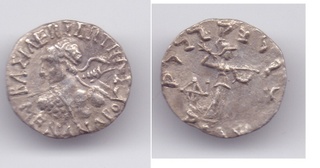 As to authentisity ? I'll leave that to the pro's.. Hope this helps Paul Edited by Palouche
04/13/2018 3:57 pm
|
|
New Member
Norway
32 Posts |
Thanx guys. I really don't know how you manage find out, you rock. It seems like my coin is fake, doesn't look like the pictures I find on the net. But I'm not sure though, will check it out with a coinshop.
|
|
Moderator
 United States
23731 Posts |
I would like to see a picture without being in the 2x2. I believe the coin is genuine but would need the better pictures to say for sure.
|
|
Rest in Peace
United States
17900 Posts |
The many dots raised above the fields are most likely tiny casting bubbles.
|
|
New Member
Norway
32 Posts |
|
|
Pillar of the Community
Spain
2752 Posts |
What's the weight?...Should be around 2.3 grams
|
|
Pillar of the Community
United States
4883 Posts |
I think this is a tough call. Do the surfaces and devices look as they do on account of the coin having been in the ground or underwater, or because it's a casting? Weight may not decide the issue if it was cast from silver. I think analysis via xray fluorescence (XRF) might be necessary to see if there's the telltale trace amount of gold that ought to be present, and no other modern metals that shouldn't be there.
I'd also kind of like to know the provenance of the piece - bought form a reputable dealer, or a blind internet or flea market purchase?
Colligo ergo sum
|
|
Pillar of the Community
United States
1554 Posts |
Rough surfaces are not unusual on these, the result of long immersion in water. Most silver coins of this era entering the market over the last 20 years have come from a single enormous hoard, hundreds of thousands of coins, found in a well in Afghanistan. http://www.thehindu.com/features/fr...e7662522.eceEdited by Kushanshah
04/13/2018 6:32 pm
|
|
Moderator
United States
23731 Posts |
Some environmental damage to the surface causing the rough appearance. A popular coin type but not rare. They have been faked, but I still say this one is genuine.
|
|
Pillar of the Community
United States
4883 Posts |
Kushanshah - Now that's the sort of background that contributes to an informed evaluation of the specimen presented! Great article for which you provided a link, too.
I'm now inclined to take the "authentic" side of the argument. If a whole bunch went to Switzerland twenty years ago, it's not much of a stretch for an example to turn up in Norway. I still wonder why the seller evidently had it unattributed, though.
Colligo ergo sum
|
| |
Replies: 13 / Views: 2,175 |
|







 Posted 04/13/2018 3:05 pm