| Author |
 Replies: 7 / Views: 1,972 Replies: 7 / Views: 1,972 |
|
|
Pillar of the Community
United States
1156 Posts |
I generally collect 8 reales and other silver crowns from the time before steam driven manufacturing processes became common so I had little interest in the Bank of England emergency issues of 1804 since the examples that I've seen show no details of the host coin. However, when this raw example with some underlying details showed up in a Heritage auction, I couldn't resist examining it in hand. From what I can see, it's a Carlous IIII from 180?. Mintmark not visible. It appears to be thinner in one section leading to the poor overstrike. I surmise it was struck in an open collar press because the Spanish colonial edge details are still present. The photos show two opposing overlaps although you can see how off-center the edge was applied in some areas. There is a seam through the rim on the reverse but I'm not sure if it's an artifact of the overstrike. I also note a divot under the A in GRATIA that shows a different color. The most obvious clue that the host is a counterfeit is that the coin weighs 25.65 gm.  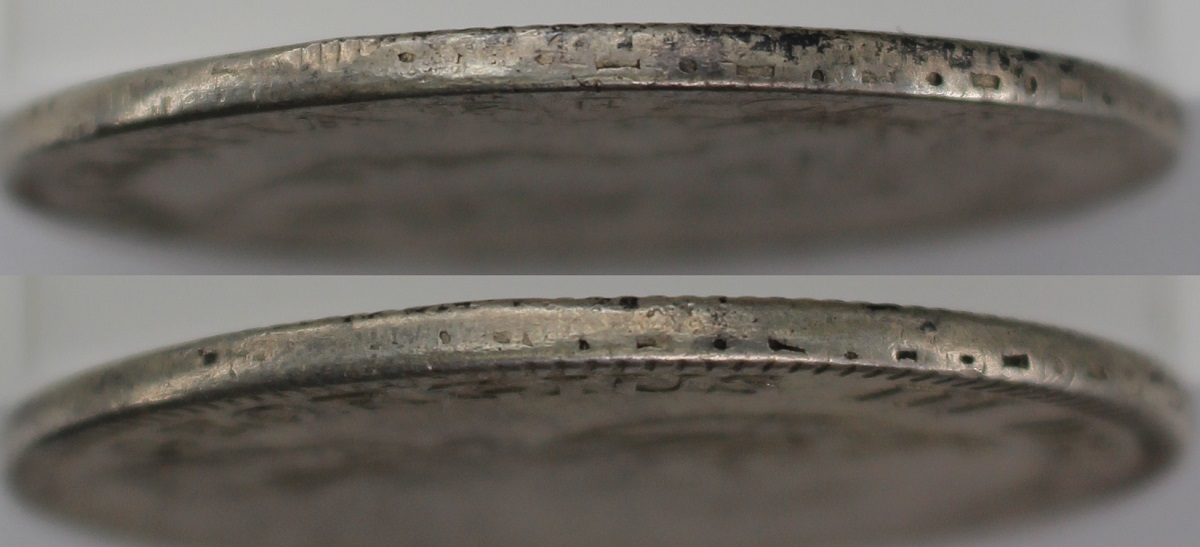 |
|
|
|
Pillar of the Community
United States
4883 Posts |
Quote:
The most obvious clue that the host is a counterfeit is that the coin weighs 25.65 gm That weight isn't so far off that I'd jump to that conclusion. You also state that it "appears to be thinner in one section" which suggests that the weight deficit might be explainable by it's having been shaved prior to being overstruck, either by the mint for the benefit of the crown or nefariously by somebody for their own profit. Measuring its specific gravity would go a long way toward determining if the host coin was of the proper fineness, and therefore genuine even if underweight. An extremely cool piece, regardless. Colligo ergo sum
Edited by Lucky Cuss
04/16/2018 12:12 am
|
|
Rest in Peace
United States
17900 Posts |
I'm not seeing anything on the strikes that would lead me to question the authenticity of this coin. I like it.
|
|
Pillar of the Community
 United States
1156 Posts |
Here's some more info on the curious host coin. Specific gravity: 9.5 The section near the rim where the host coin's legend is most visible is 0.3 mm thinner than average. Since this is where the host coin is most visible I think it's the way the blank was made and the reason for the weak overstrike in that area. I believe the divot under GRATIA is showing a different alloy. 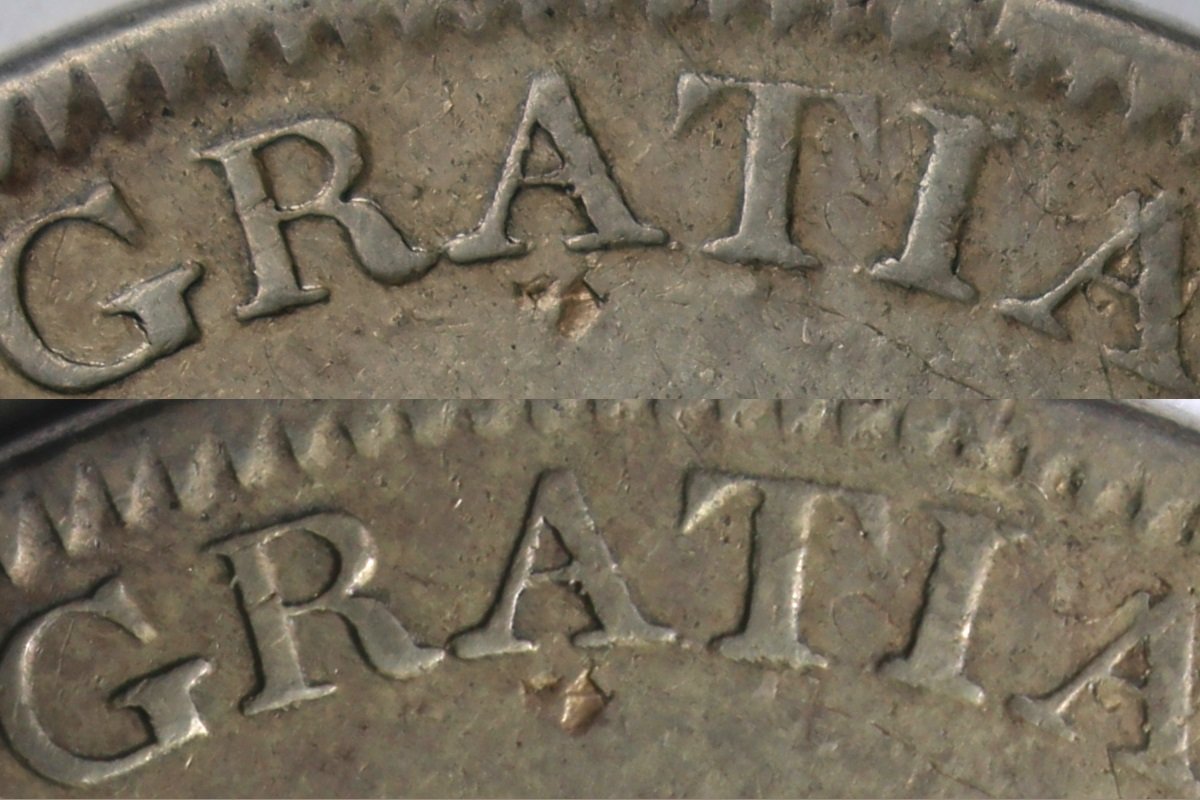 Although the edge shows the alternating rectangle and circle design, it drifts wildly from top to bottom. 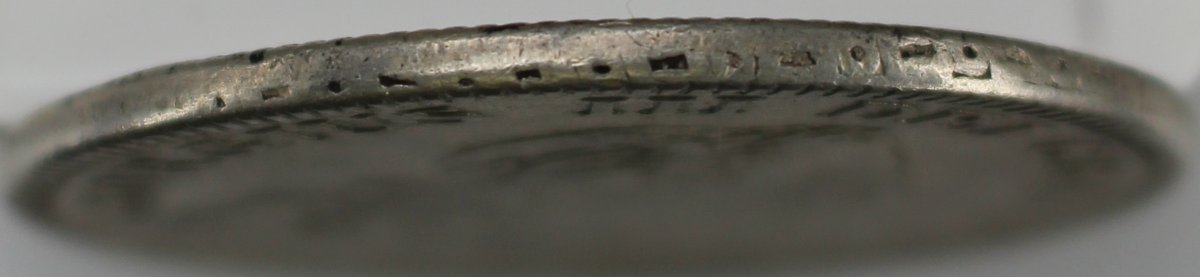 This section of the reverse shows a groove along the edge which I'm not sure how to explain. 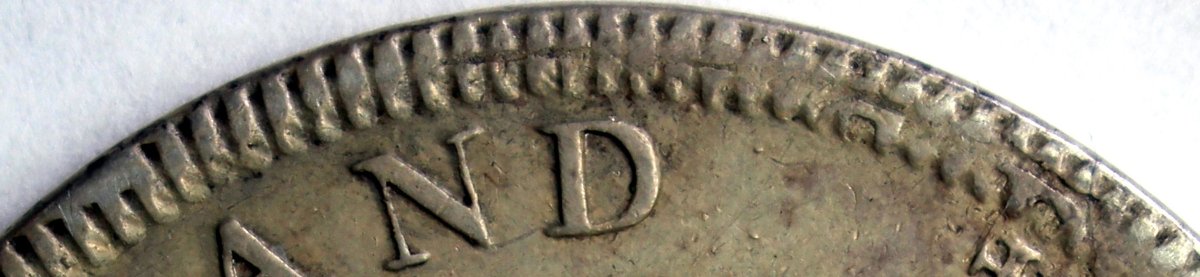 |
|
Pillar of the Community
United States
5362 Posts |
The density at 9.5 is a clear indication of a counterfeit host. Provided the test is accurate you have the answer. The dies seem to be genuine B of E types at least to my eye. The use of a Circulating Counterfeit as a host coin for one of the Bank tokens is not unheard of. I take it that Heritage does not indicate the host is not genuine.
I really like the coin. I would expect the coin is scarcer than a genuine issue.
|
|
Pillar of the Community
United States
1156 Posts |
Thanks, swamperbob! I guess there's not enough evidence to call it a "Birmingham" counterfeit, although a SG of 9.5 points to a high copper content. Maybe that divot is big enough to target with a hand-held XRF to see what that alloy is.
|
|
Pillar of the Community
United States
4963 Posts |
Thanks for posting this. I haven't read much about bank dollars before today. Assuming you're correct, I find it fascinating that a genuine coin could be struck over a counterfeit. I suppose it's not rare an occurrence, though.
|
|
Pillar of the Community
United States
1156 Posts |
@Sap bought an interesting 1804 Bank Dollar that had a similar thin section. I wonder if he still has it. |
| |
Replies: 7 / Views: 1,972 |
|







 Posted 04/16/2018 08:50 am





