| Author |
 Replies: 5,294 / Views: 291,006 Replies: 5,294 / Views: 291,006 |
|
|
|
Pillar of the Community
 Sweden
2124 Posts |
Quote:
1605 Charles IX of Sweden
4 Mark A lovely coin this is, remarkably well preserved.  Quote:
The Jahweh symbol on the reverse also appears regularly on jetons from the United Provinces Some historical background on Charles IX and how the Jahve name symbol ended up on Swedish coins: Charles was deeply religious and a Christian puritan and Lutheran, the official Swedish religion since 1536. With the older brother John III and John's son Sigismund III being successive kings and supporters of the Catholic reformation, there were strong forces to bring Sweden back to the Catholic church. Sigismund was also king of Poland and he appointed Charles as regent of Sweden in his place. He also accepted that Sweden remained Lutheran and that practicing Catholicism became forbidden. Despite this, suspicion remained with Charles, parts of the nobility and Protestant clergy that Sigismund's goal was to eventually make Sweden Catholic again, which eventually led to open conflict and civil war, ending with victory for Charles. Sigismund was deposed 1599 and Charles formally became king 1604. And the Jahve name in the sun then? That was taken by Charles as his personal symbol, as a sign of his devotion to God and of his role as Protector of the Swedish Church. It appears in various places connected to Charles, like in churches built around his time. So that it appeared also on his coins was quite natural. The inscription is Charles's motto: Jehovah Solatium Meum - God is my comfort. So, speculating a bit, perhaps Sweden had became Catholic and united with Poland had it not been for Charles... Despite his important role in Swedish history, he is not remembered much today. If he is remembered for anything, it is for his unique hair style - the portrait shown previously in this thread is the portrait of Charles IX, found in school books etc. And, if one like me has grown up in Karlstad ("Charlestown"), one of the cities he founded, that can spur some extra interest in his person.  |
|
Pillar of the Community
United States
9395 Posts |
1605 -- Kingdom of France, 1/4 ecu:   |
|
Pillar of the Community
Belgium
1185 Posts |
Quote:
And the Jahve name in the sun then? That was taken by Charles as his personal symbol, as a sign of his devotion to God and of his role as Protector of the Swedish Church. very interesting, erafjel ! the symbol on the 1605 jetons from Dordrecht and the 4 Mark from Charles IX of Sweden are already quite similar; but see the comparison with the center of a 1602 jeton below, it is quite striking: 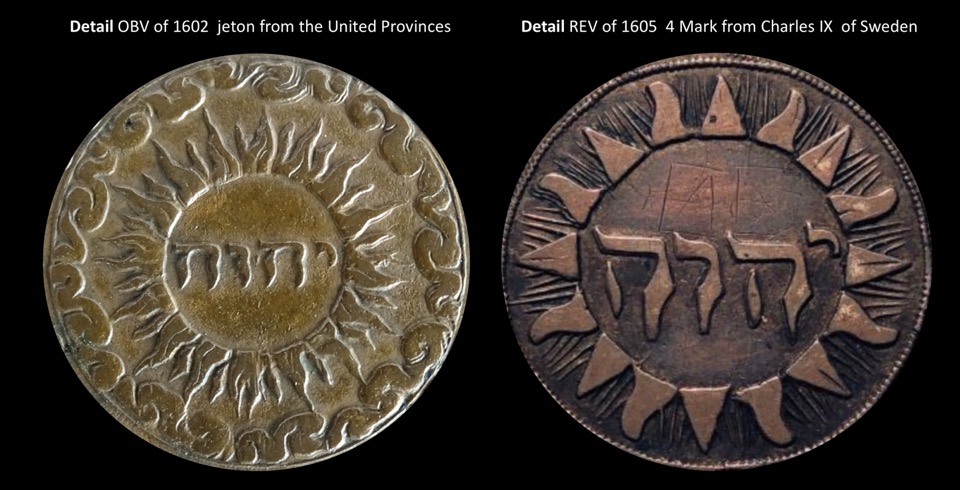 Maybe the common use during the same decade by Holland and Sweden of religious symbols on coins/tokens is not that surprising. Both countries were involved in a struggle between the catholic church and lutheran/calvinistic reformation. Both countries were connected not only by religion but also by intensive trade between the North Sea and the Baltic. Do we know earlier examples? Perhaps something to discuss further in another thread. http://goccf.com/t/336420 |
|
Valued Member
Norway
375 Posts |
Thaler, Saxony, 1604 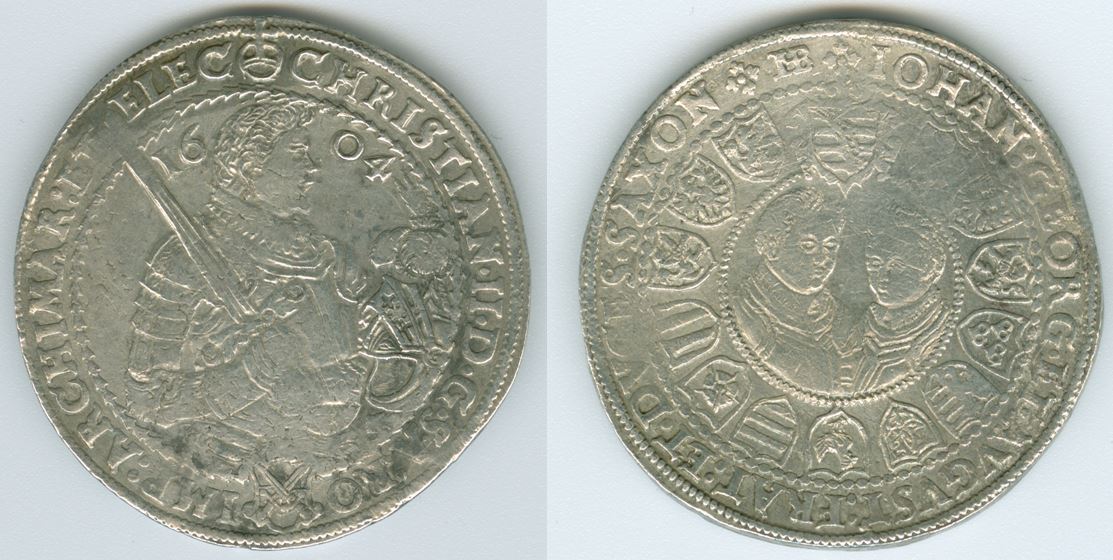 |
|
Pillar of the Community
Belgium
1185 Posts |
1604 jeton from Dordrecht, Dutch Republic obverse Capture of Sluis by the United Provinces reverse Capture of Oostende by Spanish Netherlands 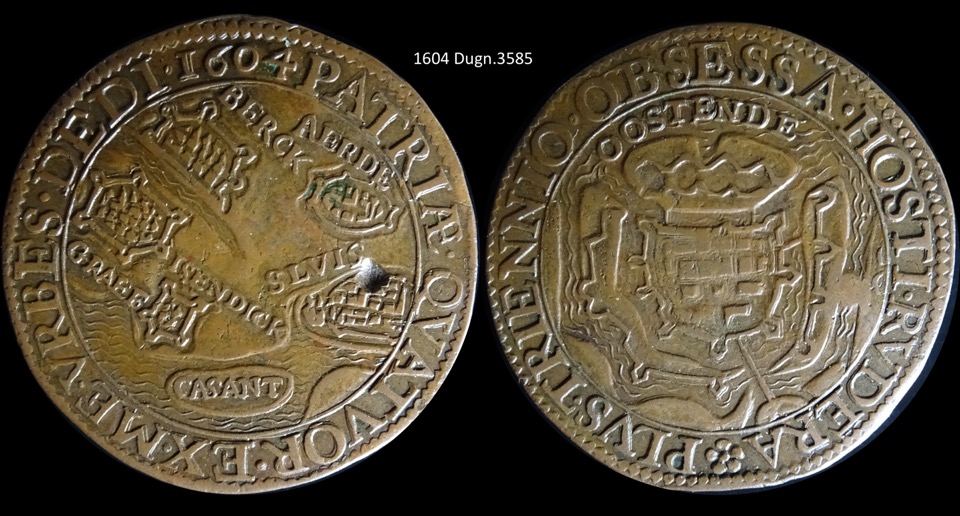 The siege of Oostende (5 July 1601 - 20 September 1604) was one of the longest and bloodiest sieges in world history, with more than 100,000 soldiers were killed, missing or wounded. See: https://en.wikipedia.org/wiki/Siege_of_OstendSluis (in current Zeeland) was in the middle ages an important port for the city of Bruges, and after 1500 important as naval basis. the capture of Sluis and Oostende were the last in a long series of military actions that started in 1579 with the "ten years of Farnese, duke of Parma" creating enormous success for the Spanish Netherlands, than that were followed by the extremely successful campaigns of prince Maurice of Nassau from the United Provinces. After 1604 the borders between the Spanish Netherlands and the Dutch republic were made, so it was time to consider a truce. |
|
Pillar of the Community
Belgium
2895 Posts |
sorry, 1 day late...  Counter token/jeton "geneigdheid tot vrede", 1605 obv. crowned arms of the Spanish Habsburgs in the chain of the order of the golden fleece. *CALCuli.RATIionum. (fleece) .FINANCIARVM - counter of the chamber of accounts of finance, hand (mintmark of Antwerp). rev: Victoria (attribute: palm branch) standing right, offering a key (the key to close the temple of Janus, which symbolises peace) to Pax (attribute: olive branch), walking left. Centre background: a burning fire altar. In the exergue 1605. .PAX.AVT VICTORI A CRESCAT" - May (either) peace or Victory increase. In 1605, both the Habsburgs and the Republic were war-weary, but neither trusted the other enough for serious peace negotiations. The counter refers to a land campaign under Spinola, who had already taken Lochem, Groenlo and Rijnberk and was marching towards Oldenzaal, which he would take in 1605. He was stopped only in 1606 at the battle of Berkumerbrug. Meanwhile, the fleet of the Republic dealt a punishing blow to the Spanish fleet in the battle of Gibraltar. These events indeed convinced both parties that neither could win. Negotiations ended up in 1609 in a truce only, which held for 12 years. Peace had to wait until 1648. Dugniolle 3598; Van Loon dl. II p. 21; v Orden 1086; Swiss Bank Corporation's catalogue 31, pg.66, no: 168 c M. Tas (2009) pg 192, no 382. Counter of the Southern Netherlands, struck in Antwerp, wish for peace. Diameter should have been 27-28 mm... 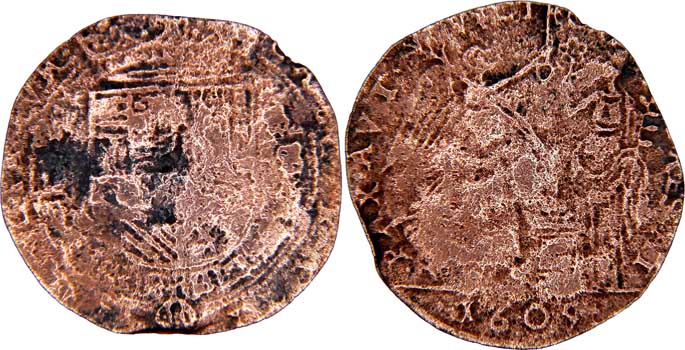 Corrections welcome |
|
Pillar of the Community
United States
8056 Posts |
I think @t360 said this thread is for history buffs.
I am very grateful to our colleagues in Belgium, and especially 1c5d's great collection of tokens, for the historical narrative during this period.
In the U.S. educational system, the history that is taught about the Reformation, counter-Reformation, and this period of European history is strongly Anglo-centered (Elizabethan England), which I suppose is natural, as this was the main thread of our colonial origins (though by no means the only thread, and also not the earliest).
I suspect it also comes as a surprise to many (most?) of us to learn that our Revolution was not the earliest struggle in the western world for self-determination.
|
|
Pillar of the Community
 United States
2703 Posts |
1604 King Charles IX of Sweden4 Mark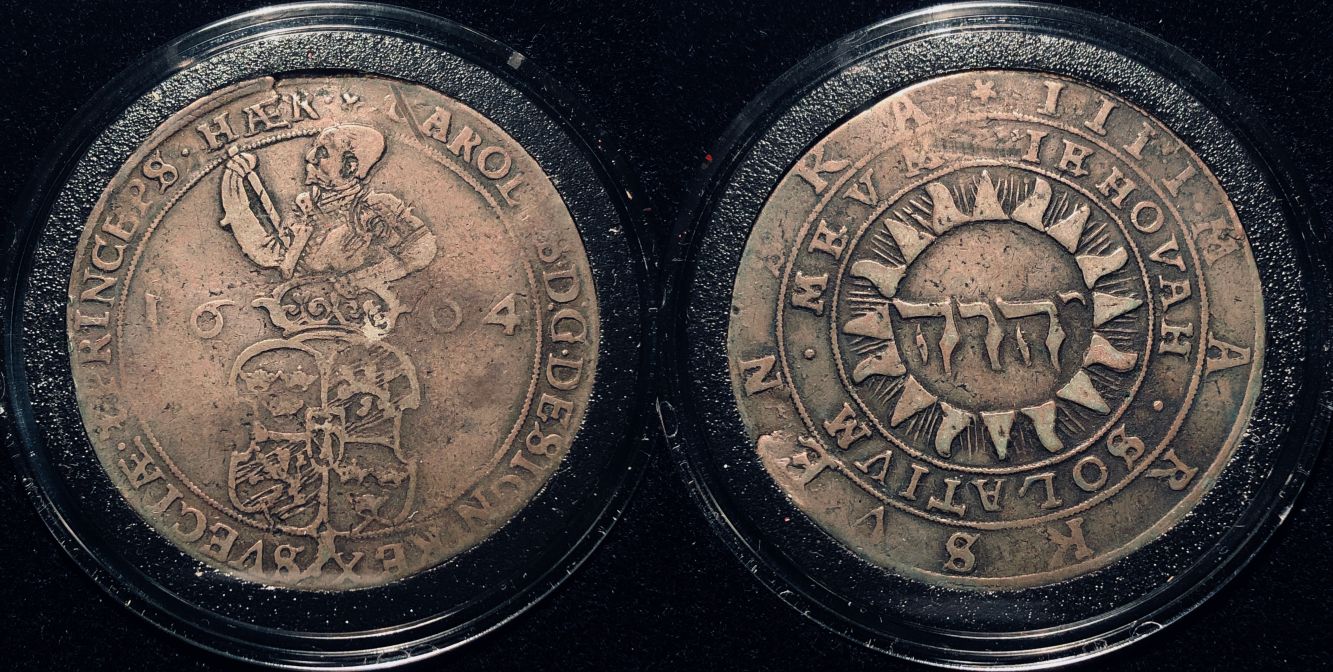
|
|
Pillar of the Community
Russian Federation
5186 Posts |
I should have posted this yesterday, but I honestly forgot, and lost count a bit. Admittedly it's an undated coin anyway... 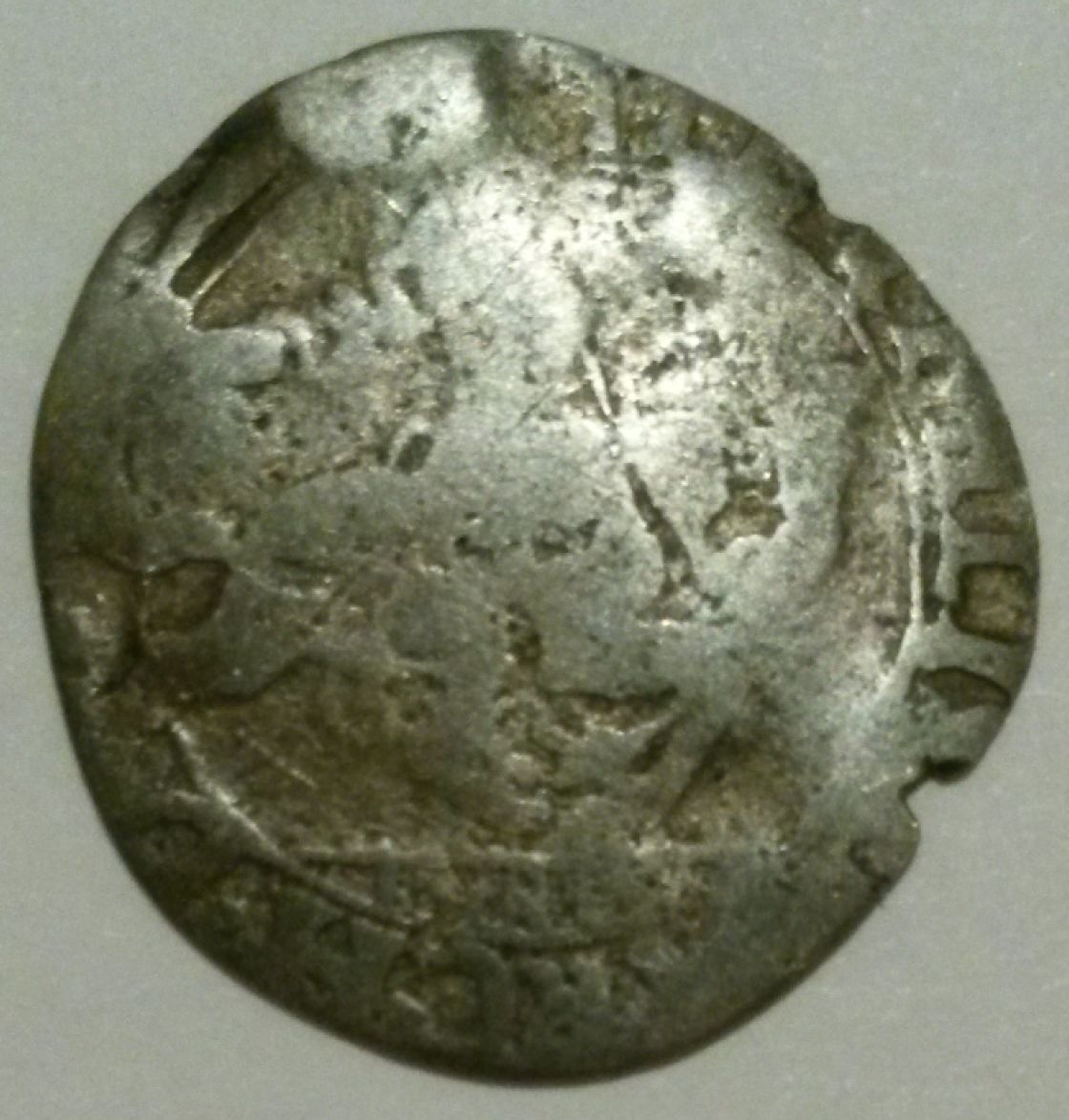  Spanish Netherlands, Roermond (Ruremonde), Albert and Isabella ND peerdeke of 1 1/2 stuiver (1605-1612); 23 mm, ~2 g Vanhoudt 628 (whatever that means); Numista 105812As usual, I apologize for the (lack of) photo quality. |
|
Pillar of the Community
Belgium
1185 Posts |
@t360, another great 4 mark piece from Sweden, very impressive ! are any older Swedish coins known than those of 1604 with the tetragrammaton ? I checked Dugniolle online; the first Dutch jeton showing the tetragrammaton is from 1574 (Dugn.2630): the message of this jeton is freedom of religion (one of the key issues that started the Dutch Revolt). see: http://www.dugniolle.com/dugniolle2601-2700.html |
|
Pillar of the Community
United States
2703 Posts |
Quote:
are any older Swedish coins known than those of 1604 with the tetragrammaton ? To my knowledge, the earliest Swedish coins that feature the tetragrammaton are the fyrks, 1/2 ore and 1 ore coins struck by Karl IX (Charles IX) as Regent in the period from 1598-1604. Edited by t360
08/12/2019 4:41 pm
|
|
Pillar of the Community
United States
9395 Posts |
1604 -- Kingdom of Spain, 4 maravedis: 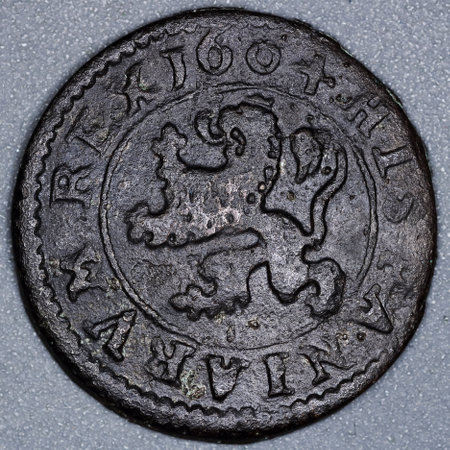 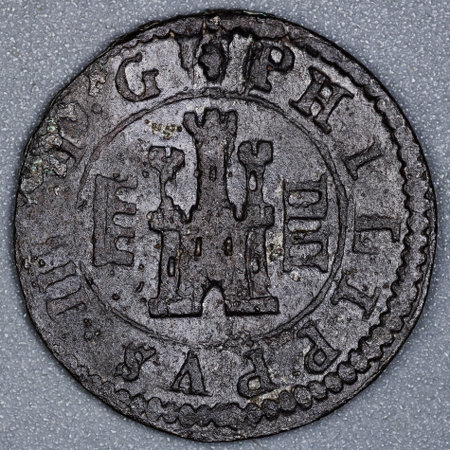 |
|
Pillar of the Community
Belgium
1185 Posts |
Quote:
the earliest Swedish coins that feature the tetragrammaton are the fyrks, 1/2 ore and 1 ore coins struck by Karl IX (Charles IX) as Regent in the period from 1598-1604. It seems plausible then that Dutch merchants brought some copper (or silver) jetons from the period 1574-1597 to Sweden. (there are many with a tetragrammaton as we will see during the next weeks). It is also likely that the Dutch struggle for independence from Spain (based on the ideal of freedom of religion) was well known in the Baltic. So Karl IX adopted the same symbol in order to support his effort to guarantee freedom to practice Lutheran faith in Sweden. |
|
Moderator
United States
34563 Posts |
Here is a 3 Kreutzer from the German Free City of Pfalz-Zweibrucken dated AD 1604: 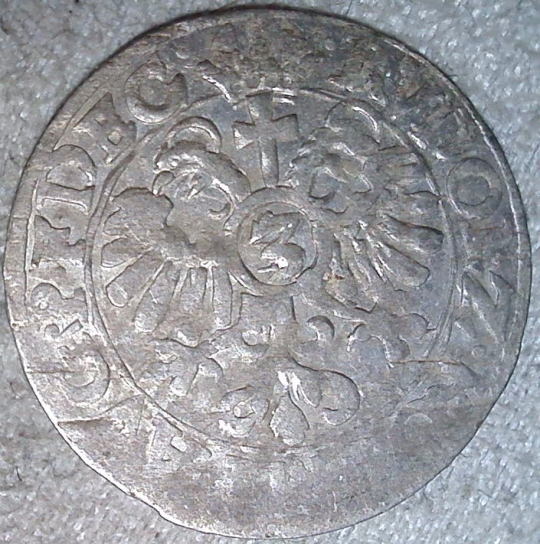 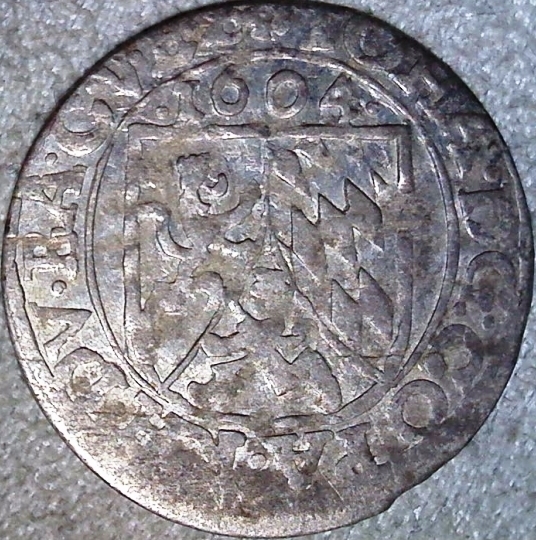 "If you climb a good tree, you get a push."
-----Ghanaian proverb
"The danger we all now face is distinguishing between what is authentic and what is performed."
-----King Adz
|
|
Pillar of the Community
Belgium
1185 Posts |
1603, third year of the siege of Oostende jeton made in Antwerpen, the Spanish Netherlands (Dugniolle 3558) conveying the message that the Dutch lobster will be crushed by the military weight of the Spanish Netherlands; a piece of political propaganda 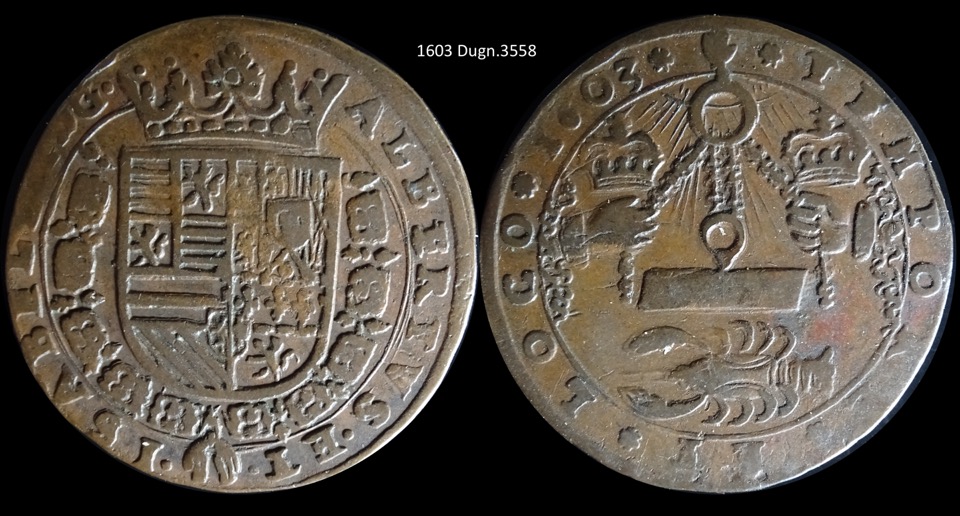 below a oil painting of the siege of Oostende by Peter Snayers; the Archdukes had constructed a huge wooden tower in order to bombard the city with artillery 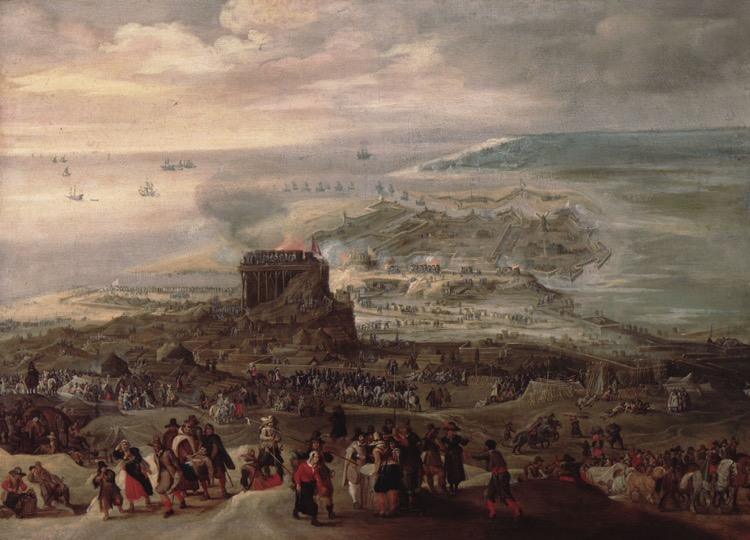 |
| |
Replies: 5,294 / Views: 291,006 |







 First Page
 Previous Page


 Posted 08/11/2019 4:13 pm





