| Author |
 Replies: 5,294 / Views: 290,847 Replies: 5,294 / Views: 290,847 |
|
|
|
Valued Member
Norway
375 Posts |
Trojak, 3 groschen, Poland, 1591 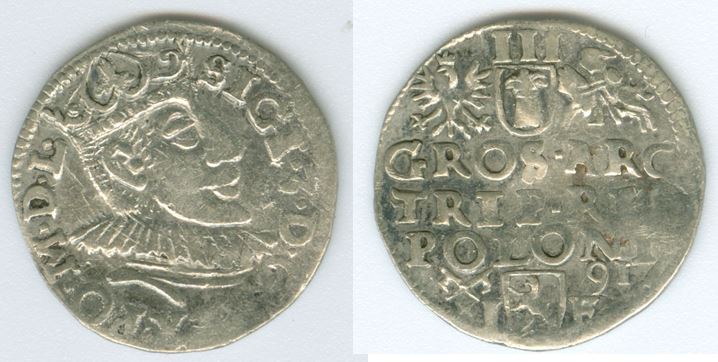 |
|
Pillar of the Community
Belgium
2895 Posts |
1 thaler no date (1591-1611) Christian II, Johann Georg I and August (1591-1611) mint: Chemnitz FRAT: ET.DU CES.SAXON. FRATRES ET DUCES SAXONIAE brothers and dukes of Saxen CHRISTIAN.IOHAN: GEORG.ET.AUGUST partnership of: Christiaan II (1583-1611) Johannes Gerorg I (1585-1656) Gustaaf II Adolf (1594-1632) ? KM # 15 forgery/replica/copy !!  |
|
Moderator
 United States
34562 Posts |
Here is a 4 Cavalli from the Italian City States of Naples and Sicily dated AD 1591:   "If you climb a good tree, you get a push."
-----Ghanaian proverb
"The danger we all now face is distinguishing between what is authentic and what is performed."
-----King Adz
|
|
Pillar of the Community
 United States
8056 Posts |
Quote:
Here is a 4 Cavalli Four horses? I wonder where that originated? And nice to see another oldie from the Italian peninsula. @giljan's trojak is Poznan mint Iger P.91.1.b, mine is Riga: 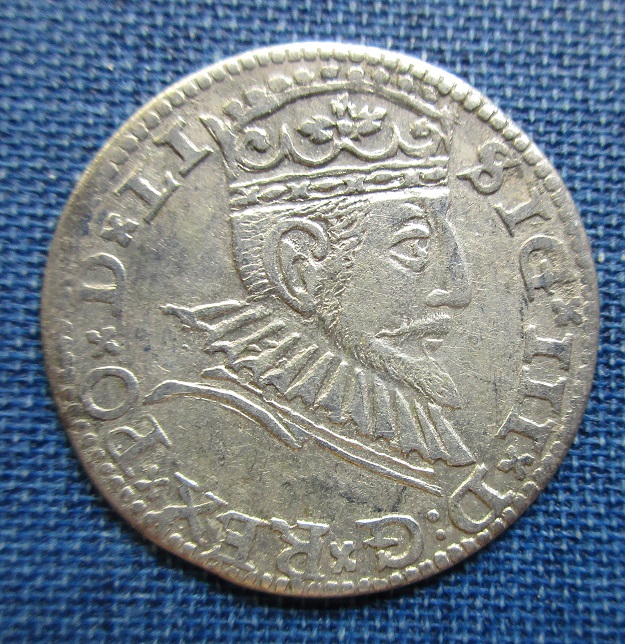 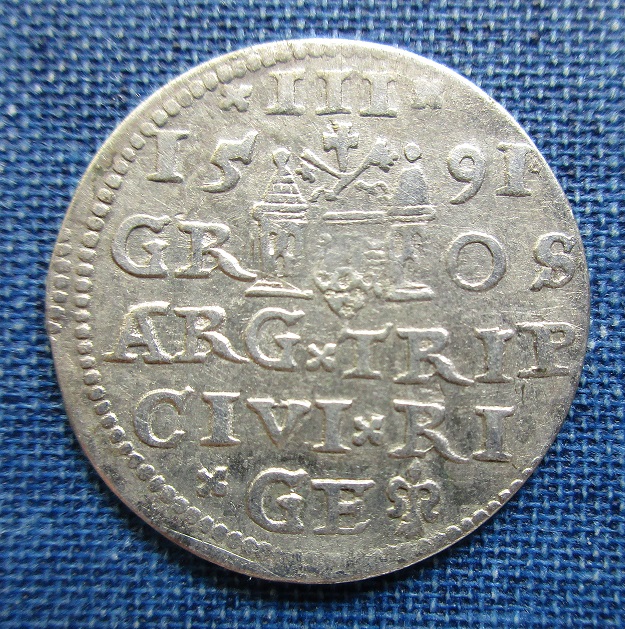 Edited by tdziemia
08/25/2019 07:14 am
|
|
Pillar of the Community
Belgium
1185 Posts |
Quote:
Schilling 1592 Queen Elizabeth I of England great shilling with a nice portrait ! the year has arrived to connect via coins three leaders that influenced in many ways history of the 1580ies and thereby the future of Western Europe and beyond Philippe II of Spain
Queen Elizabeth I of England
William of Orangebelow is a late "Prinsendaalder" minted in 1591 in Utrecht. Obverse: William of Orange Reverse: Crested helmet, which is why the taler is also called 'Gehelmde rijksdaalder"   <i>William of Orange </i>(also known as William the Silent) was in charge of the second and third Dutch revolt against Spain, which -respectively- started in 1575 and 1579. When he was assassinated in Delft by an aide of Phillip II, the young republic was in great danger; this has contributed to the idea to ask for help from Elizabeth I of England. Help was given in 1586 by sending the Earl of Leicester. This provoked two years later with the Spanish Armada to invade England, which failed. This short sequence of events probably explained why the Dutch-English (later with France triple) alliance succeeded. below a portrait of Willam Prince of Orange by Adriaen Thomaszoon Key (collection of the Rijksmuseum Amsterdam)  William of Orange (the "father of the Netherlands") became immediately popular on coins then and now. Indeed "Prinsendaalders" are not cheap on auctions compared to other daalders with the same relative rarity. This particular piece is very dear to me and connected to a little anecdote. After loosing interest for coins between age 19 and 40, I saw it in the window display of a small coin shop in Stockholm. I was so curious about a Dutch daalder in Sweden that is sparked interested and started collecting coins again. Edited by 1c5d7n5m
08/25/2019 12:28 pm
|
|
Pillar of the Community
United States
8056 Posts |
Quote:
After loosing interest for coins between age 19 and 40, Very interesting how these things work. Also for me, I lost interest in coins between university and age 42. Then, while living in Belgium, a work colleague mentioned a coin auction in Brussels. I took my rather competitive 9 year old son with me, who ensured that we won a couple of medieval coins (one Brabant and one Poland if I remember correctly). |
|
Pillar of the Community
United States
9395 Posts |
1591 -- Kingdom of France, 1/4 ecu:   |
|
Pillar of the Community
Belgium
1185 Posts |
1590 another silver daalder from the United Provinces the West-Friese daalder below was minted by the Province of West-Friesland and is also sometimes called daalder with "the man with the hat", a type that is similar to early 16th century German daalders from Saxony.   The West-Friese daalders were produced only in West-Friesland during the same period as the Prinsendaalders (see 1591); as they show the same crested type of helmet on the reverse. It is unknown who is represented by the portrait on the obverse. |
|
Pillar of the Community
Belgium
1185 Posts |
a few more jetons from 1590; an pair that illustrates the idea of an upgrade; http://goccf.com/t/347488  1590 Dugn.3256 Dordrecht 'Freedom of Religion' Obv: 6 arms (the six provinces, Overijssel was not liberated yet) hold a column with the hat of liberty Rev: 6 arrows held together by two hands the hat of liberty and the bundled arrows are important symbols of the Dutch Revolt that were later used again on coins of the French Revolution which is the topic of another thread http://goccf.com/t/351313 |
|
Moderator
 United States
196100 Posts |
Looking good!  |
|
Pillar of the Community
Belgium
1185 Posts |
one last jeton for today, memorizing one of the more spectacular events during the 80-years war: the capture of Breda 1590 Dugn.3255, jeton from Dordrecht 'the capture of Breda by the United Provinces' OBV: Peat barge secretly opening in the night in the city of Breda REV: Latin text mentioning the capture of Breda and the date cIc . Ic . xc  the capture of Breda was the legend of a Trojan horse put into real practice: a secret mission prepared for years beforehand was to smuggle 75 Dutch soldiers into the well defended city of Breda with thick walls, powerful artillery and moats etc etc. The soldiers were hidden in the secret compartment deep in a peat barge that regularly brought fuel for house heating. So the guards of the water towers of the wall suspected nothing when they inspected the ship. Business as usual. The capture of Breda was a turning point in the 80 years war; after the "ten years of Farnese" (1578-1588) during which large parts of the Netherlands were conquered by the Spanish army, Breda was the start of the ten years of Maurits, as we have seen on the story of jetons during the past weeks. The fortifications of Breda were strong and the city was well defended by a large Spanish/Italian garrison. https://en.wikipedia.org/wiki/Captu...Breda_(1590)painting of the same event by Jacob de Vos  |
|
Pillar of the Community
United States
9395 Posts |
1590 -- Kingdom of England, 6 pence:   |
|
Pillar of the Community
United States
8056 Posts |
@1c5d, that is an impressive combination of historical context, numismatics, and contemporary art!
Many thanks.
|
|
Pillar of the Community
United States
8056 Posts |
By the time 1594 was posted some days ago, we covered all 9 mints in the Polish-Lithuanian commonwealth at which trojaks were produced between 1588-1601 during the early reign of Sigismund III  . Here is the list of posted examples from all contributors: Bydgoszcz(1596,1598,1600), Krakow(1601), Lublin(1596), Malbork(1592-94), Olkusz(1594-7), Poznan(1591,93-4,1598), Riga(1591,1596,1598), Vilnius(1597), Wschowa(1595). Before 1590, only trojaks from Riga and Poznan are common. Sigismund's bust is much different from later issues: his beard is shorter, and his collar is more modest. Here is 1589 Riga: 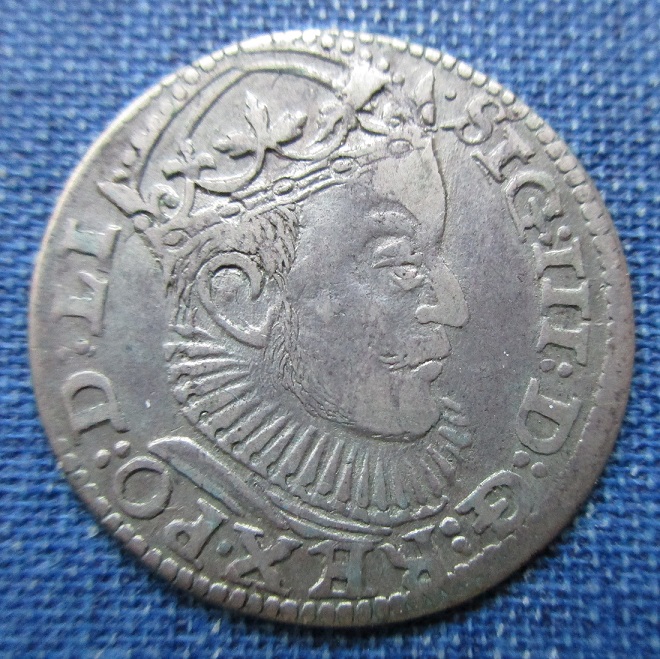 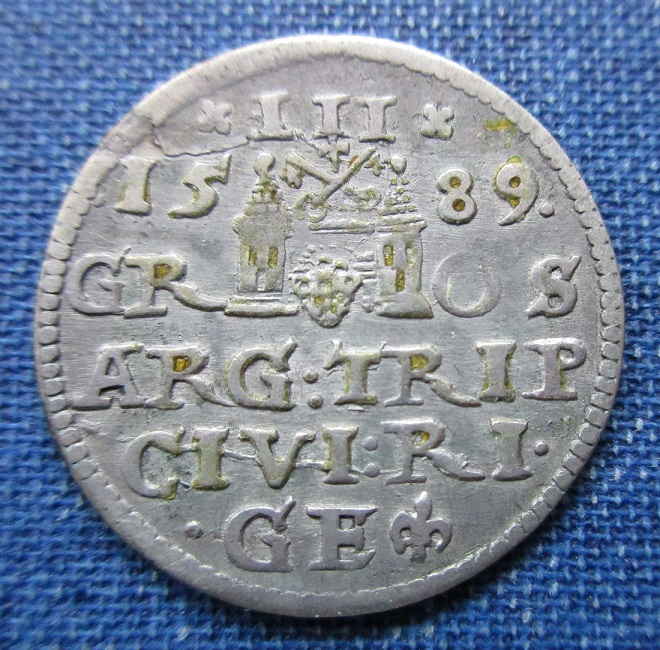 And Poznan:   |
|
Pillar of the Community
Belgium
2895 Posts |
1 thaler = 48 penny lion thaler 1589 MO * NO * ARG * ORDIN * HOL * moneta nova argentea ordinum Hollandiae regular new silver money from Holland CONFIDENS * DNO * NON * MOVETVR confidens domino non movetur steady faith in the lord mint mark: rose (Dordrecht) Dav. # 4856?   Is this a replica? |
| |
Replies: 5,294 / Views: 290,847 |







 First Page
 Previous Page


 Posted 08/25/2019 06:13 am


